Developing math skills Addition Worksheets for Ages 3-7
7 filtered results
-
From - To
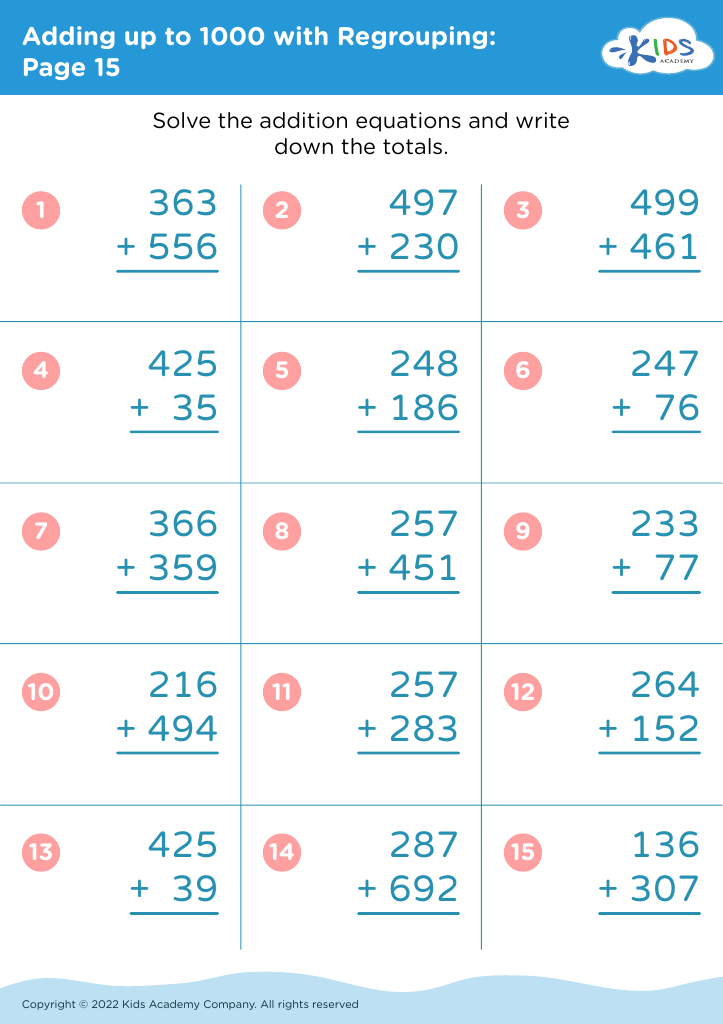
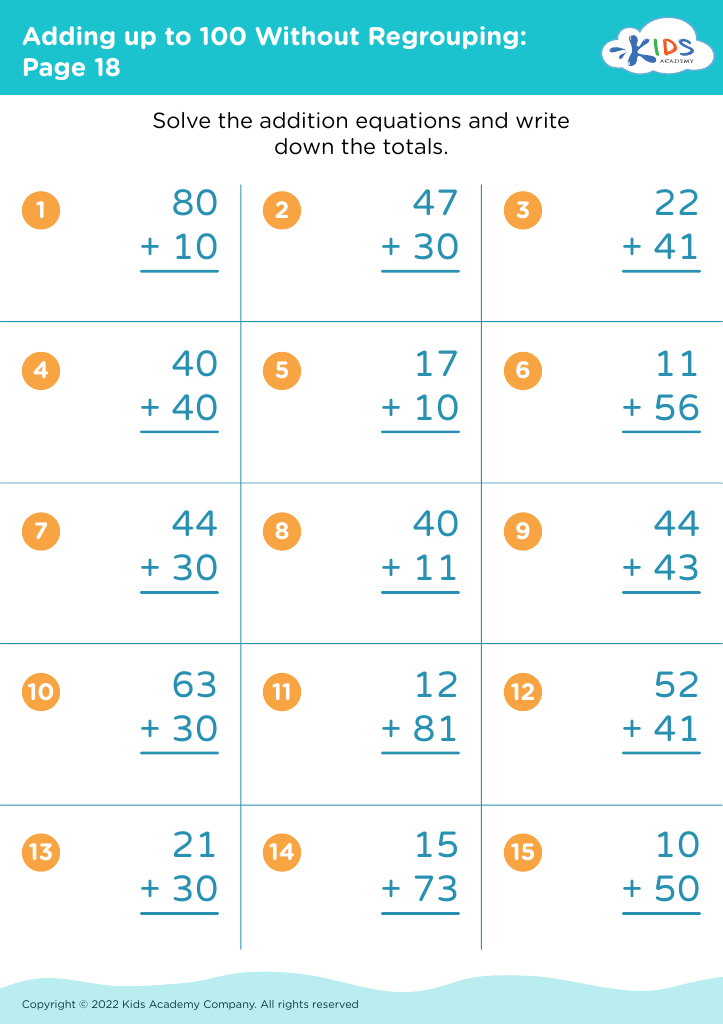
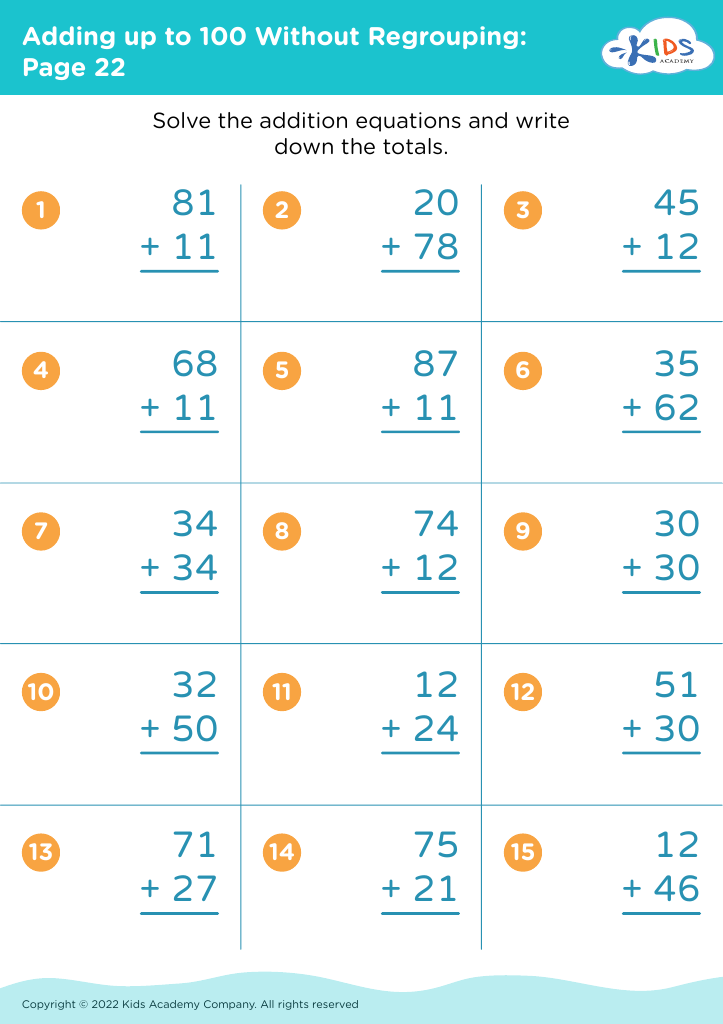
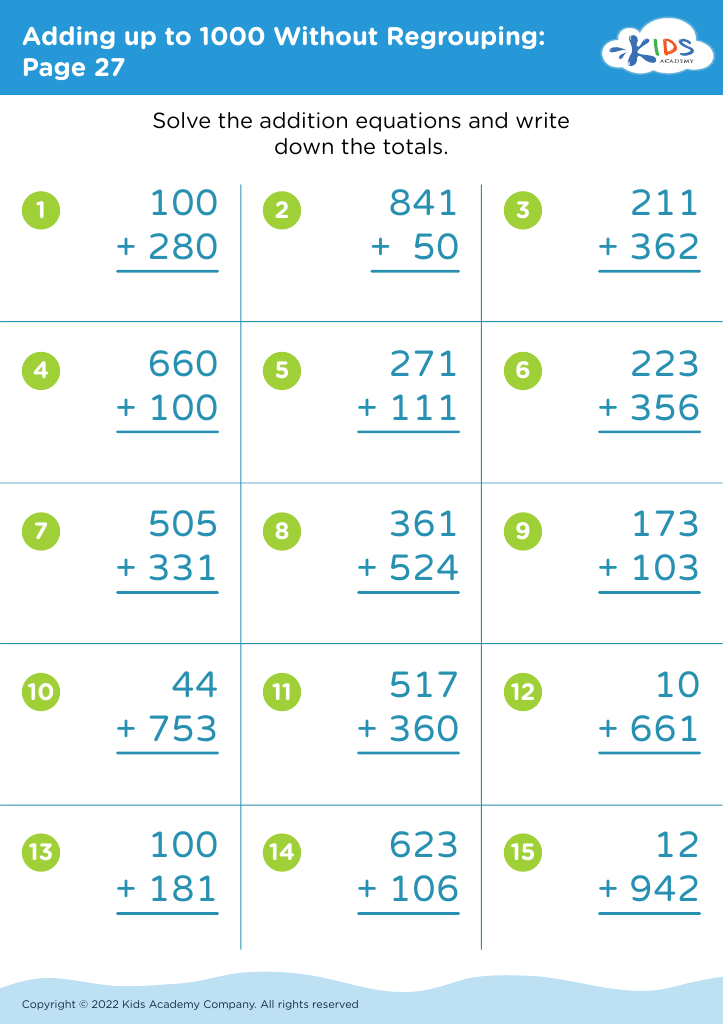
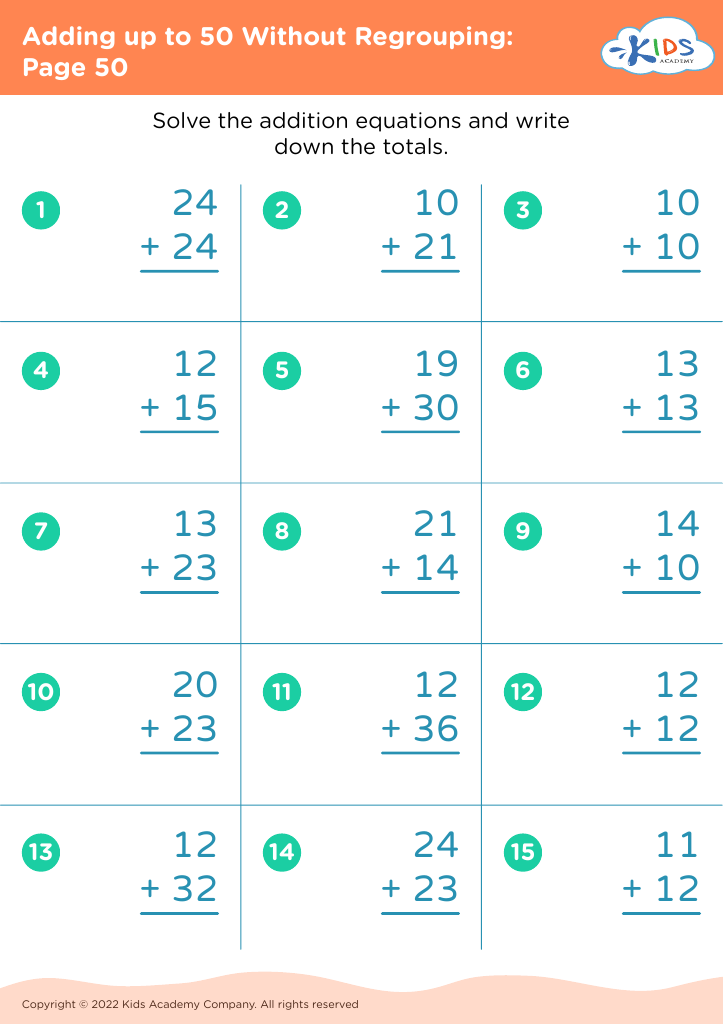
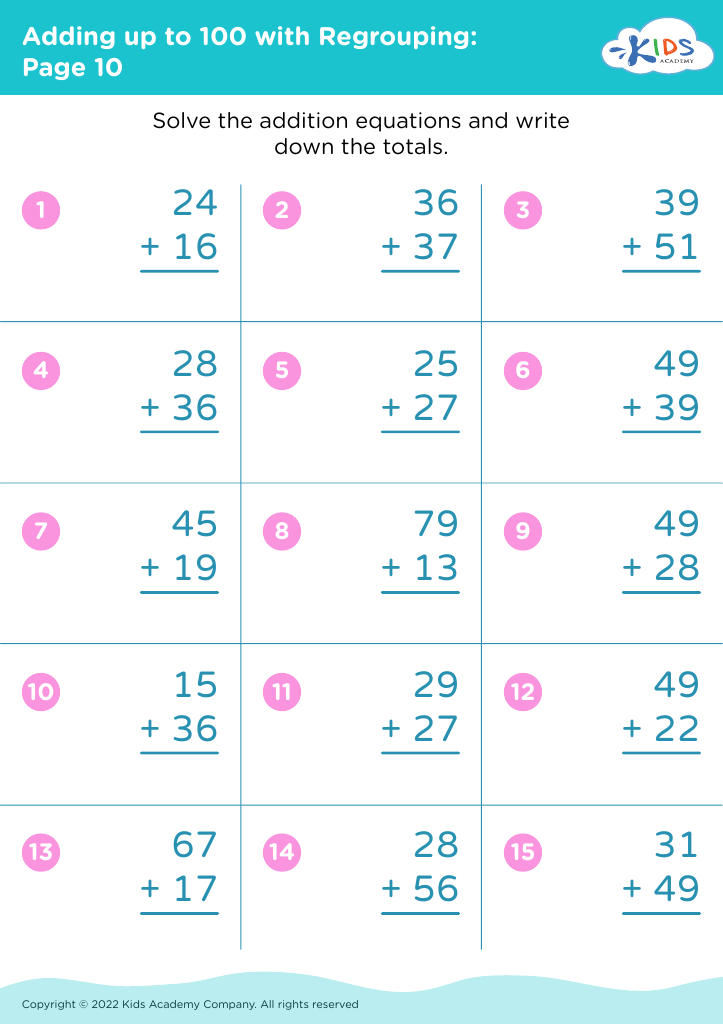
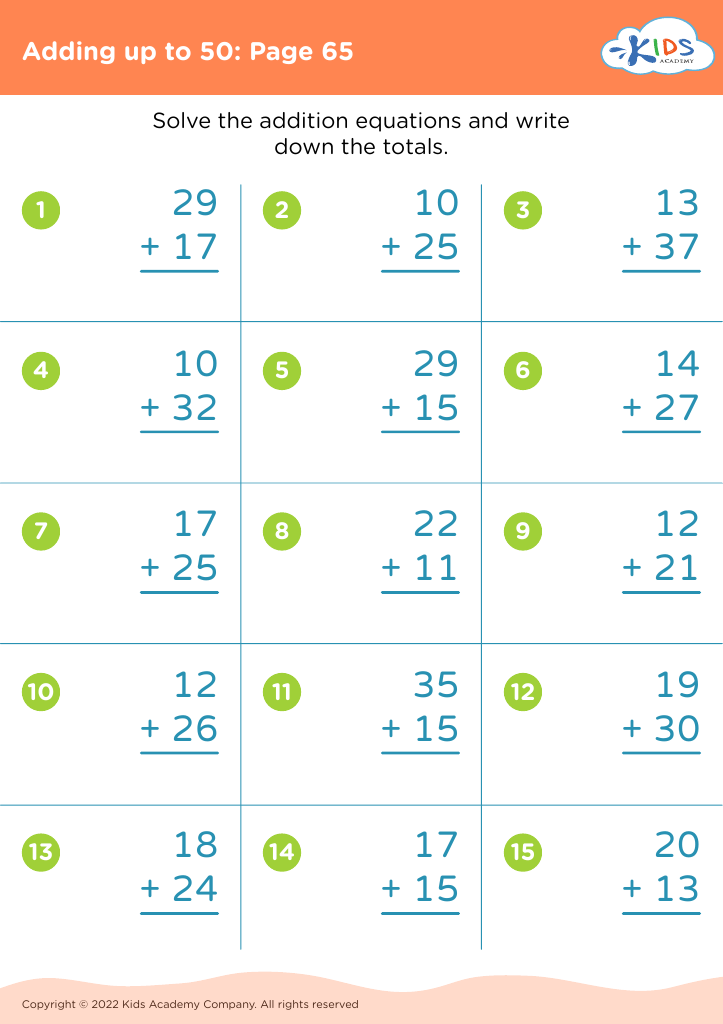
Our "Developing Math Skills: Addition Worksheets for Ages 3-7" are meticulously designed to build a strong foundation in math for young learners. These engaging, age-appropriate worksheets transform addition into a fun and rewarding experience, fostering enthusiasm for math from an early age. By incorporating colorful illustrations and interactive activities, children are encouraged to practice and master addition, boosting their confidence and cognitive skills. Ideal for preschoolers and early elementary students, these worksheets align with educational standards and support both classroom learning and at-home practice. Equip your child with the essential math skills needed for future academic success!



.jpg)




Developing math skills, especially in addition, for children aged 3-7 is crucial for several key reasons. Firstly, foundational math skills form the bedrock of all future learning in mathematics, which is essential for everyday tasks and academic success. Early proficiency in addition boosts a child's confidence and fosters an enthusiastic attitude toward learning, making them more eager to tackle more complex mathematical concepts later on.
Furthermore, developing addition skills at a young age sharpens a child's problem-solving abilities and enhances logical thinking. These cognitive skills are not only critical for math but also benefit other areas of learning and development, such as patterns recognition, sequencing, and critical thinking.
Additionally, learning addition helps children improve their number sense, understanding the relationships between numbers and their real-world applications, like counting objects, sharing toys, or managing simple transactions. Integrating math into daily activities and play encourages practical learning and makes the subject more relatable and enjoyable for young children.
Finally, mastering basic addition sets a positive trajectory for early academic achievement, which is a predictor of later academic success. Therefore, parents and teachers play a pivotal role in nurturing these early math skills to ensure children are well-equipped for their educational journey and beyond.








