Enhance fine motor skills Addition Worksheets for Ages 3-7
4 filtered results
-
From - To
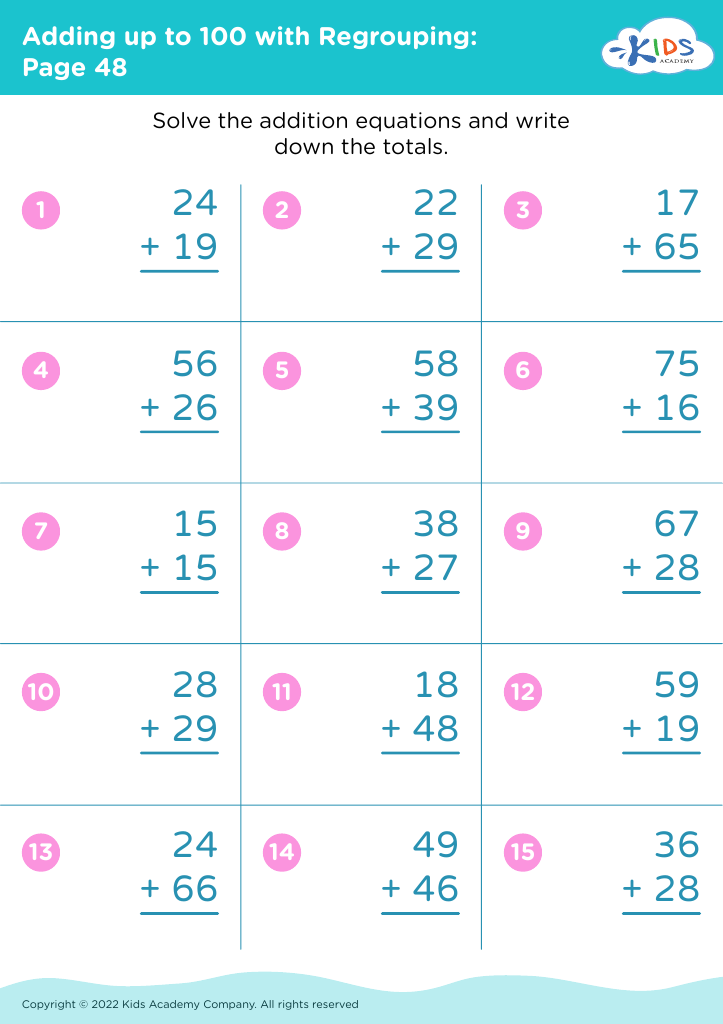
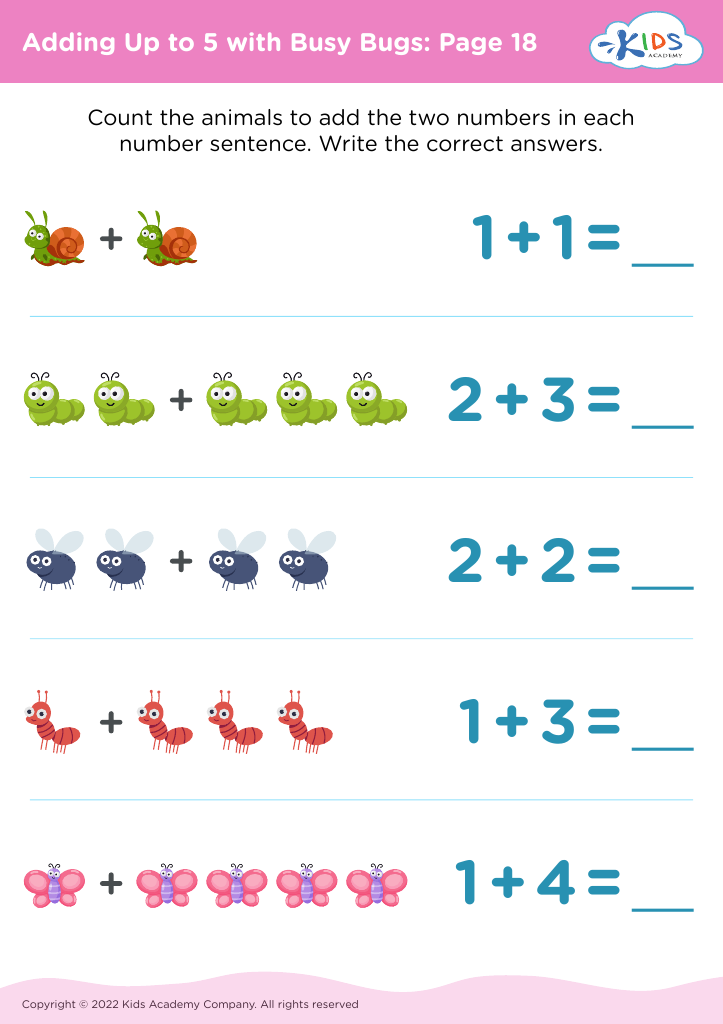
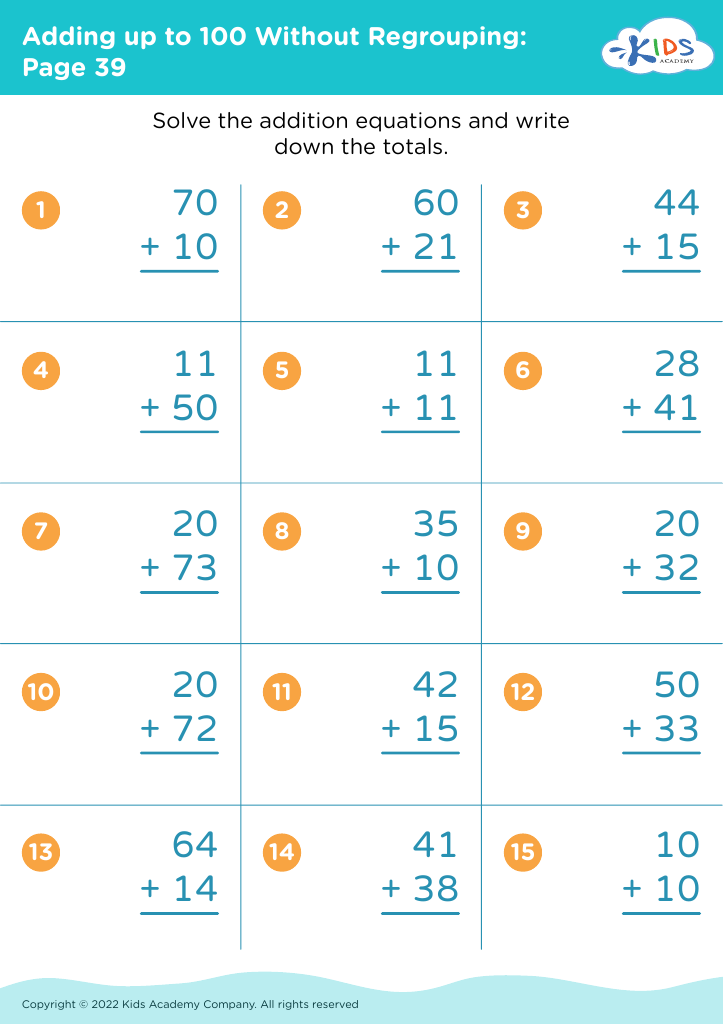
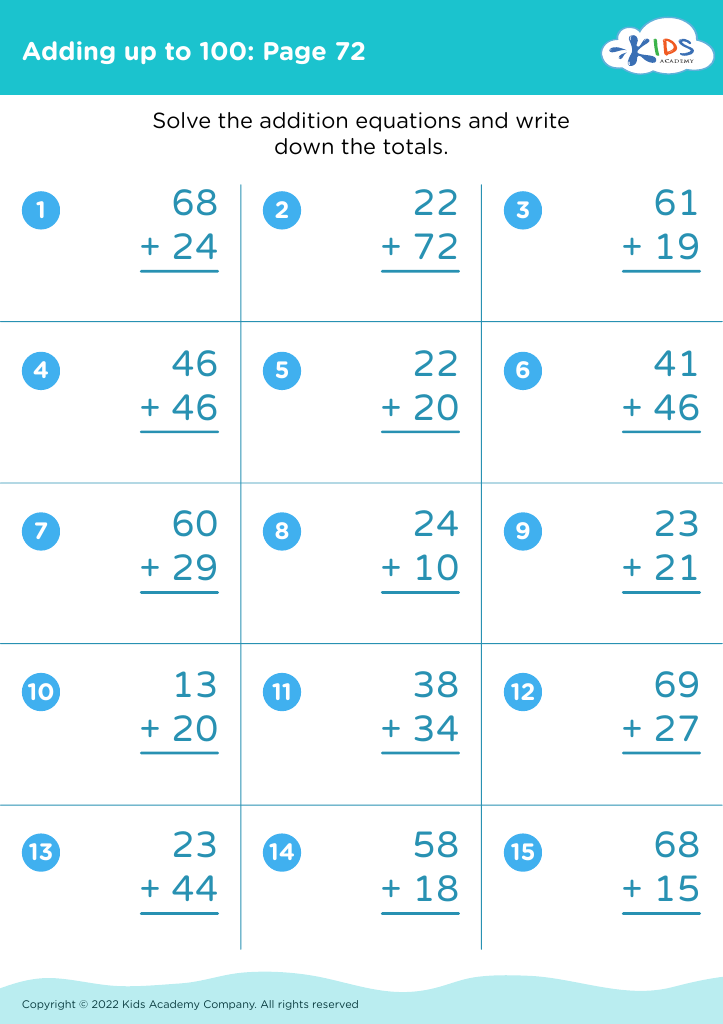
Discover engaging addition worksheets designed for children aged 3-7, tailored to enhance fine motor skills while mastering essential math concepts. These interactive activities not only make learning fun but also develop important hand-eye coordination, grip strength, and dexterity. Each worksheet incorporates colorful illustrations and hands-on elements, guiding young learners through fundamental addition exercises in a creative way. Perfect for homeschooling or supplemental learning, our resources promote critical thinking while fostering a love for math. Help your child build a strong foundation in mathematics and fine motor development with our carefully crafted worksheets that make learning an enjoyable adventure!








Enhancing fine motor skills in children aged 3-7 is crucial for their overall development and learning experience. During this developmental stage, children are rapidly acquiring new abilities, and fine motor skills, which involve the use of small muscles in the hands and fingers, play a significant role in their daily activities and academic performance.
First, strong fine motor skills contribute to a child's ability to participate in essential tasks such as writing, buttoning clothes, and using scissors. These skills support independence in self-care and classroom tasks, fostering confidence and engagement.
Additionally, fine motor development is directly linked to cognitive growth. Activities that strengthen these skills, such as sewing, sorting, or manipulating small objects, boost hand-eye coordination and concentration, enhancing problem-solving abilities and creativity. They also lay the groundwork for later academic skills required in reading and mathematics.
Moreover, engaging fine motor activities can promote social interaction and cooperation among children. Collaborative projects help develop teamwork and communication skills, which are vital components of emotional intelligence.
Involving parents and teachers in supporting fine motor skills not only accelerates children's readiness for more complex tasks, but also nurtures a love for learning, ultimately ensuring a well-rounded foundation for lifelong success.








