Enhancing problem-solving abilities Addition Worksheets for Ages 3-7
9 filtered results
-
From - To
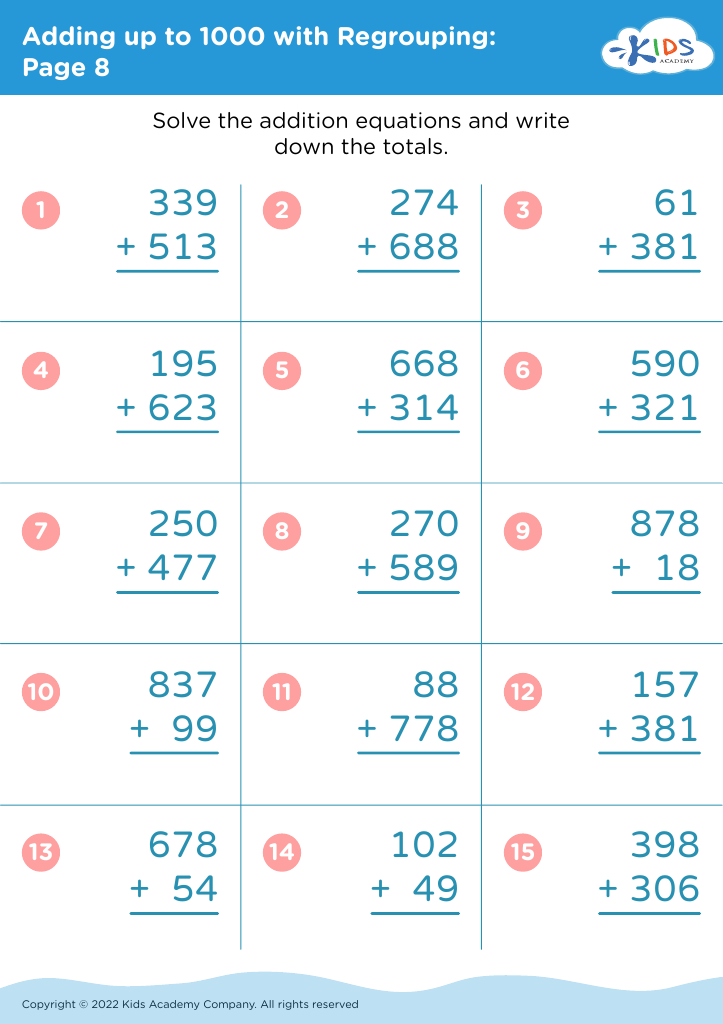
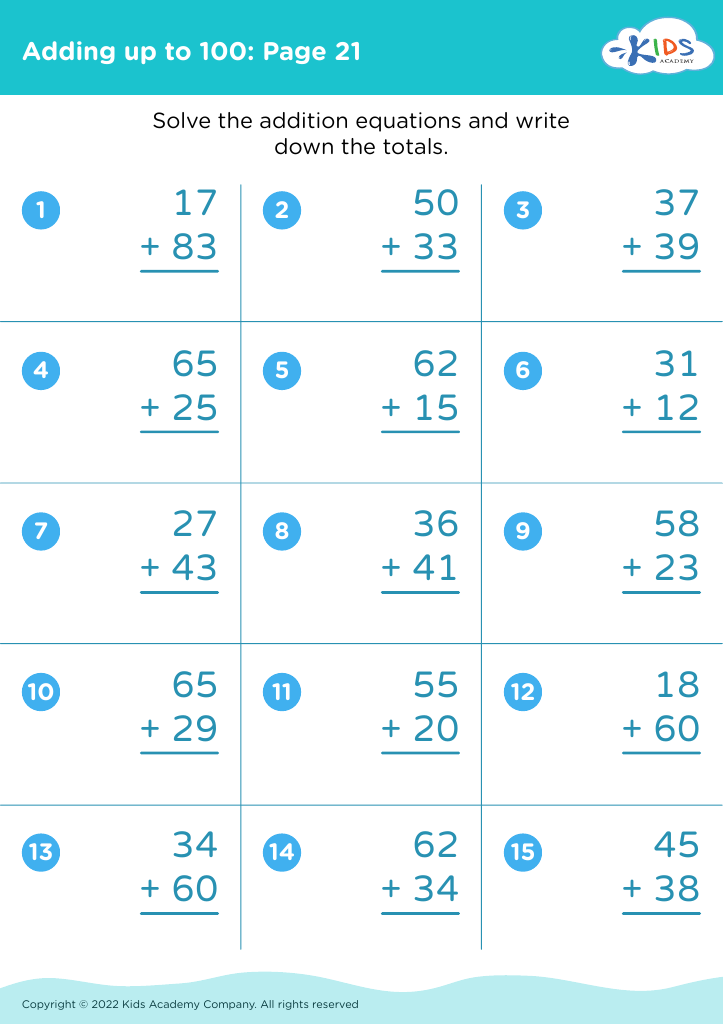
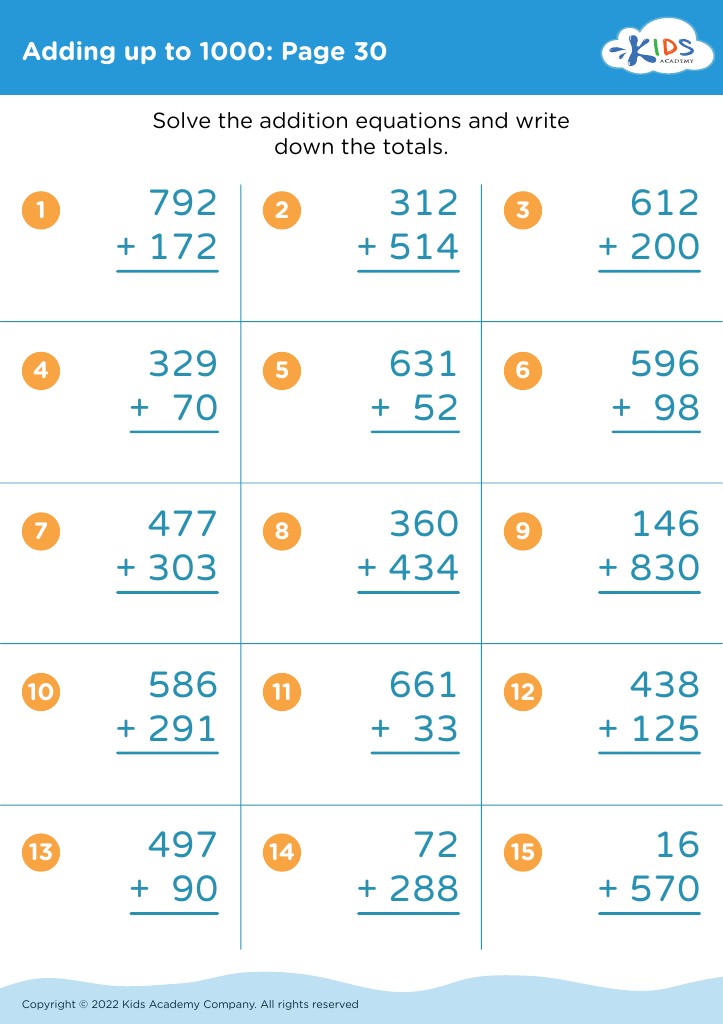
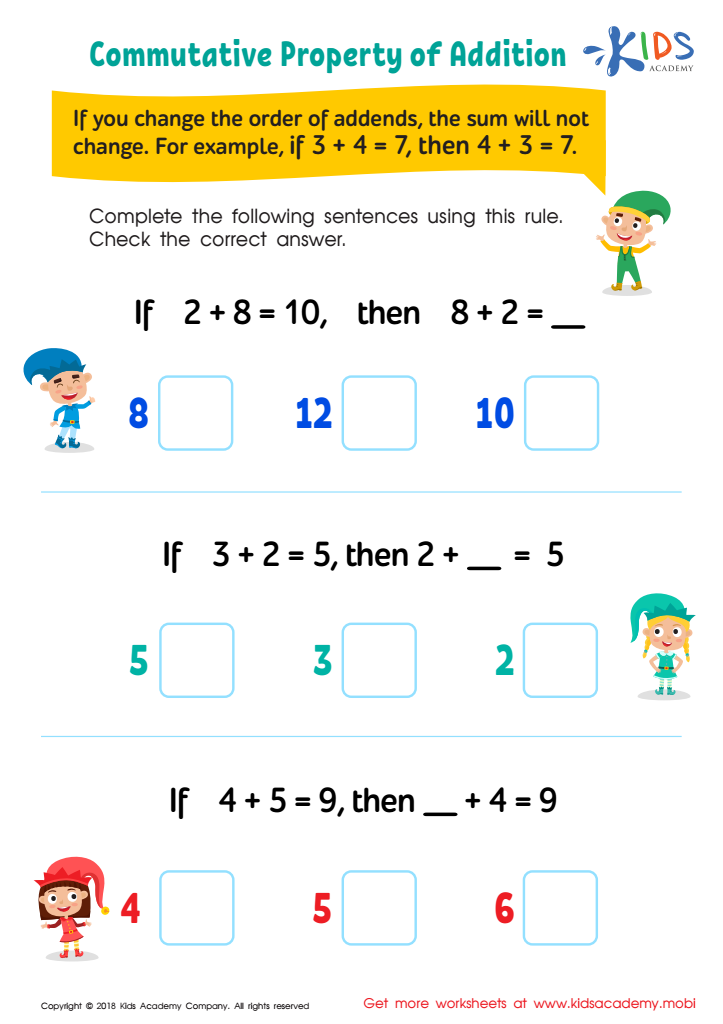
Boost your child's problem-solving skills with our engaging Addition Worksheets designed for ages 3-7. These interactive worksheets provide an effective way for young learners to practice addition while enhancing critical thinking and analytical skills. Each activity promotes a fun, hands-on approach to learning, encouraging children to explore and discover math concepts independently. With colorful visuals and varying difficulty levels, our resources cater to each child’s unique learning pace. Help your little ones build a strong foundation in mathematics that will serve them well in future academic endeavors. Explore our collection and empower your child’s learning journey today!
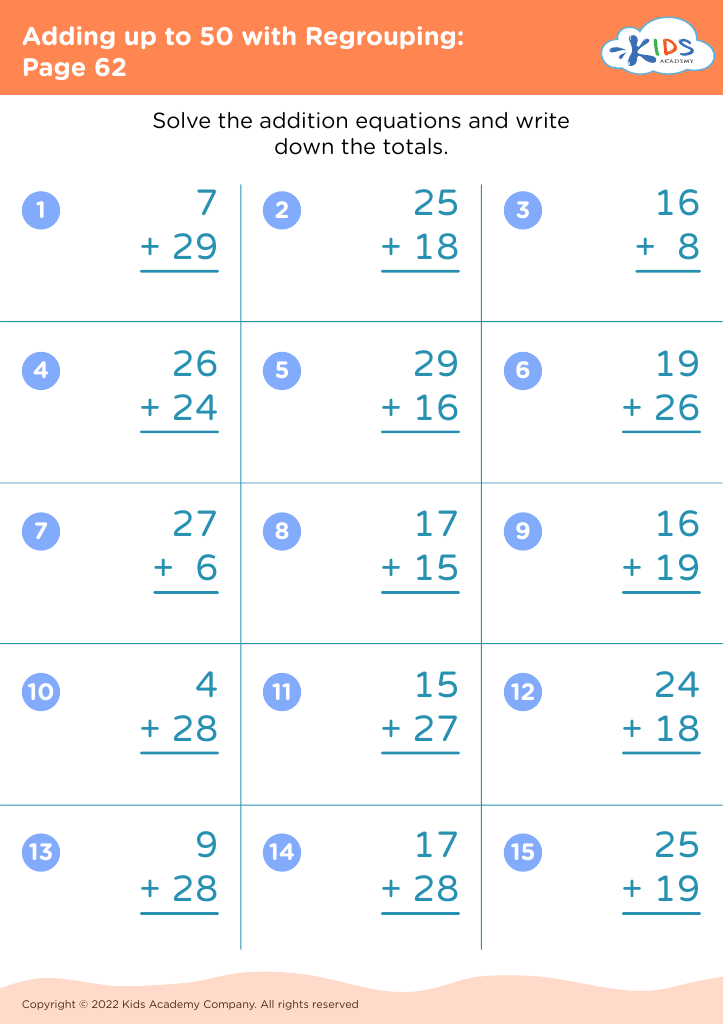
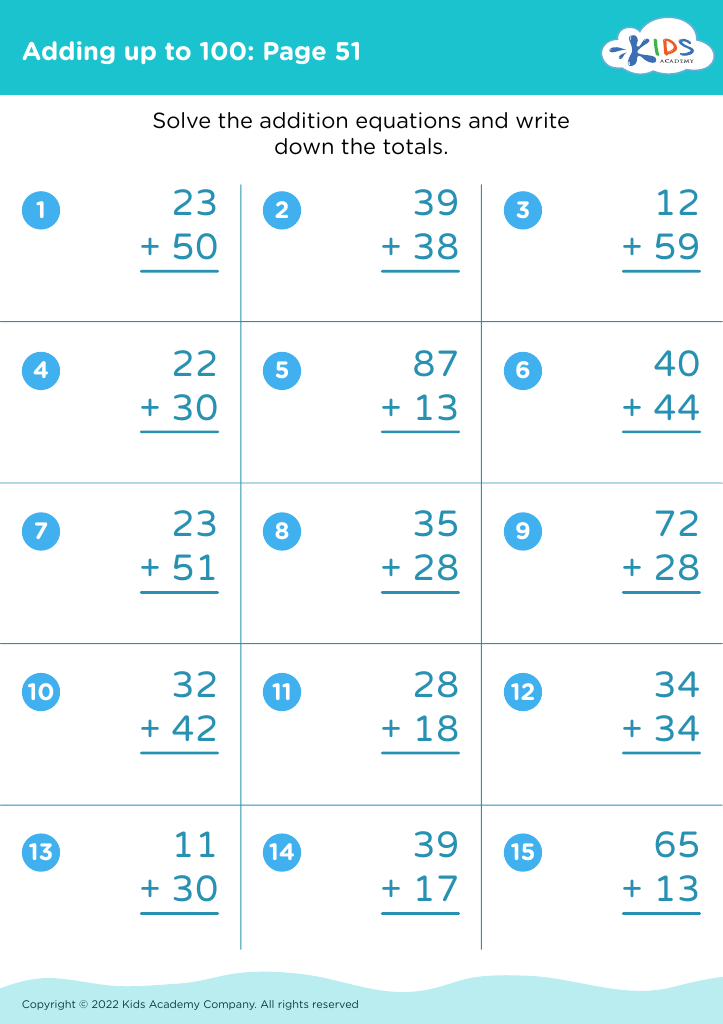
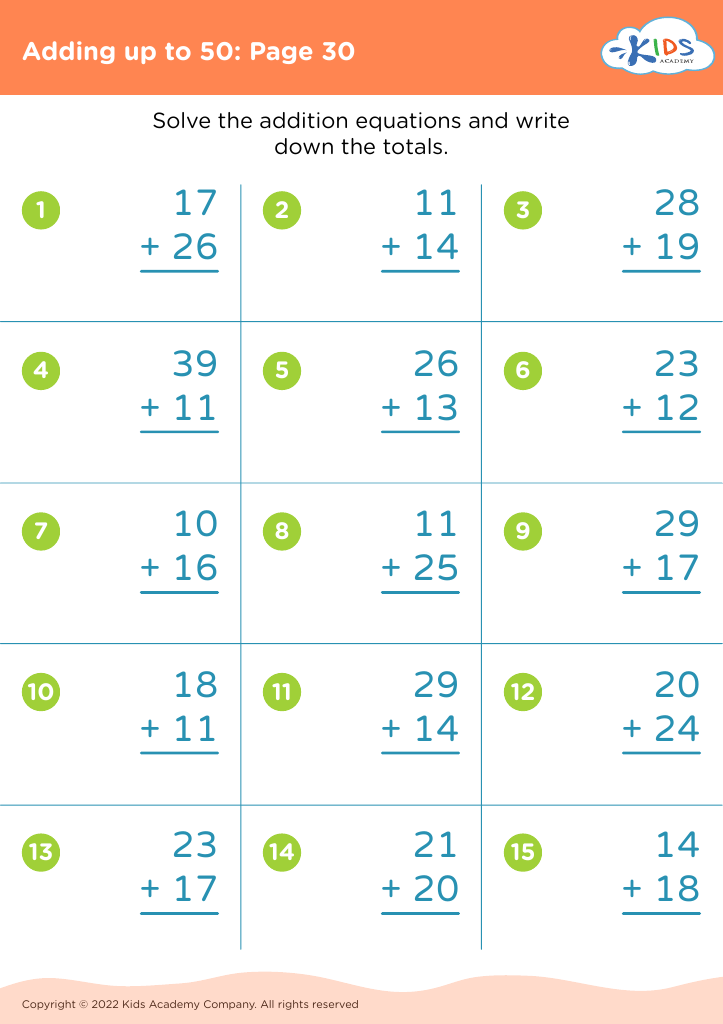
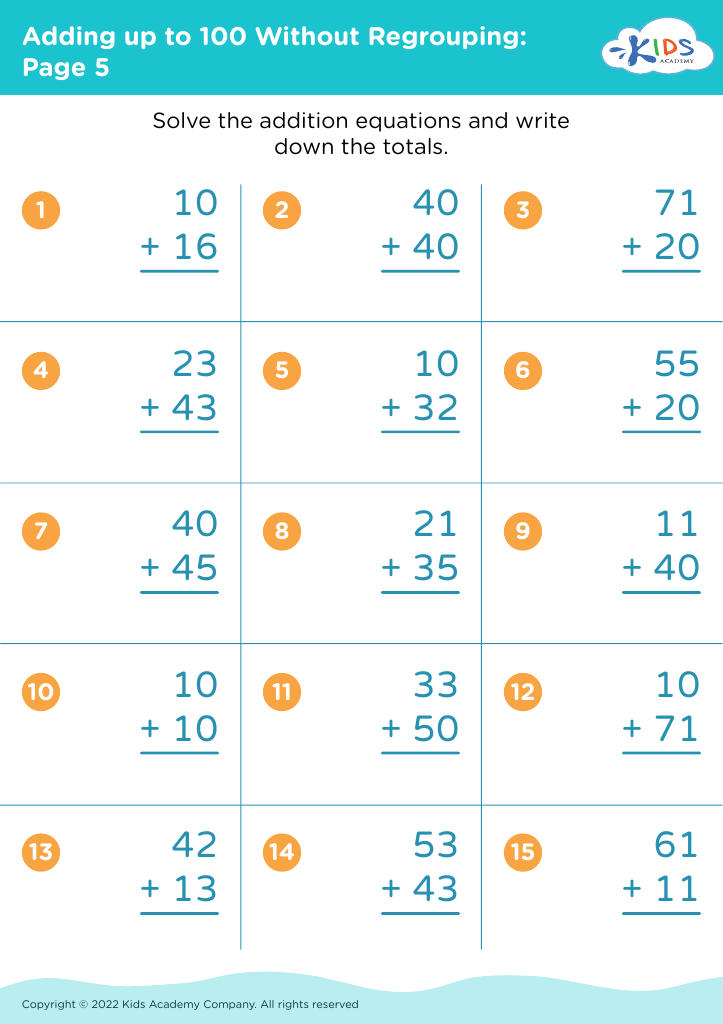
Commutative Property of Addition Worksheet
 Assign to My Students
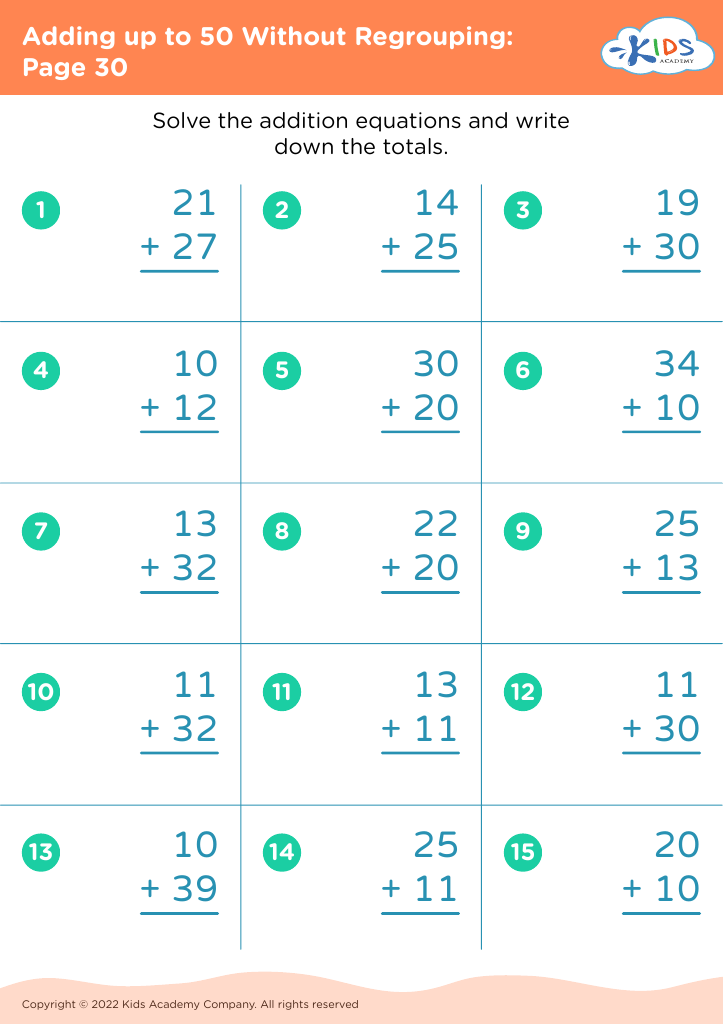


.jpg)





Enhancing problem-solving abilities in young children aged 3-7 is crucial for their cognitive, emotional, and social development. During these formative years, children are naturally curious and eager to explore, making it the ideal time to nurture their critical thinking and problem-solving skills. Parents and teachers who focus on developing these abilities help lay a strong foundation for future learning and life challenges.
When children engage in problem-solving activities, they learn to approach challenges systematically, think creatively, and collaborate with others. These skills not only enhance their mathematical understanding of addition but also boost resilience and independence. Strong problem solvers are better equipped to cope with obstacles, as they learn to assess situations, consider various solutions, and evaluate outcomes.
Fostering an environment that encourages exploration, questioning, and creative thinking enables children to develop a growth mindset. This mindset promotes persistence and adaptability—qualities that are essential in an ever-changing world. Additionally, improving problem-solving abilities also supports social-emotional skills. By working through challenges with peers, children build empathy, communication skills, and teamwork.
In summary, emphasizing problem-solving skills in early education empowers children to navigate complexity and sets the stage for lifelong learning and success.








