
Handwriting practice Addition Worksheets for Ages 3-7
5 filtered results
Difficulty Level
Grade
Age
-
From - To
Subject
Activity
Standards
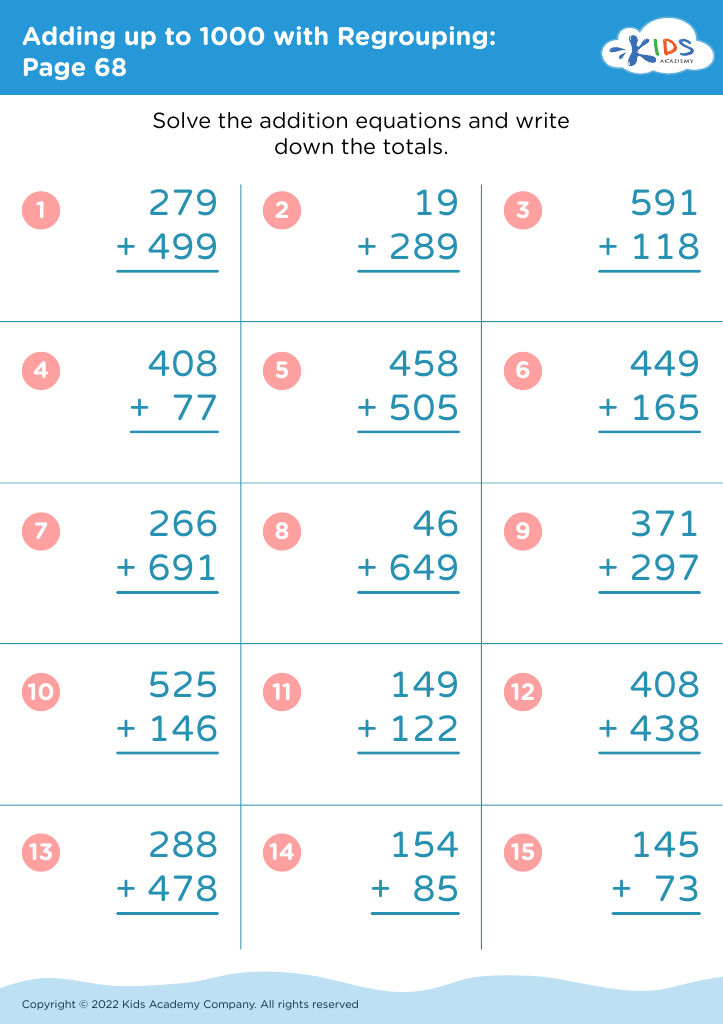
Enhance your child’s learning with our Handwriting Practice Addition Worksheets for ages 3-7. Combining math skills with fine motor development, these engaging resources help young learners master basic addition while practicing handwriting. Perfect for preschool and early elementary students, each worksheet features fun, age-appropriate addition problems alongside traceable number and equation lines to strengthen writing skills. Foster confidence and academic growth by integrating these printable worksheets into your child's daily routine. Trusted by educational professionals, Kids Academy ensures high-quality materials that make learning both fun and effective. Visit our website for access to a wide variety of educational worksheets.
Favorites
With answer key
Interactive
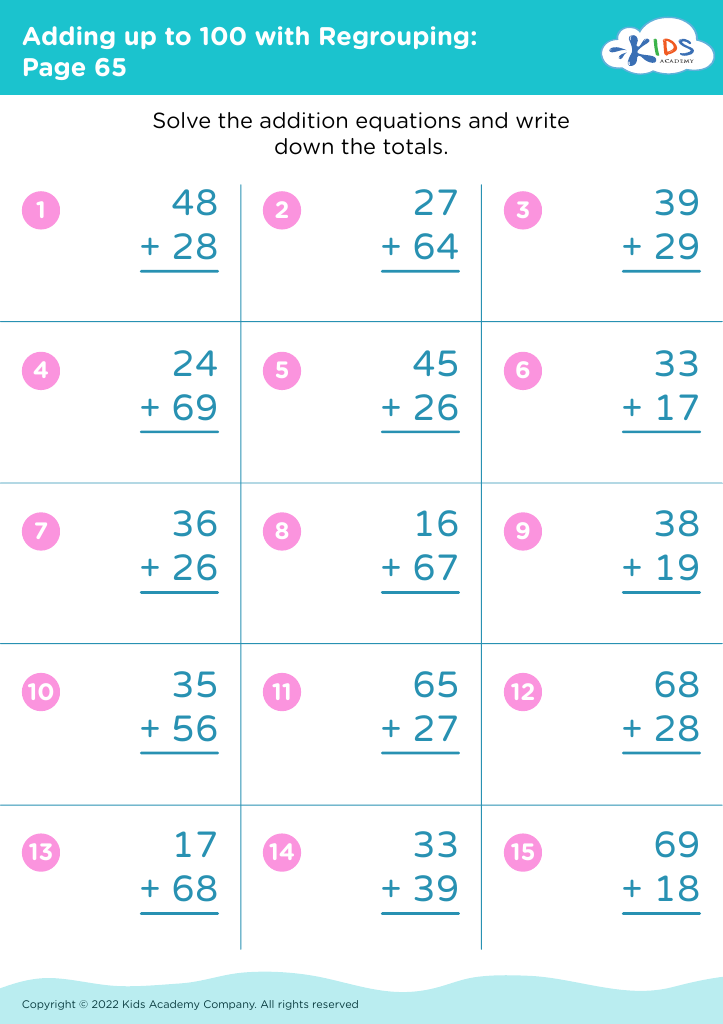
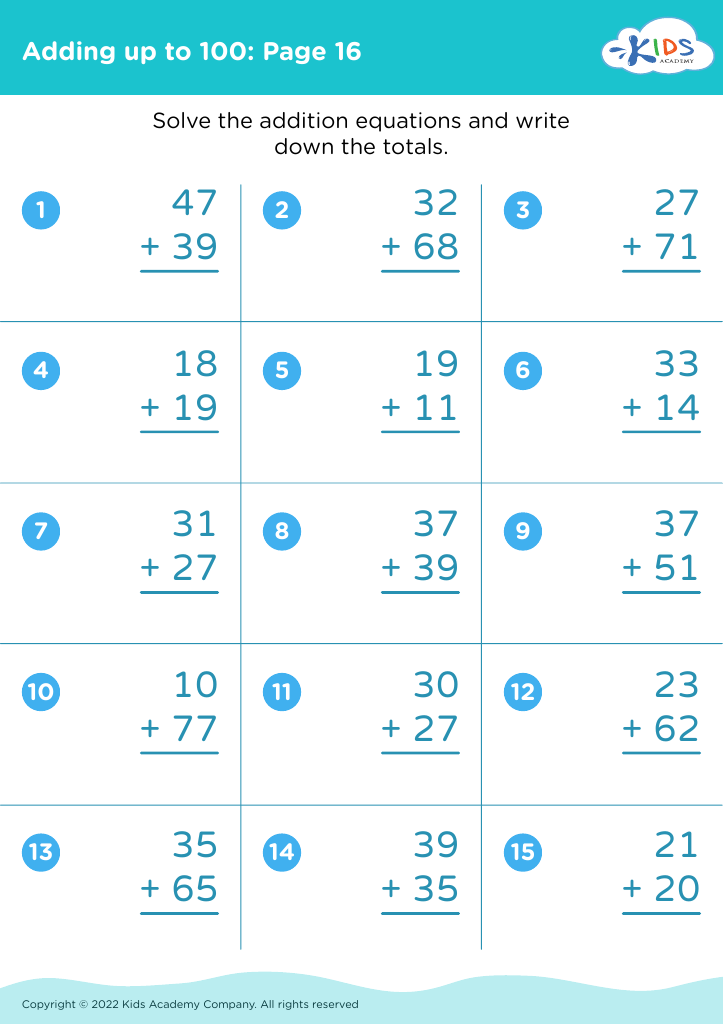
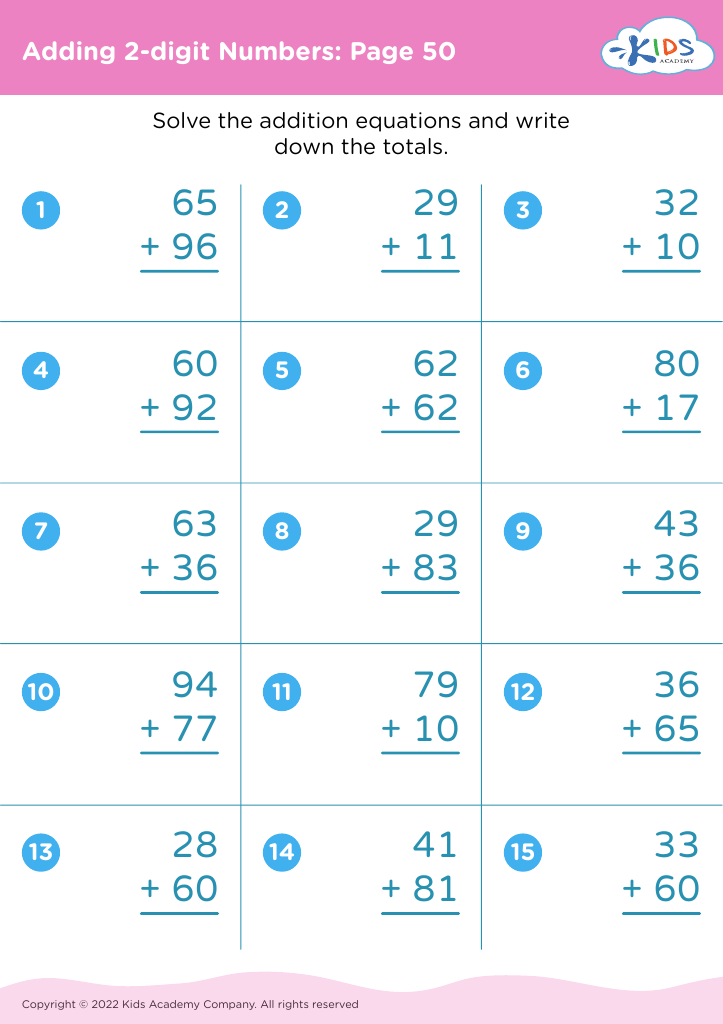
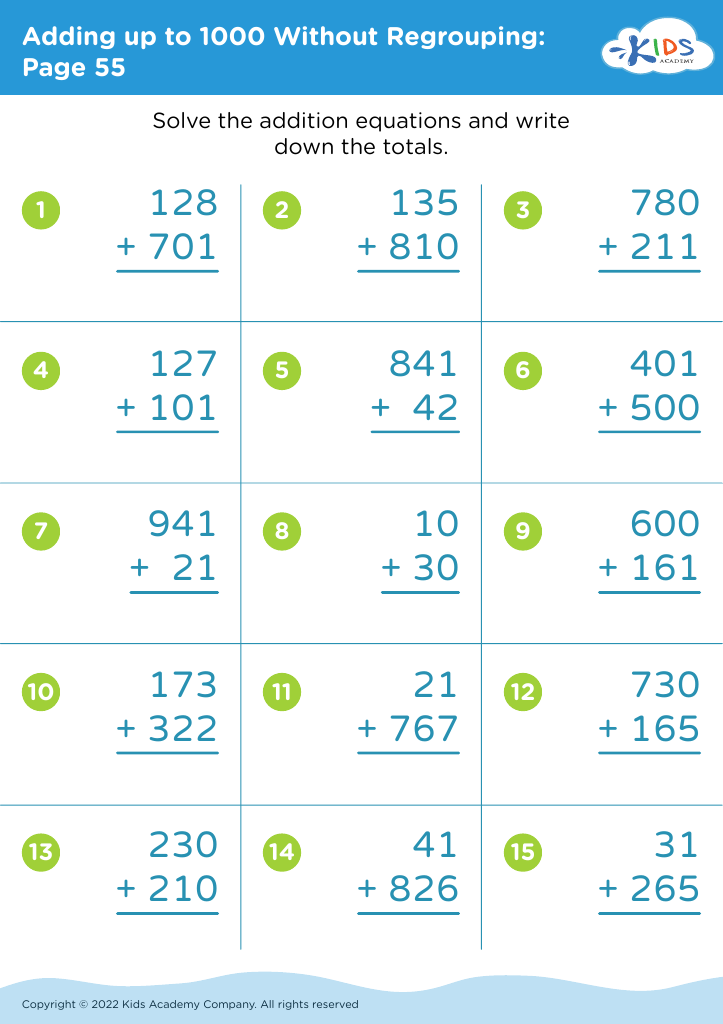
Join Kids Academy for Free
Who is primarily going to use this learning content?








Handwriting practice, combined with addition exercises, for children aged 3-7 is vital for their developmental journey, serving as a foundational skill set with far-reaching benefits. This critical period capitalizes on rapid brain growth and neural plasticity, making it ideal for fostering fine motor skills, cognitive development, and early numeracy.
Firstly, handwriting practice enhances fine motor skills by strengthening the muscles in the children’s hands and fingers, aiding in coordination and precise movements. This physical aspect is important for overall developmental milestones, from tying shoelaces to more complex skills later on.
The synthesis of handwriting and addition presents a multi-dimensional approach to learning. As children practice writing numbers and solving simple addition problems, they're simultaneously absorbing the basics of number formation and arithmetic. This dual focus nurtures their ability to process mathematical concepts more intuitively, laying a robust groundwork for more complex math in the future.
Moreover, this collaborative practice fosters discipline, focus, and patience. Developing these skills early equips children with the endurance needed for academic pursuits, promoting a positive attitude toward learning. Parental and teacher involvement also strengthens emotional bonds and provides essential encouragement, further motivating kids to persist in their practice.
In essence, handwriting and addition practice is a comprehensive exercise that builds vital cognitive and physical competencies necessary for future academic and everyday life success.








