Number Sequencing Addition Worksheets for Ages 3-7
10 filtered results
-
From - To
Discover our engaging Number Sequencing Addition Worksheets, specially designed for children ages 3-7. These worksheets help young learners develop vital math skills as they explore the world of numbers through fun, interactive activities. By practicing number sequencing, children enhance their understanding of addition and improve their ability to identify and organize numbers in a set sequence. Each worksheet is colorful and visually appealing, making math enjoyable and accessible. Perfect for use at home or in the classroom, our resources are aligned with early learning standards to support your child's educational journey. Start building a strong math foundation today!
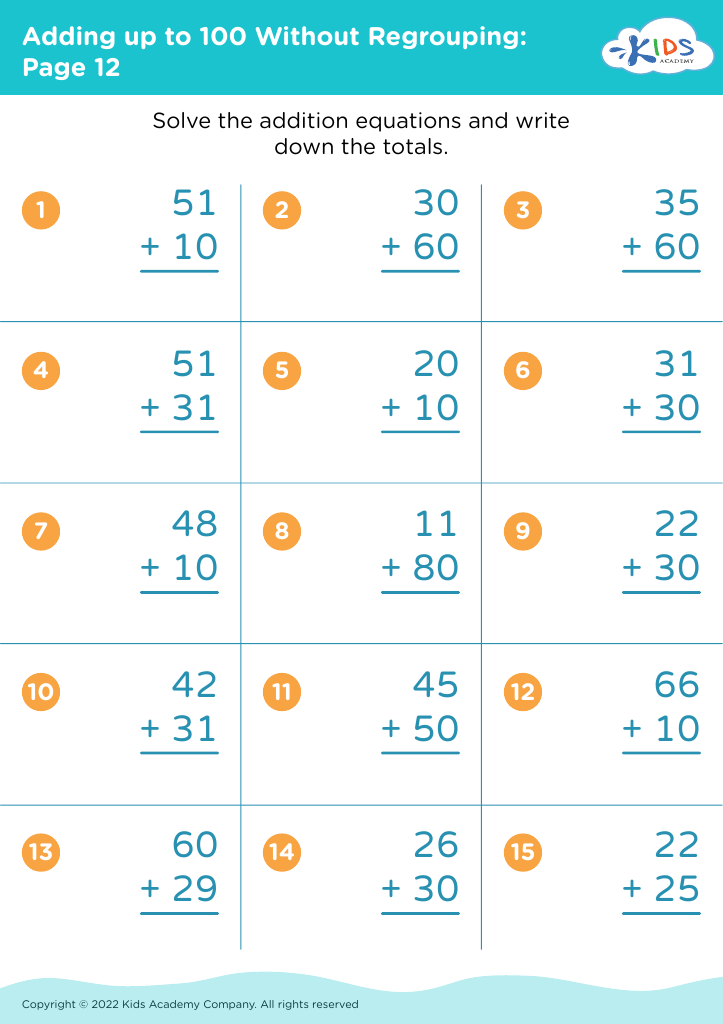
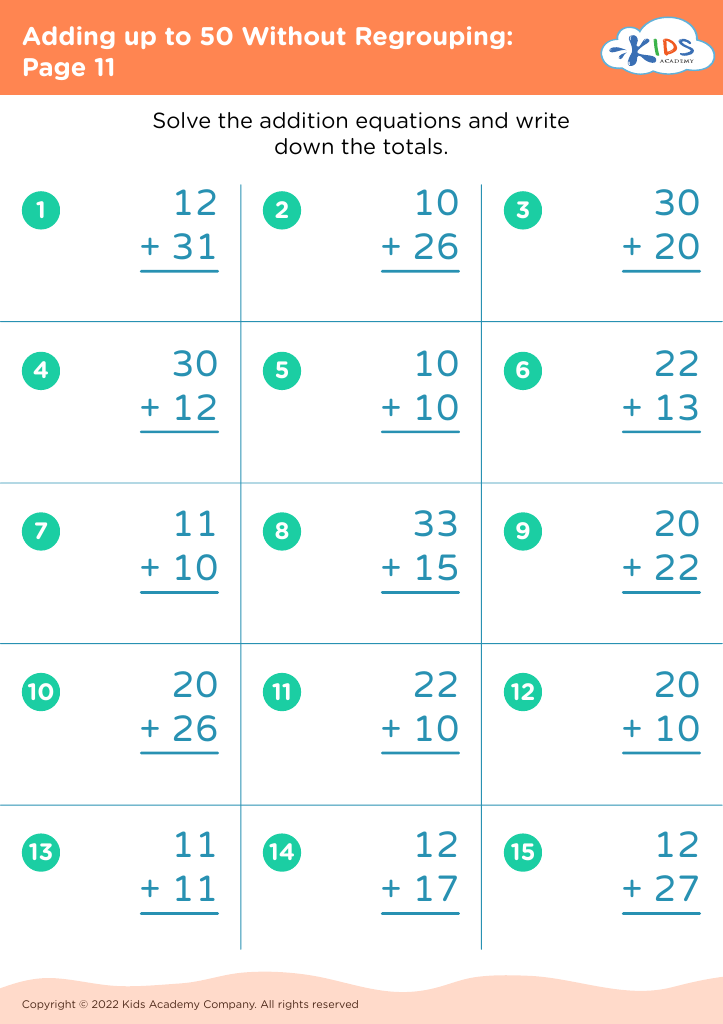
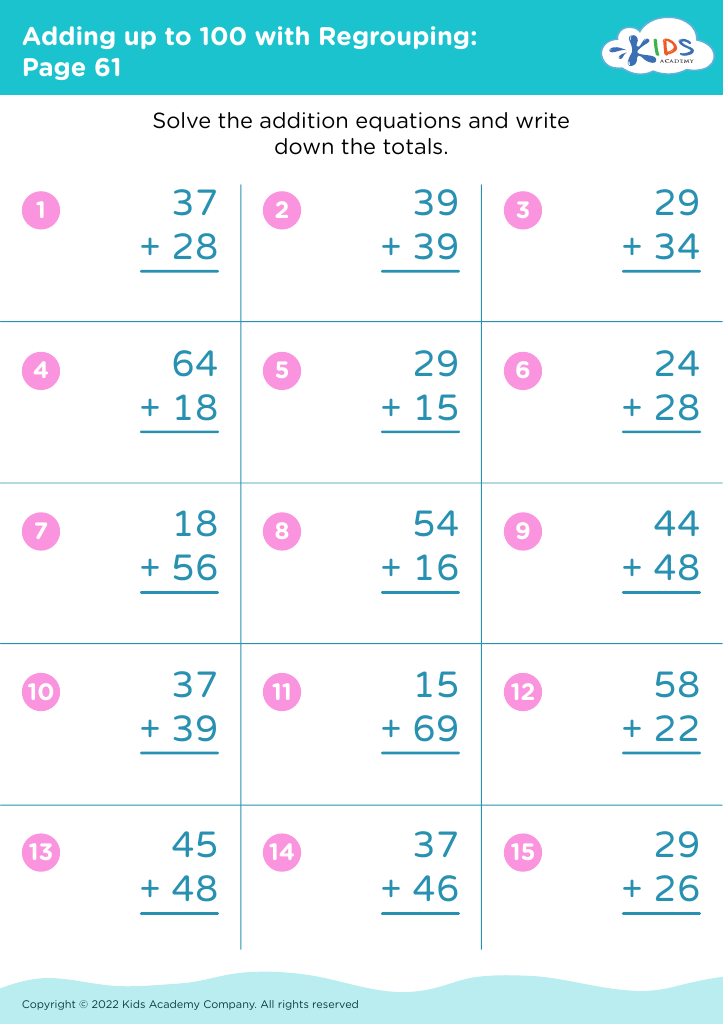
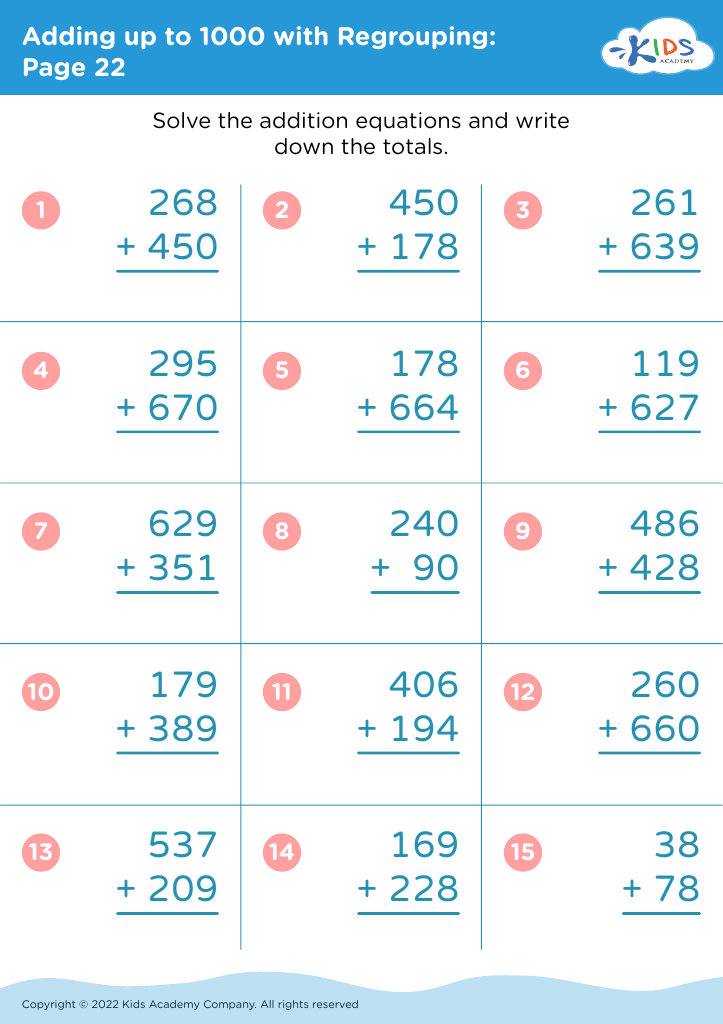
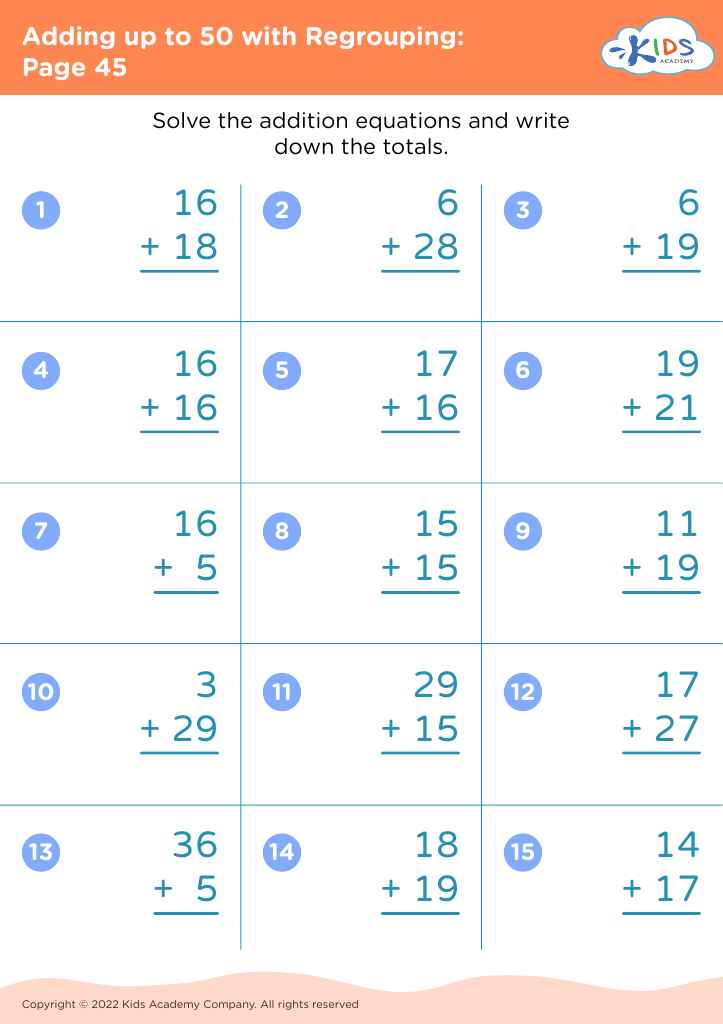
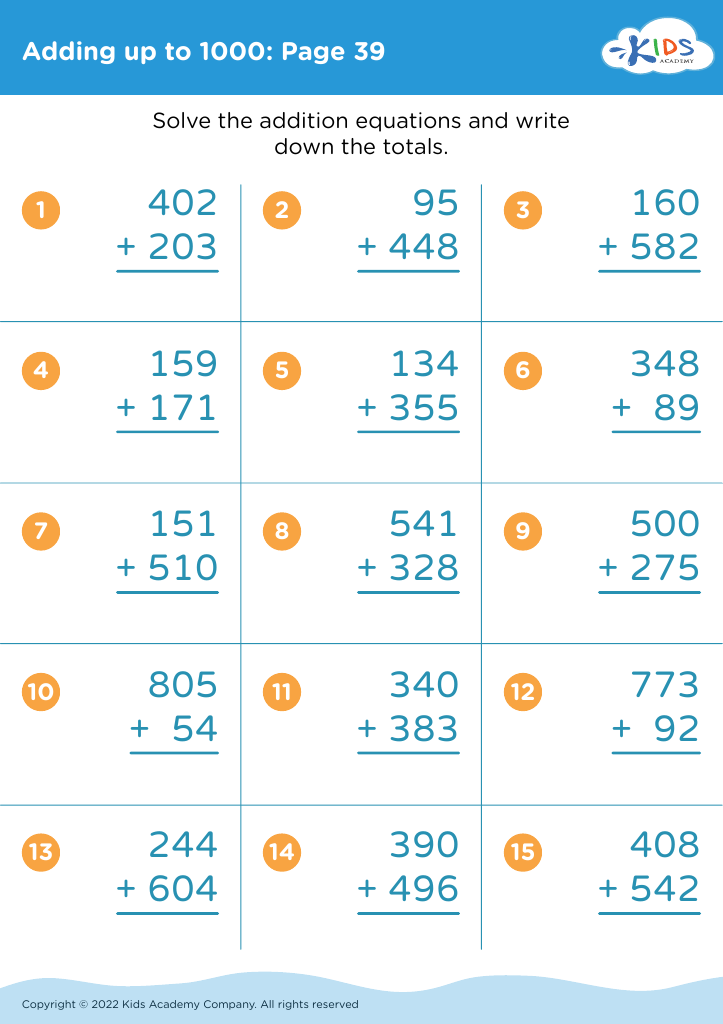
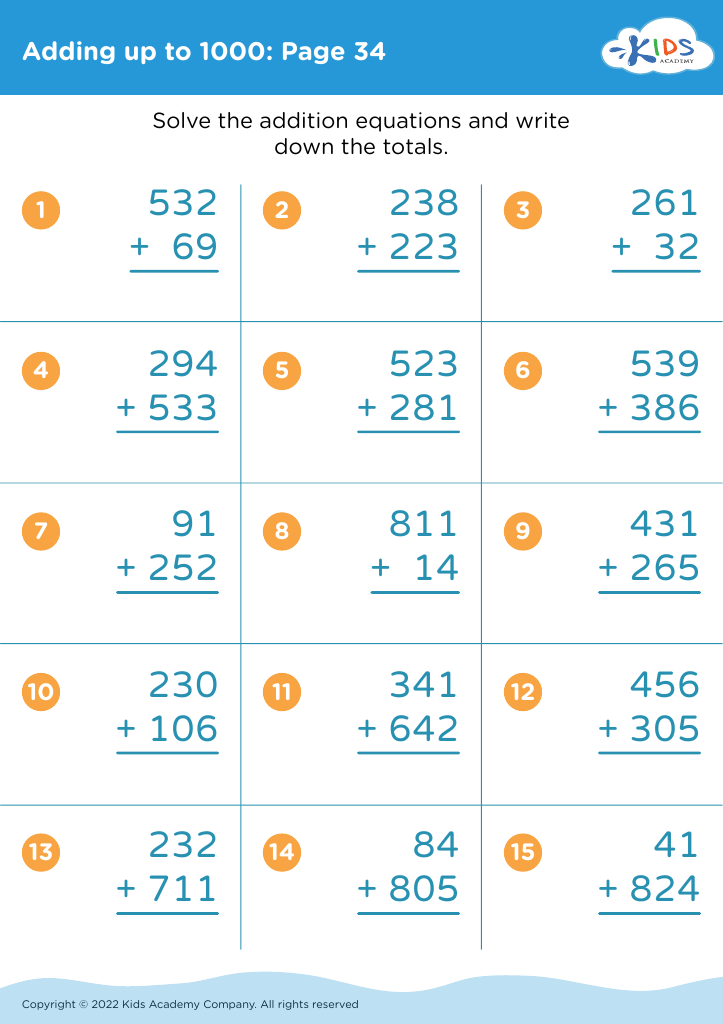
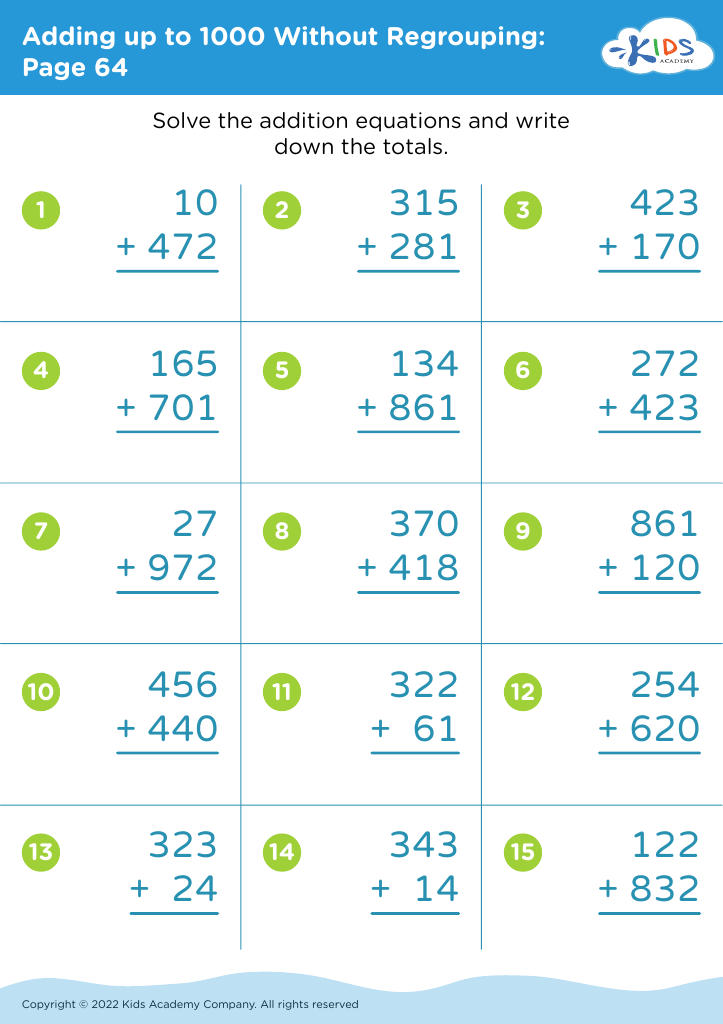
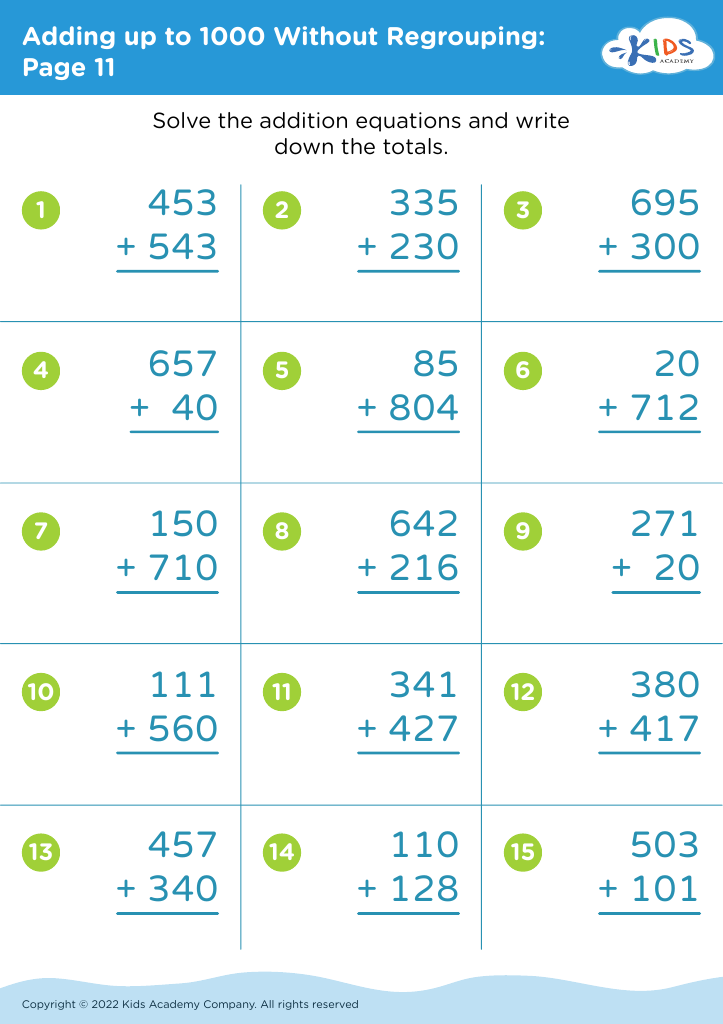
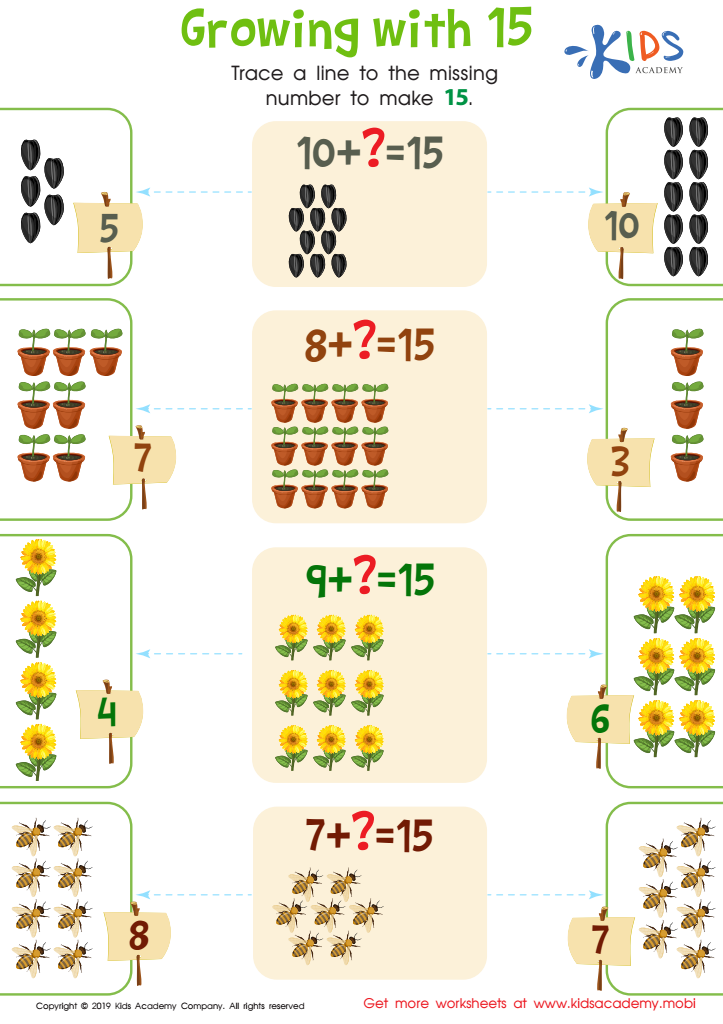
Growing with 15 Worksheet
 Assign to My Students


.jpg)





Number sequencing and addition are foundational skills in early childhood education, crucial for developing a strong mathematical understanding. For children aged 3-7, mastering these skills sets the stage for future academic success. Engaging with number sequencing helps children recognize patterns, understand the order of numbers, and enhances their ability to manipulate quantities, which is essential for addition.
When children learn to sequence numbers, they gather the cognitive tools needed to perform basic operations effectively. It enhances their problem-solving abilities and promotes logical thinking. Additionally, early number fluency boosts confidence, inspiring children to explore more complex mathematical concepts as they progress.
Parents and teachers play a vital role in fostering these skills through interactive and playful learning experiences. Using everyday activities like counting objects, singing number songs, or playing sequencing games can make learning enjoyable and meaningful. Moreover, supporting number sequencing and addition lays a solid foundation for crucial skills such as measurement, more advanced arithmetic, and eventually, even higher-level math.
Ultimately, when parents and teachers invest in these early experiences, they help children navigate their educational journeys more successfully, unlocking opportunities for them in the future. This investment not only shapes math skills but also enhances overall cognitive development.








