Numeracy development Addition Worksheets for Ages 3-7
3 filtered results
-
From - To
Explore our engaging numeracy development addition worksheets designed specifically for children ages 3-7! These worksheets provide a fun, interactive way for young learners to grasp basic addition concepts, helping them build a solid foundation in mathematics. Filled with colorful visuals and age-appropriate activities, each worksheet supports skill development through hands-on learning. Our resources encourage children to practice counting, object recognition, and problem-solving, ensuring they gain confidence in their math abilities. Ideal for homeschool or classroom settings, these addition worksheets are valuable tools for fostering a love for numbers. Start your little ones on their mathematical journey today with our exciting offerings!
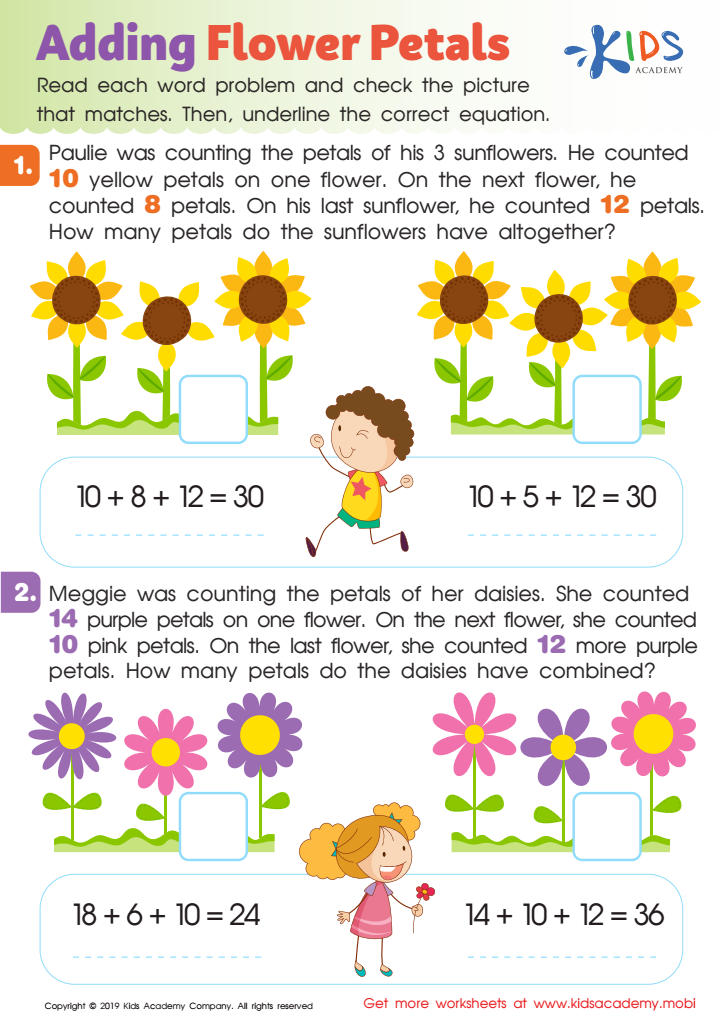
Adding Flower Petals Worksheet
 Assign to My Students
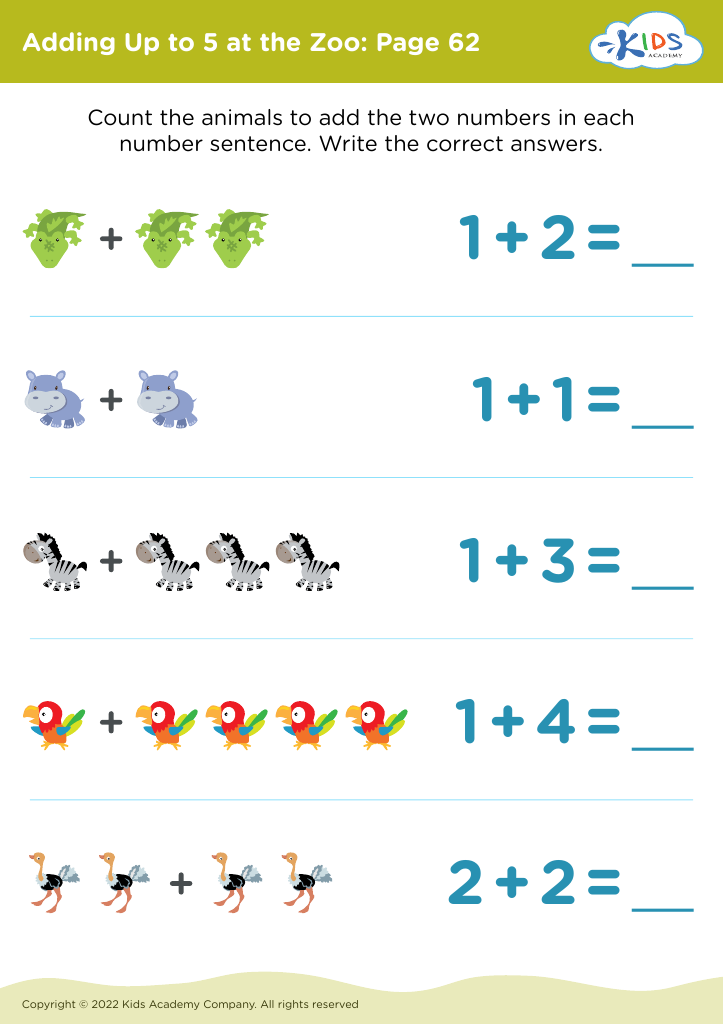
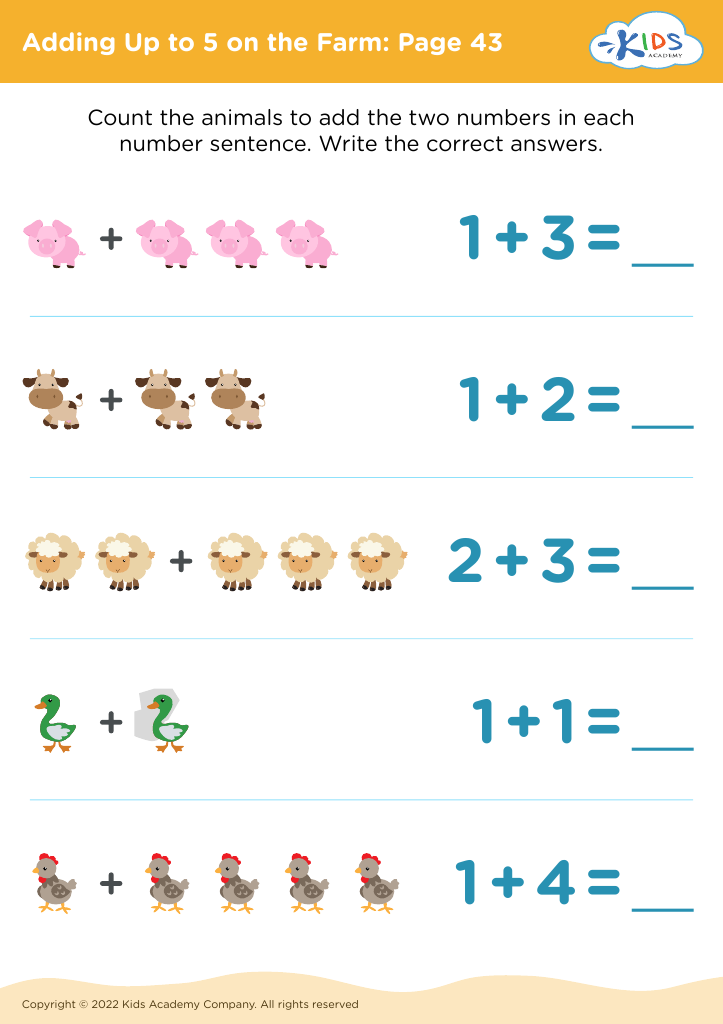








Numeracy development, especially in relation to addition for children aged 3-7, is crucial for several reasons. First, foundational mathematical skills are essential as they set the stage for future academic success. Early introduction to addition helps children make sense of numbers and develop problem-solving skills. At this age, children are naturally curious, eager to learn, and capable of grasping mathematical concepts through engaging activities.
Moreover, addition is not solely an academic task; it enhances critical thinking and logical reasoning. As children practice addition, they learn to recognize patterns, make connections, and develop resilience when faced with challenges. This cognitive growth is linked to better outcomes not only in math but across all subjects.
Additionally, numeracy supports everyday life skills, such as managing money, cooking, or planning activities, fostering independence as they grow. Parents and teachers can promote a positive attitude towards math by incorporating it into fun, everyday experiences, making learning enjoyable rather than a chore.
Lastly, strong numeracy skills contribute to a child’s confidence and self-perception as a learner, influencing their attitude towards education. Investing in early addition skills thus paves the way for lifelong learning and success in an increasingly numeric world.








