Numerical problem solving Addition Worksheets for Ages 3-7
3 filtered results
-
From - To
Boost your child's math skills with our engaging Numerical Problem Solving Addition Worksheets, designed specifically for children ages 3-7. These worksheets provide a fun and interactive way to introduce young learners to basic addition concepts through real-life scenarios and colorful illustrations. As children solve these problems, they will enhance their critical thinking, improve number comprehension, and develop essential problem-solving abilities. Perfect for parents, teachers, and caregivers, our resources can be easily printed and used at home or in the classroom. Start your child's mathematical journey today and watch them gain confidence in addition skills while enjoying the learning process!
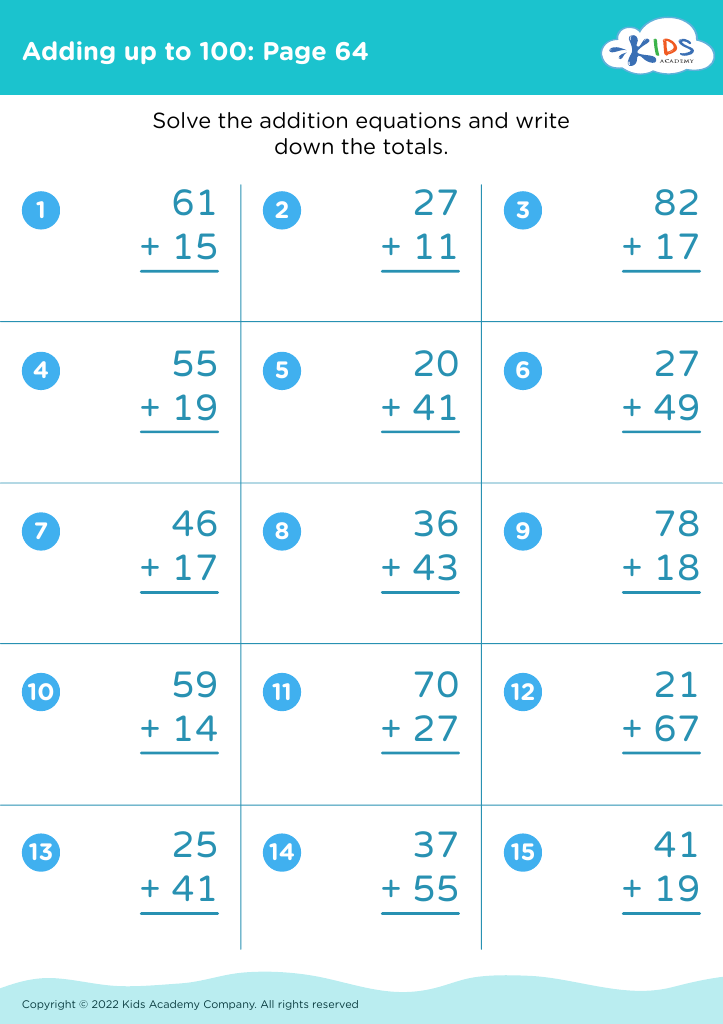
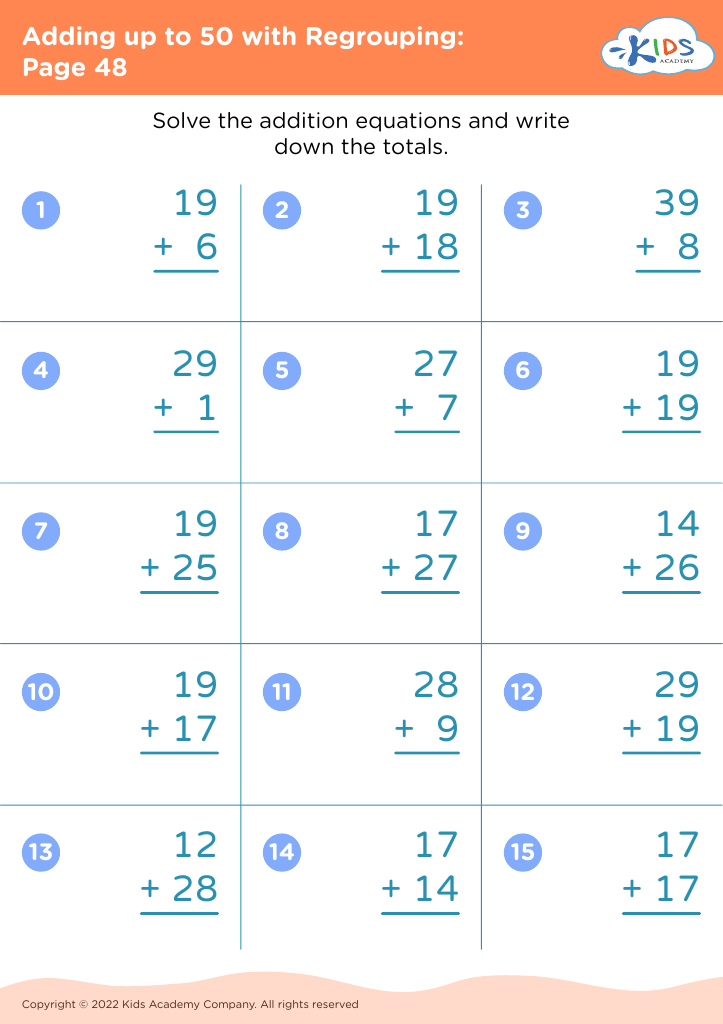
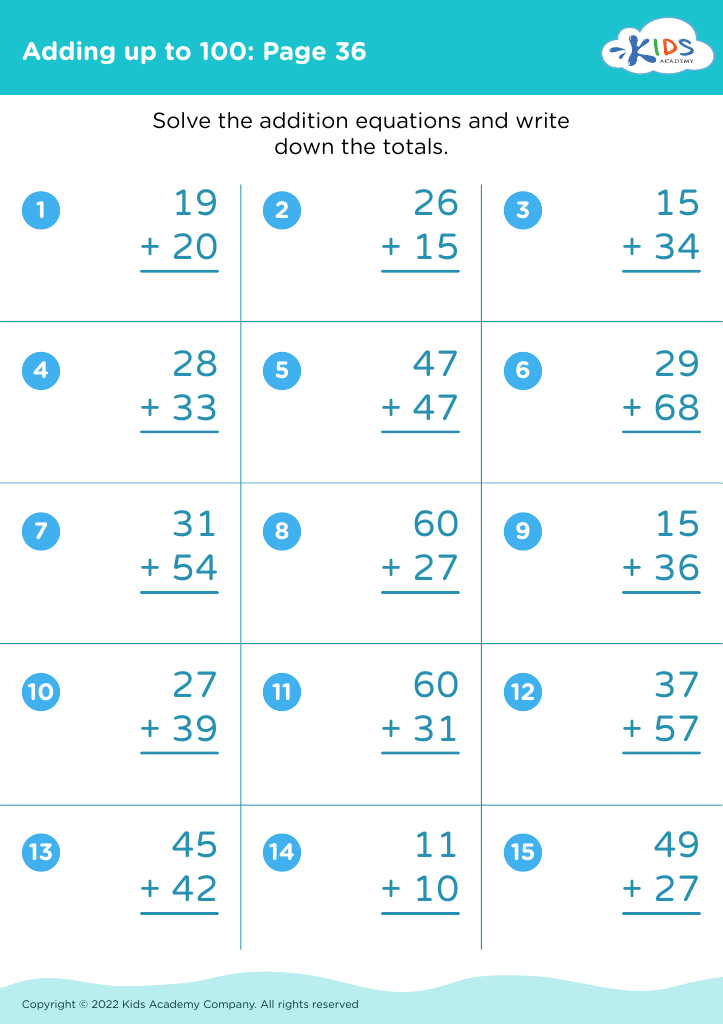








Numerical problem-solving in addition for children aged 3-7 is crucial for several reasons. First, it lays the foundation for essential math skills. Mastery of addition forms the backbone for more advanced mathematical concepts like subtraction, multiplication, and division. Learning to solve numerical problems helps children develop critical thinking and analytical skills, as they learn to evaluate various strategies to reach a solution.
Additionally, these early math experiences can boost children's confidence and instill a positive attitude towards learning. Engaging in fun and interactive problem-solving activities fosters a love for numbers, decreasing math anxiety as they progress. These skills are not only academic; they also cultivate social competencies. Children often learn to work collaboratively during math activities, enhancing their communication and teamwork abilities.
Moreover, developing numeracy skills early can lead to better academic outcomes and increased opportunities in education. Understanding and coping with basic addition sets a tone for lifelong learning and adaptability in an increasingly numerate world. Hence, parents and teachers should prioritize numerical problem-solving in addition to help children build essential skills, confidence, and a strong mathematical foundation for future success.








