
Practice division Addition Worksheets for Ages 3-7
3 filtered results
Difficulty Level
Grade
Age
-
From - To
Subject
Activity
Standards
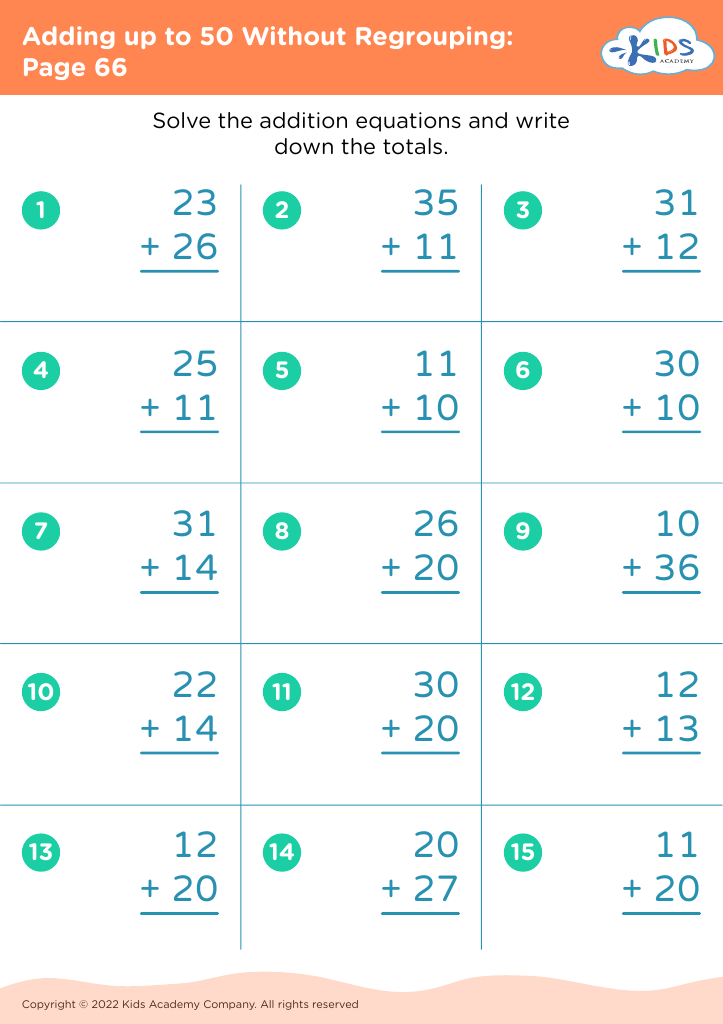
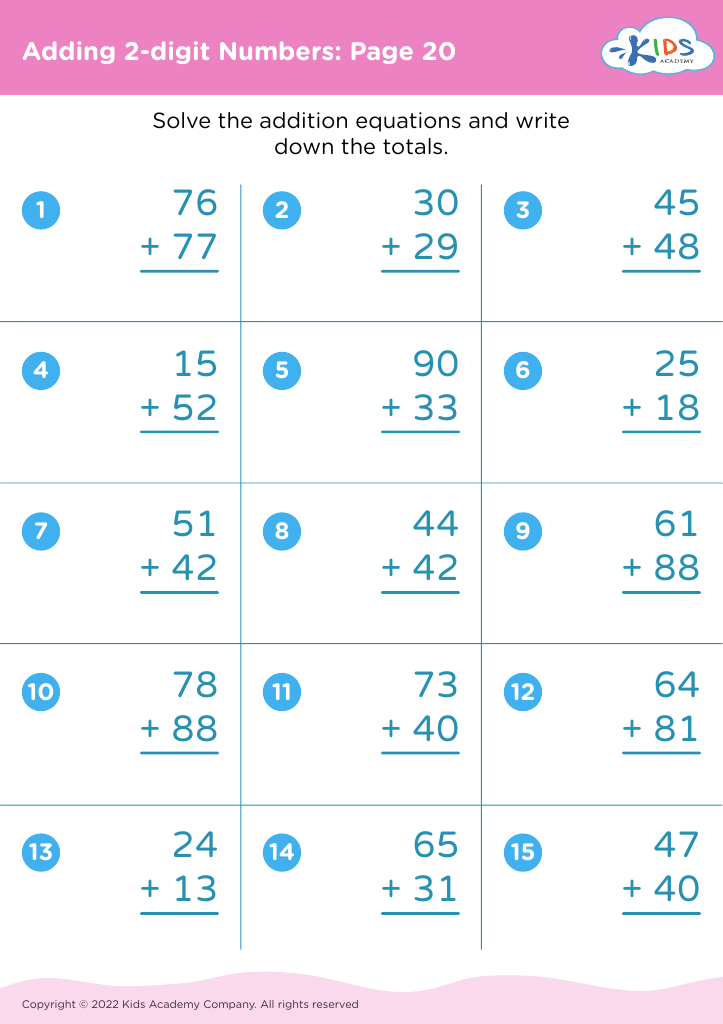
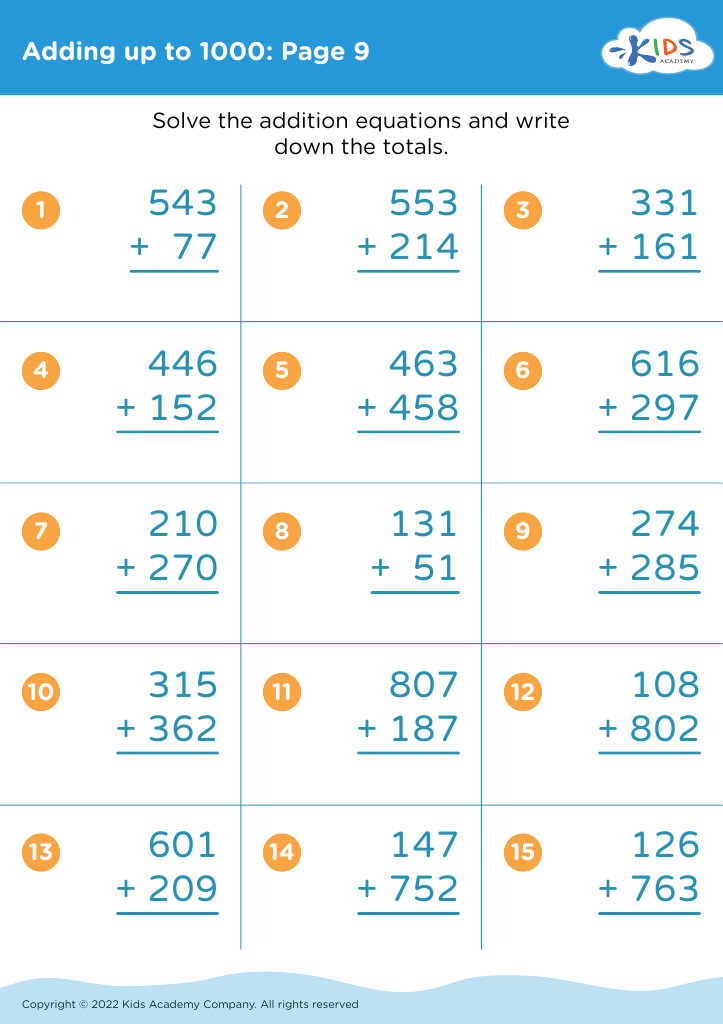
Empower your child's arithmetic skills with our "Practice Division Addition Worksheets for Ages 3-7." These engaging and colorful worksheets are designed to introduce young learners to the basics of addition through fun, interactive exercises. Perfect for preschool to second-grade students, these worksheets help develop essential math skills while sparking a love for learning. With kid-friendly themes and age-appropriate challenges, your child will find math practice enjoyable. Download and print from Kids Academy to support your child's educational journey and watch them build a strong foundation in math with confidence and excitement.
Favorites
With answer key
Interactive
Join Kids Academy for Free
Who is primarily going to use this learning content?








Introducing young children, ages 3-7, to basic math concepts like addition and division can be incredibly beneficial and lay a strong foundation for future learning. At this early age, children's brains are developing at an unprecedented rate, making it the perfect time to instill essential cognitive skills.
First, practicing addition helps young kids develop their number sense, which is the ability to understand numbers and their relationships. This is foundational for not just math learning but also everyday problem-solving skills. Through addition, children also learn to count and understand one-to-one correspondence, which are crucial skills in early mathematics.
As for introducing the concept of division, even in its simplest forms, it helps children understand the idea of sharing and grouping, essential aspects of real-world applications. Though formal division might be complex for very young children, embracing it through activities like sharing toys or dividing treats can make the concept relatable and understandable.
Moreover, engaging in these math activities enhances critical thinking skills and boosts confidence. Kids who start early with math tend to perform better academically in the long run. This early exposure also fosters a positive attitude towards math, counteracting any potential future anxiety about the subject.
Investing time now to teach addition and introduce basic division can set children on a path toward academic success and practical life skills.








