Problem-Solving Skills Addition Worksheets for Ages 3-7 - Page 6
147 filtered results
-
From - To
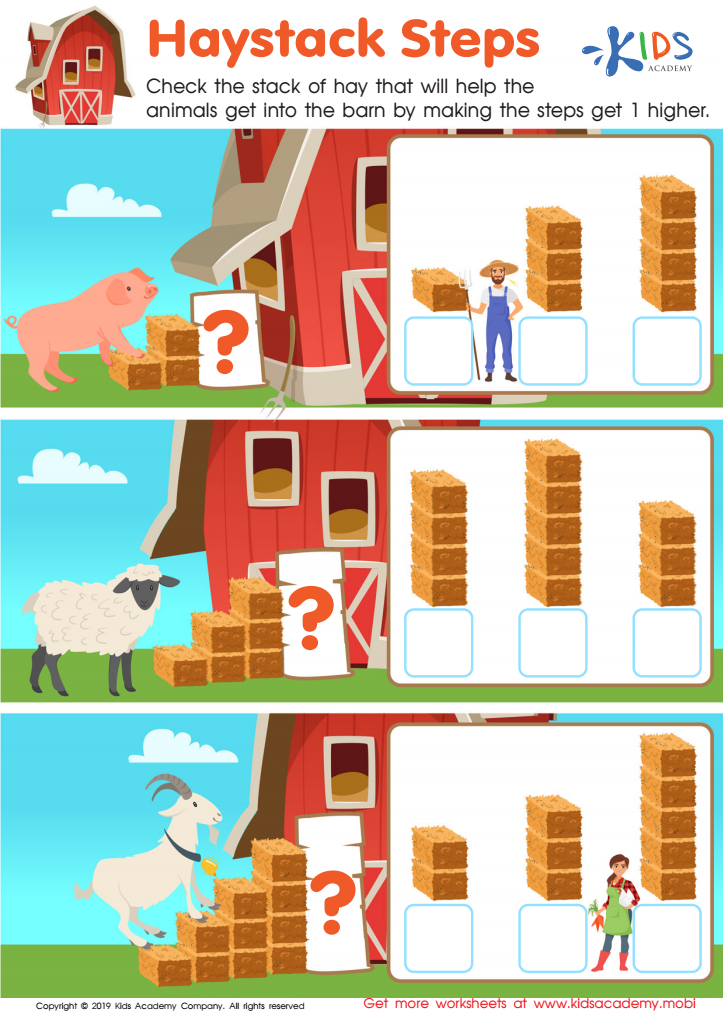
Haystack Steps Worksheet
 Assign to My Students
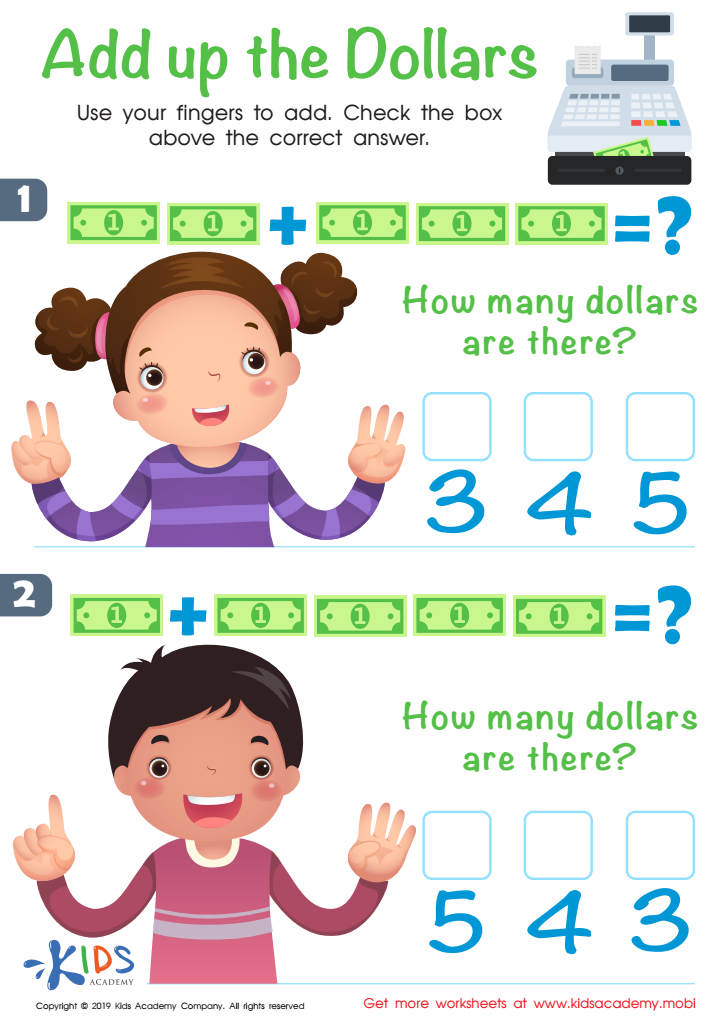
Add up the Dollars Worksheet
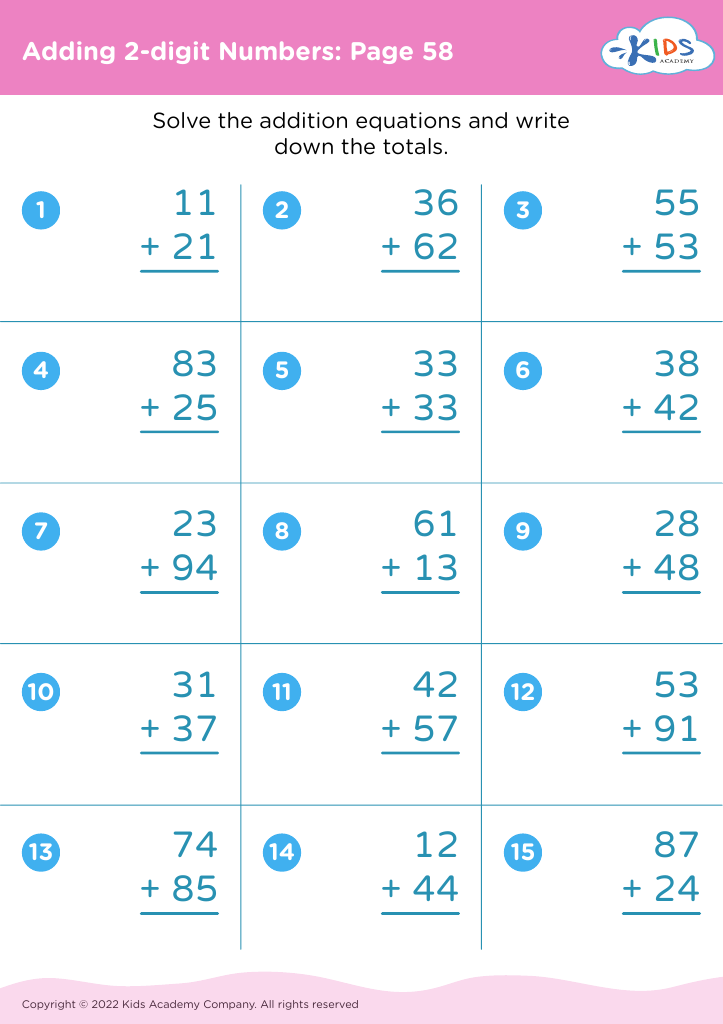
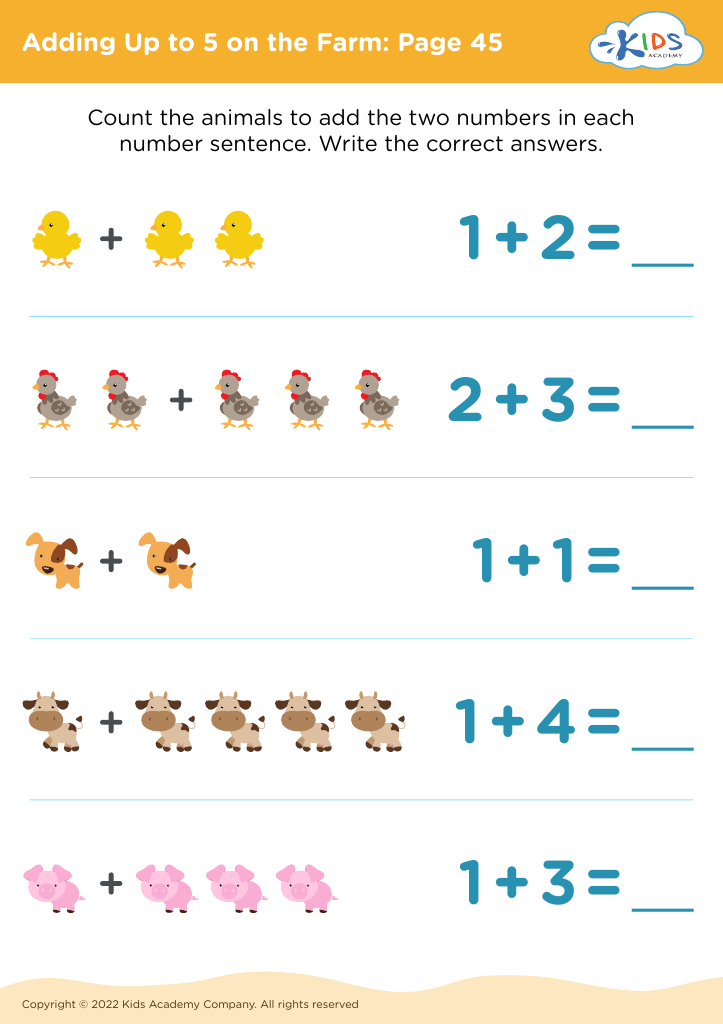
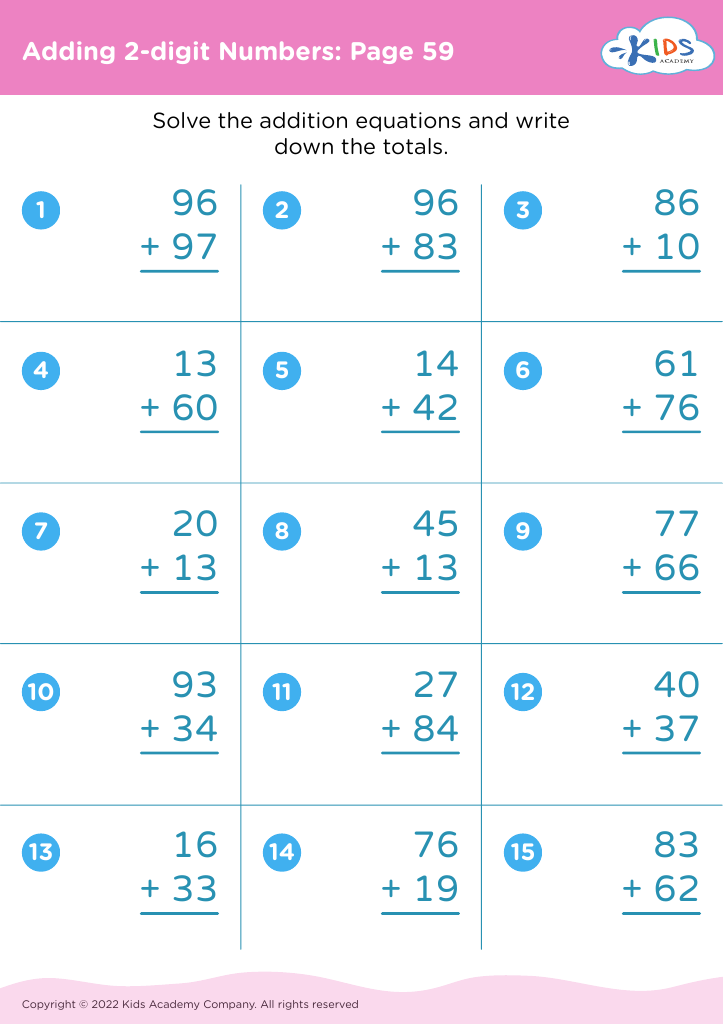
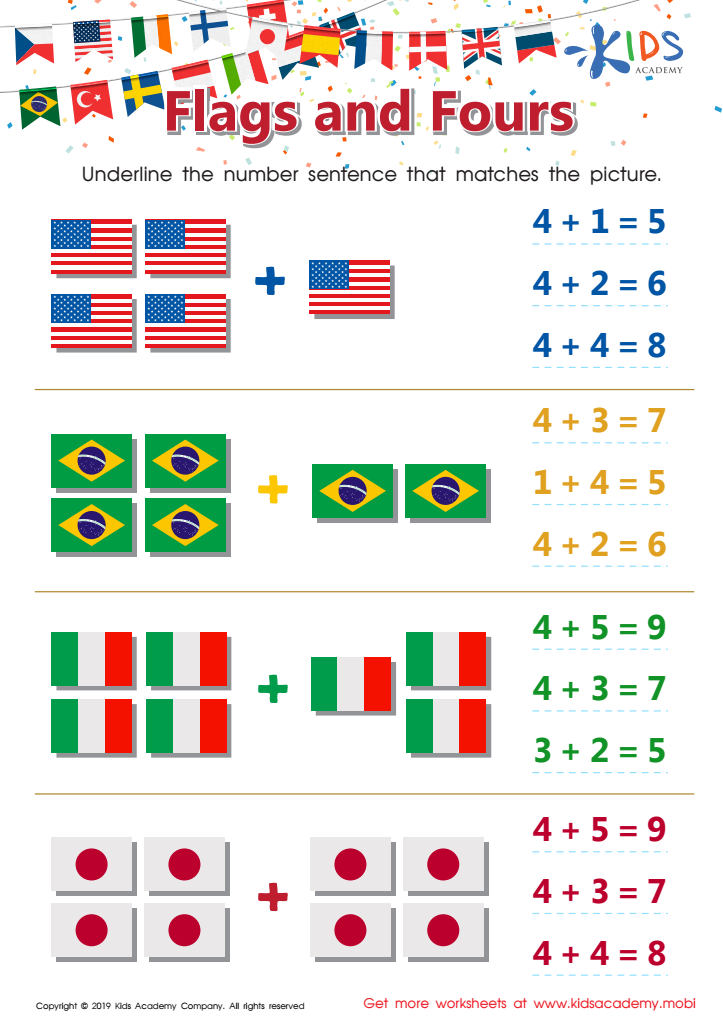
Flags and Fours Worksheet
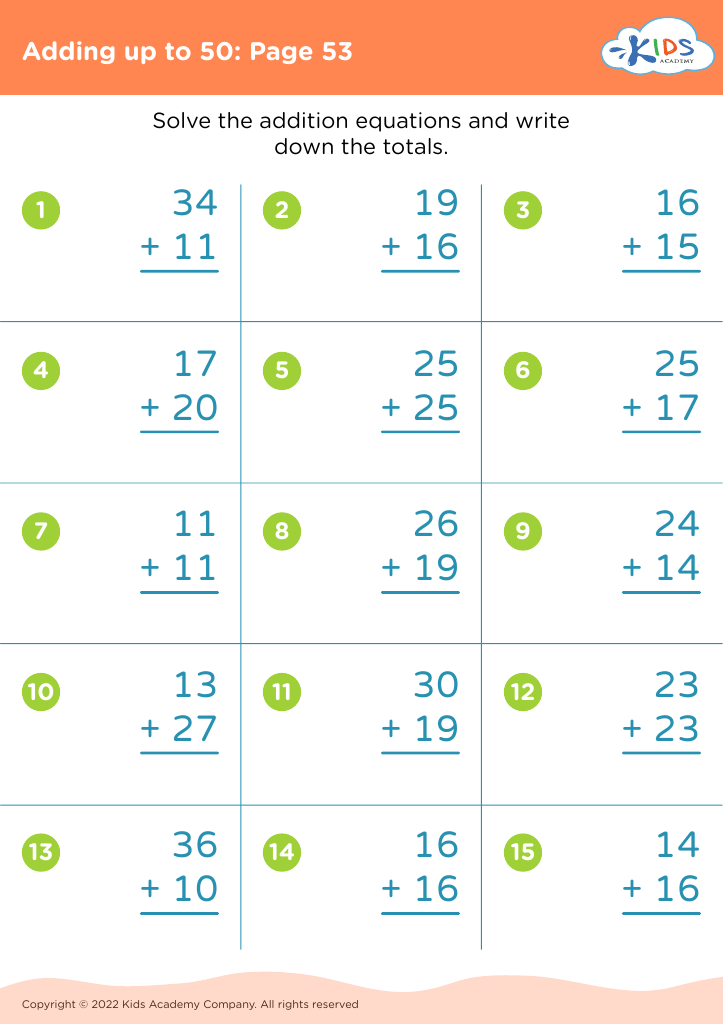
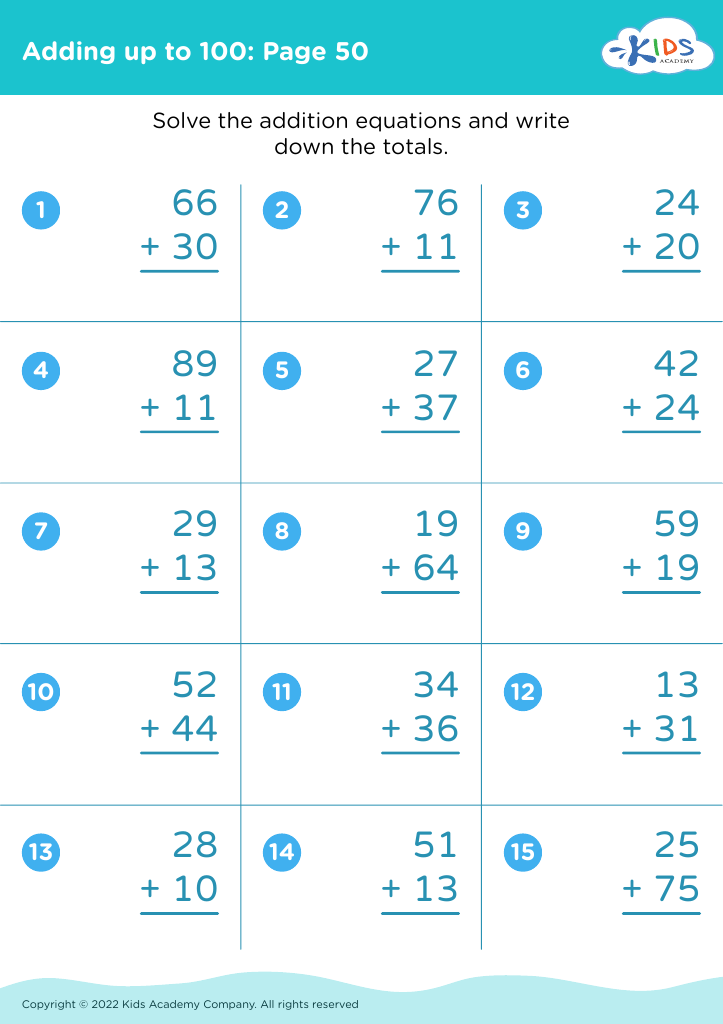
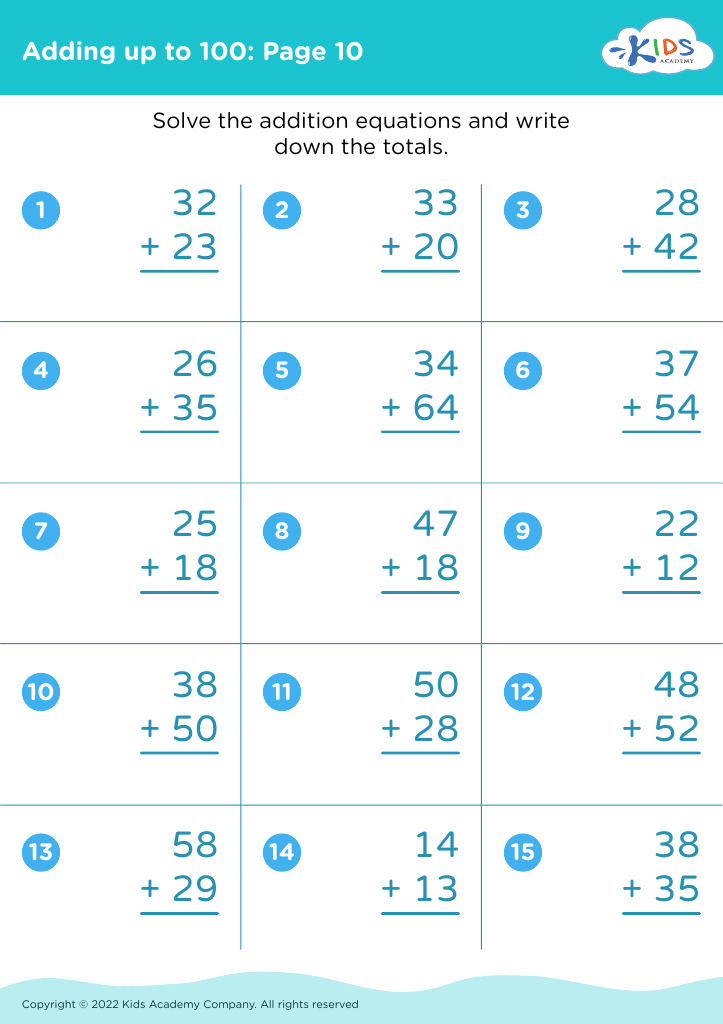
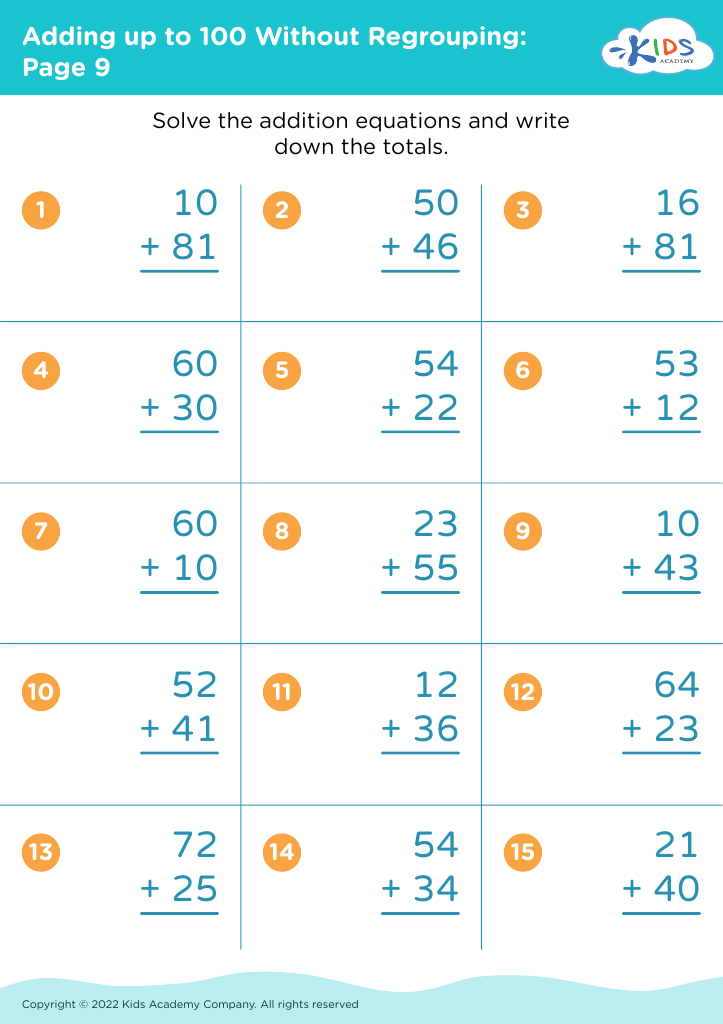








Problem-solving skills are essential for young children aged 3-7 as they form the foundation for critical thinking and social development. At this age, children encounter various situations that require them to identify problems, explore possible solutions, and make decisions. Enhancing problem-solving skills through activities like addition not only helps in developing mathematical abilities but also cultivates resilience and creativity.
When parents and teachers engage children in addition-focused problem-solving activities, they encourage exploration and reasoning. For instance, using physical objects like blocks or counters to solve addition problems fosters hands-on learning, enabling children to visualize mathematical concepts and improve their cognitive skills. This approach transforms learning into an enjoyable experience, motivating children to tackle challenges with confidence.
Additionally, these skills extend beyond mathematics. Children learn to collaborate with peers, express their thoughts, and accept feedback. Such teamwork and communication skills are crucial for their future social interactions and academic success. Consequently, by prioritizing problem-solving skills in relation to addition, parents and teachers not only strengthen foundational math competencies but also equip children with life skills that will benefit them as they grow.








