Reading comprehension Addition Worksheets for Ages 3-7 - Page 2
39 filtered results
-
From - To
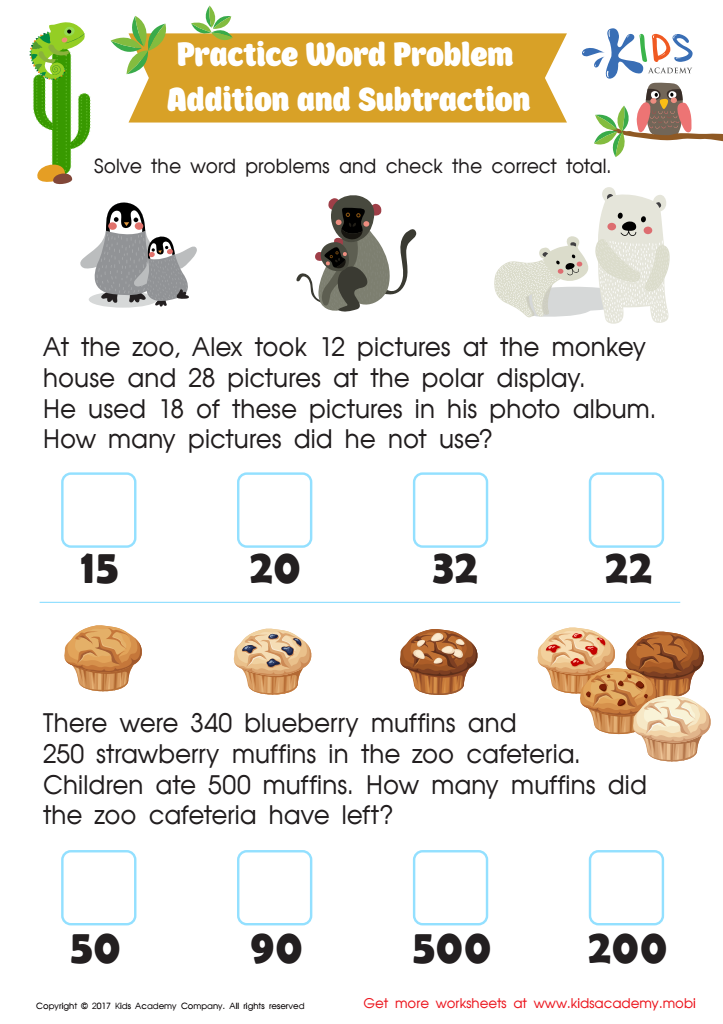
Addition and Subtraction: Word Problems Worksheet
 Assign to My Students
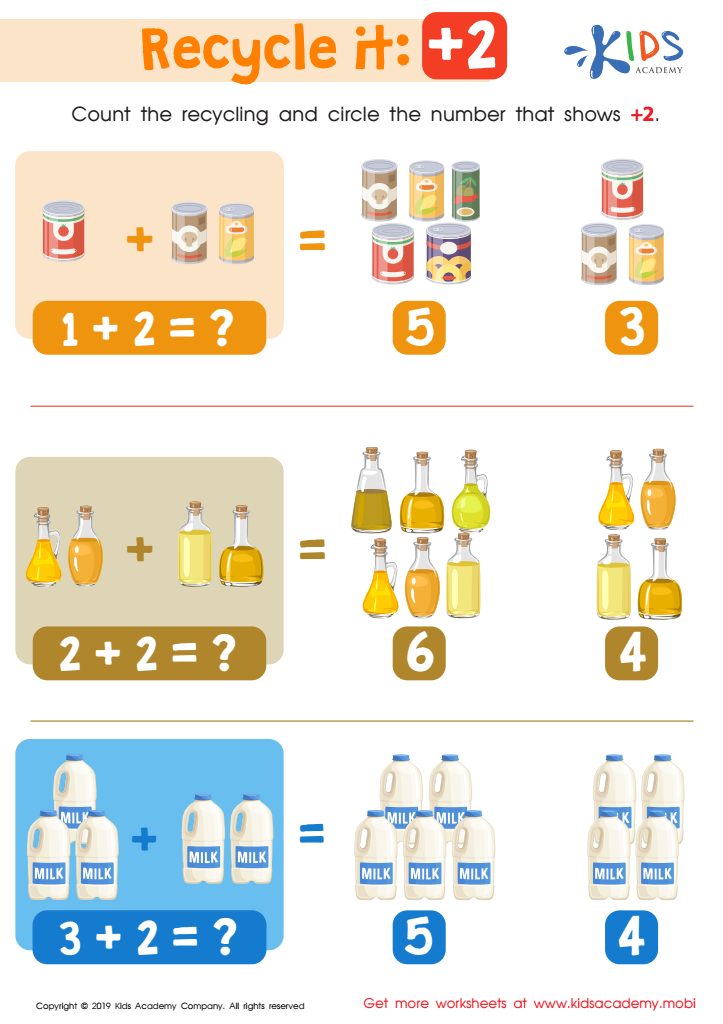
Recycle It: +2 Worksheet








Parents and teachers should prioritize reading comprehension in children ages 3-7 because it lays the foundation for their overall academic success and lifelong learning. During these formative years, children's cognitive abilities and language skills are rapidly developing. By focusing on reading comprehension, adults can help children understand the meaning of stories, improve vocabulary, and develop critical thinking skills.
Early reading comprehension supports emotional and social development as well. Children who can engage with and understand narratives can relate better to their peers and navigate social situations more effectively. It fosters empathy as they explore diverse characters and experiences in stories.
Moreover, strong reading comprehension skills are pivotal for future learning across subjects, influencing their ability to interpret instructions, engage in science experiments, or decode math story problems. When children grasp the content and context of what they read, they become more motivated learners.
Engaging in activities like reading aloud, asking questions, and discussing stories nurtures a child's interest in literature and encourages a love for reading. By nurturing these skills early, parents and teachers become vital partners in cultivating competent, confident learners who can thrive academically and navigate the complexities of the world around them.








