Recognizing Patterns Addition Worksheets for Ages 3-7
21 filtered results
-
From - To
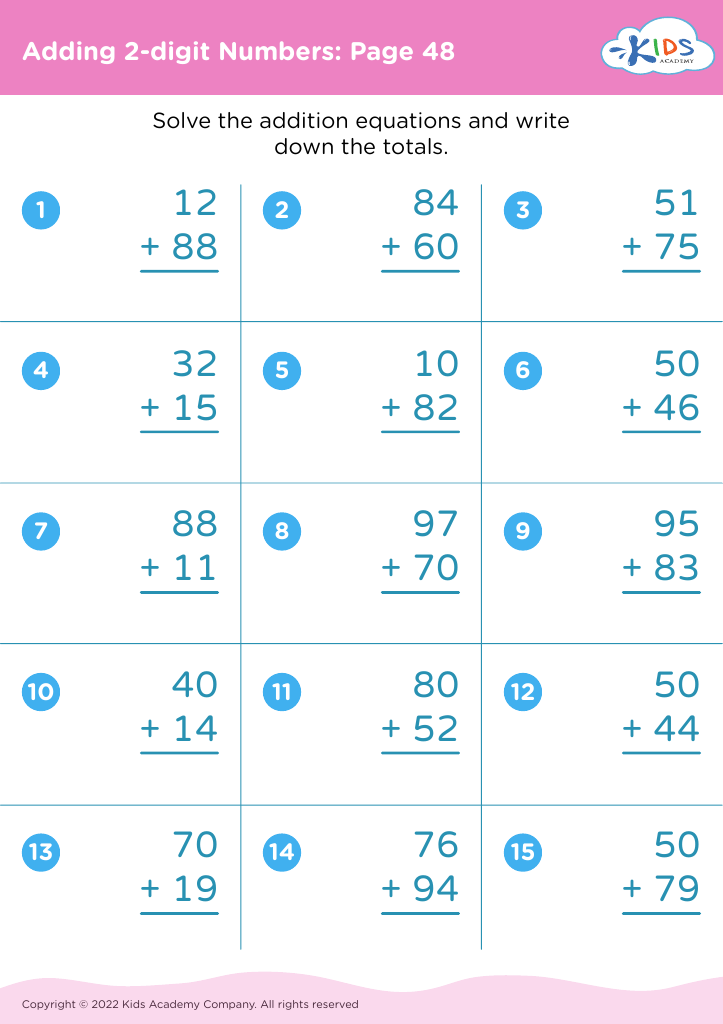
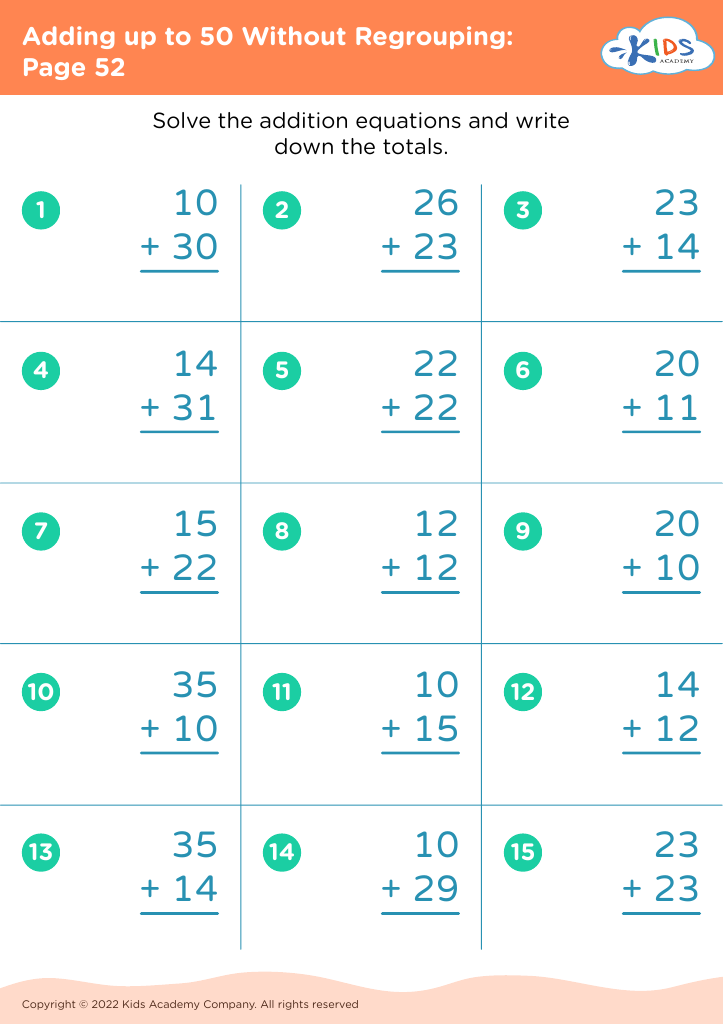
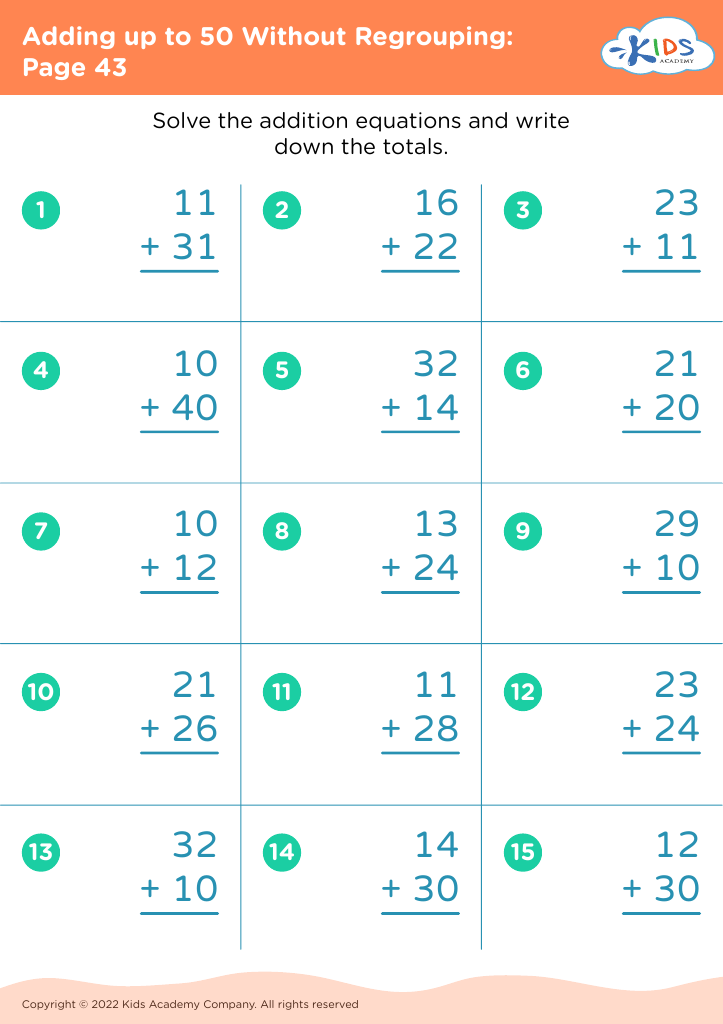
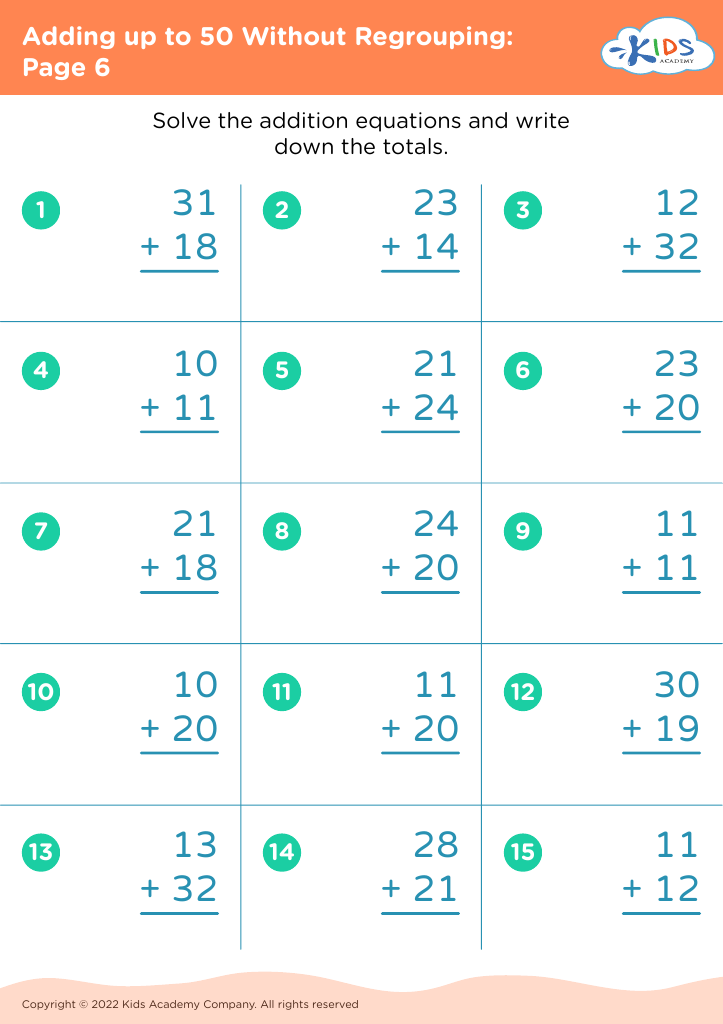
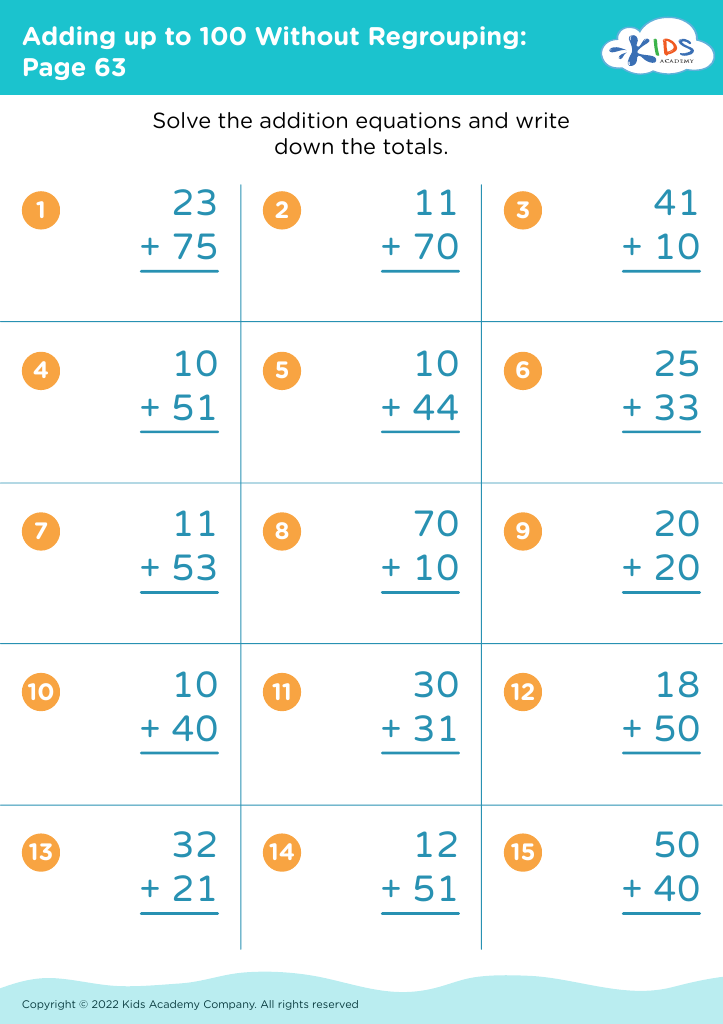
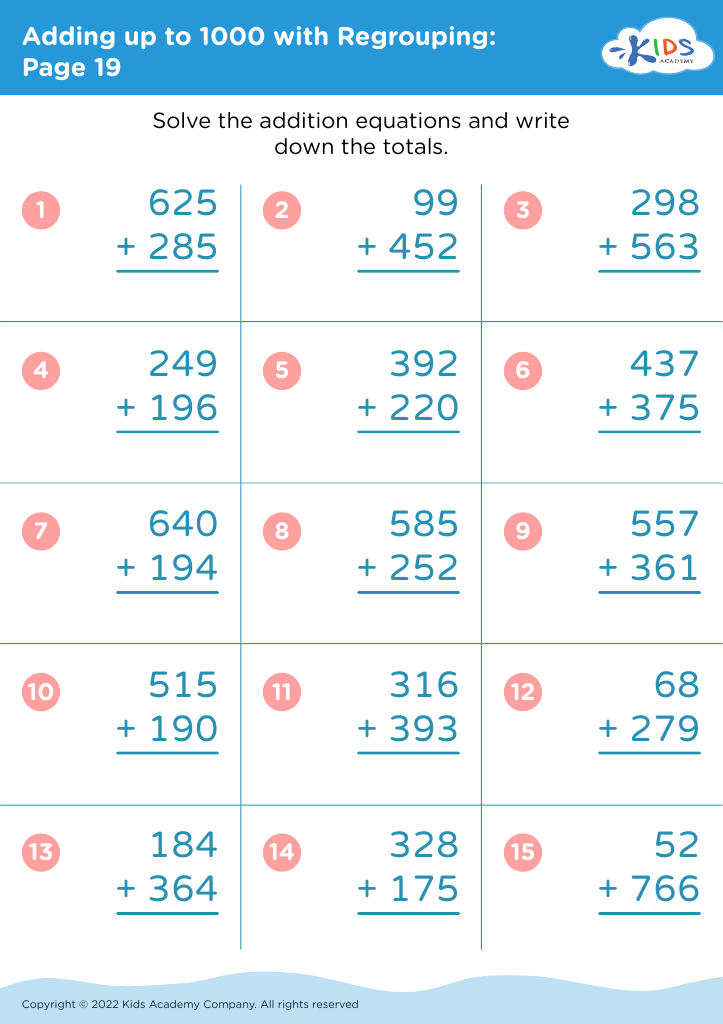
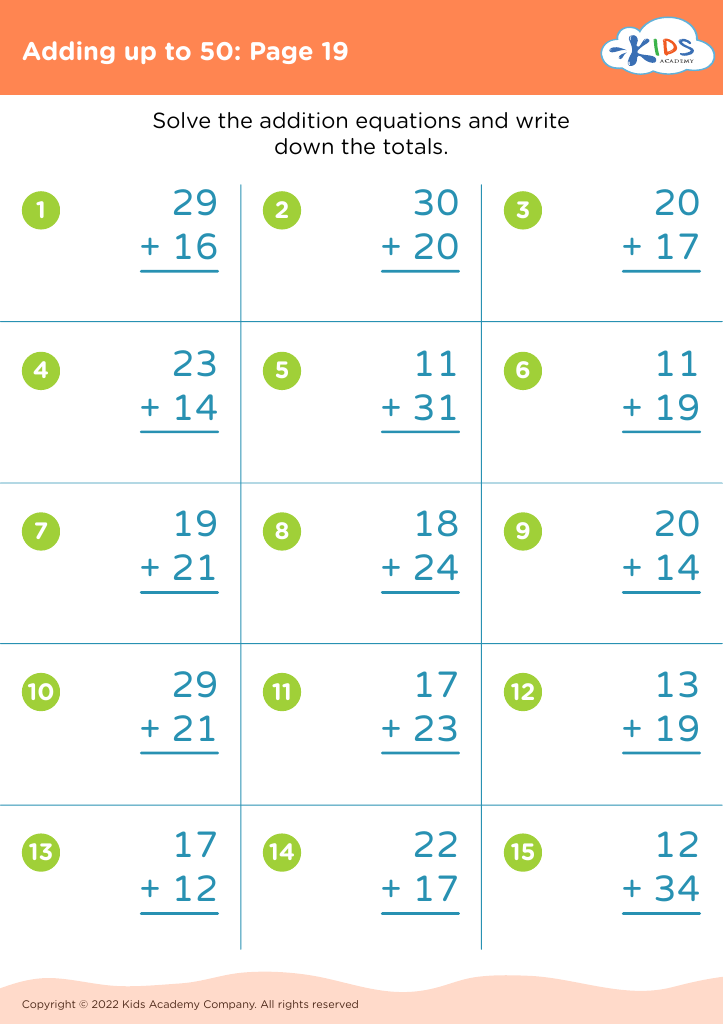
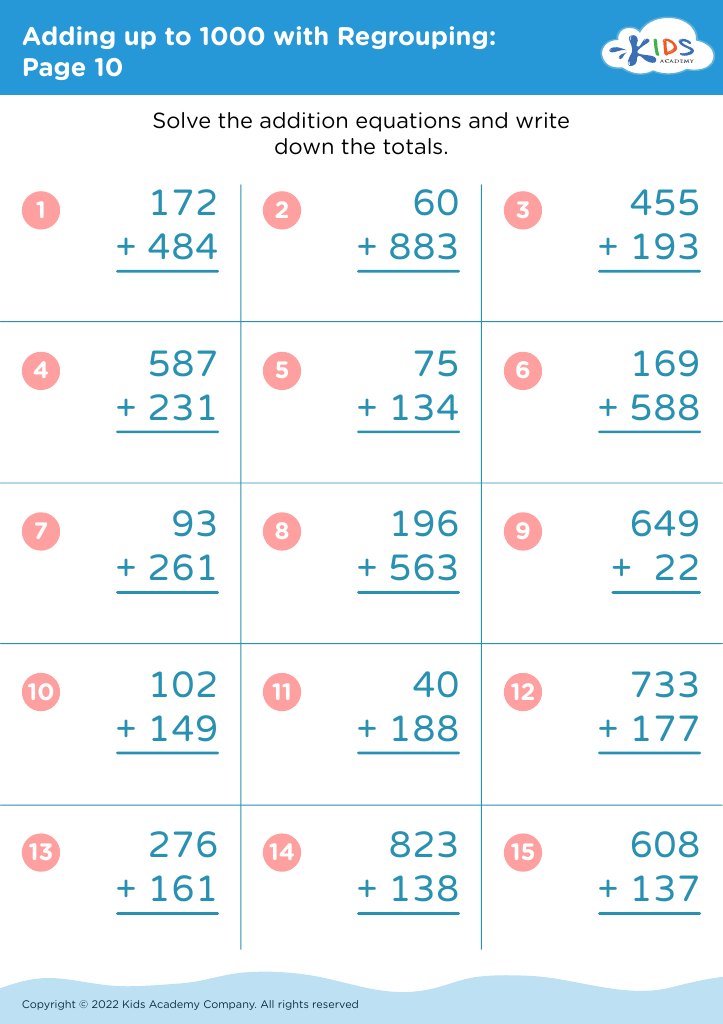
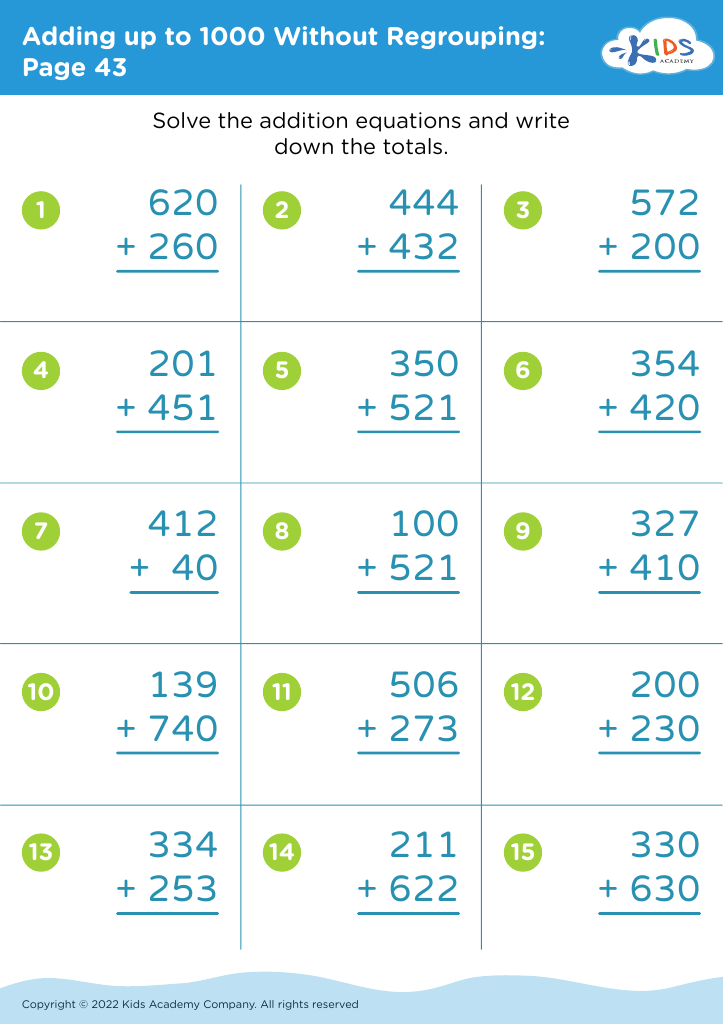
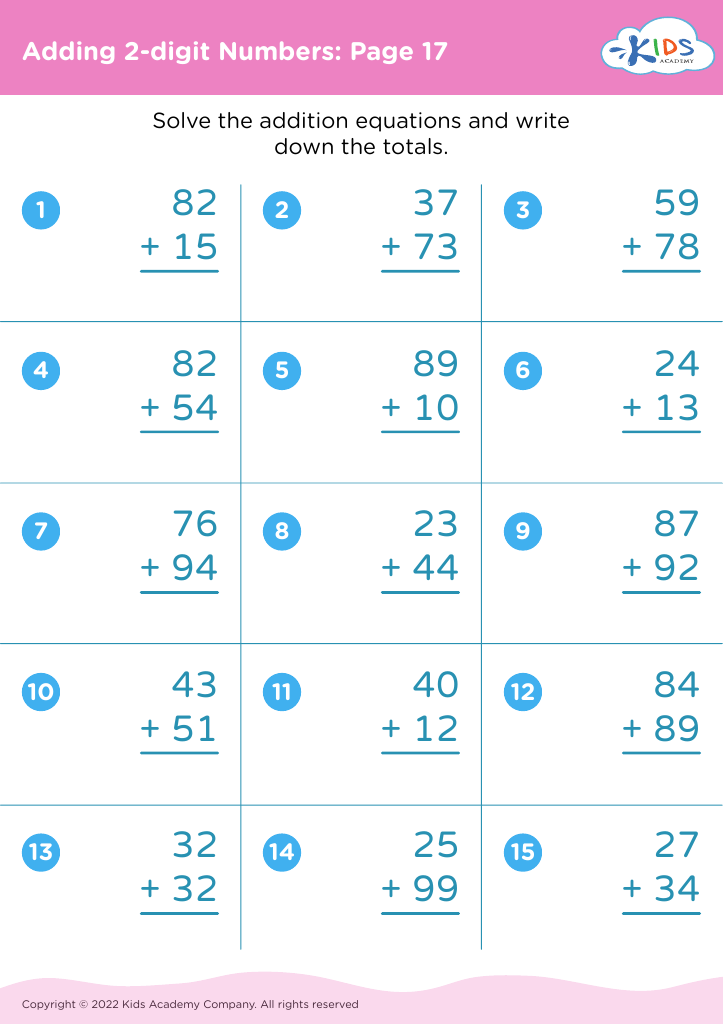
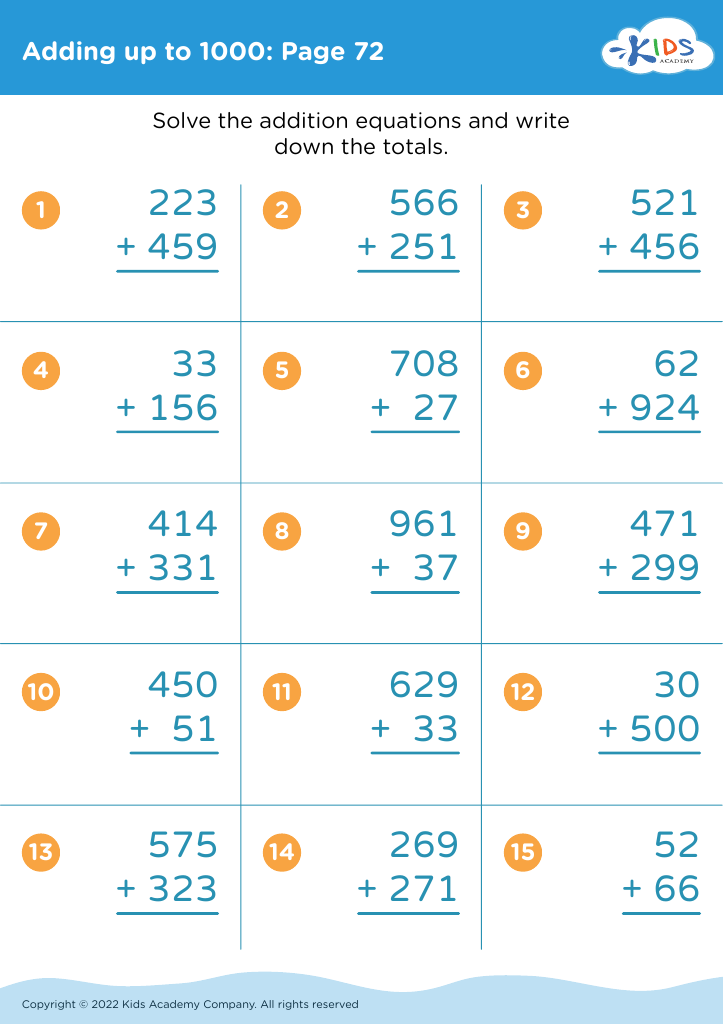
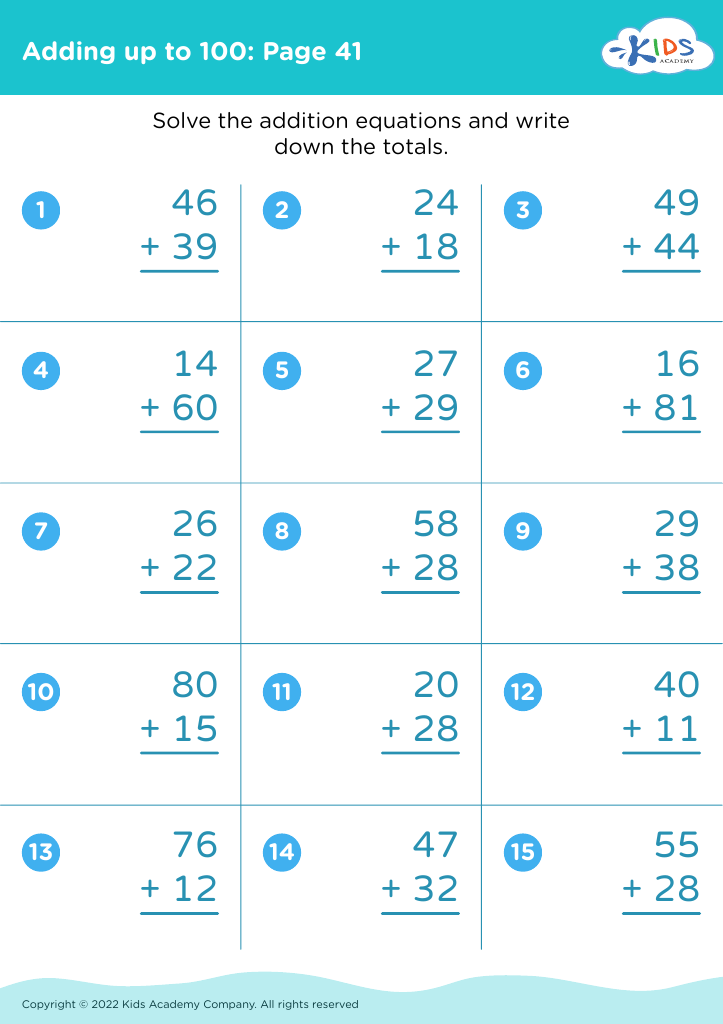
Unlock your child's mathematical potential with our Recognizing Patterns Addition Worksheets for Ages 3-7! Specially designed for young learners, these engaging worksheets blend fun and education to help children master addition through visual patterns. With vibrant illustrations and intuitive exercises, kids will develop essential early math skills while boosting their cognitive abilities and pattern recognition. Perfect for both classroom and home use, our worksheets cater to various learning styles, ensuring every child stays motivated and confident in their mathematical journey. Inspire a love for math and watch your child flourish with our expertly crafted addition worksheets!
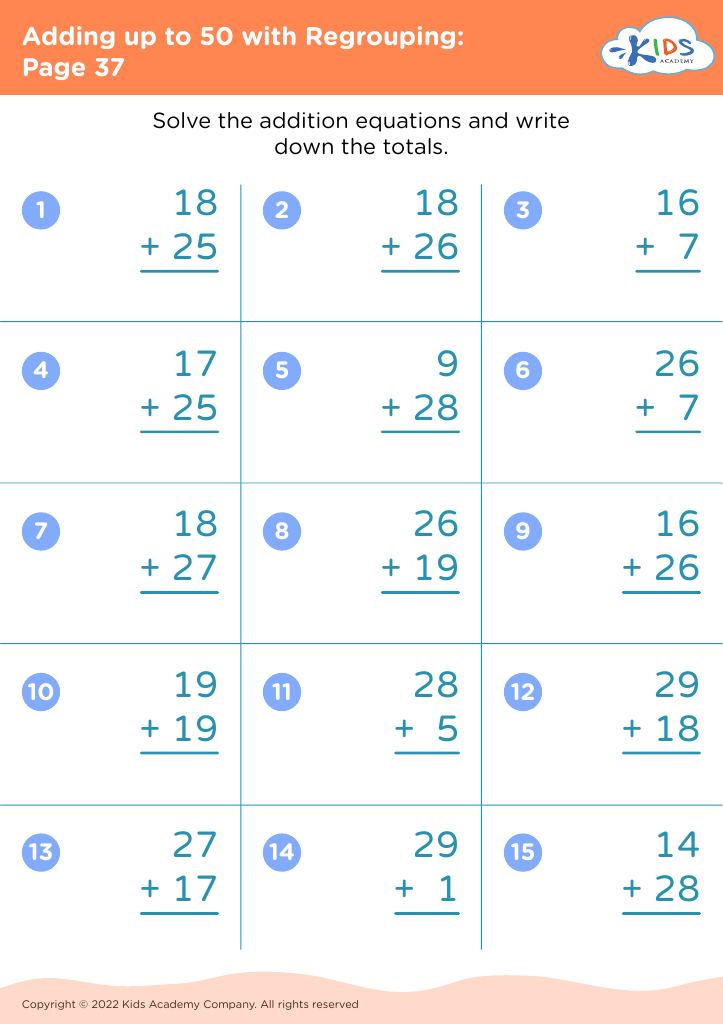
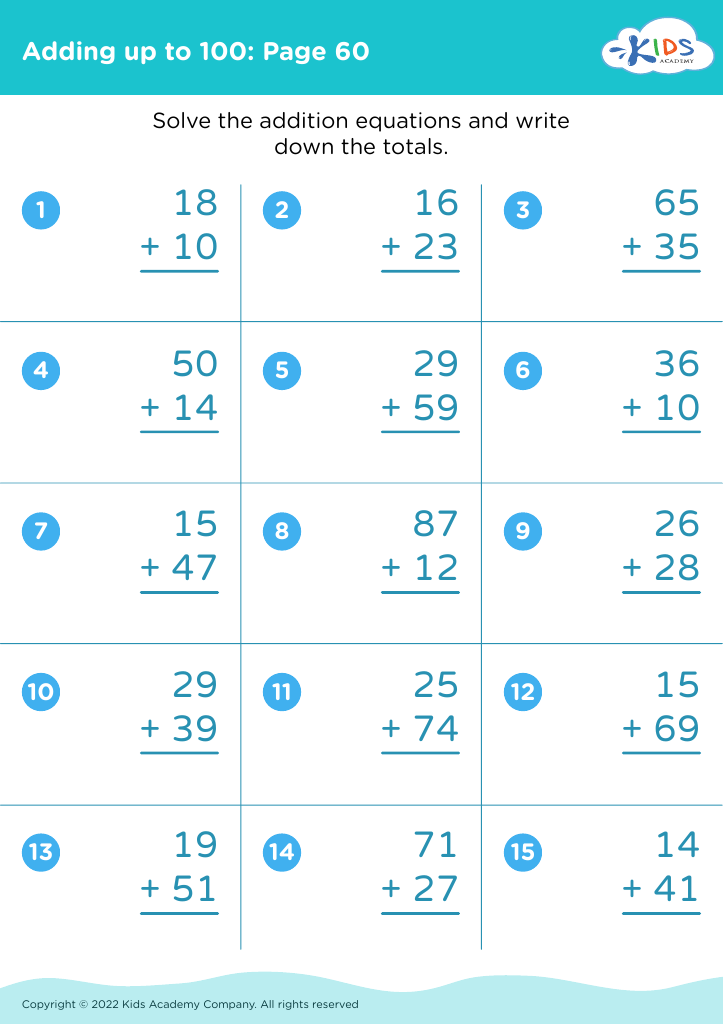
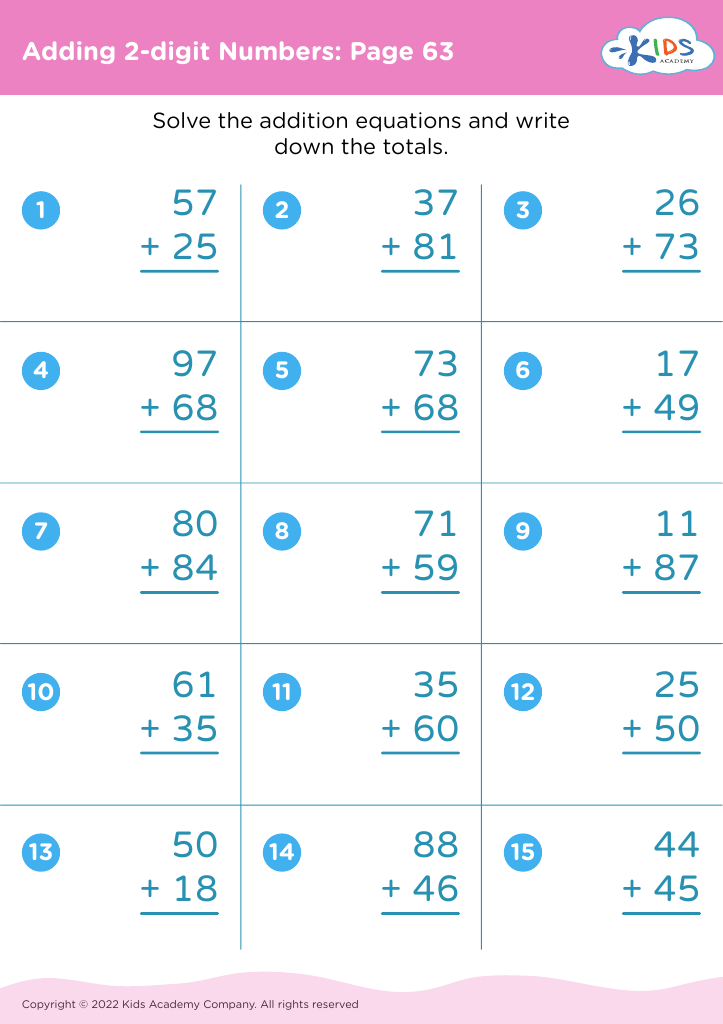
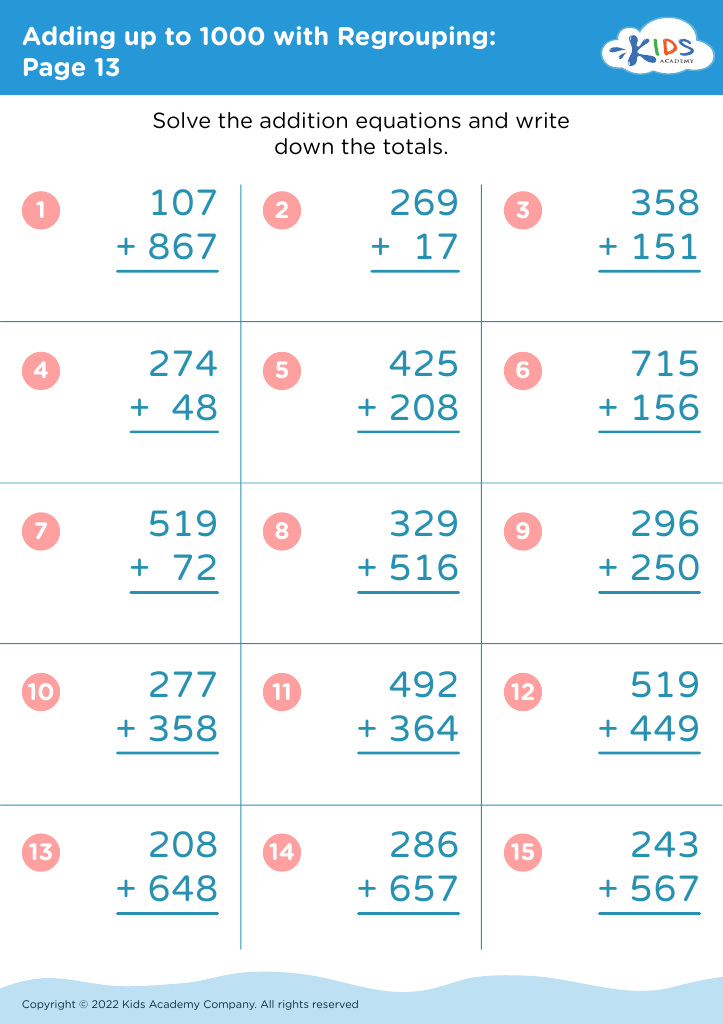
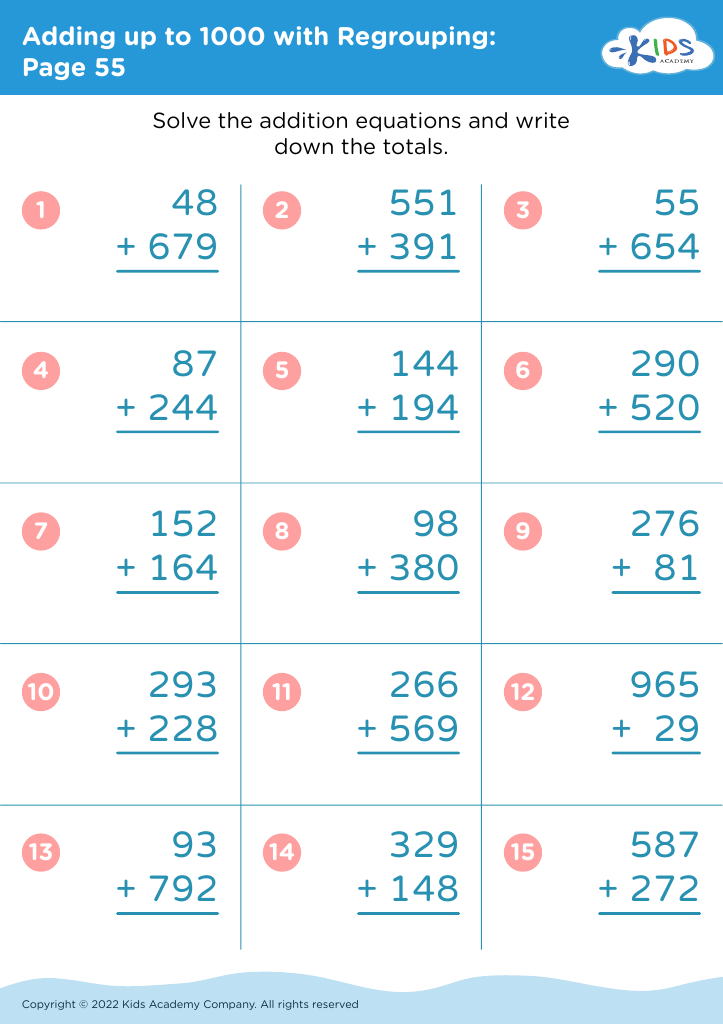
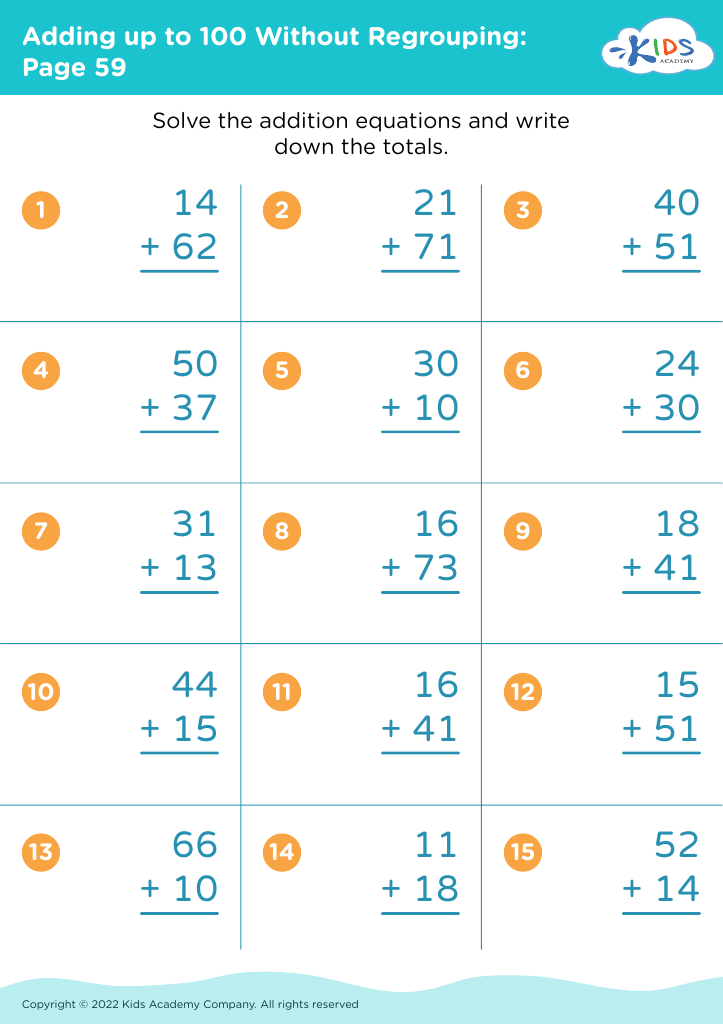
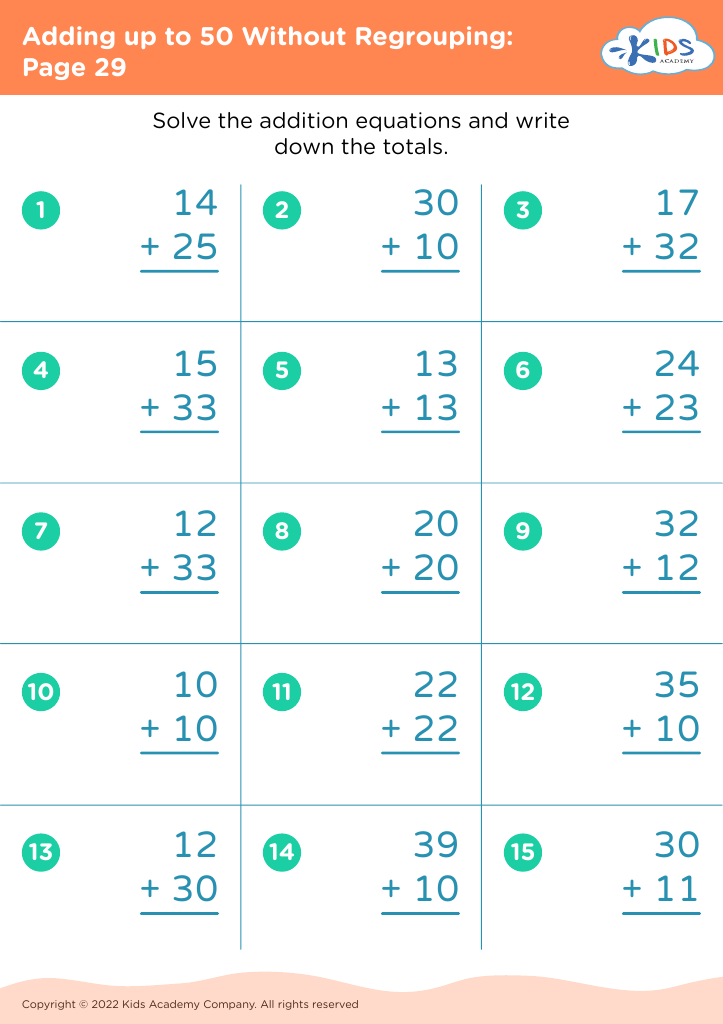
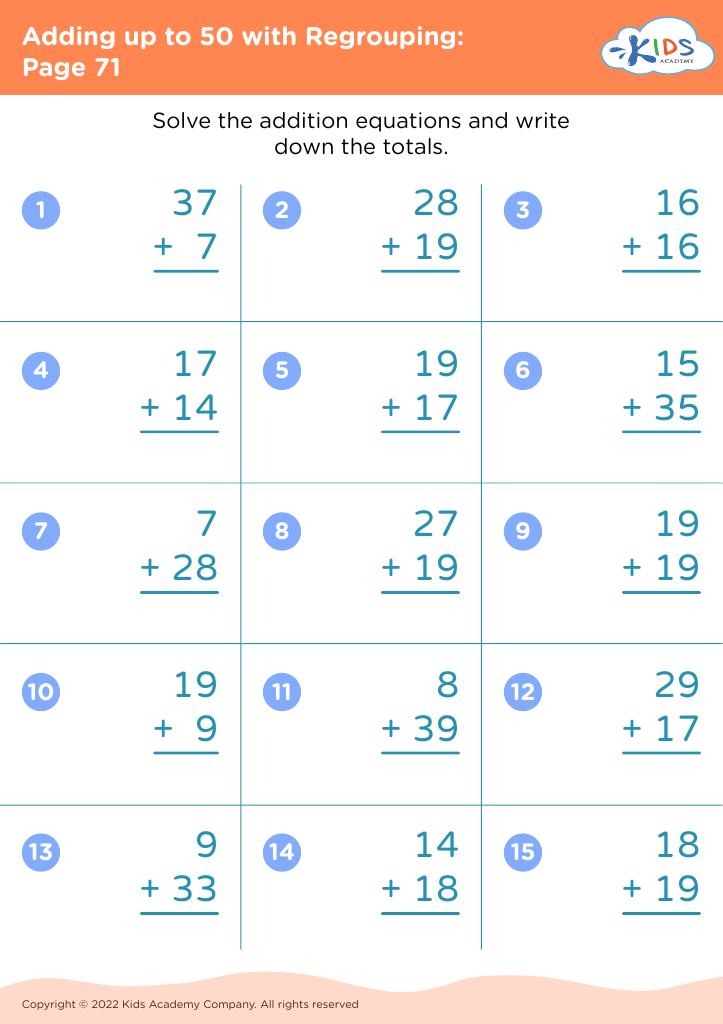
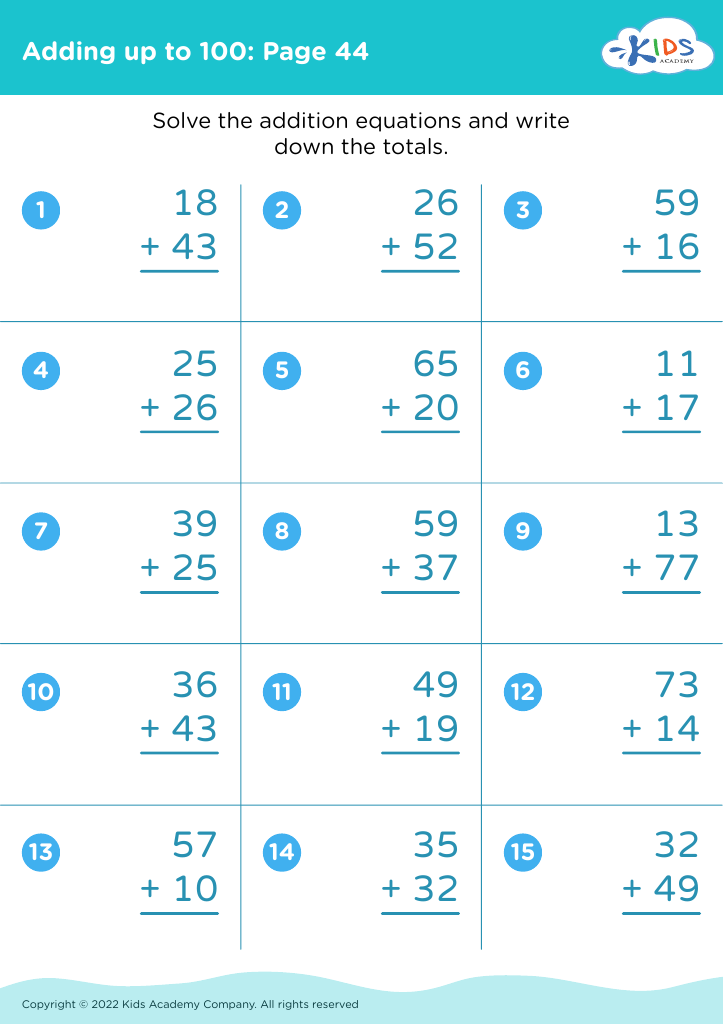








Recognizing patterns and addition at an early age, specifically ages 3-7, is crucial for the cognitive and academic development of children and should be a priority for both parents and teachers. During these formative years, children's brains are rapidly developing, and introducing concepts like patterns and addition can enhance their logical thinking, problem-solving abilities, and numeracy skills.
Understanding patterns helps children make predictions, find order in chaos, and develop a sense of sequence, all of which are foundational skills not just in math, but across many learning areas. When children recognize patterns, they can better understand relationships and structures, which will benefit them in reading, science, and even in social situations.
Incorporating basic addition builds a child's confidence and familiarity with numbers, setting a firm foundation for more advanced math concepts later on. Basic addition also enhances memory, concentration, and the ability to manipulate numbers mentally. These skills are important for everyday activities and future academic pursuits.
By recognizing the importance of these foundational skills, parents and teachers can encourage a child's curiosity and enthusiasm for learning. Through games, activities, and engaging lessons focused on patterns and simple math, we can build a solid mathematical framework, which is essential for academic success and daily life proficiency. Integrating these practices makes learning fun and stimulates an early love for mathematics, ensuring learners are well-prepared for their future education.








