Filters

20 filtered results

Clear all filters
Favorites
With answer key
Interactive

20 filtered results

Difficulty Level

Grade


Unlock young minds with our "Understanding Multiplication Addition Worksheets" for ages 3-7. These engaging worksheets from Kids Academy combine vibrant images with simple math problems to introduce the basics of multiplication through addition. Watch as your child builds confidence by linking familiar addition concepts to the foundations of multiplication, fostering a stronger grasp of early math skills. Perfect for preschoolers and early elementary students, these printable activities are designed to make learning fun and effective. Discover the joy of math together, and lay the groundwork for future arithmetic excellence with our expertly crafted worksheets.
Check out this FREE Trial Lesson on Addition for age 3-7!

Exactly the Same, or Not

Favorites
With answer key
Interactive
  • 3-7
  • Understanding multiplication
  • Addition
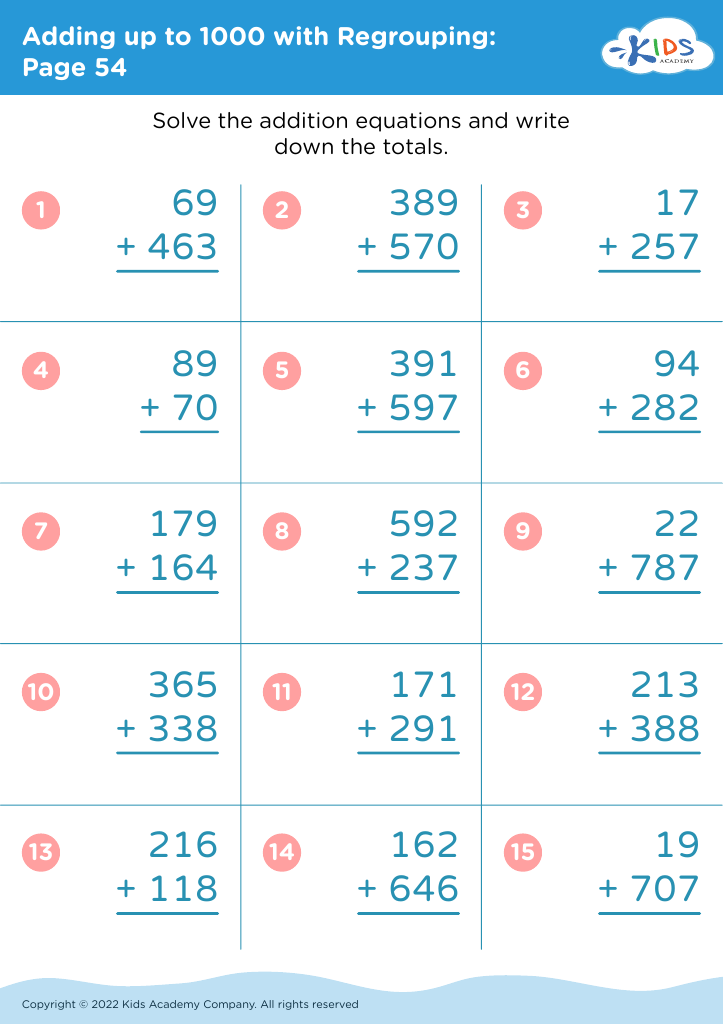
Adding up to 1000 with Regrouping: Page 54
Worksheet
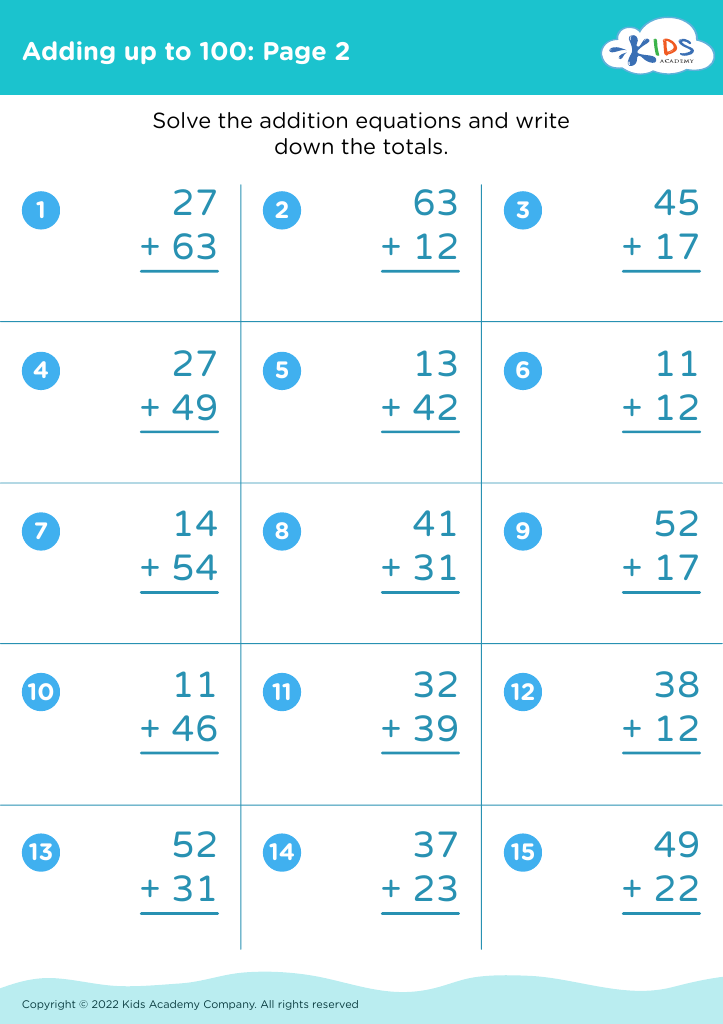
Adding up to 100: Page 2

Adding up to 100: Page 2

Adding up to 100: Page 2
Worksheet
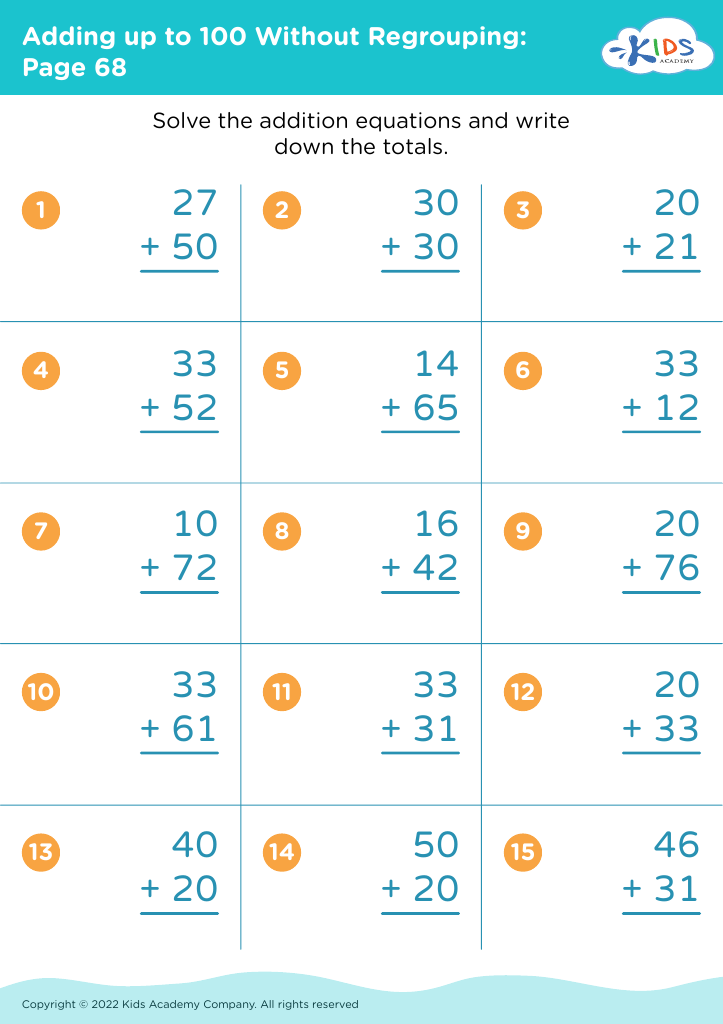
Adding up to 100 Without Regrouping: Page 68
Worksheet
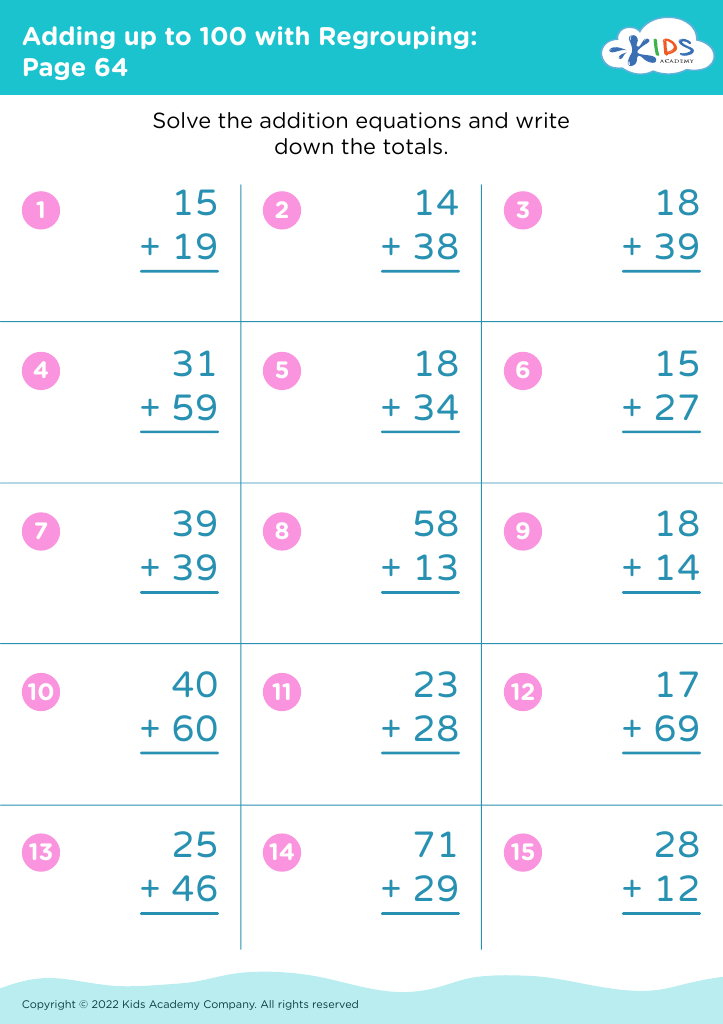
Adding up to 100 with Regrouping: Page 64
Worksheet
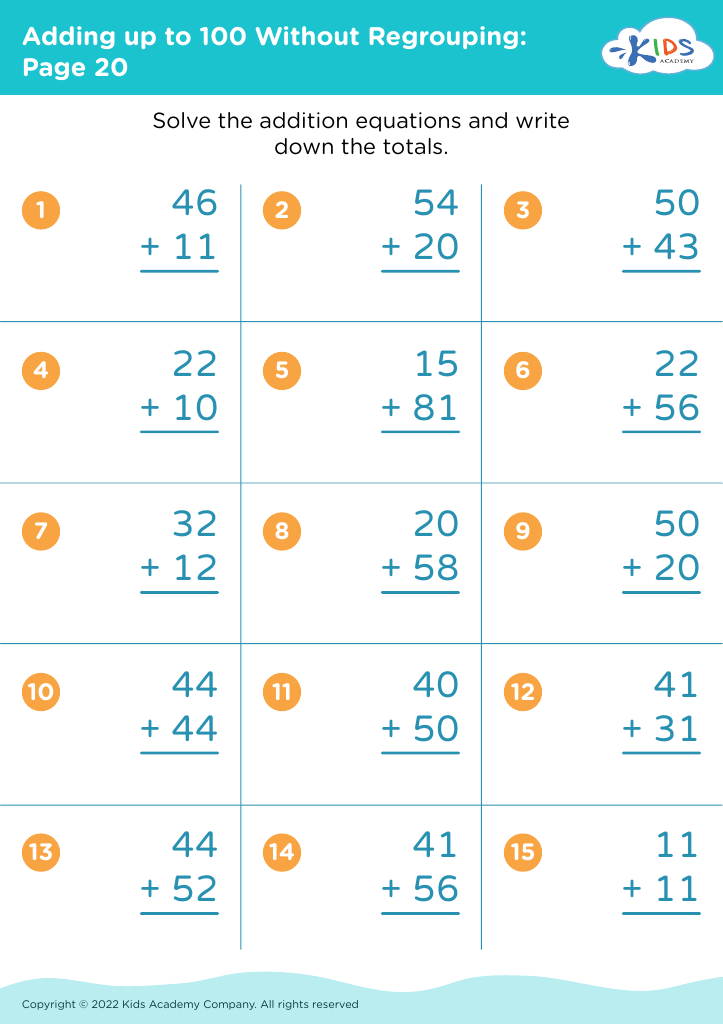
Adding up to 100 Without Regrouping: Page 20
Worksheet
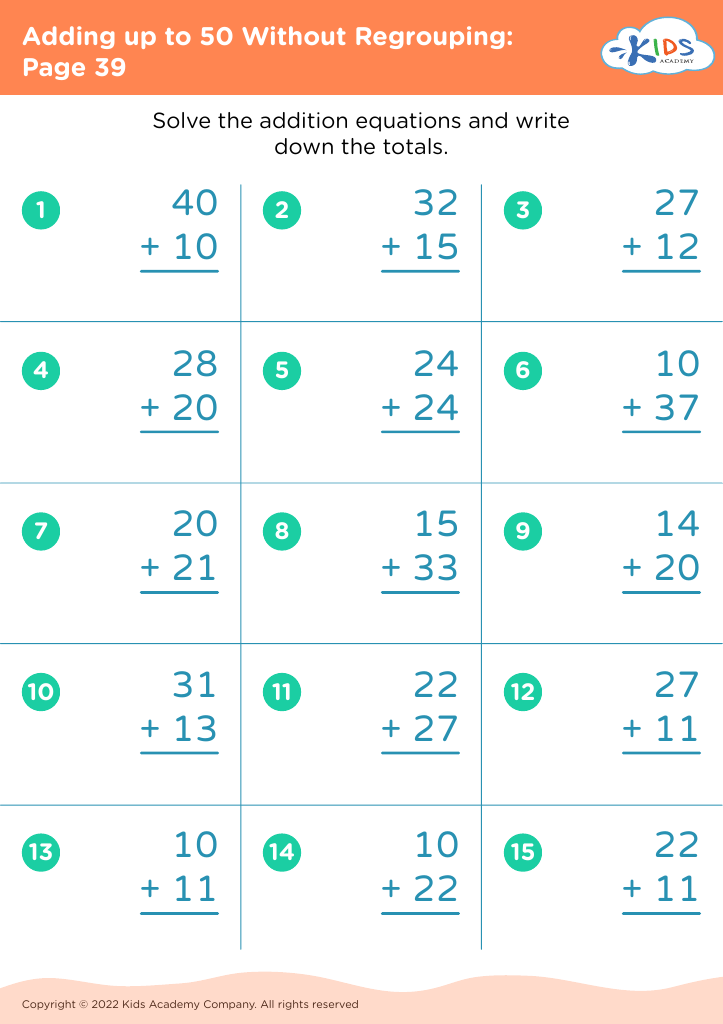
Adding up to 50 Without Regrouping: Page 39
Worksheet
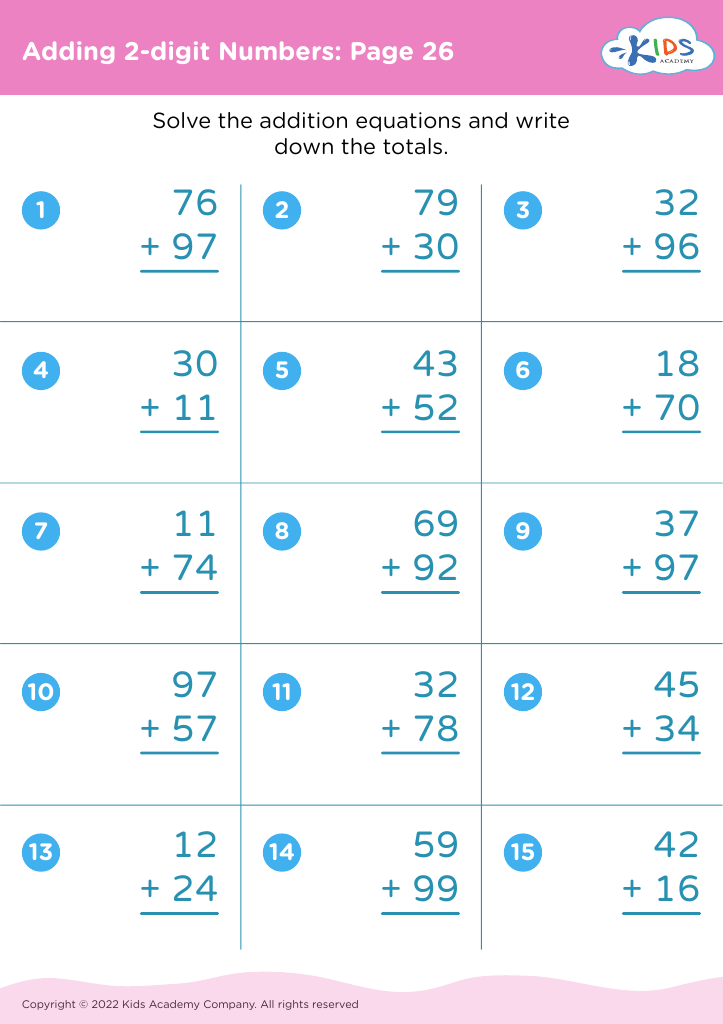
Adding 2-digit Numbers: Page 26

Adding 2-digit Numbers: Page 26

Adding 2-digit Numbers: Page 26
Worksheet
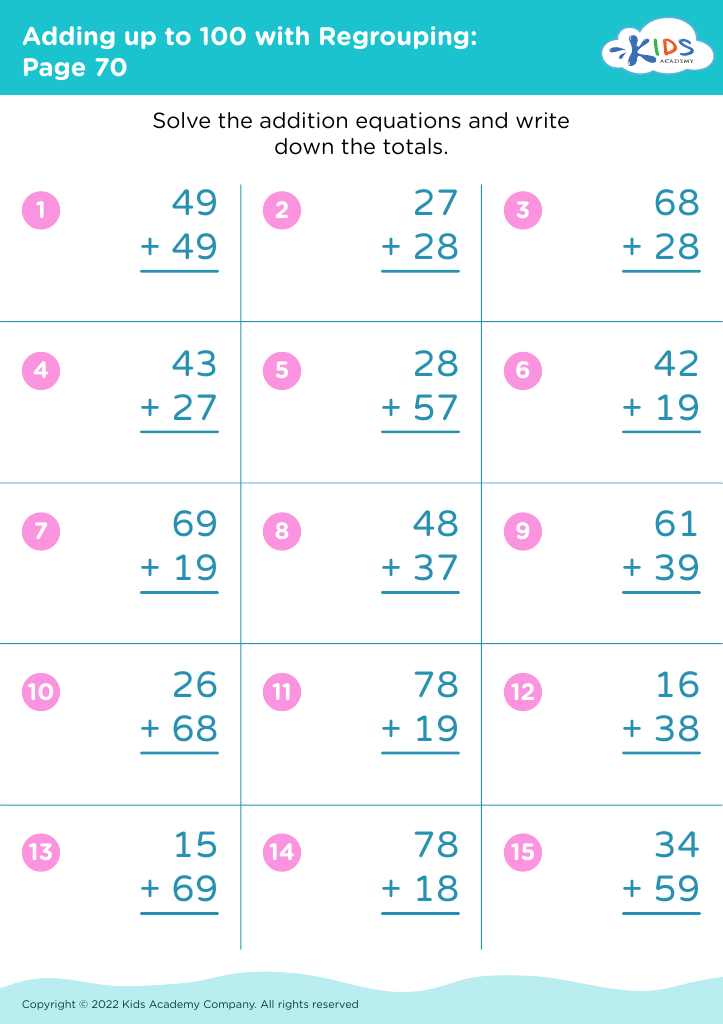
Adding up to 100 with Regrouping: Page 70
Worksheet
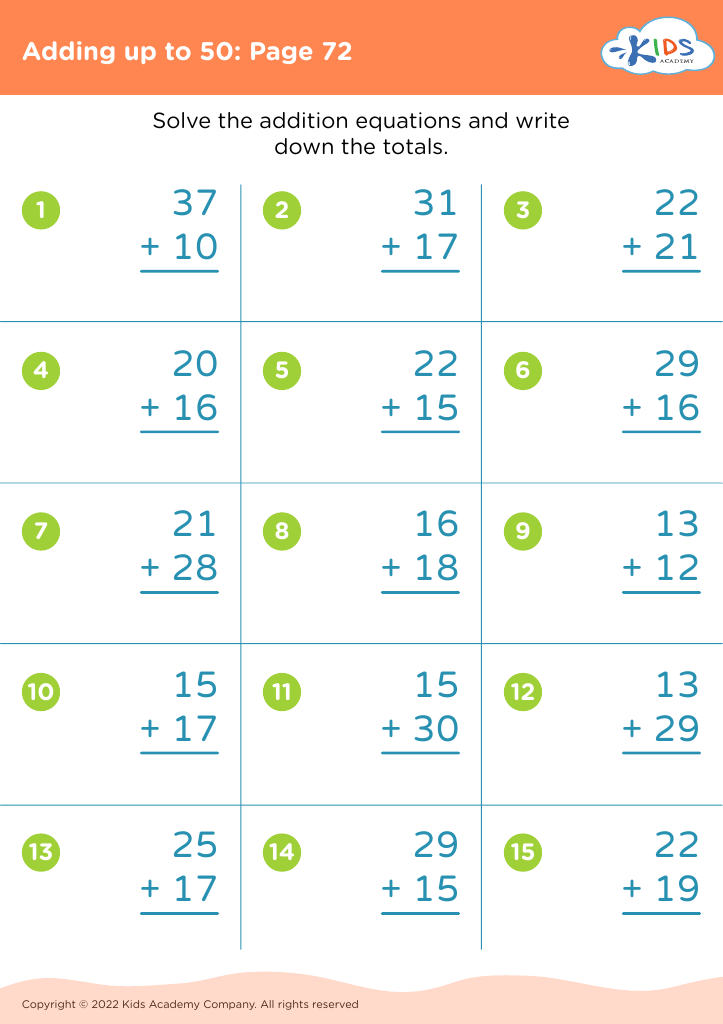
Adding up to 50: Page 72

Adding up to 50: Page 72

Adding up to 50: Page 72
Worksheet
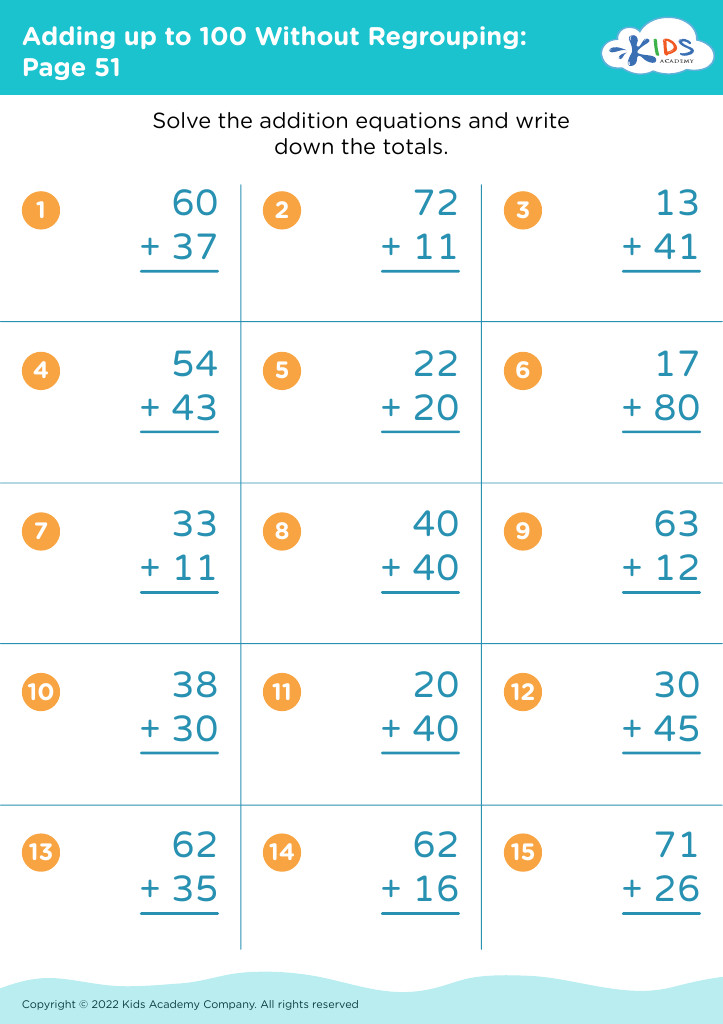
Adding up to 100 Without Regrouping: Page 51
Worksheet
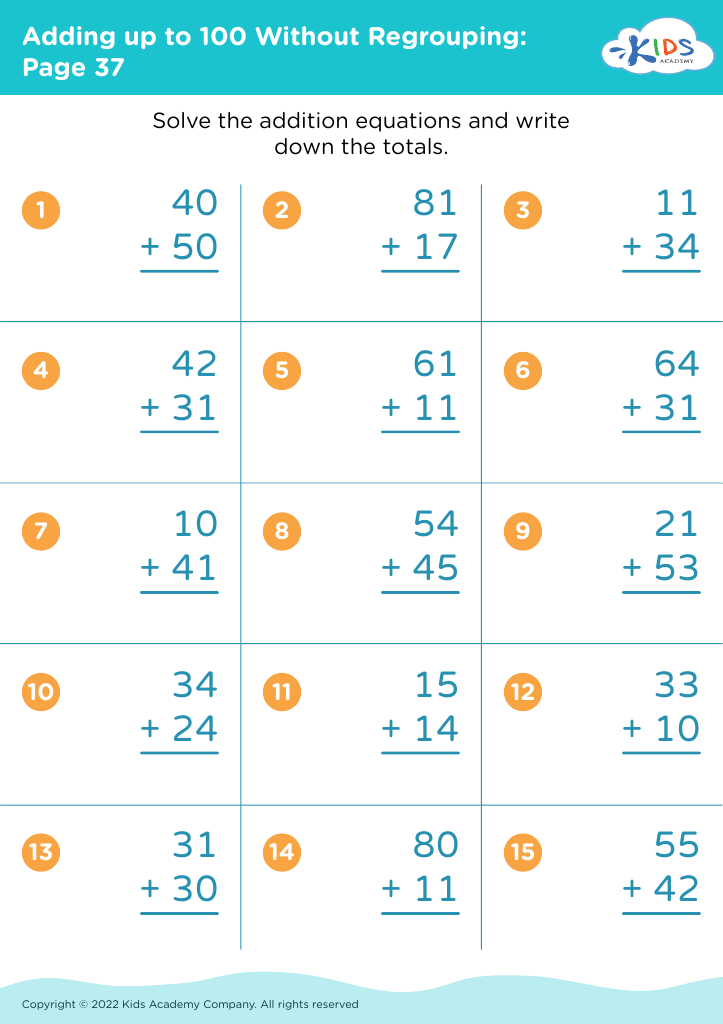
Adding up to 100 Without Regrouping: Page 37
Worksheet
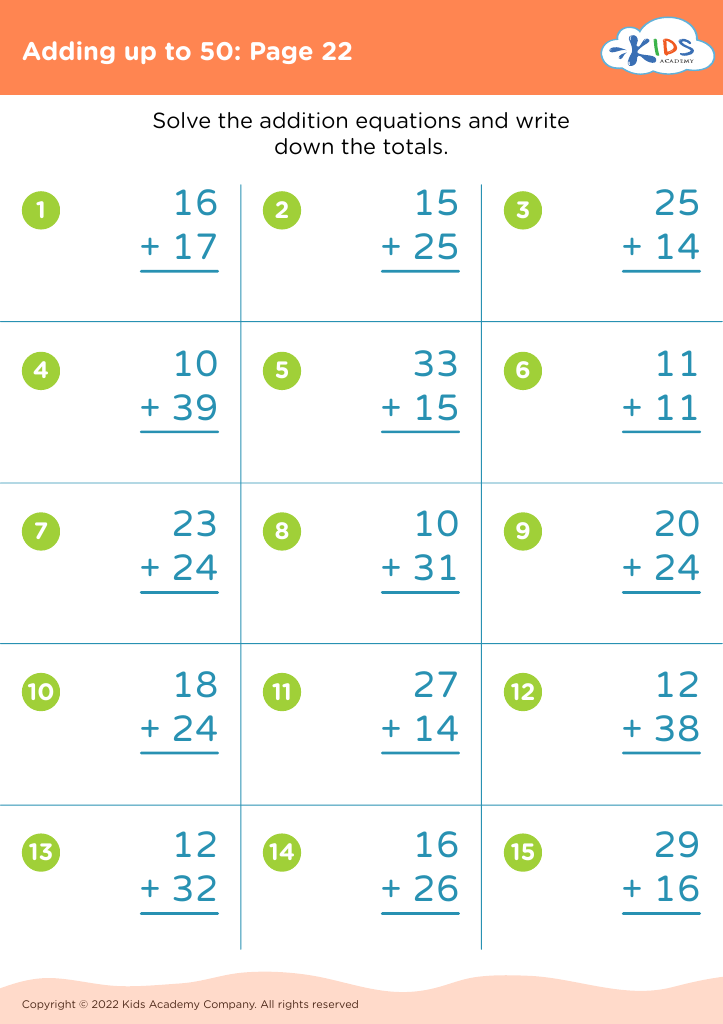
Adding up to 50: Page 22

Adding up to 50: Page 22

Adding up to 50: Page 22
Worksheet
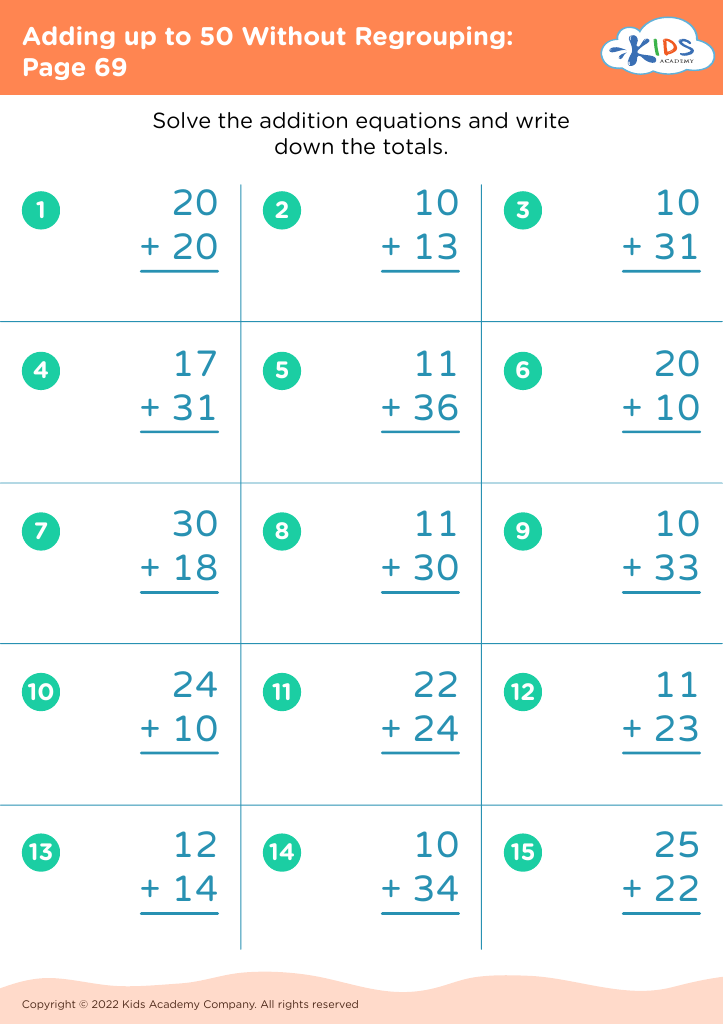
Adding up to 50 Without Regrouping: Page 69
Worksheet
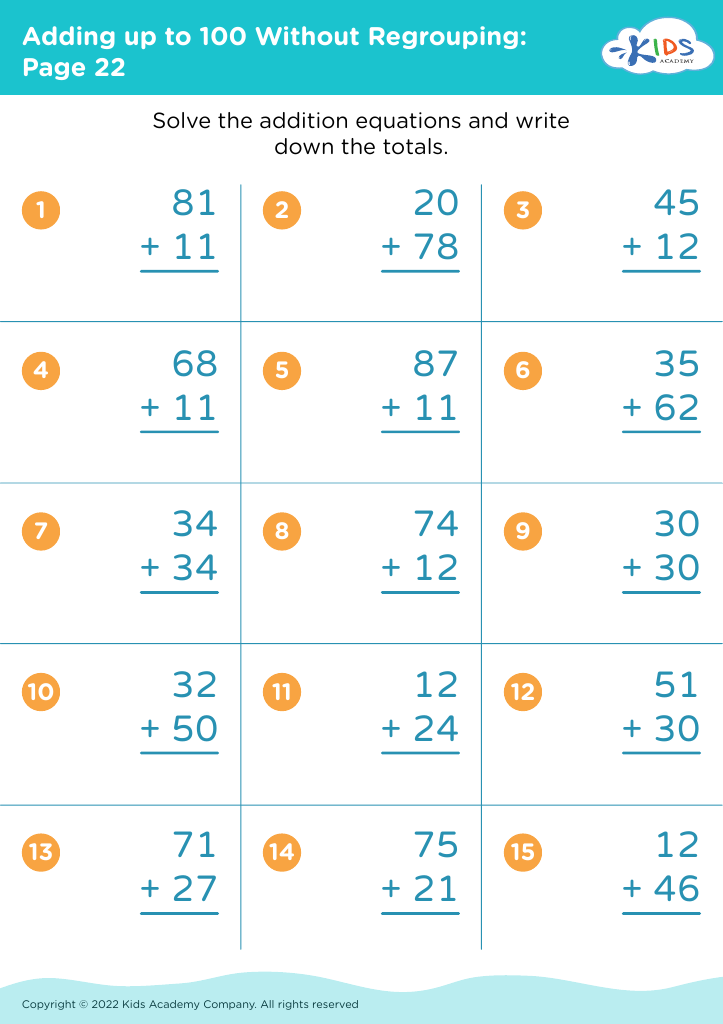
Adding up to 100 Without Regrouping: Page 22
Worksheet
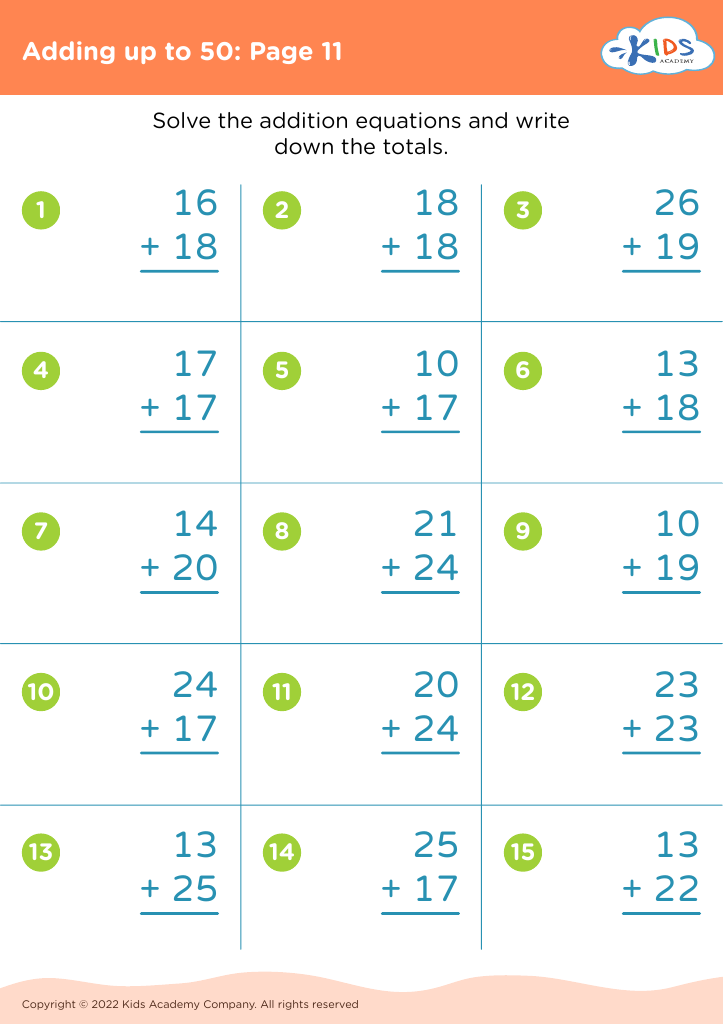
Adding up to 50: Page 11

Adding up to 50: Page 11

Adding up to 50: Page 11
Worksheet
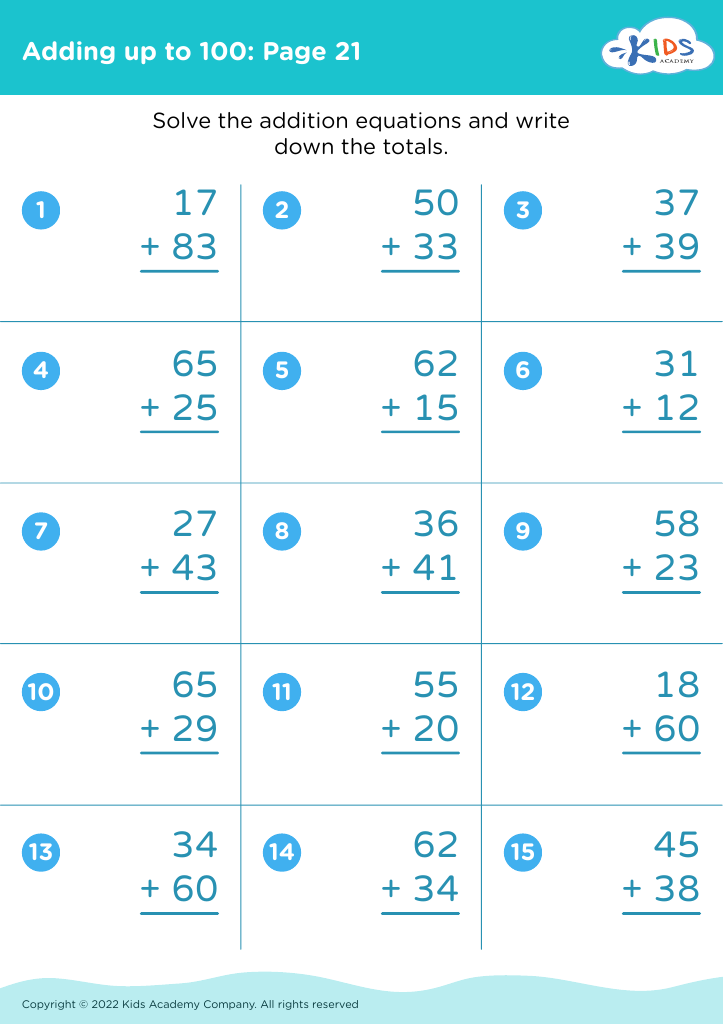
Adding up to 100: Page 21

Adding up to 100: Page 21

Adding up to 100: Page 21
Worksheet
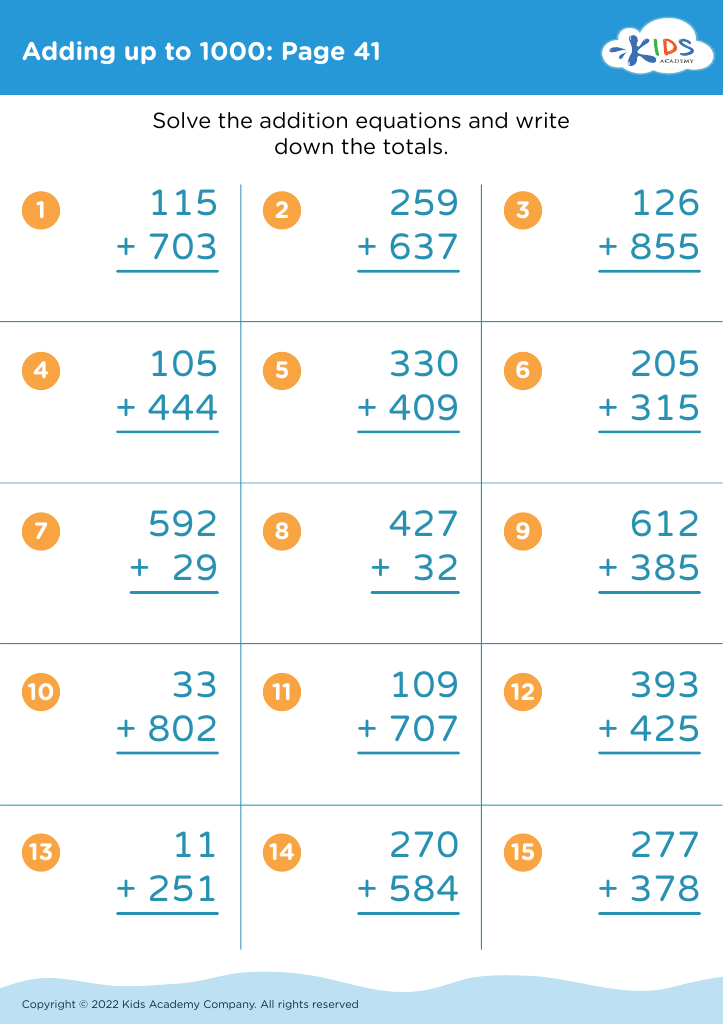
Adding up to 1000: Page 41

Adding up to 1000: Page 41

Adding up to 1000: Page 41
Worksheet
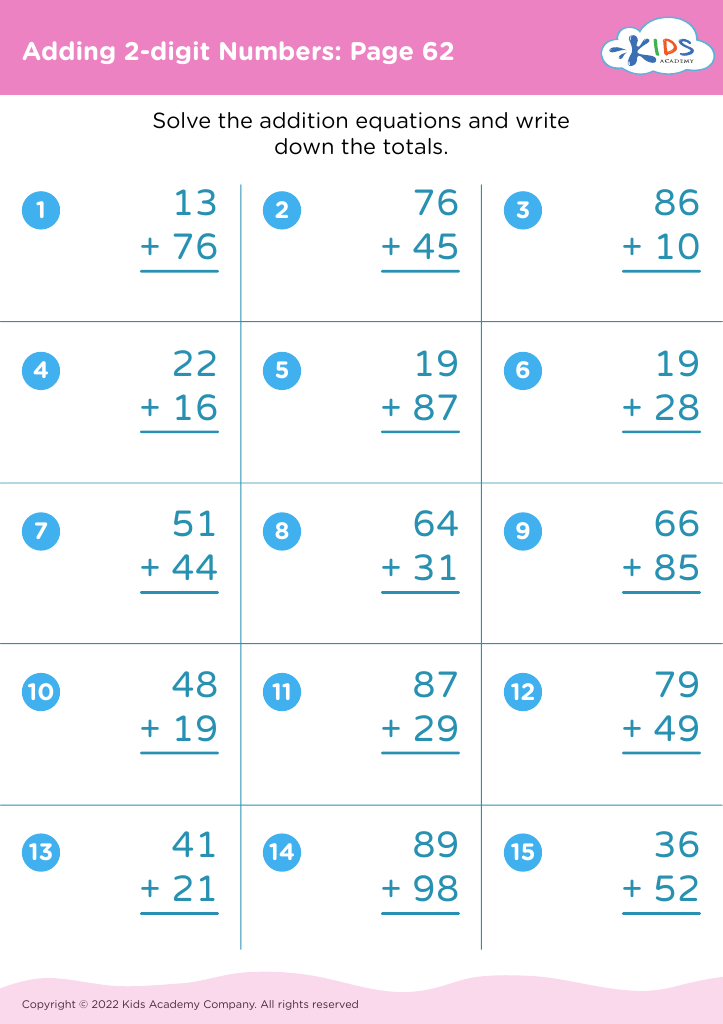
Adding 2-digit Numbers: Page 62

Adding 2-digit Numbers: Page 62

Adding 2-digit Numbers: Page 62
Worksheet
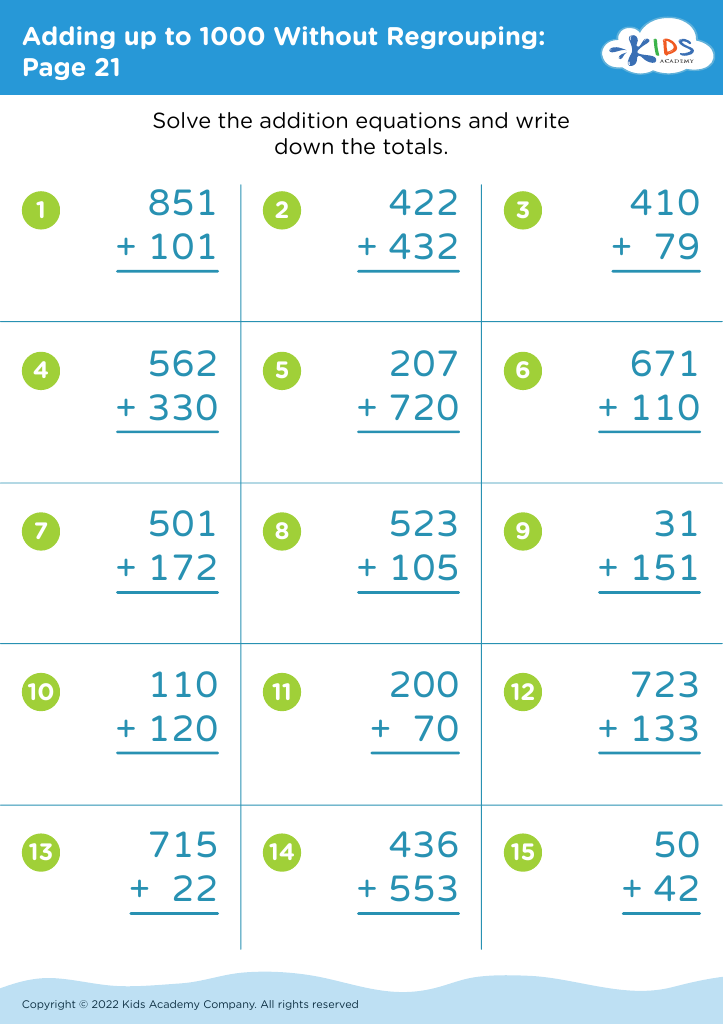
Adding up to 1000 Without Regrouping: Page 21
Worksheet
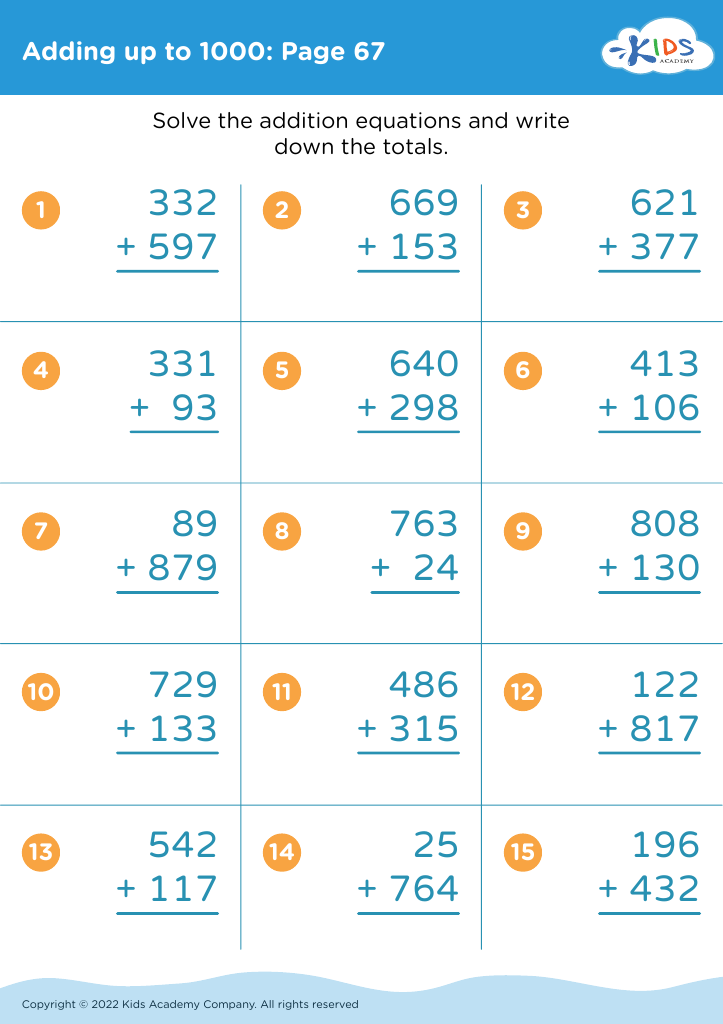
Adding up to 1000: Page 67

Adding up to 1000: Page 67

Adding up to 1000: Page 67
Worksheet


Understanding multiplication and addition at an early age, particularly for children aged 3-7, is crucial for several developmental and educational reasons. Firstly, mastering basic arithmetic forms the foundation for later mathematical learning and problem-solving skills. By grasping addition and beginning to see groupings (a rudimentary form of multiplication), children develop logical thinking and an understanding of relationships between numbers.

Incorporating these concepts early equips children with the tools needed for more complex mathematical tasks in the future. Cognitive development research suggests that early exposure to arithmetic enhances brain functions such as memory, attention, and problem-solving abilities.

Moreover, learning math concepts in an engaging, hands-on manner can foster a love for learning and build self-confidence. Activities that make use of visual aids, physical objects, and interactive games can make learning multiplication and addition fun and relatable for young minds.

Parents and teachers play a vital role in this process. By understanding and teaching these concepts using age-appropriate strategies, they help children strengthen their foundational skills not just in math, but in their overall academic journeys. This foundational understanding ultimately contributes to academic success and a positive attitude towards lifelong learning.