Understanding sequence Addition Worksheets for Ages 3-7
4 filtered results
-
From - To
Discover our engaging and educational Sequence Addition Worksheets tailored for children aged 3-7, designed to enhance young learners' understanding of addition concepts through visual sequencing. These worksheets foster essential skills by allowing kids to recognize patterns and order numbers, making math fun and approachable. Through practice, children will develop critical thinking skills as they solve problems in a structured manner. Our resource encourages early mathematical development and builds confidence in tackling addition tasks. Perfect for educators and parents, these printable worksheets are a fantastic tool to support your child's learning journey, ensuring a solid math foundation as they grow.
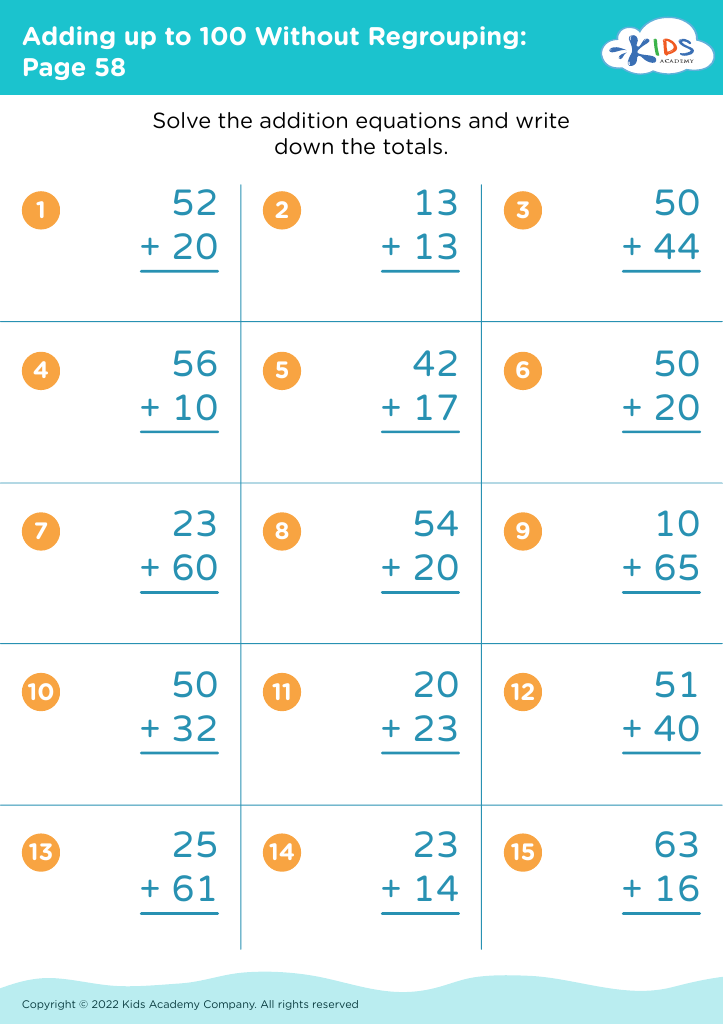
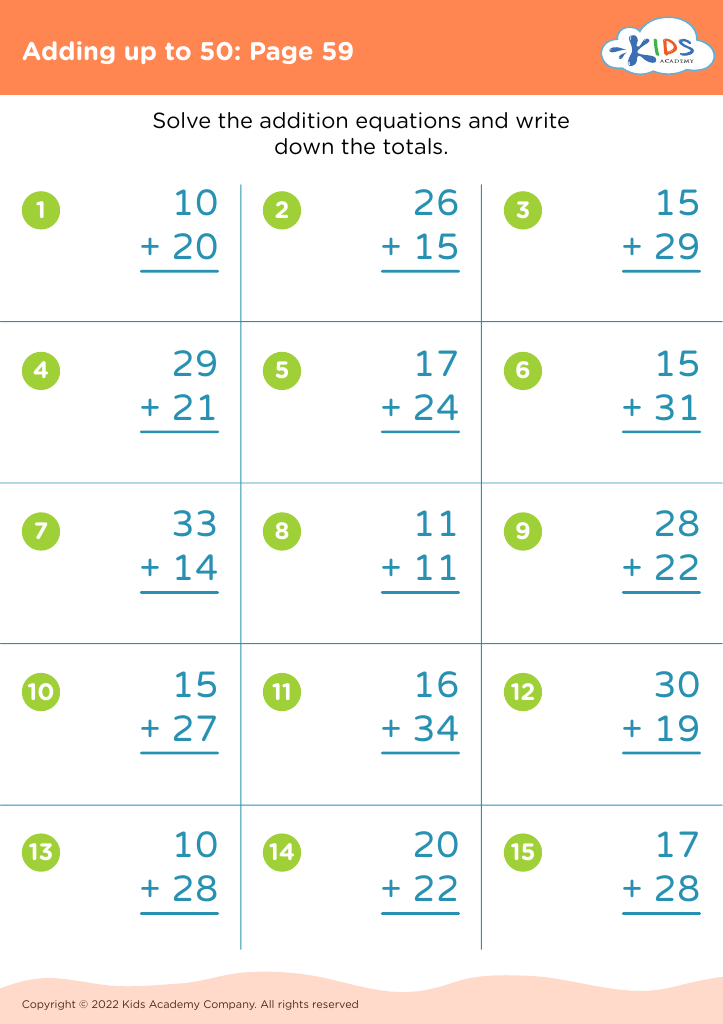
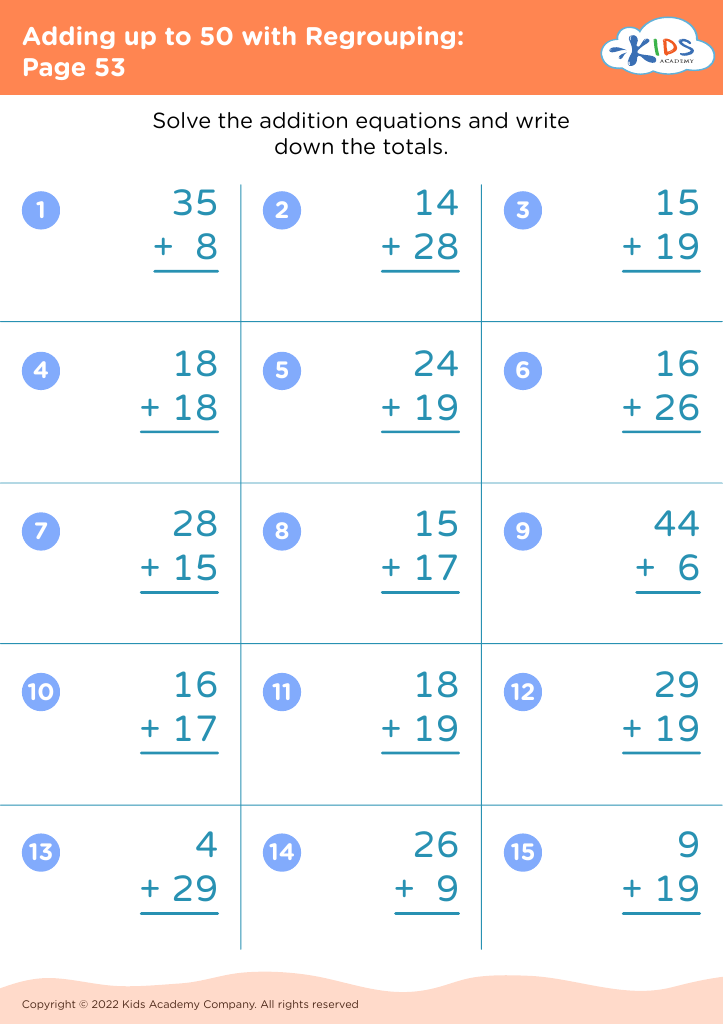
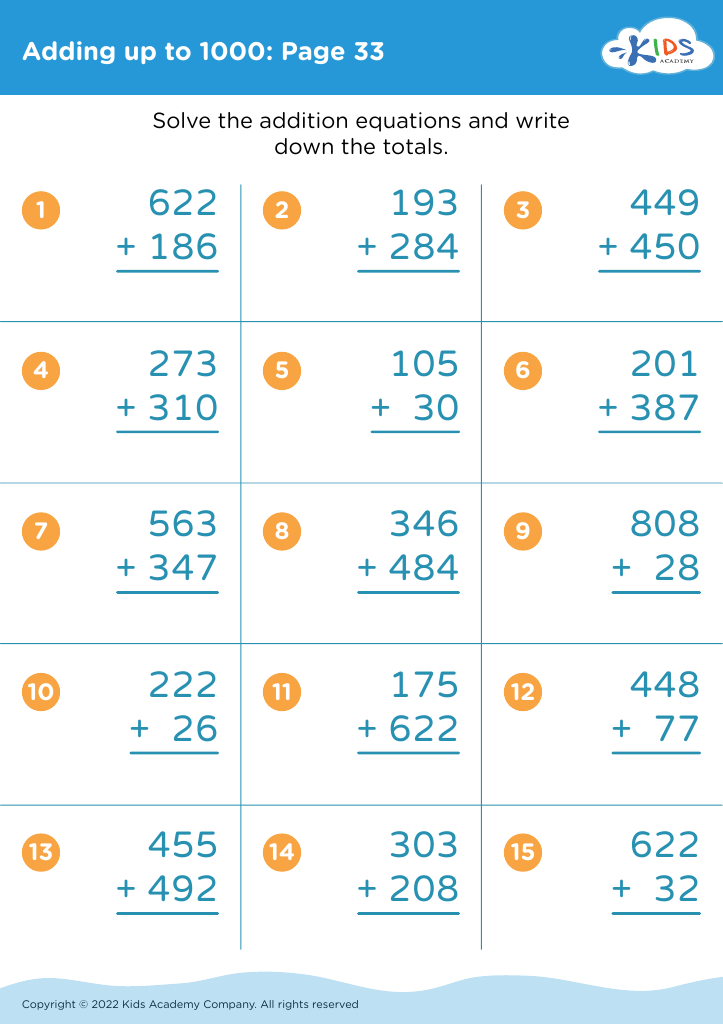








Understanding sequence addition is crucial for children ages 3-7, as it lays the groundwork for their mathematical development. Early mastery of addition concepts helps children recognize numbers and understand their relationships, promoting skills like counting, comparing, and problem-solving.
Parents and teachers should care about this because sequential addition encourages logical thinking and cognitive growth. When children learn to add in a structured way—recognizing patterns and sequences—they can develop a deeper comprehension of arithmetic that serves as a building block for more complex mathematical concepts later on.
Moreover, grasping the concept of sequence addition fosters number fluency, allowing children to solve problems more efficiently and confidently as they continue their education. It can also enhance children's ability to tackle real-world scenarios, such as counting items, sharing resources, or budgeting.
Incorporating games and fun activities that focus on sequence addition makes learning more enjoyable, leading to increased engagement and motivation among young learners. When supported at home and school, children become more resilient learners, ready to face future challenges in mathematics and beyond. Ultimately, fostering an early understanding of sequence addition enriches children's overall academic experience and lays the foundation for lifelong learning.








