Vocabulary development Addition Worksheets for Ages 3-7
5 filtered results
-
From - To
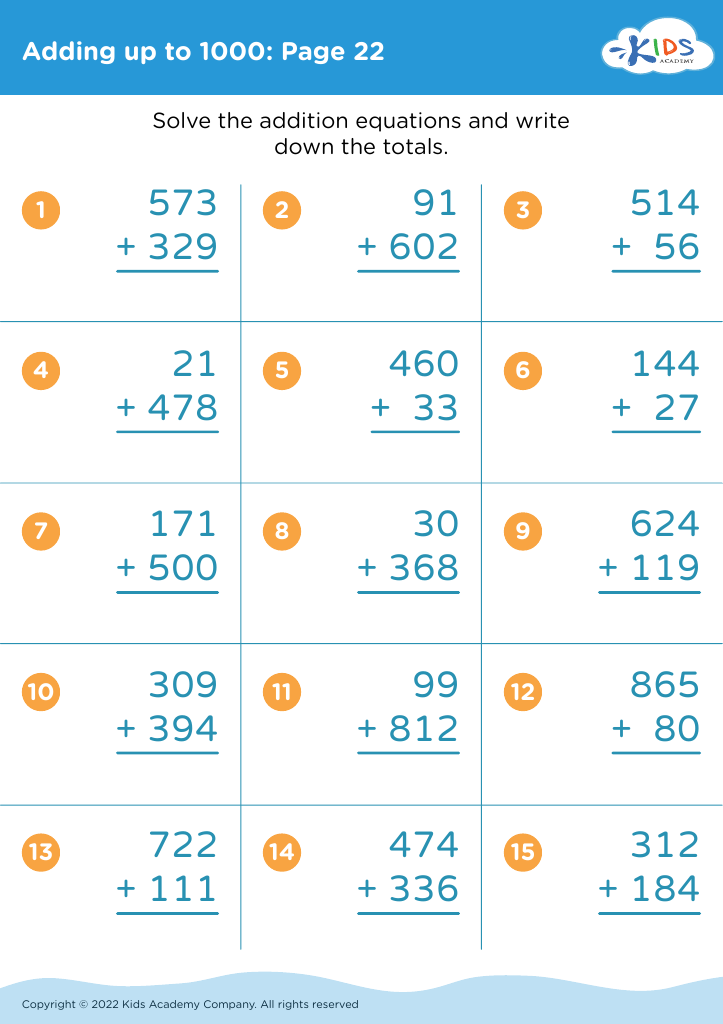
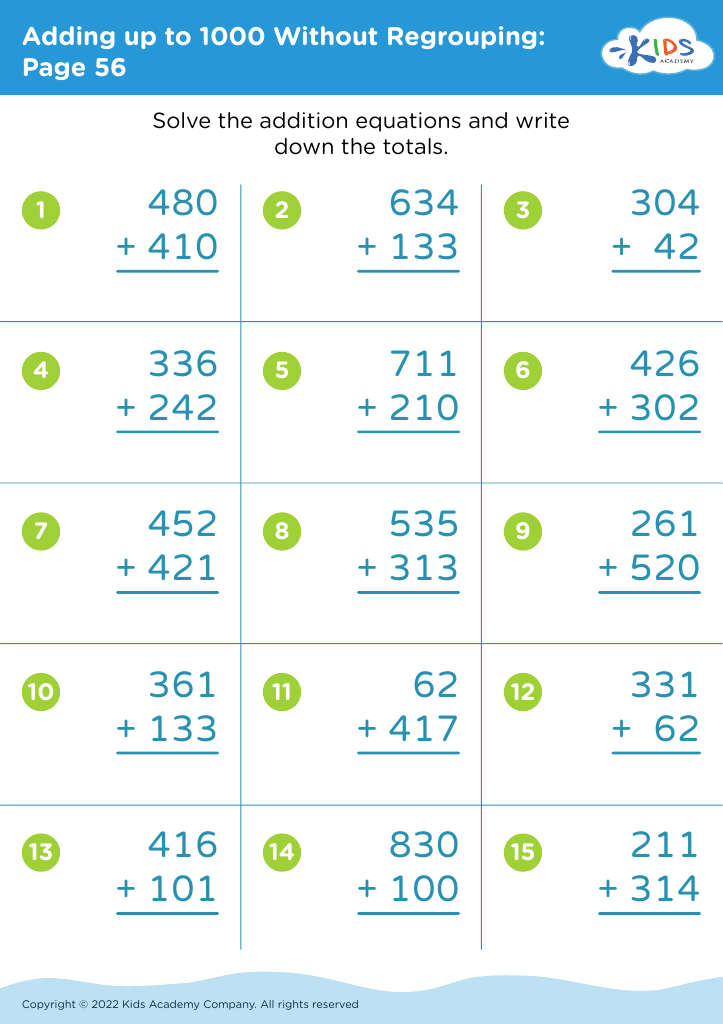
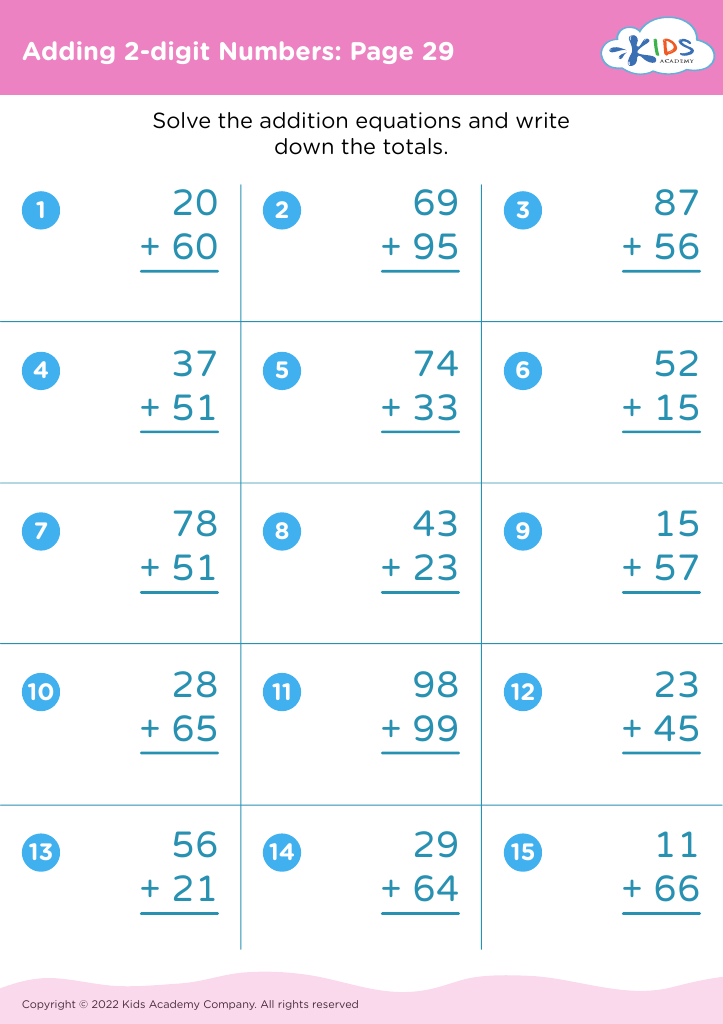
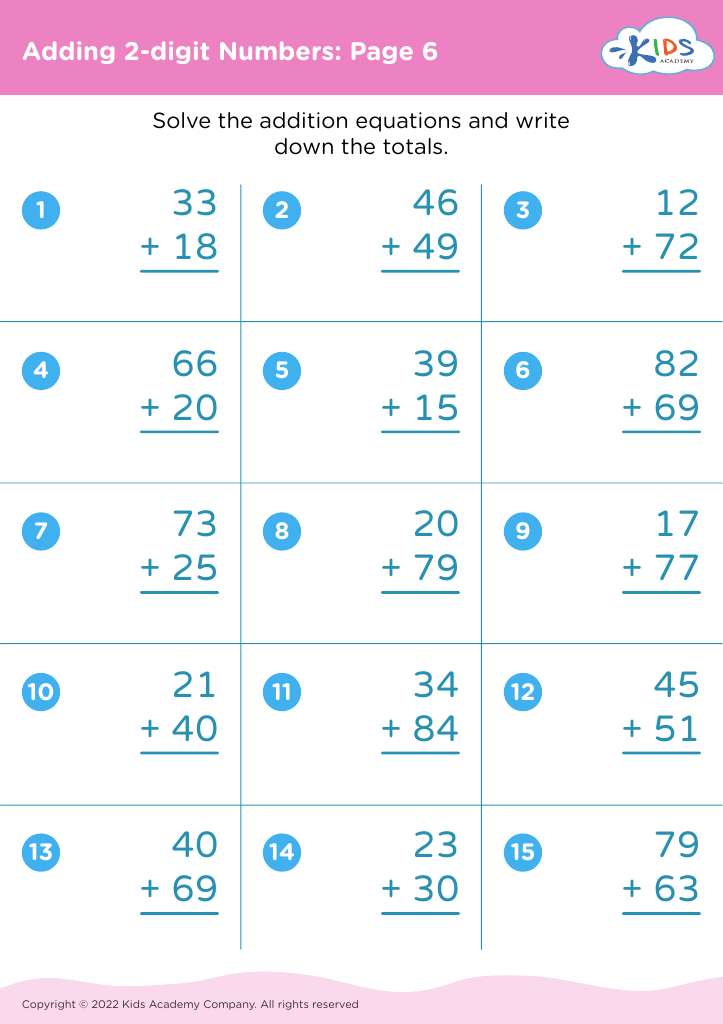
Explore our engaging Vocabulary Development Addition Worksheets, designed specifically for children aged 3-7! These worksheets provide a fun and interactive approach to learning, helping young learners enhance their vocabulary while mastering basic addition skills. Each activity is tailored to foster linguistic growth alongside mathematical understanding, making learning a holistic experience. With colorful illustrations and delightful themes, children will be excited to practice their addition concepts while expanding their word knowledge. Ideal for parents and educators, these resources encourage creativity and critical thinking, paving the way for future academic success. Start building essential skills today and watch your child thrive!








Vocabulary development in children aged 3-7 is crucial for their overall academic success and communication skills. During these formative years, children are rapidly learning and absorbing language, making it vital for parents and teachers to prioritize vocabulary growth. A strong vocabulary supports reading comprehension, allowing children to decode and understand texts more effectively. When children can articulate their thoughts and feelings, they build confidence, social skills, and emotional intelligence. These foundational abilities pave the way for successful interactions with peers and adults.
Moreover, a robust vocabulary enhances critical thinking skills, allowing children to make connections between ideas and concepts. Engaging activities, such as storytelling, interactive games, and vocabulary-rich conversations, facilitate spontaneous word use and deepen understanding. At this age, children are naturally curious, and introducing new words related to their experiences encourages exploration and discussion.
Additionally, early vocabulary development can contribute to reducing the achievement gap often seen in later years. Through building a rich language experience at home and in school, caregivers can set children on a path toward lifelong learning and communication proficiency. By actively participating in vocabulary enrichment, parents and teachers lay a strong foundation for children’s intellectual and social development.








