Counting skills Money Worksheets for Ages 3-7
5 filtered results
-
From - To
Discover engaging Counting Skills Money Worksheets designed for children ages 3-7 to develop essential math skills through play! Our printable worksheets help young learners recognize coins, count money, and understand basic transactions in a fun, interactive way. Each worksheet features vibrant visuals and age-appropriate activities to capture children’s interest while fostering essential counting abilities. These resources support early childhood education, promoting confidence and independence in math. Perfect for home or classroom use, our counting money worksheets encourage young minds to explore the world of finance, paving the way for a strong mathematical foundation. Start your child's learning journey today!
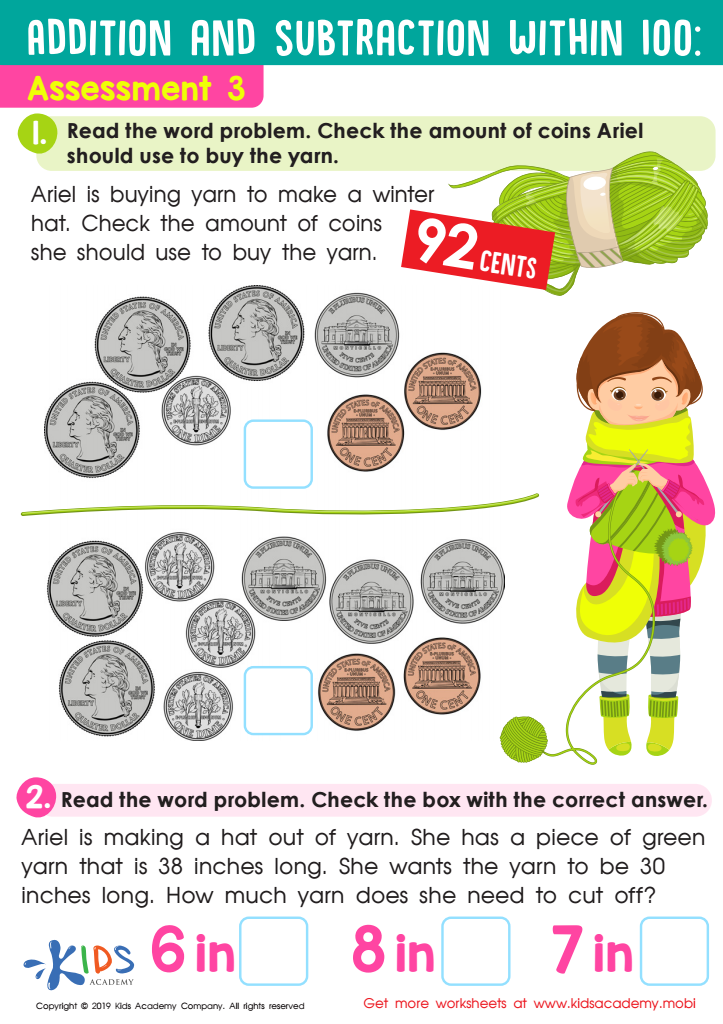
Assessment 3 Math Worksheet
 Assign to My Students
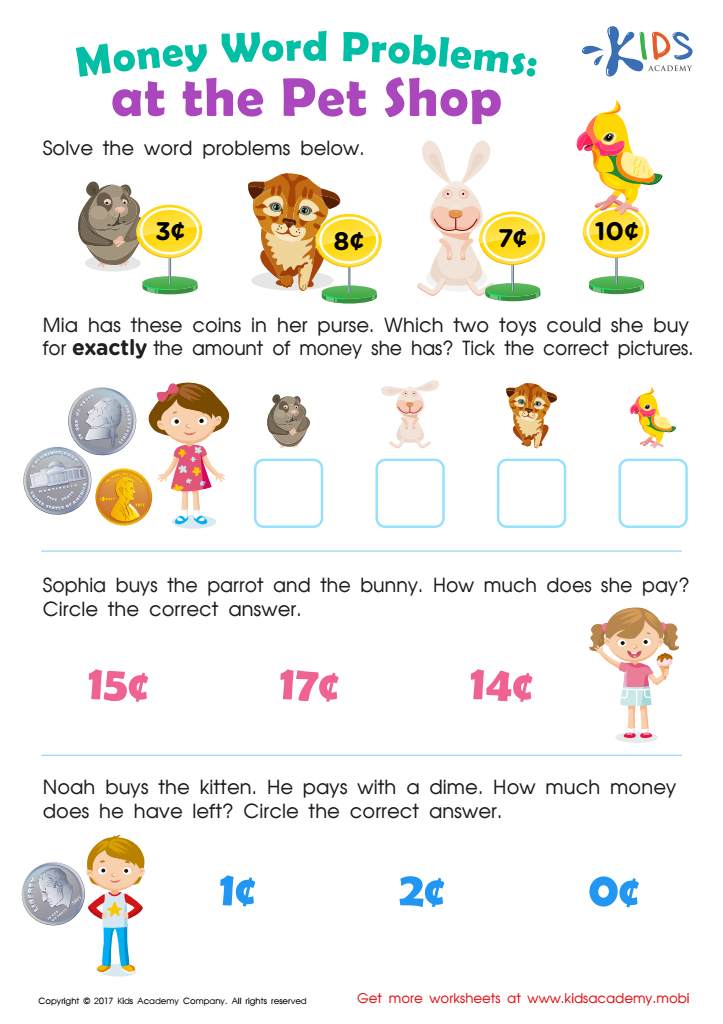
Pet Shop Worksheet
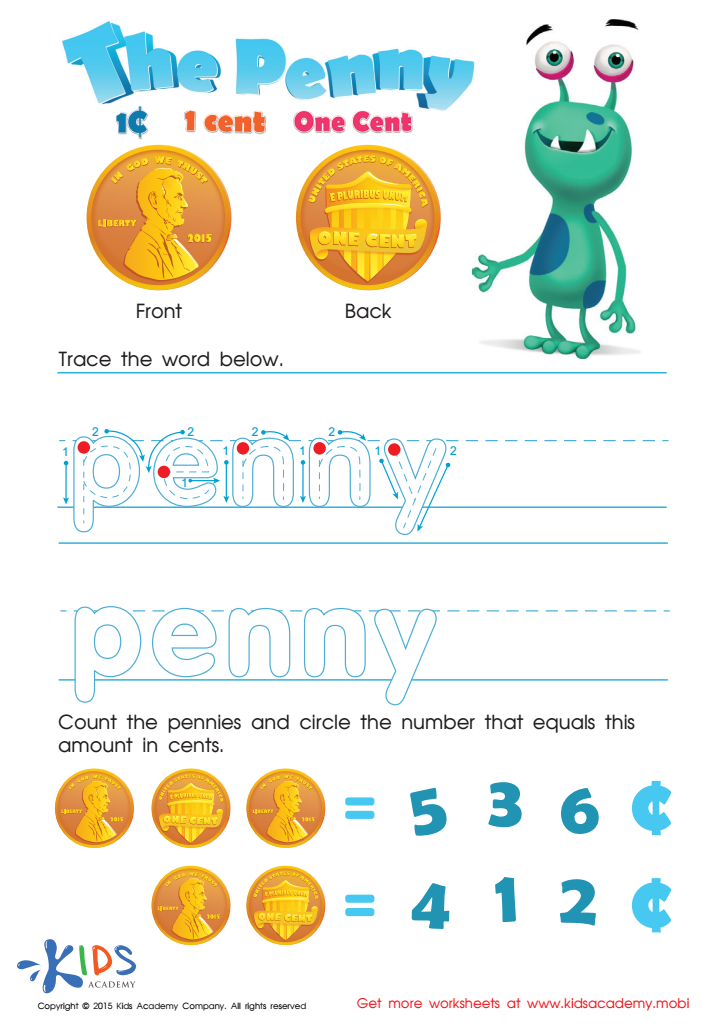
One Cent or the Penny Money Worksheet
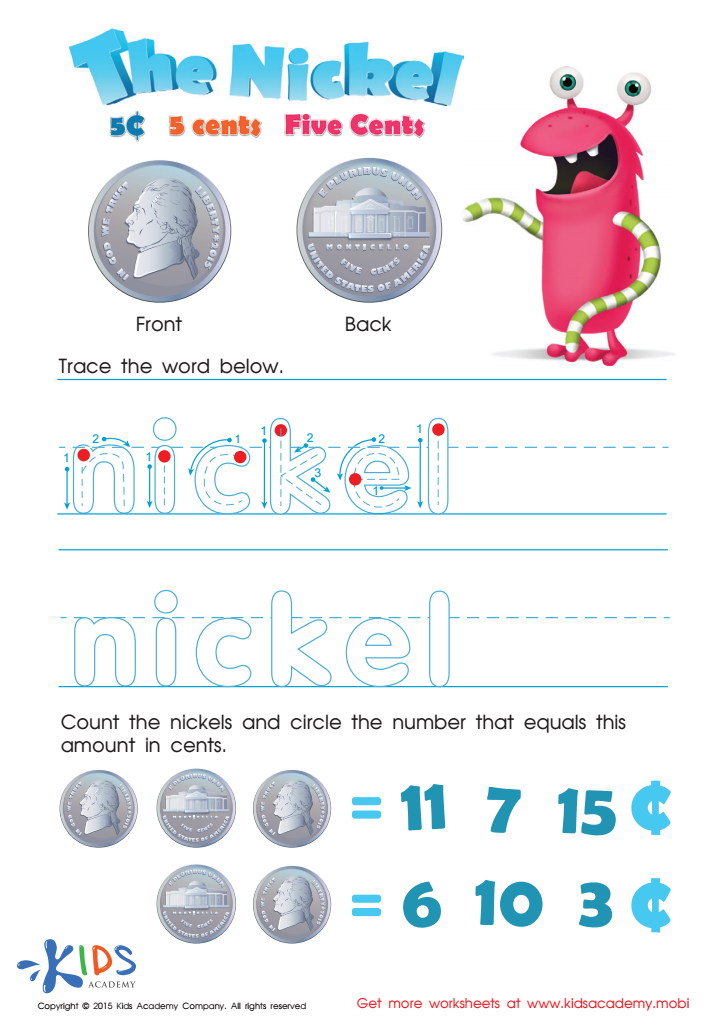
Five Cents or the Nickel Money Worksheet
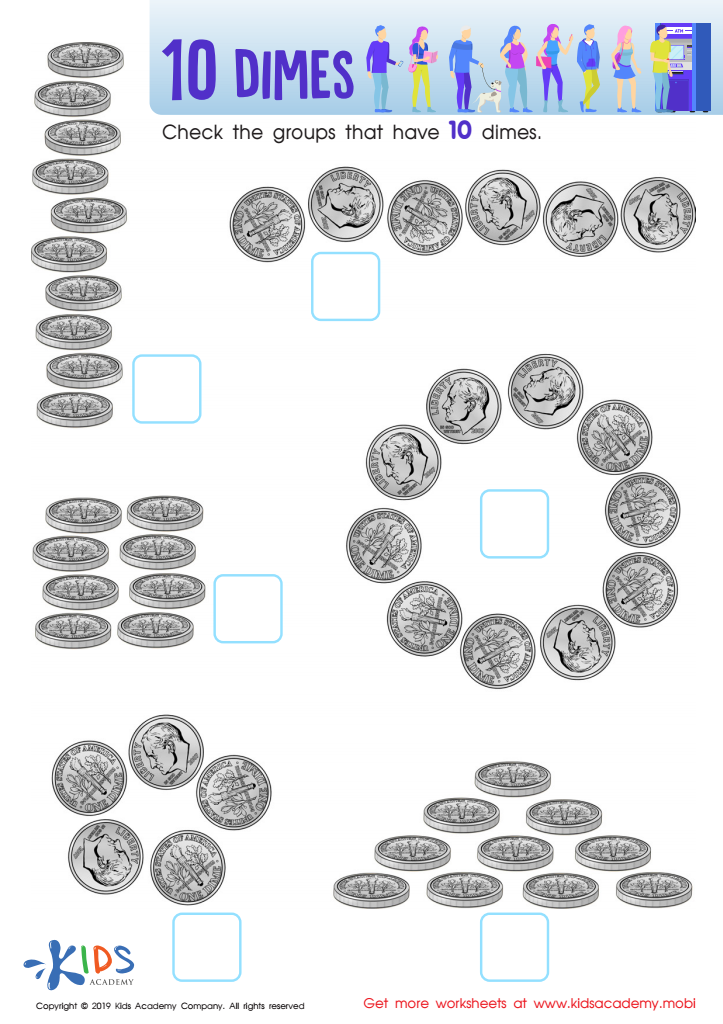
10 Dimes Worksheet








Counting skills, especially in the context of money, are crucial for children aged 3-7 as they lay the groundwork for essential mathematical understanding and everyday life competencies. By introducing concepts of counting and money early, parents and teachers help children develop critical thinking, problem-solving abilities, and numeracy skills.
Understanding money encourages children to grasp the value of numbers in a practical setting, promoting skills like addition and subtraction. It also fosters an awareness of budgeting and financial literacy, which is essential as they grow older. Engaging children in play scenarios like "store" or "bank" helps make abstract concepts tangible, allowing them to practice real-life skills in a fun and interactive way.
Additionally, developing counting skills at an early age boosts confidence in math, setting a positive attitude towards future learning. When children can count and recognize different denominations, they feel empowered in social situations like shopping, which nurtures independence. Overall, fostering counting skills related to money is a vital step in a child’s development that offers lifelong benefits in mathematics and everyday decision-making. Parents and teachers play a crucial role in shaping these skills during formative years, making their involvement indispensable.








