Basic Math Skills Fractions of Shapes Worksheets for Ages 3-7
8 filtered results
-
From - To
Introduce your little learners to the exciting world of fractions with our "Basic Math Skills: Fractions of Shapes Worksheets" designed specifically for ages 3-7. These engaging worksheets help children grasp fundamental fraction concepts using colorful shapes and simple visual aids. Perfect for early learners, they promote mathematical awareness while fostering critical thinking and problem-solving skills. From identifying halves and quarters to coloring and dividing shapes, each activity is crafted to make fractions relatable and fun. Enhance your child's learning journey with these essential math worksheets, and build a robust foundation for future mathematical success. Start exploring today!
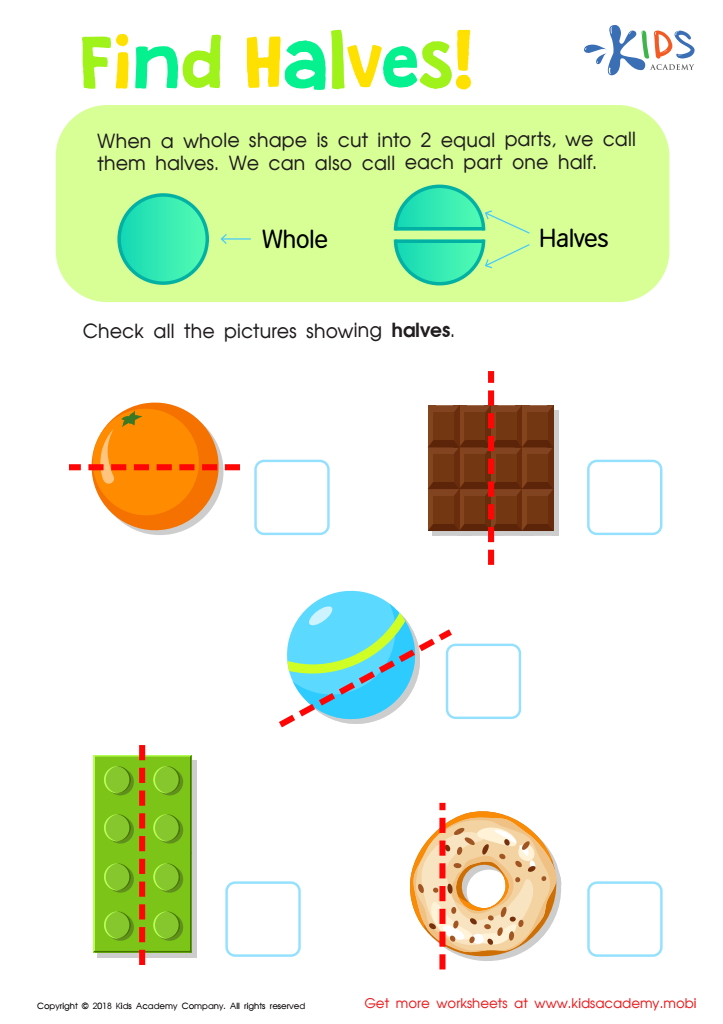
Find Halves Worksheet
 Assign to My Students
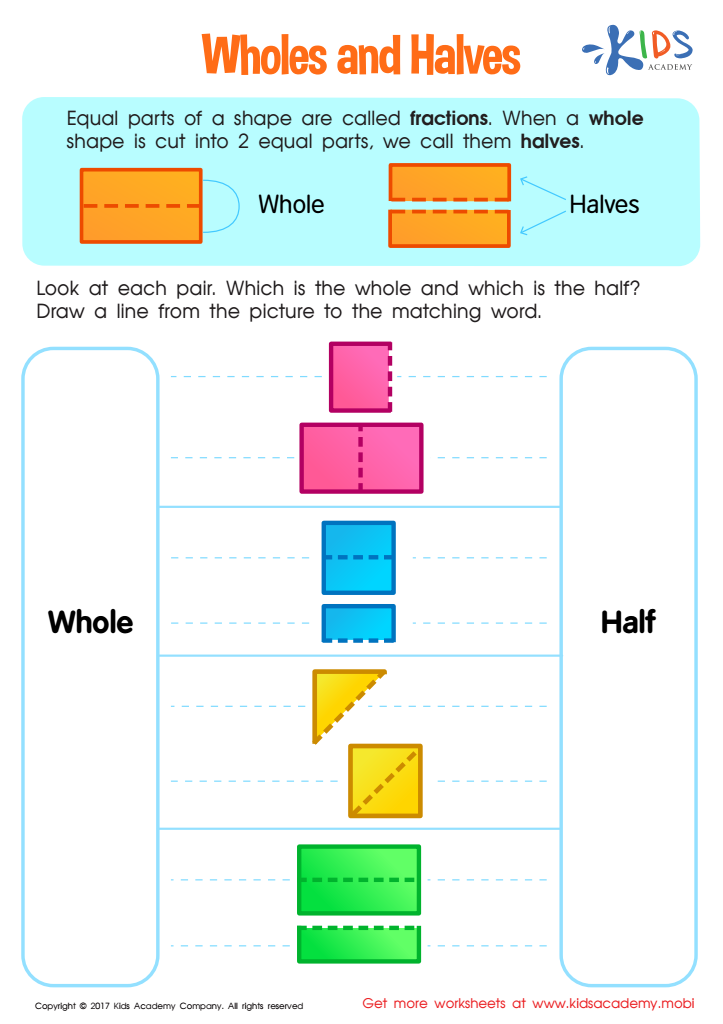
Wholes and Halves Worksheet
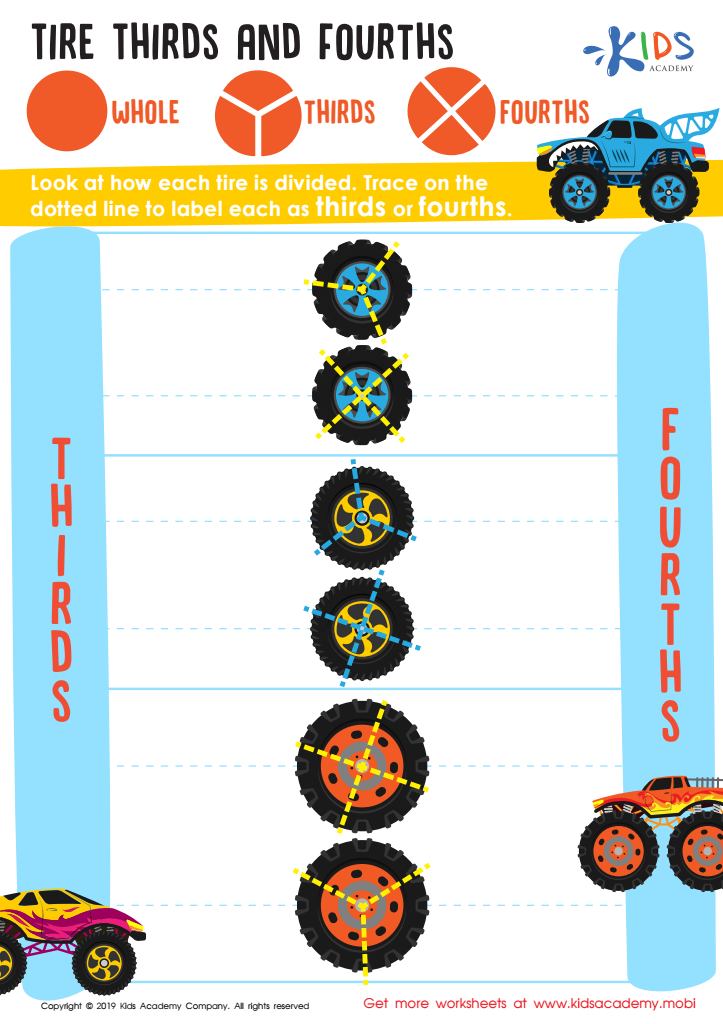
Tire Thirds and Fourths Worksheet
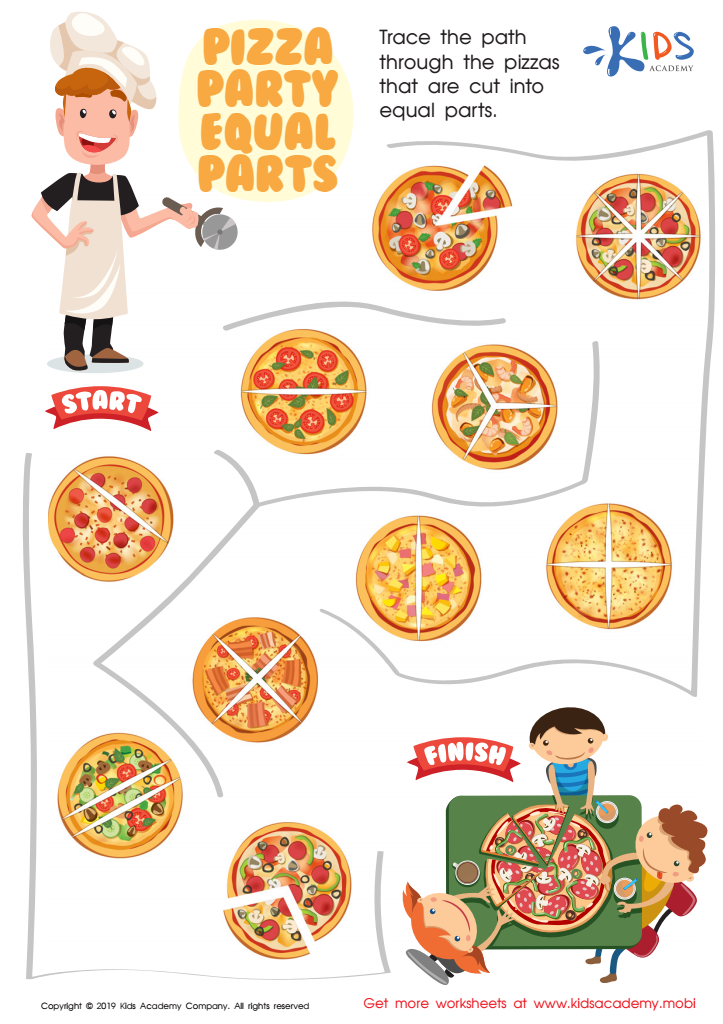
Pizza Party Equal Parts Worksheet
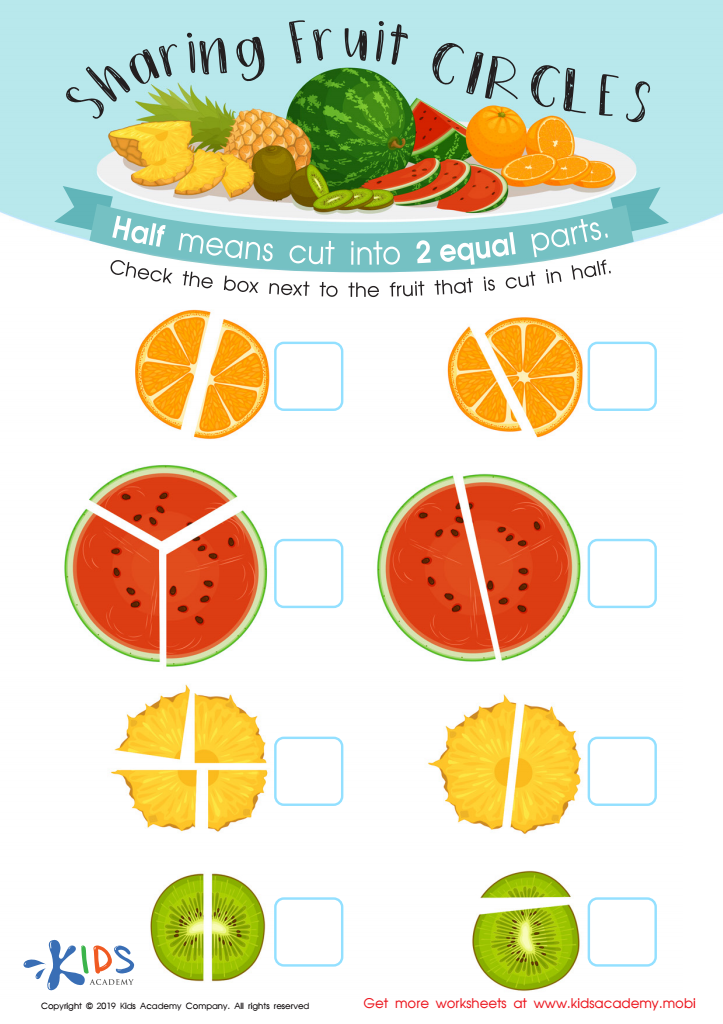
Sharing Fruit Circles Worksheet
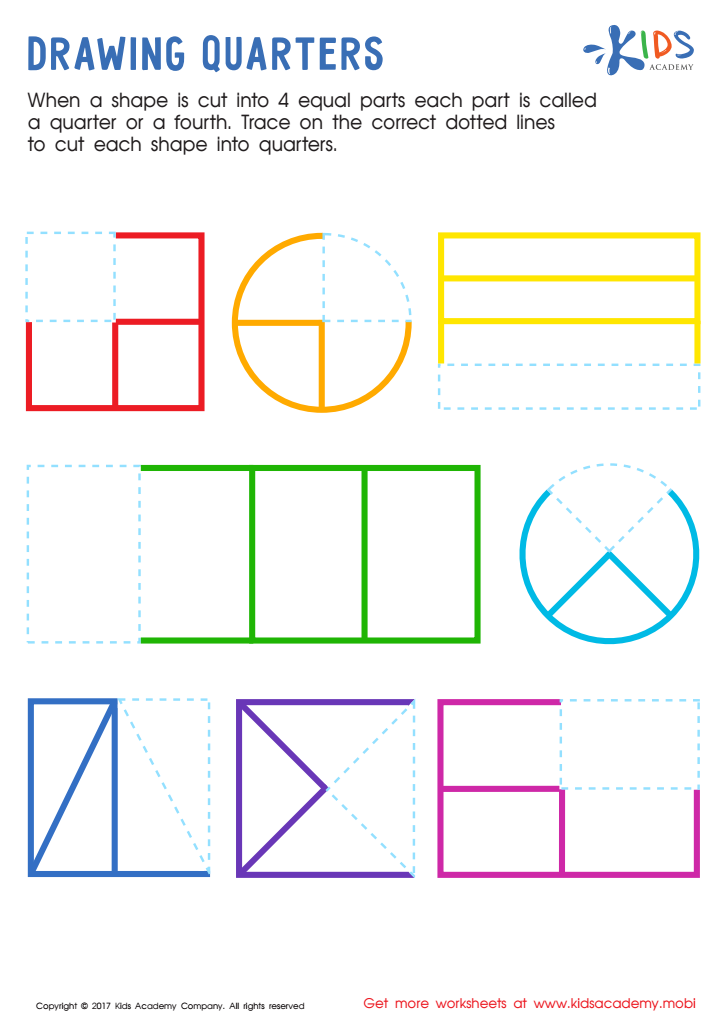
Drawing Quarters Worksheet
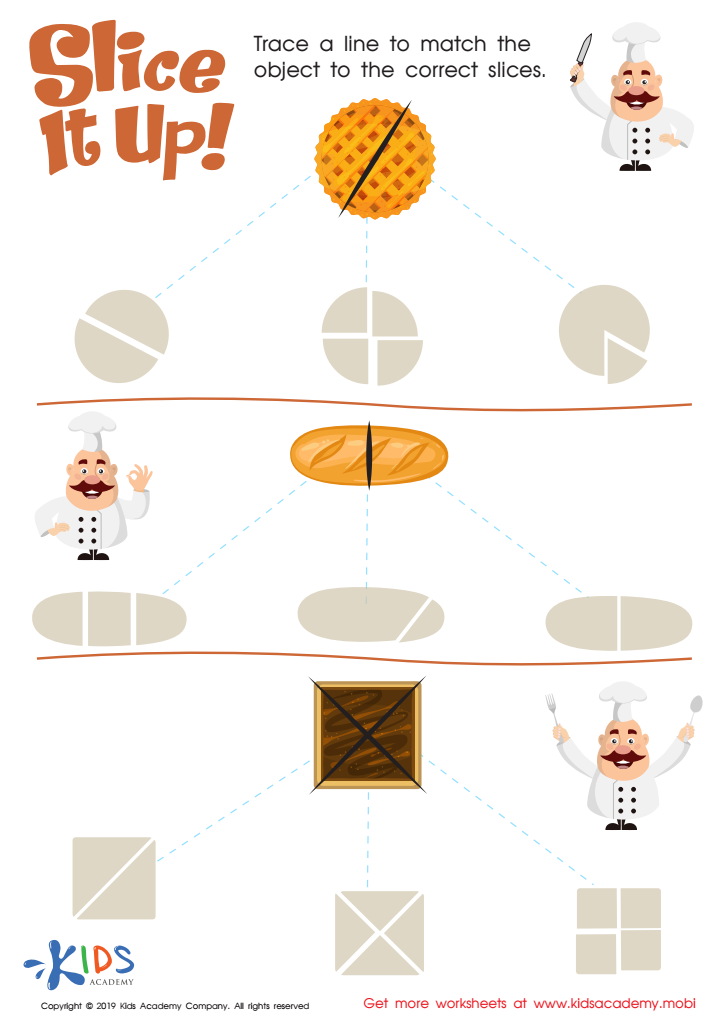
Slice It Up Worksheet
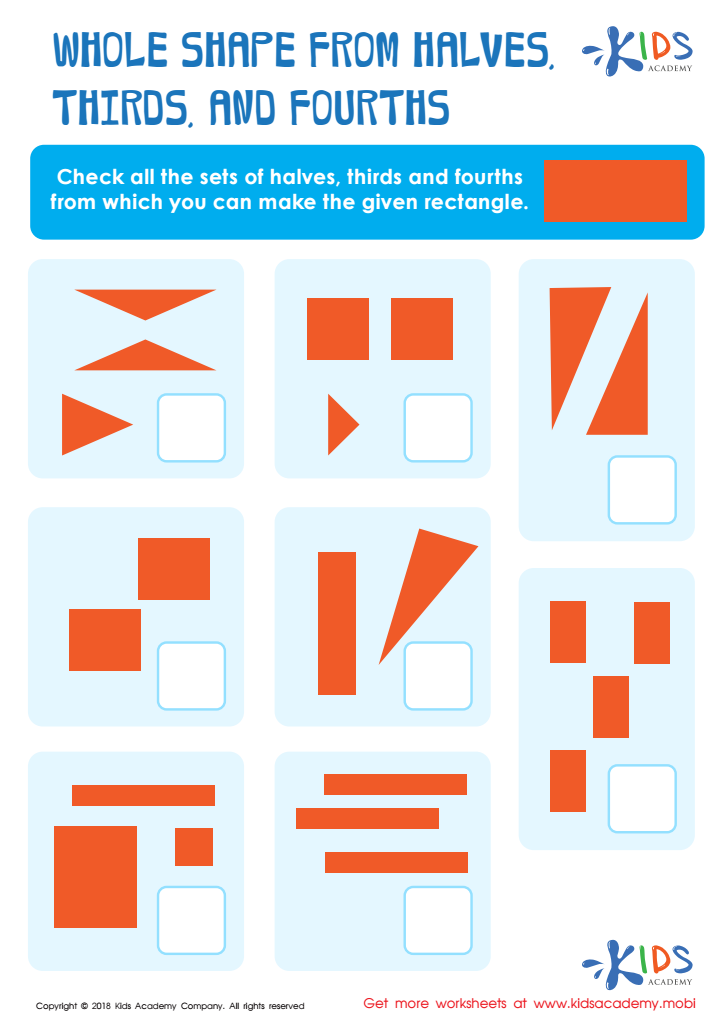
Whole Shape from Halves, Thirds and Fourths Worksheet








Basic math skills and an understanding of fractions of shapes are foundational components in early childhood education for children ages 3-7. During these formative years, integrating fractions of shapes into learning activities significantly impacts a child's cognitive development and establishes crucial problem-solving skills. Mastery of these concepts prepares children for more complex mathematics in later educational stages.
First, understanding fractions through shapes enhances cognitive abilities like visual-spatial reasoning. The ability to see and divide shapes into equal parts fosters a tangible sense of what fractions represent, aiding comprehension m immensely. This visualization lays the groundwork for more abstract numerical fractions introduced in higher grades.
Secondly, learning fractions in a hands-on, visual manner engages children’s natural curiosity and turns abstract concepts into playful activities, making learning both effective and enjoyable. Teachers and parents can utilize everyday materials such as playdough, paper cutouts, or even foods like pizza slices to teach these concepts interactively.
Lastly, developing a strong foundation in fractions early on can lead to improved confidence in math overall. Children who feel competent with basic maths skills are more likely to encounter future challenges with a positive mindset and a greater willingness to tackle difficult concepts.
Thus, early engagement with fractions through shapes not only boosts current and future academic success but also shapes a child’s relationship with math in a positive and enduring manner.