Basic geometry Geometry Worksheets for Ages 3-7
3 filtered results
-
From - To
Discover engaging basic geometry worksheets designed for kids ages 3-7. Our carefully crafted resources help young learners explore essential geometric concepts, including shapes, patterns, and spatial awareness. Each worksheet combines fun activities with educational exercises to make learning captivating and effective. Perfect for parents and teachers, these worksheets are easy to print and offer a seamless way to support early math skills. Help your child develop a strong foundation in geometry with interactive challenges, colorful illustrations, and kid-friendly instructions. Start your little learner’s journey into the world of shapes today with our exciting and educational materials.
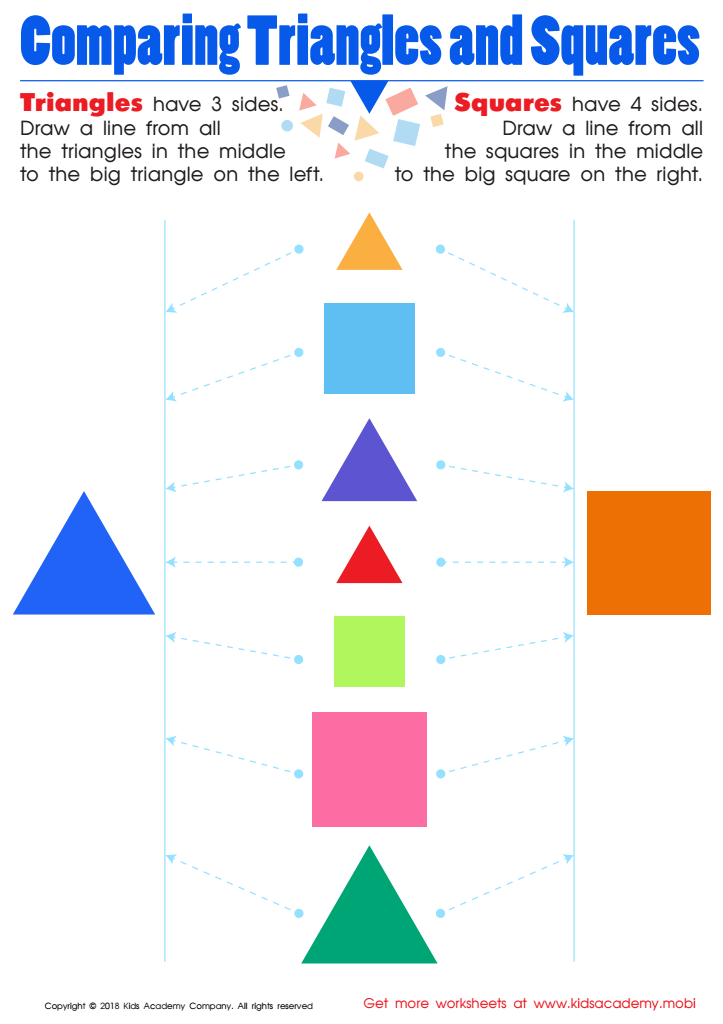
Comparing Triangles Squares Worksheet
 Assign to My Students











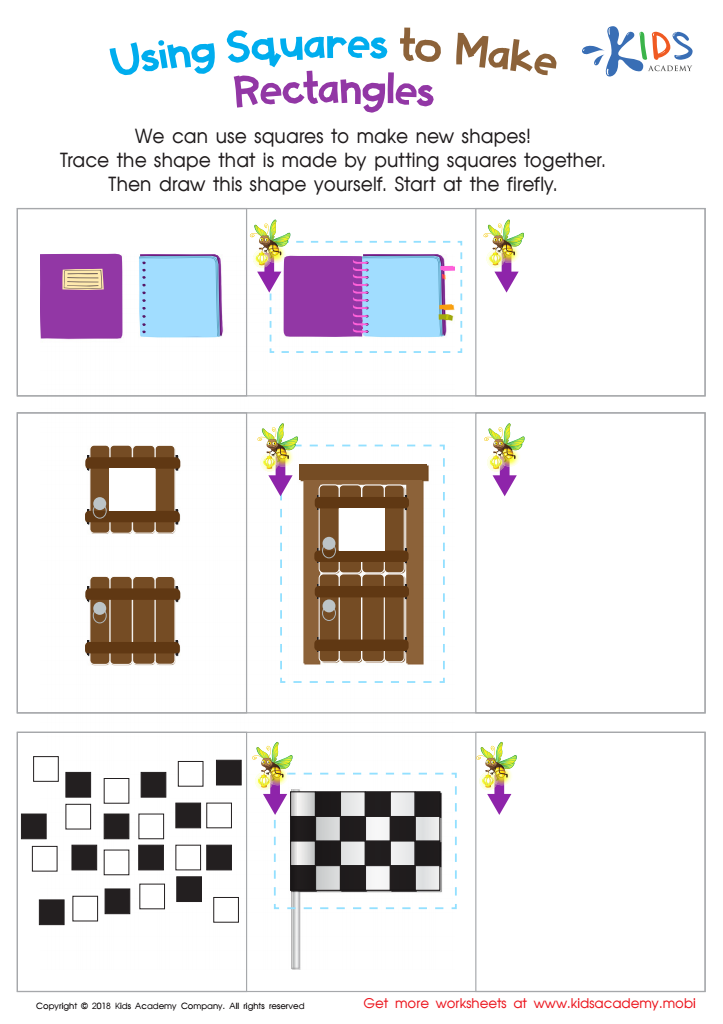
Using Squares to Make Rectangles Worksheet
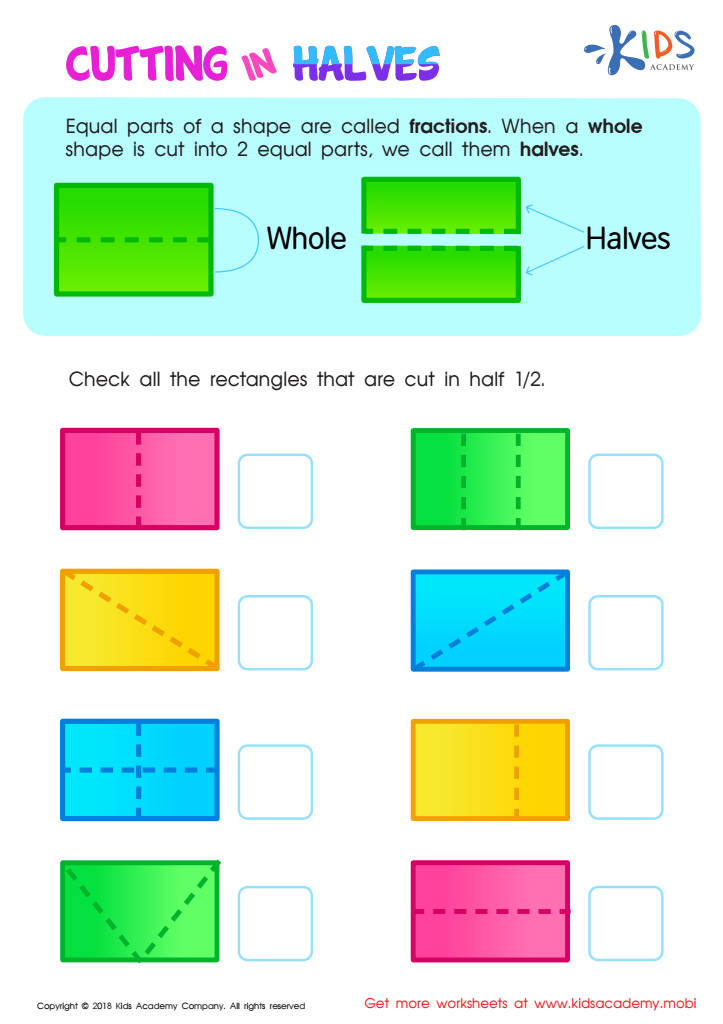
Cutting in Halves Worksheet








Basic geometry for ages 3-7 is crucial for several reasons, and both parents and teachers should take an active interest in introducing these concepts to young children. At this early age, children's brains are incredibly receptive to learning new concepts, and they naturally explore the world through shapes and spatial understanding.
-
Foundation for Math Skills: A strong grasp of geometry forms the basis for more advanced mathematical concepts. Understanding shapes, sizes, and spatial relationships helps children later when they deal with more complex math in school. Recognizing patterns and geometrical structures also enhances their problem-solving abilities.
-
Language Development: Learning geometric terminology such as "circle," "triangle," "square," and "rectangle" enriches children's vocabulary. This helps them better describe and navigate their world.
-
Spatial Awareness: Knowing basic geometry improves spatial awareness and can aid in everyday tasks, such as packing a bag or assembling a puzzle. This foundational skill is important in a variety of fields, including architecture, engineering, and the arts.
-
Motor Skills: Engaging in activities like tracing shapes, drawing, and building objects improves fine motor skills. Manipulating objects of different shapes can strengthen hand-eye coordination and dexterity.
-
Creativity and Art: Geometry isn't just about math; it intersects with art. Knowing shapes aids children in drawing and coloring, fostering creativity and artistic expression.
Thus, early introduction to basic geometry sets a well-rounded educational foundation, empowering young minds with essential skills for their future academic and daily life.








