Differentiating shapes Geometry Worksheets for Ages 3-7
3 filtered results
-
From - To
Explore our "Differentiating Shapes Geometry Worksheets" designed for children ages 3-7! These engaging worksheets help young learners identify, compare, and classify various shapes, fostering essential geometry skills early on. With fun activities tailored to different learning paces, children can enjoy hands-on practice with circles, squares, triangles, and more. Our resources aim to build confidence and understanding in shape recognition, setting a strong foundation for future math concepts. Perfect for educators and parents alike, these worksheets make learning interactive and enjoyable, ensuring that kids master the fundamentals of geometry while having fun. Start their shape exploration journey today!
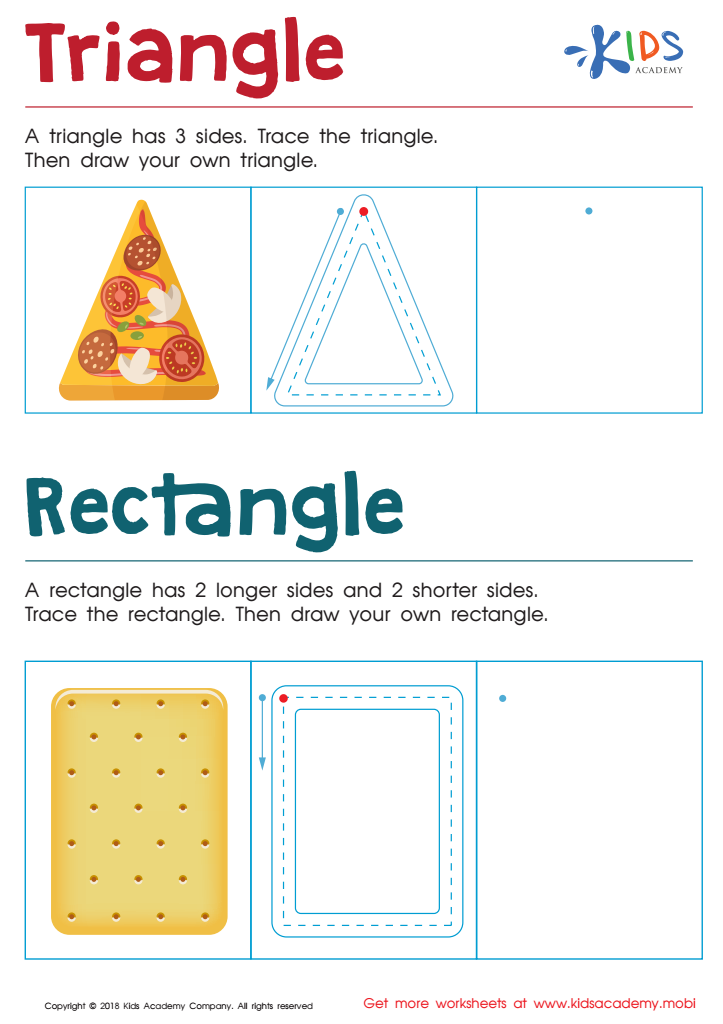
Triangle Rectangle Worksheet
 Assign to My Students











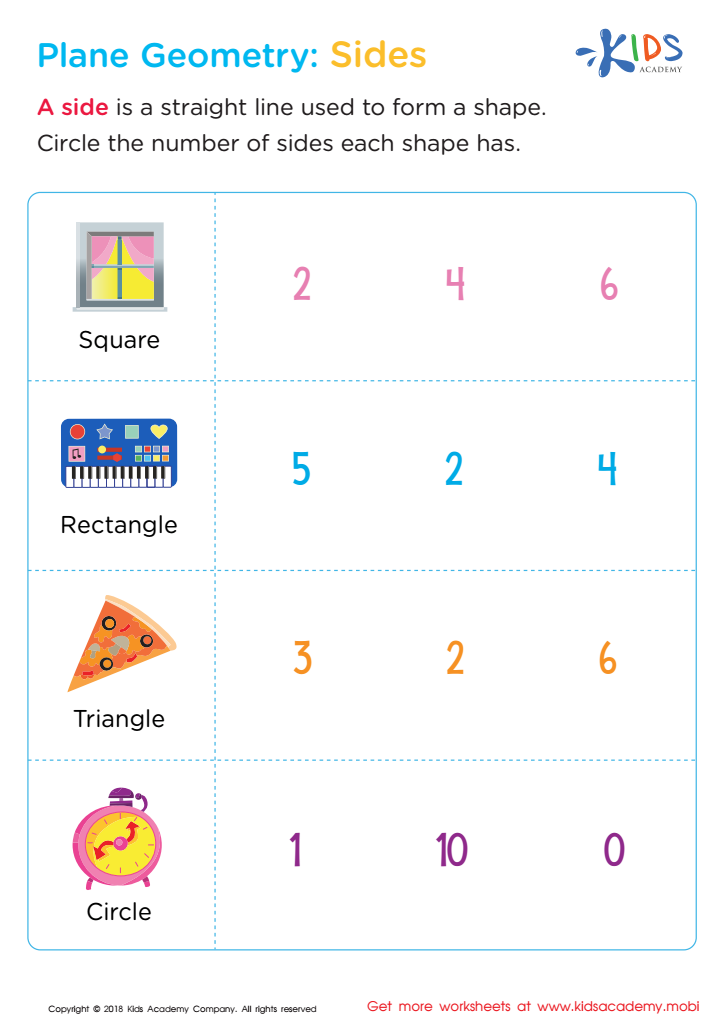
Plane Geometry: Sides Worksheet
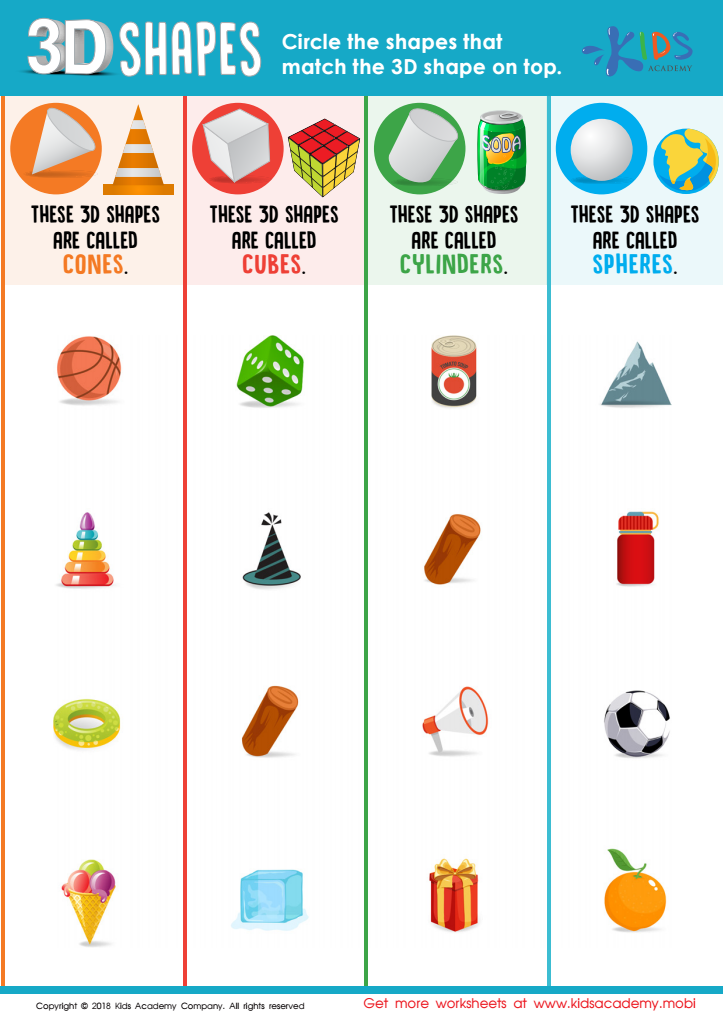
3D Shapes Worksheet








Differentiating shapes geometry for children aged 3-7 is crucial for their cognitive and social development. At this age, children are naturally curious and exploring their environment, making it an optimal time to introduce concepts of shapes and geometry. Understanding shapes helps to foster critical thinking skills, as children learn to classify, compare, and differentiate various geometric forms.
Parents and teachers should prioritize this learning because it forms the foundation for future mathematical concepts. Early geometric knowledge is directly linked to later success in mathematics, promoting skills such as spatial reasoning, problem-solving, and logical thinking.
Moreover, incorporating geometric shapes engages children creatively. Activities that explore shapes through art and play not only make learning enjoyable but also enhance fine motor skills and expression. Additionally, this knowledge supports language development, as children learn to name, describe, and categorize shapes, improving their vocabulary.
Lastly, teaching shapes encourages collaboration and social interaction during group activities, fostering teamwork and communication skills. In essence, differentiating shapes in geometry nurtures young learners holistically, empowering them with essential skills for academic success and lifelong learning. Parents and teachers play a vital role in making these learning experiences enriching and effective.








