Fraction visualization Geometry Worksheets for Ages 3-7
5 filtered results
-
From - To
Our Fraction Visualization Geometry Worksheets for Ages 3-7 provide engaging, interactive activities designed to introduce young learners to the world of fractions and geometric shapes. These captivating worksheets help children visualize fractions by using circles, squares, and other shapes, allowing them to grasp core concepts through fun exercises. Perfect for home or classroom use, our resources promote critical thinking, fine motor skills, and an early understanding of mathematical relationships. Let your child explore the connections between fractions and geometry while developing foundational math skills in a playful environment. Download and watch them thrive in their learning journey today!
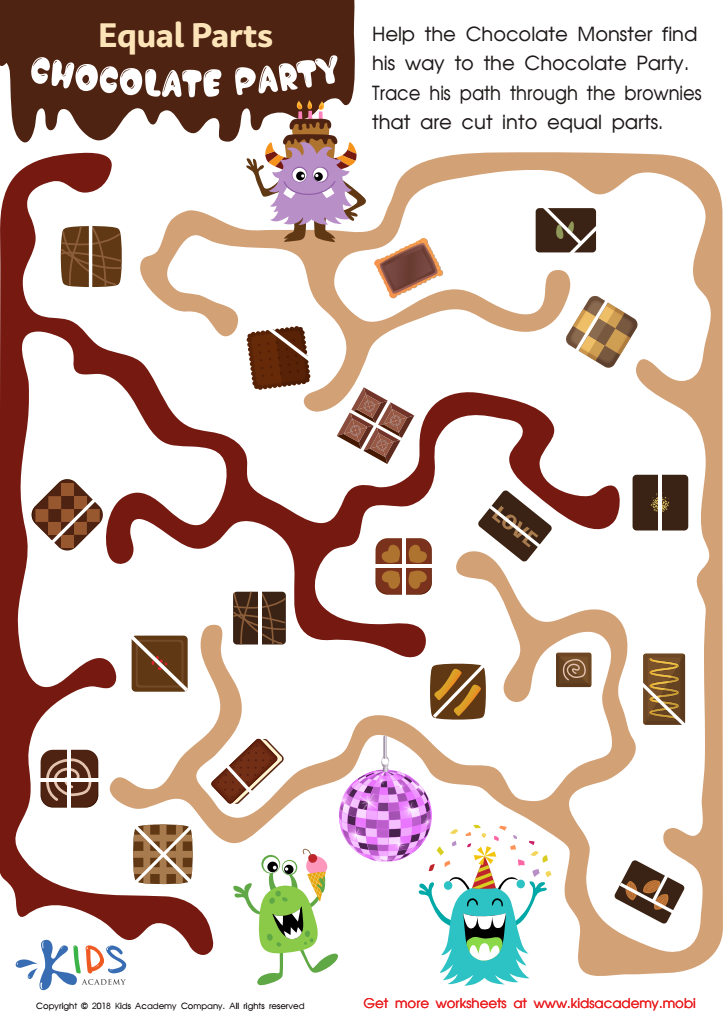
Equal Parts: Chocolate Party Worksheet
 Assign to My Students











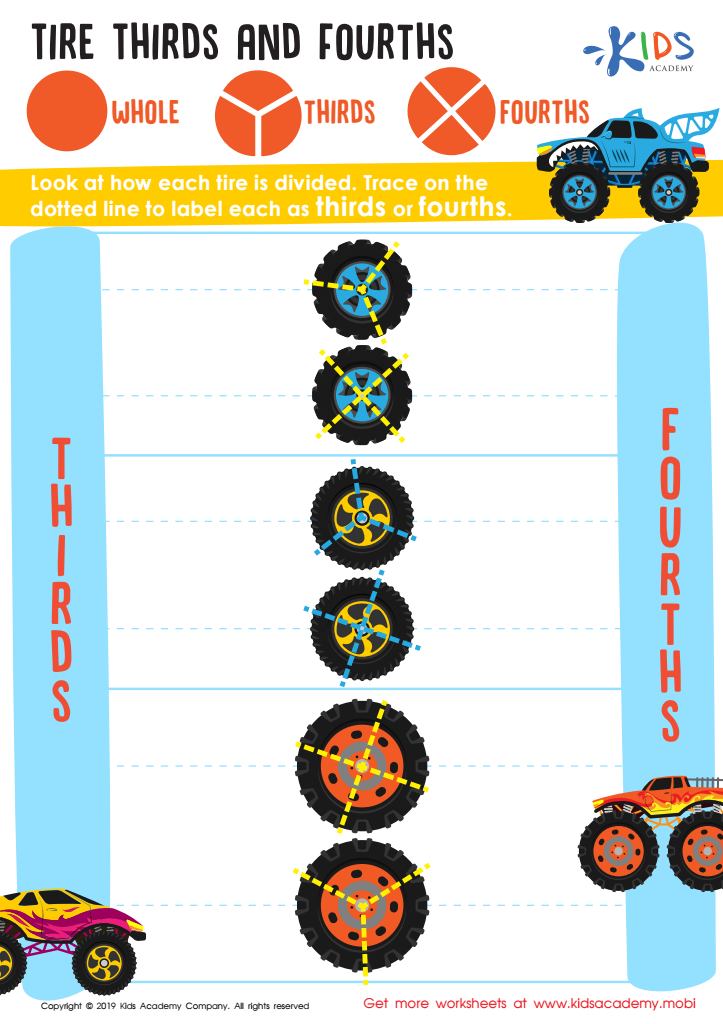
Tire Thirds and Fourths Worksheet
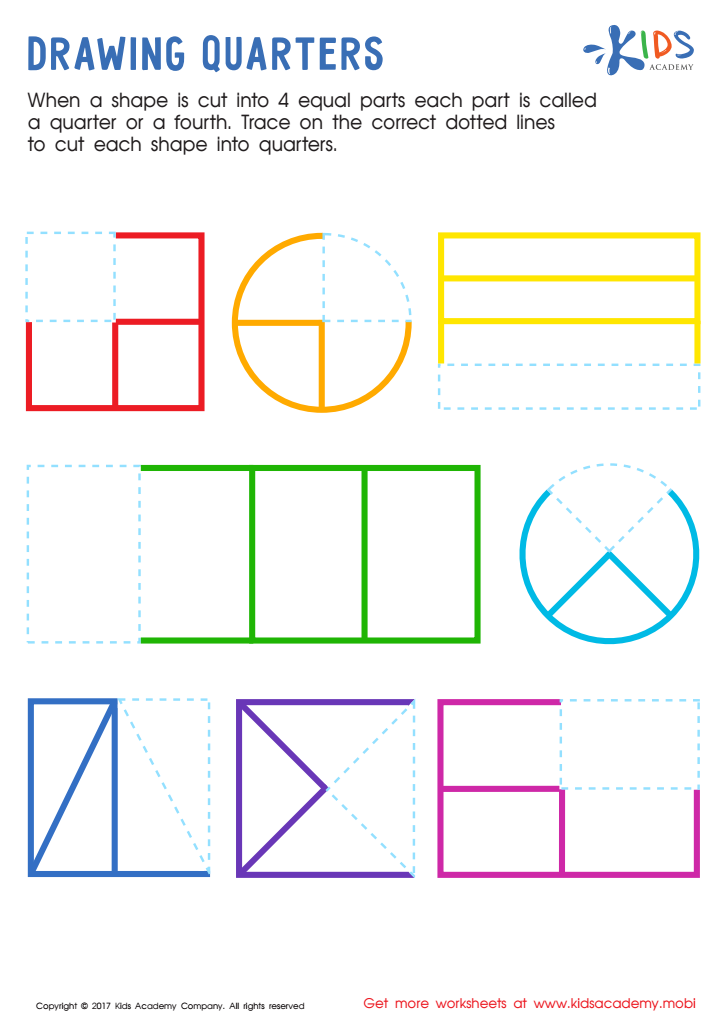
Drawing Quarters Worksheet
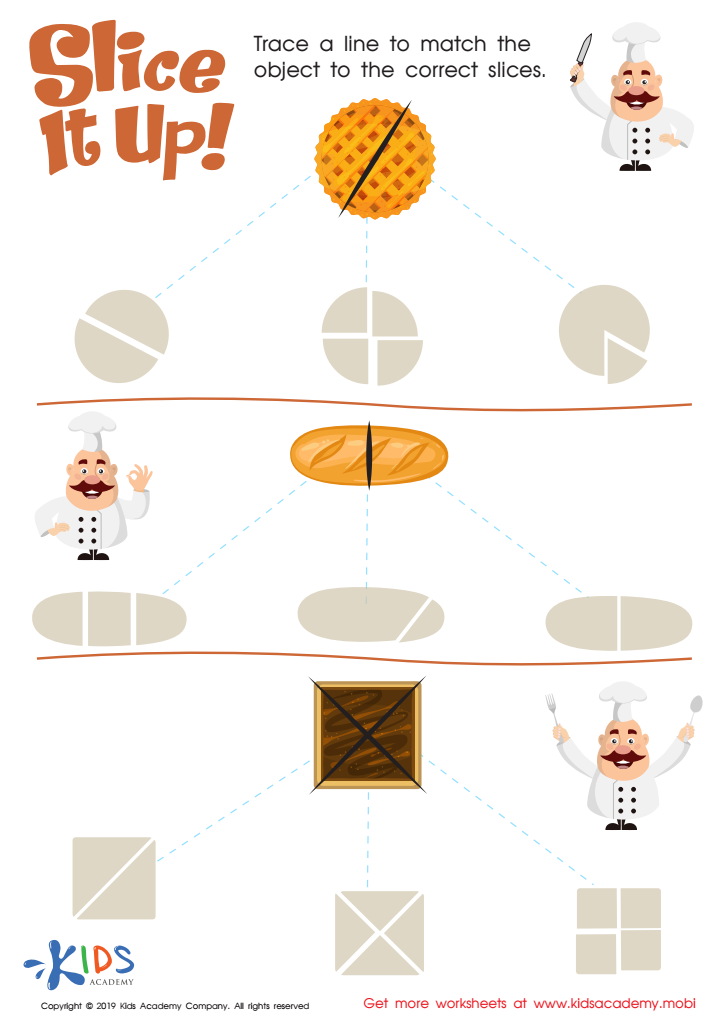
Slice It Up Worksheet
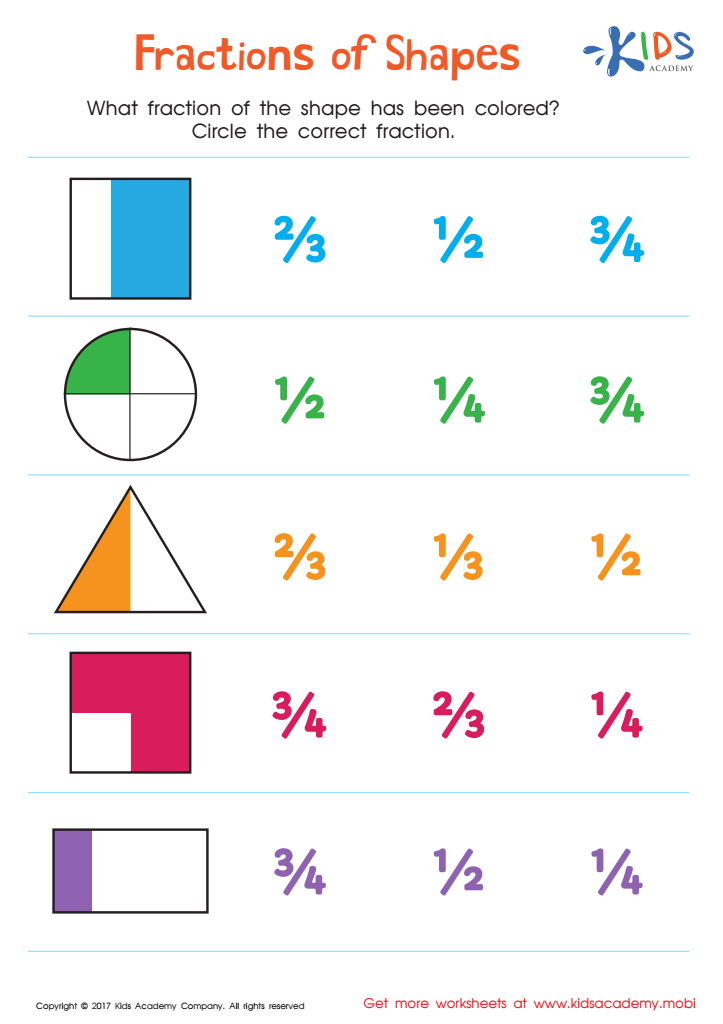
Fractions of Shapes: Math Concept Worksheet








Fraction visualization and geometric understanding are foundational skills for young learners, particularly for ages 3-7. During these formative years, children develop critical thinking and problem-solving abilities. Engaging them in activities that incorporate fractions within geometric contexts helps them grasp the concept of part-to-whole relationships, a skill essential not only in mathematics but also in daily life.
Teachers and parents should prioritize fraction visualization for several reasons. Firstly, it makes abstract mathematical concepts more concrete, allowing children to manipulate shapes and parts visually, enhancing their comprehension. For instance, when children learn to divide a circle into quarters, they can see, touch, and interact with the segments, reinforcing their understanding.
Additionally, integrating geometry with fraction learning fosters spatial awareness and promotes cognitive development. Children begin to see connections between different areas of math and learn to apply these skills in varied contexts, such as understanding sharing, dividing resources, or recognizing patterns.
Furthermore, early exposure to these concepts can spark a long-lasting interest in mathematics. Engaging parents and teachers in this process creates a supportive learning environment that encourages exploration and curiosity, setting the stage for more advanced mathematical learning in the future. Investing in artistic and geometric fraction activities lays a strong foundation for mathematical reasoning and confidence.








