Identifying shapes Geometry Worksheets for Ages 3-7
3 filtered results
-
From - To
Discover our comprehensive collection of "Identifying Shapes Geometry Worksheets" designed specifically for children ages 3-7! These engaging and colorful worksheets help young learners develop essential skills in recognizing and naming various shapes. Each activity is created to reinforce geometric concepts through fun exercises that promote visual perception and critical thinking. Perfect for homeschooling or classroom settings, our worksheets cater to different learning styles, making shape identification an enjoyable experience for every child. Dive into the world of geometry with our stimulating resources that ensure a solid foundation in math while fostering creativity and confidence in young mathematicians!
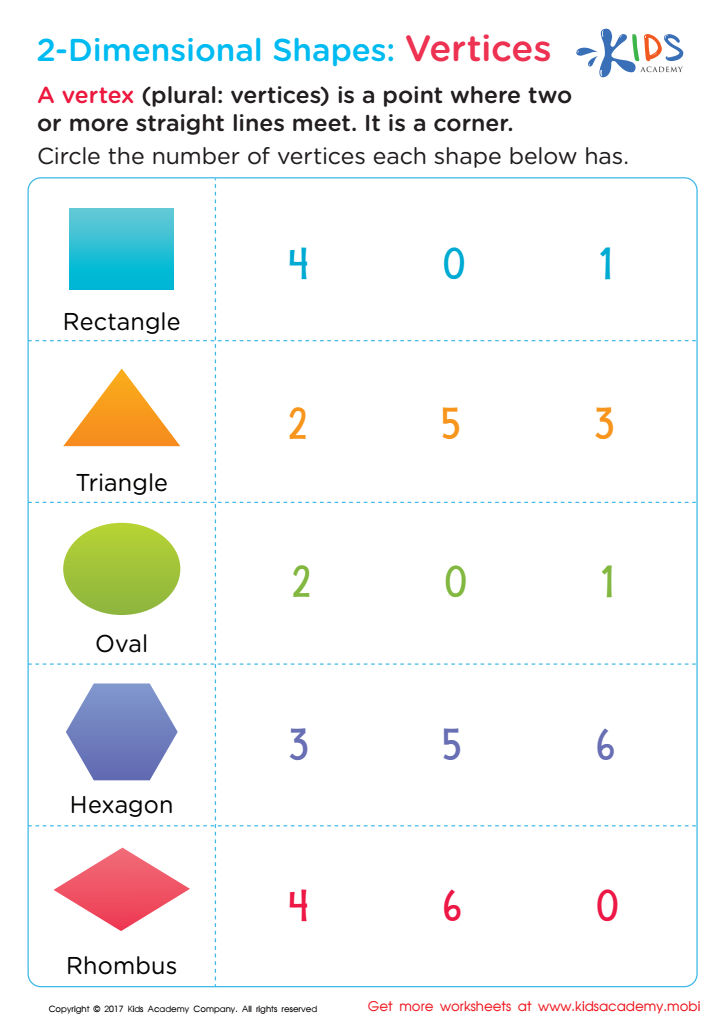
Two–Dimensional Shapes: Vertices Printable











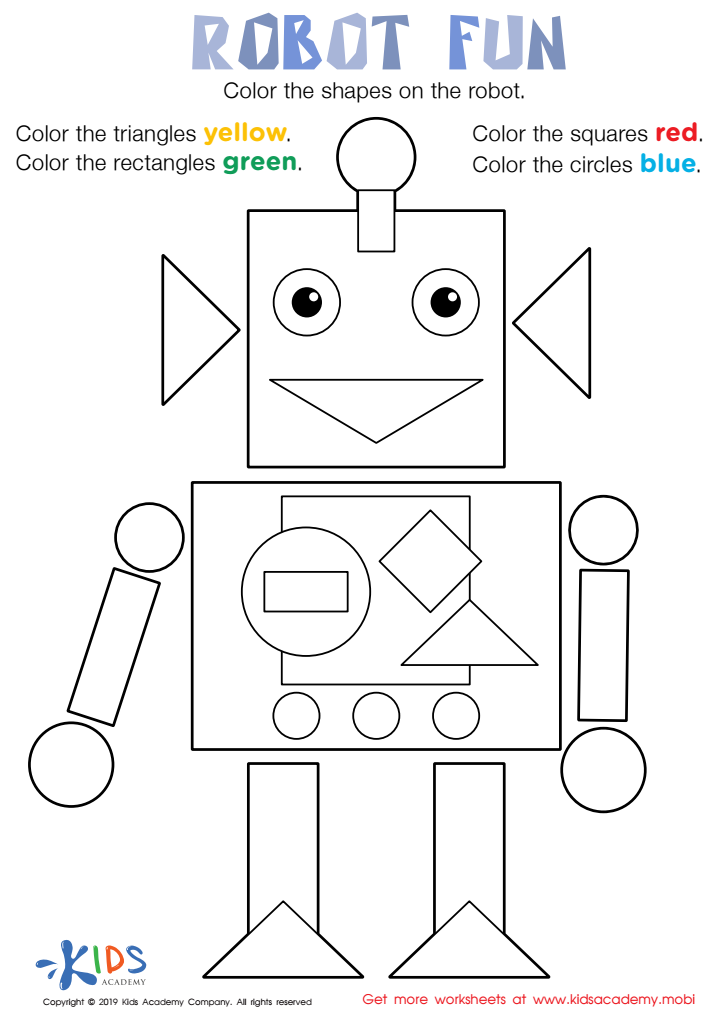
Robot Fun Worksheet
 Assign to My Students
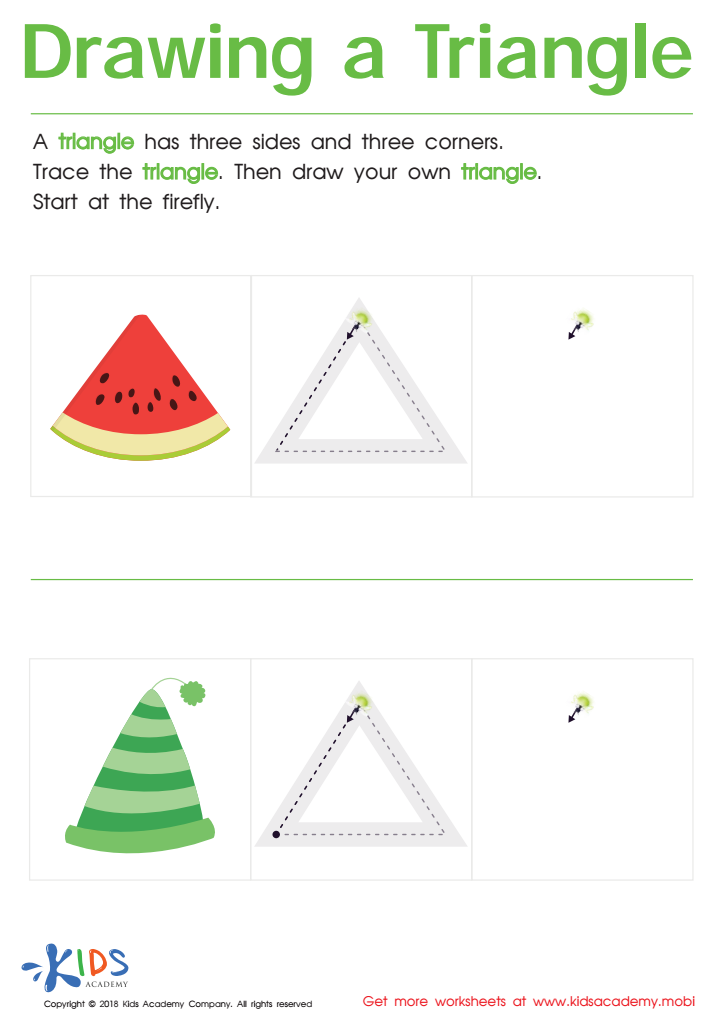
Drawing a Triangle Worksheet








Identifying shapes is a fundamental skill in early childhood education, particularly for children ages 3-7. This stage of development lays the groundwork for critical thinking, problem-solving, and spatial awareness. Shape recognition assists children in understanding their environment and forms the basis for more advanced concepts in geometry and mathematics.
Parents and teachers should care about teaching shape identification because it helps develop cognitive abilities. When children recognize and classify shapes, they enhance their categorization and analytical skills. Furthermore, shape recognition is tied to language development; as children learn to name and describe shapes, they expand their vocabulary and improve communication skills.
Moreover, understanding shapes supports other areas of learning, including art, science, and everyday life. It encourages children to observe and engage with the world around them, fostering creativity and curiosity. Regularly incorporating shape activities into daily routines can also build confidence and a sense of accomplishment in young learners.
Ultimately, by prioritizing shape identification, parents and teachers provide essential support that aids in the overall development of math and literacy skills, preparing children for future academic success and informed citizenry.








