Recognizing shapes Geometry Worksheets for Ages 3-7
4 filtered results
-
From - To
Unlock your child's potential with our "Recognizing Shapes Geometry Worksheets for Ages 3-7." These engaging worksheets are designed to make learning fun and interactive. Perfect for young learners, our activities promote the recognition and understanding of basic shapes like circles, squares, triangles, and more. Ideal for both classroom and at-home learning, each worksheet helps develop critical thinking and fine motor skills. Foster early math confidence and spatial awareness in your child with our expertly crafted resources. Explore today and watch your little one master geometry, building a strong foundation for future STEM success!
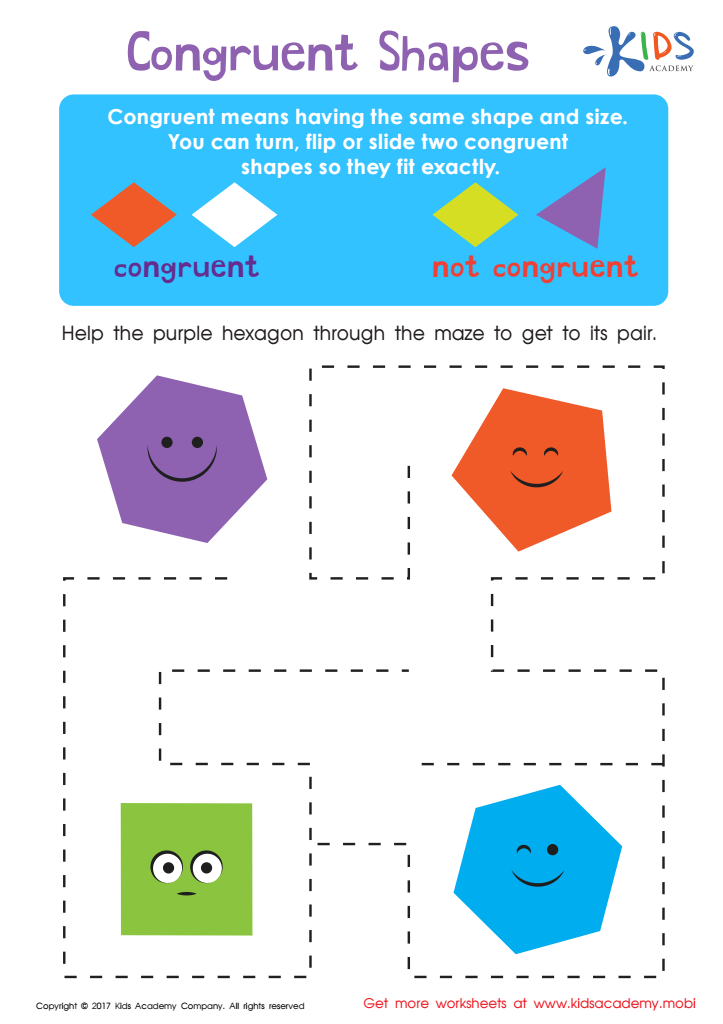
Congruent Shapes Worksheet
 Assign to My Students











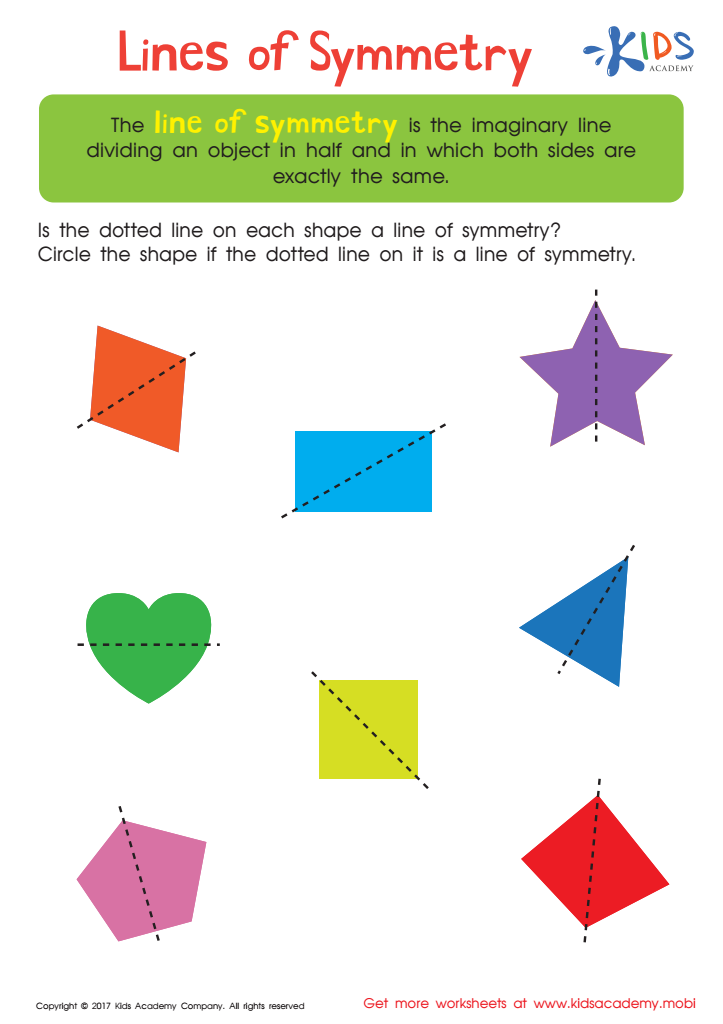
Lines of Symmetry Printable
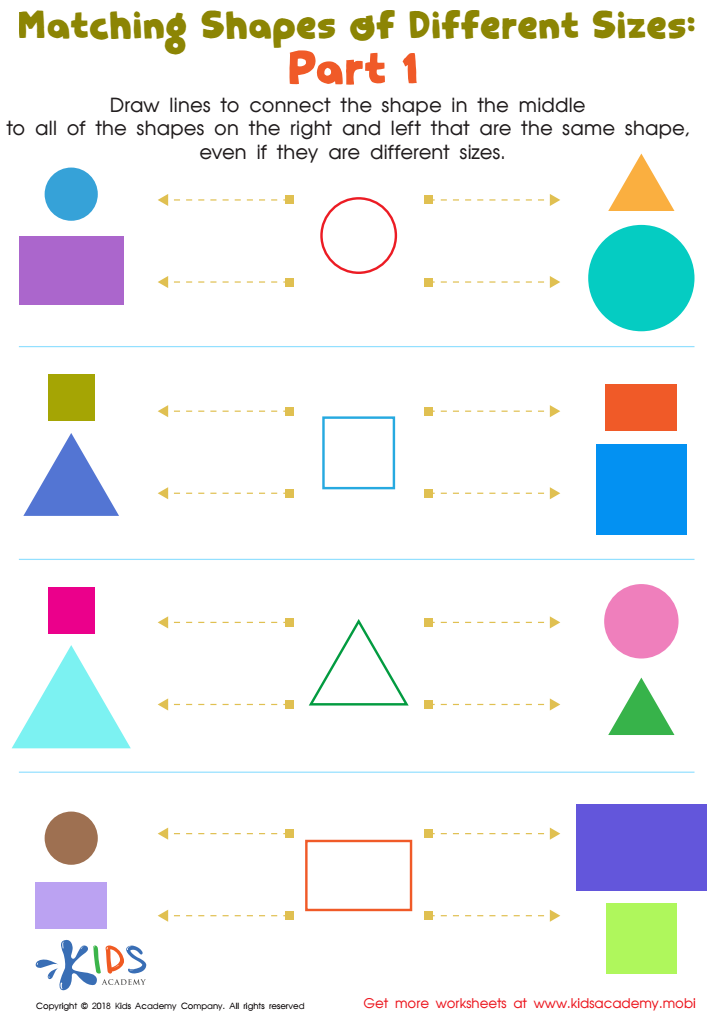
Geometry: part 1 Worksheet
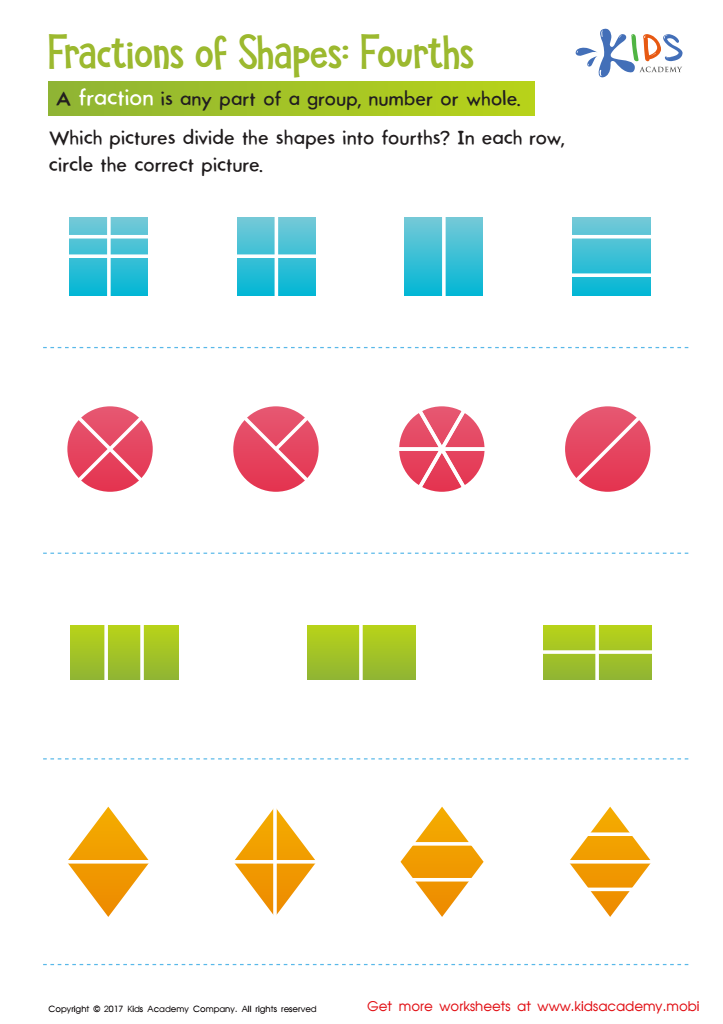
Fractions of Shapes Worksheet








Recognizing shapes and understanding basic geometry are crucial for children aged 3-7 as these skills lay the foundational groundwork for cognitive and academic development. At this early age, brains are incredibly receptive to learning new concepts, and geometry helps children make sense of the world around them. Recognizing and categorizing shapes assist in developing visual-spatial skills, critical for tasks ranging from reading and writing to problem-solving and critical thinking.
When children identify and interact with shapes, they enhance their ability to observe and recognize patterns, a fundamental skill not only in mathematics but in literacy and everyday life. This form of learning also strengthens fine motor skills, as manipulating different shapes involves hand-eye coordination and control. By integrating shapes into day-to-day activities, children also cultivate language skills; terms like "circle," "square," and "triangle" build their vocabulary and enhance their ability to communicate their experiences and ideas clearly.
Educational games, puzzles, drawing, and hands-on activities involving shapes make learning engaging and fun, fostering a positive attitude towards math early on. Encouraging children to explore geometry therefore stimulates creativity, enhances memory, and builds confidence – imperative elements in achieving long-term academic success and a love for learning.








