Shape comparison Geometry Worksheets for Ages 3-7
4 filtered results
-
From - To
Our Shape Comparison Geometry Worksheets for Ages 3-7 are specially designed to engage young learners in essential early math skills. These fun, educational worksheets enable children to explore different shapes, enhancing their visual-spatial awareness and comparative abilities. Perfect for kids aged 3 to 7, these activities include matching, sorting, and identifying shapes in playful and colorful ways. With our easy-to-use printables, your child will build a strong foundation in geometry, develop critical thinking skills, and enjoy the process of discovery. Inspire a love for learning today with our engaging shape comparison worksheets.
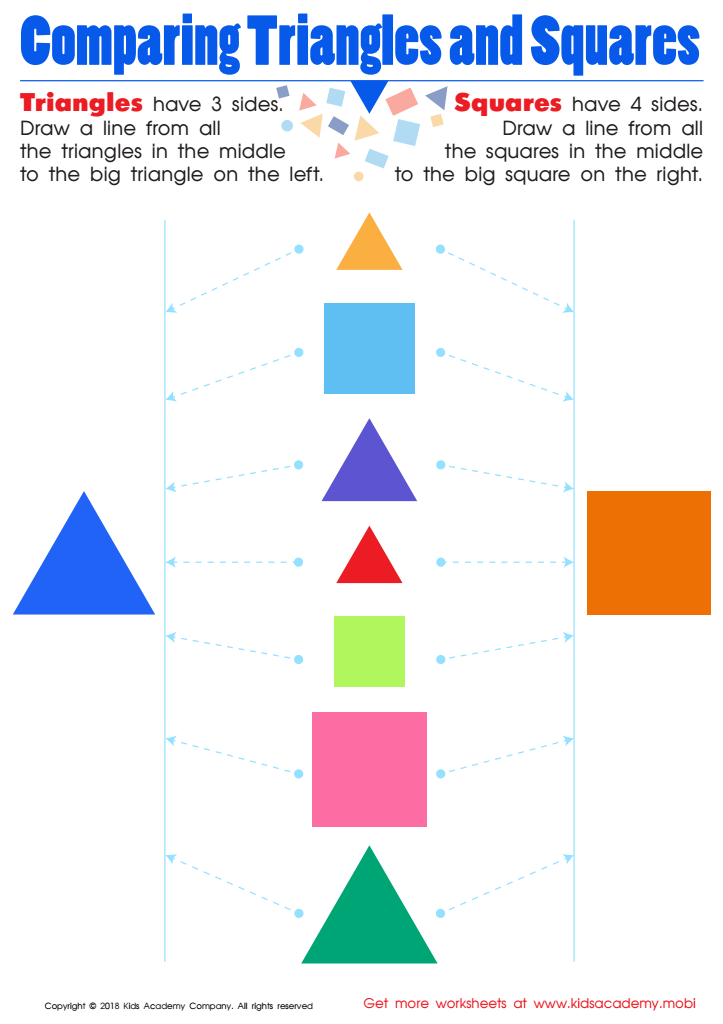
Comparing Triangles Squares Worksheet
 Assign to My Students











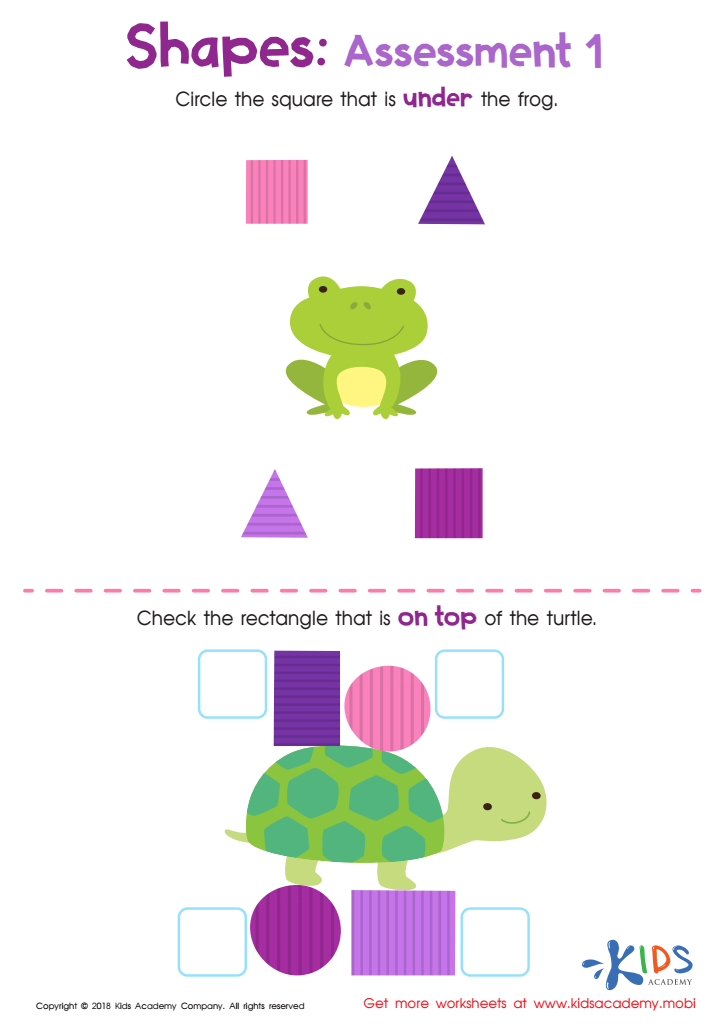
Geometry – Assessment 1 Worksheet
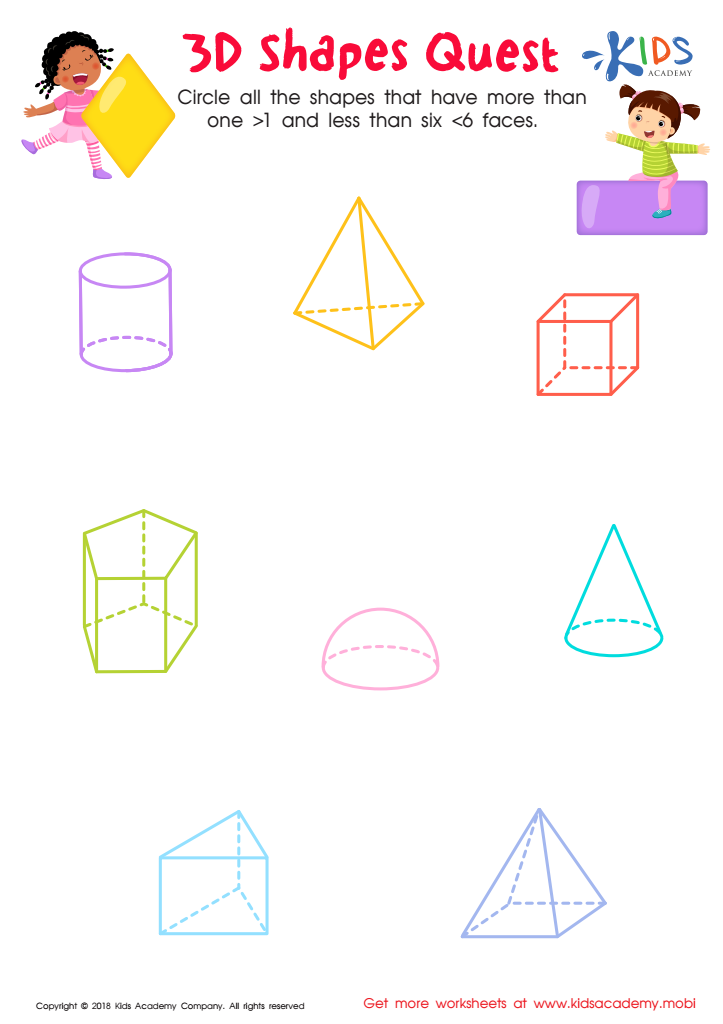
3D Shapes Quest Worksheet
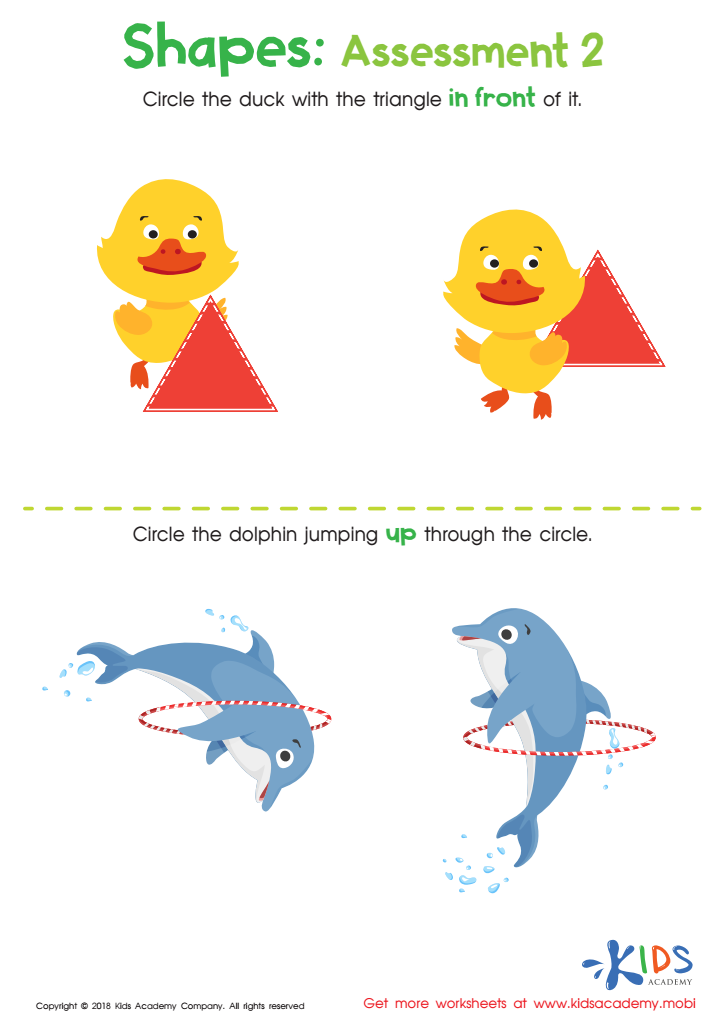
Geometry – Assessment 2 Worksheet








Introducing shape comparison geometry to children aged 3-7 is instrumental in their cognitive development. First, learning to compare shapes bolsters early visual and spatial awareness. Recognizing and differentiating between shapes allows children to grasp more complex geometric concepts later on. Shape comparison helps build fundamental math skills; understanding shapes and their attributes lays the groundwork for learning about size, symmetry, and patterns, all of which are foundational in subjects like algebra and calculus.
Moreover, shape comparison sharpens problem-solving abilities. When children observe and compare shapes, they develop categorization and critical-thinking skills. For instance, identifying which shapes fit into larger wholes promotes analytical thinking. This type of mental activity gears young minds toward scientific inquiry and logic.
Socially, learning about shapes through group activities encourages teamwork and communication. Collaborative tasks, like building blocks or group-based sorting games, enable children to verbalize ideas and improve their reasoning with peers.
Additionally, familiarity with shapes and spatial terms supports early language development. Describing shapes and their properties enriches vocabulary, with terms like "edge," "corner," and "curve."
In essence, parents and teachers should emphasis shape comparison geometry for young children to provide them with a robust foundation that aids both academic success and holistic cognitive growth.








