
Basic Math understanding Numbers Worksheets for Ages 3-7
3 filtered results
Difficulty Level
Grade
Age
-
From - To
Subject
Activity
Standards
Discover our engaging Basic Math Understanding Numbers Worksheets designed specifically for children aged 3 to 7. These worksheets aim to foster essential early math skills, helping young learners recognize, write, and understand numbers through fun and interactive exercises. With colorful illustrations and relatable themes, each activity makes learning enjoyable, boosting kids' confidence and enthusiasm for math. Ideal for homeschooling, classroom use, or extra practice, our worksheets provide a strong foundation for future math success. Explore a variety of topics tailored to your child's developmental needs, ensuring they master fundamental concepts in an exciting way. Start your child's math journey today!
Favorites
With answer key
Interactive
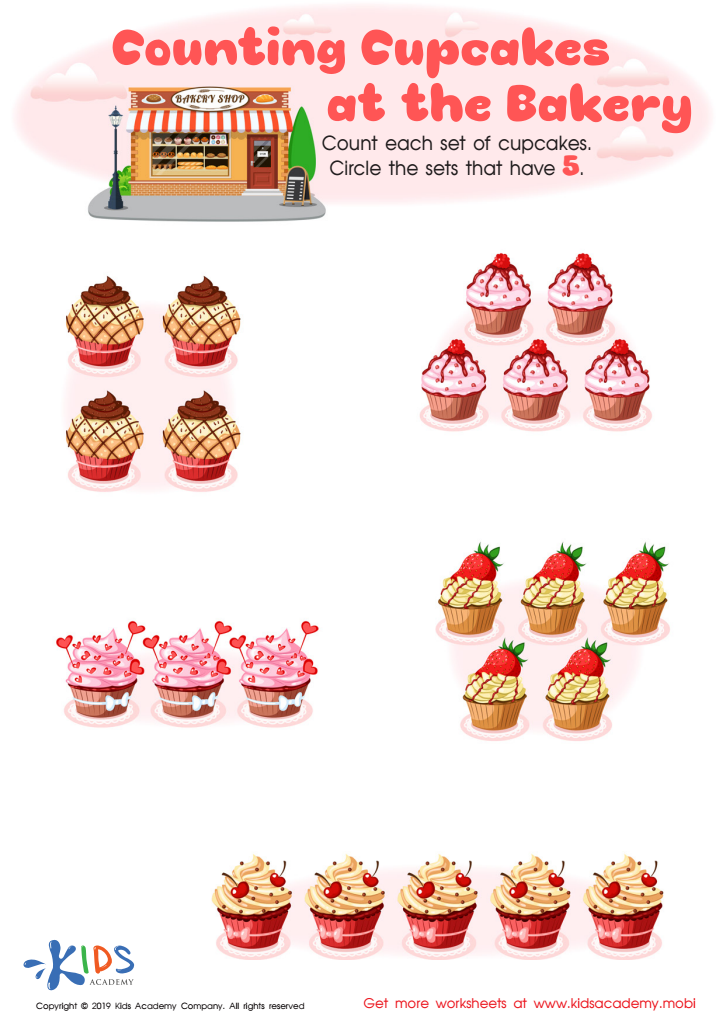
Counting Cupcakes Worksheet
This fun worksheet for preschoolers uses cupcakes to teach counting. Kids must circle the groups of cupcakes that add up to 5. The delicious treats make learning fun and engaging!
Counting Cupcakes Worksheet
Worksheet
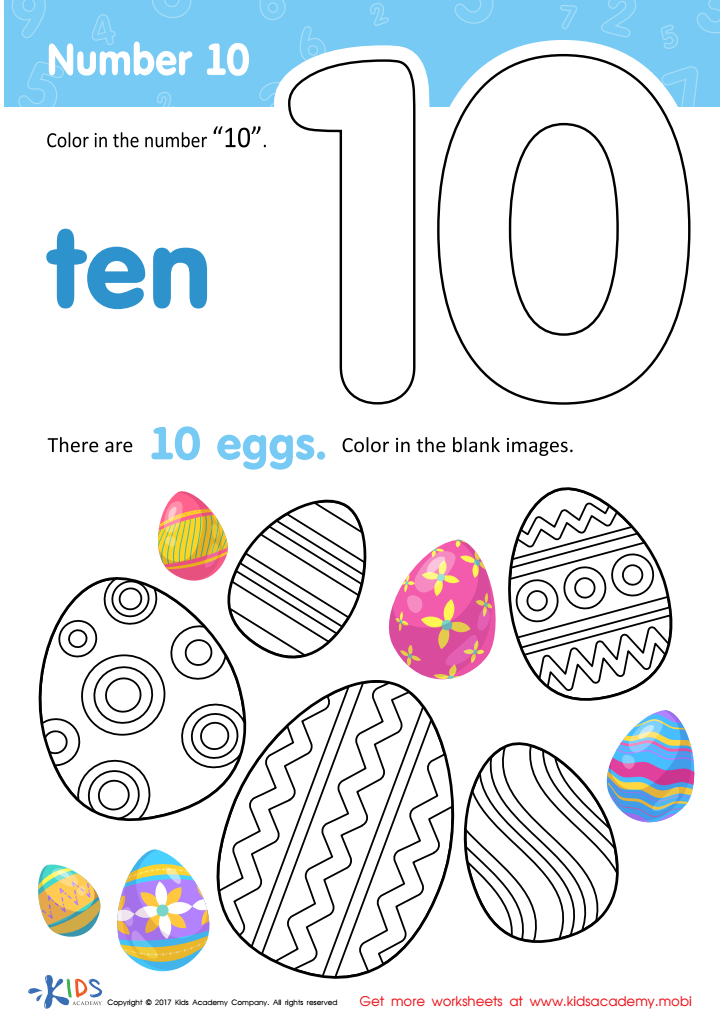
Number 10 Printable
Easter eggs are a great way to combine creativity and learning! Help your child explore the number 10 with our fun coloring page. The intricate designs will spark their imagination and fuel their artistic side, while they practice important numeracy basics. Get creative with eggs and enjoy the fun, no matter the time of year!
Download (PDF)
 Assign to My Students
Assign to My Students
Number 10 Printable
Worksheet
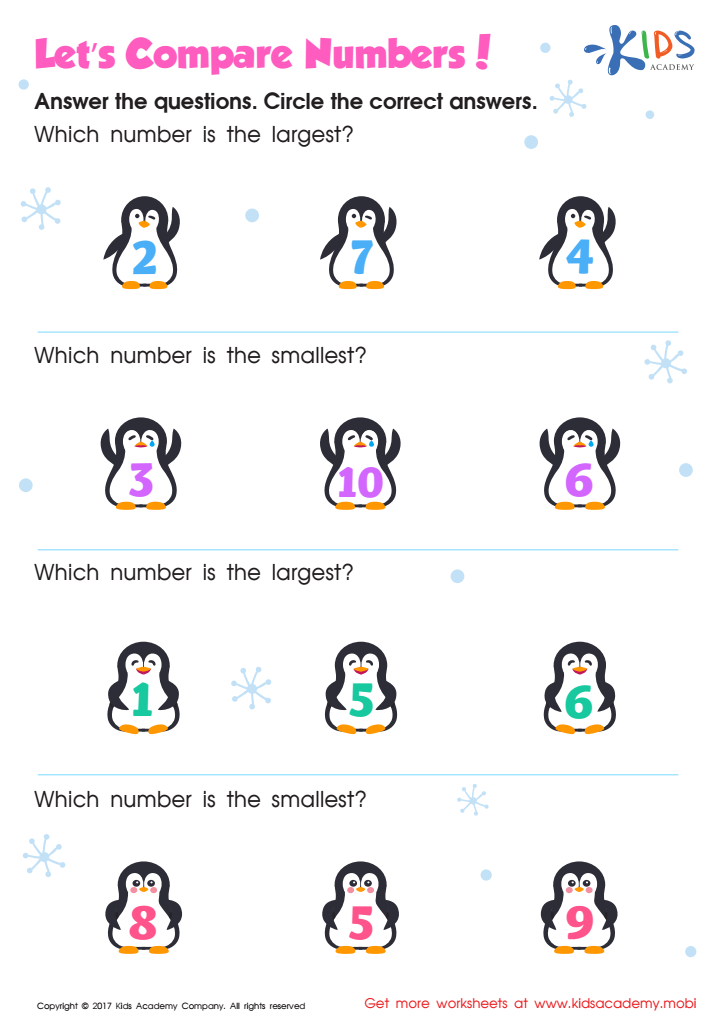
Comparing Numbers 1–10 Worksheet Kindergarten
Help your child sort out numbers 1-10 with this fun worksheet! They'll practice comparing numbers and boost their number sense. Plus, it features cute little penguins with numbers on their bellies - they make learning even more exciting!
Comparing Numbers 1–10 Worksheet Kindergarten
Worksheet
Join Kids Academy for Free
Who is primarily going to use this learning content?







Understanding numbers and basic math concepts from ages 3 to 7 is crucial for children's overall development and future academic success. During these formative years, children build the foundational skills and attitudes toward math that can shape their confidence and competence in the subject. Early exposure to numbers helps children develop critical thinking, problem-solving skills, and spatial awareness, which are instrumental across various subjects, not just math.
When parents and teachers prioritize basic math understanding, they facilitate cognitive development through engaging activities such as counting objects, recognizing patterns, and solving simple problems. These experiences foster a love for learning and humanize math as an interesting exploratory topic rather than a chore.
Moreover, early math understanding is linked to later success in school and life. Children who grasp fundamental concepts early on are more likely to perform well in standardized tests and academic settings. Additionally, instilling good numerical habits and nurturing a positive attitude towards math helps combat anxiety and negative stereotypes associated with the subject.
Ultimately, by investing time and resources in early math understanding, parents and teachers can ensure that children not only succeed academically but also develop lifelong skills necessary for rational decision-making and real-world applications.








