Develop problem-solving abilities Numbers Worksheets for Ages 3-7
3 filtered results
-
From - To
Unlock your child's potential with our "Develop Problem-Solving Abilities Numbers Worksheets for Ages 3-7". These engaging and educational printables are designed to enhance critical thinking and analytical skills through fun number-based activities. Suitable for preschoolers and early elementary students, the worksheets feature colorful illustrations and interactive exercises to challenge young minds. From counting and basic arithmetic to pattern recognition, our expert-crafted materials support comprehensive math skill development. Perfect for classroom use or at-home learning, these worksheets make mastering numbers an enjoyable adventure, setting a strong foundation for future academic success.
Discover the joy of learning with our problem-solving numbers worksheets today!
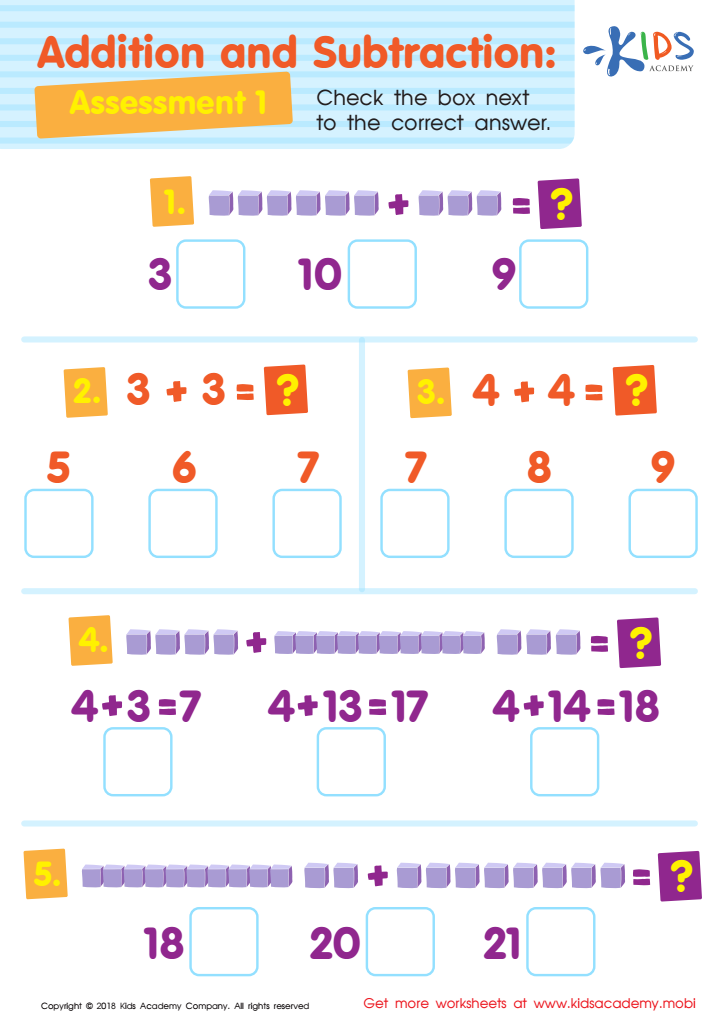
Addition and Subtraction Assessment 1 Worksheet
 Assign to My Students
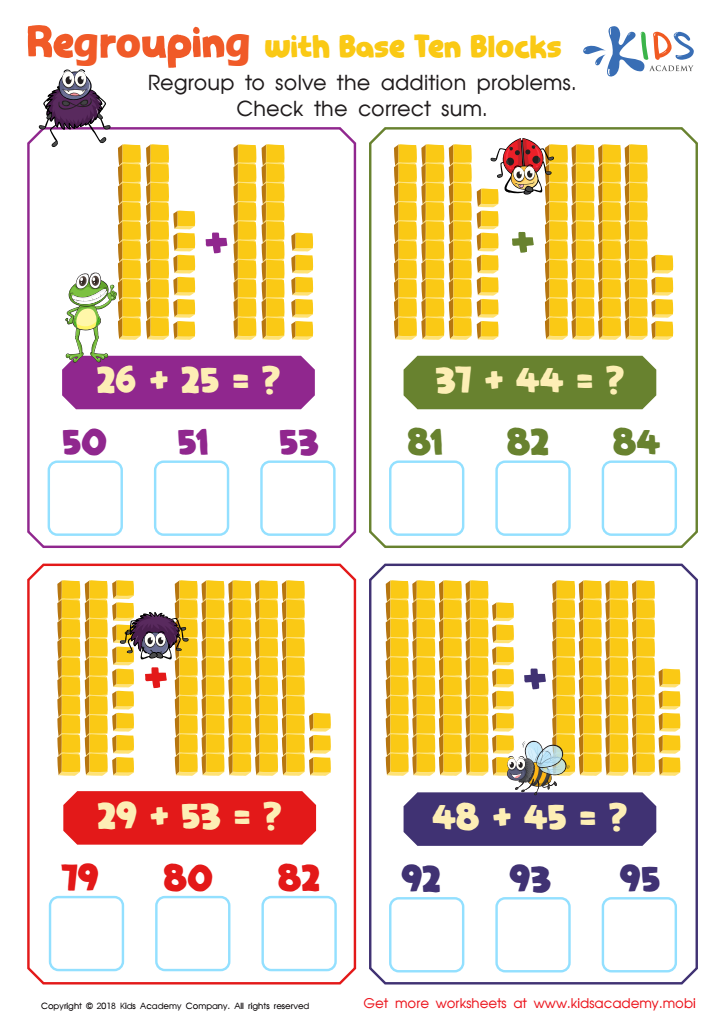
Regrouping With Base Ten Blocks Worksheet
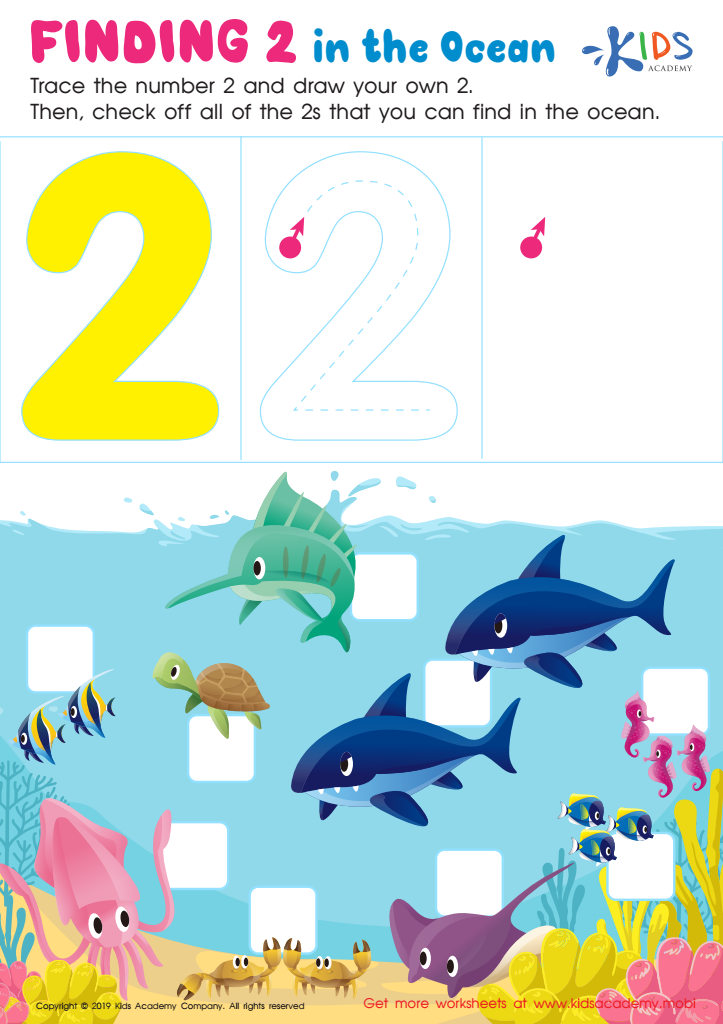
Finding 2: In the Ocean Worksheet




%20(1).jpg)



Fostering problem-solving abilities in young children, particularly through the use of numbers, is crucial for their cognitive and academic development. Between the ages of 3 to 7, children are in a critical stage of what psychologists term the preoperational and concrete operational stages. Developing number sense and problem-solving skills during this period lays a foundational framework necessary for more complex mathematics and logical reasoning later on.
First, early exposure to number-based problem-solving tasks enhances a child’s numerical literacy. They start to understand and manipulate numbers, recognizing patterns, and constructing a concrete idea of value and quantity. This knowledge fosters improve their fluency in basic arithmetic operations, forming the bedrock upon which advanced mathematical concepts can grow.
Furthermore, problem-solving with numbers encourages critical thinking, persistence, and creativity. When children tackle numerical problems, they learn to evaluate multiple approaches, persist through challenges, and derive solutions—all skills integral to overall academic success and everyday life. These skills can also be transferred to other domains, improving abilities in science, technology, reading comprehension, and even social interactions.
Moreover, nurturing an early interest in numbers cultivates a positive attitude towards mathematics, countering feelings of math anxiety that can emerge later. Ultimately, both teachers and parents play pivotal roles in enriching their child’s problem-solving abilities, set to prepare them for a lifetime of learning and confident problem-solving.








