Mental math skills Numbers Worksheets for Ages 3-7
5 filtered results
-
From - To
Explore our engaging Mental Math Skills Numbers Worksheets tailored for children ages 3-7. These creative and interactive sheets help young learners develop essential math skills in a fun and stimulating way. Designed to bolster number recognition, addition, and subtraction, our worksheets encourage mental calculation and critical thinking. Each activity is crafted to boost confidence and creativity while preparing children for formal math education. Whether at home or in the classroom, these worksheets make learning numbers enjoyable and effective. Download now and watch your child thrive in their math journey, laying a solid foundation for future learning in just a few engaging activities!
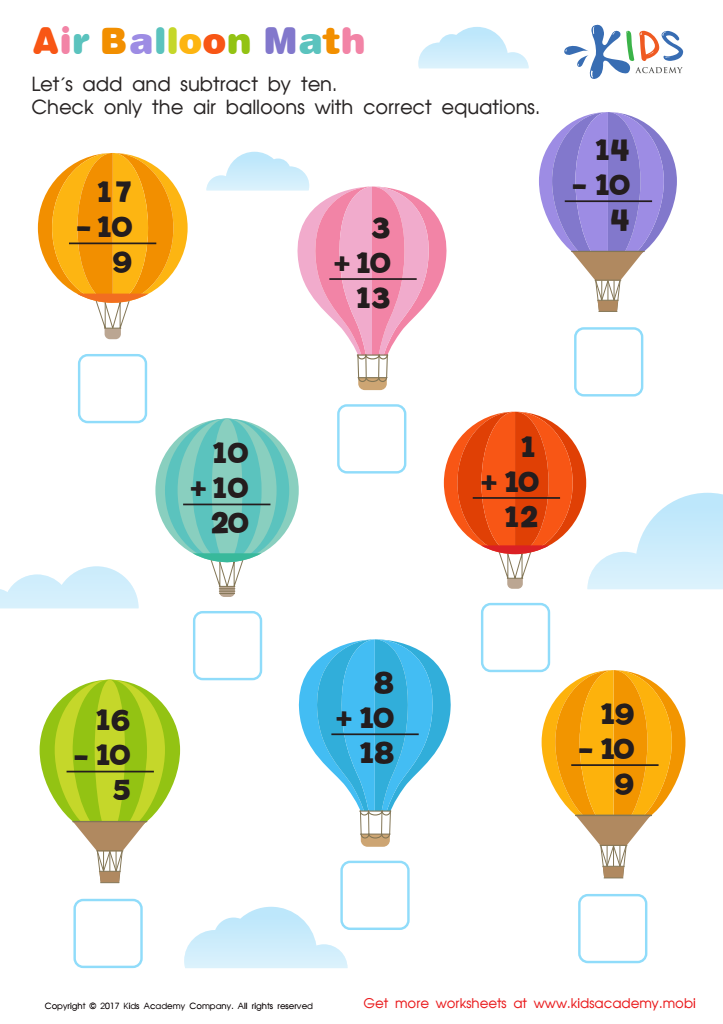
Air Balloon Math Worksheet
 Assign to My Students
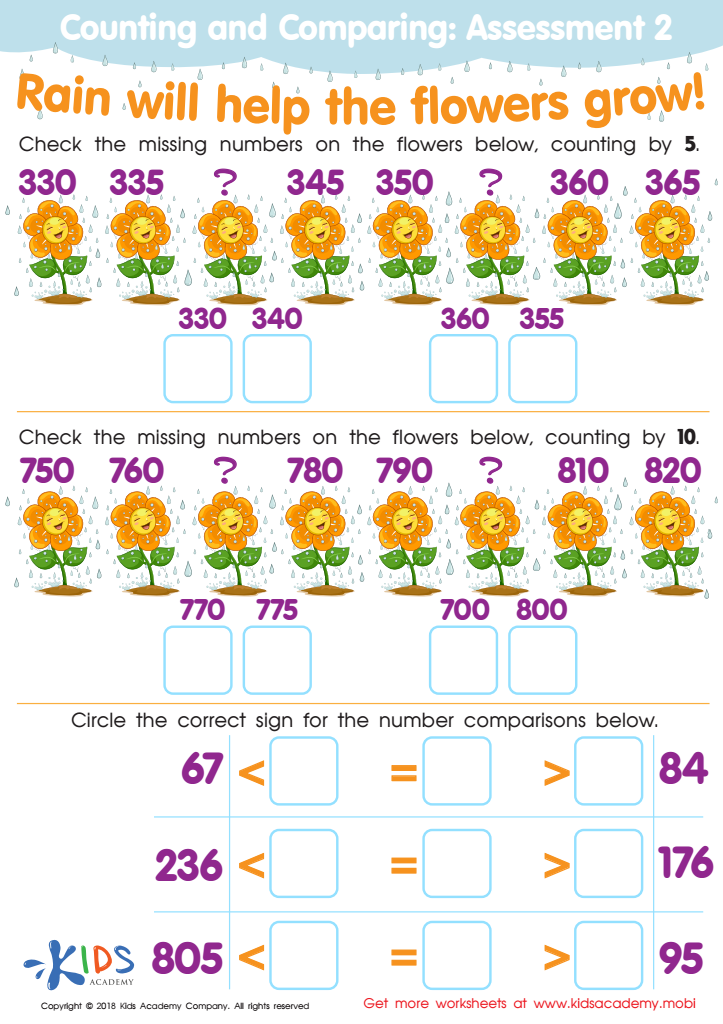
Counting and Comparing: Assessment 2 Worksheet
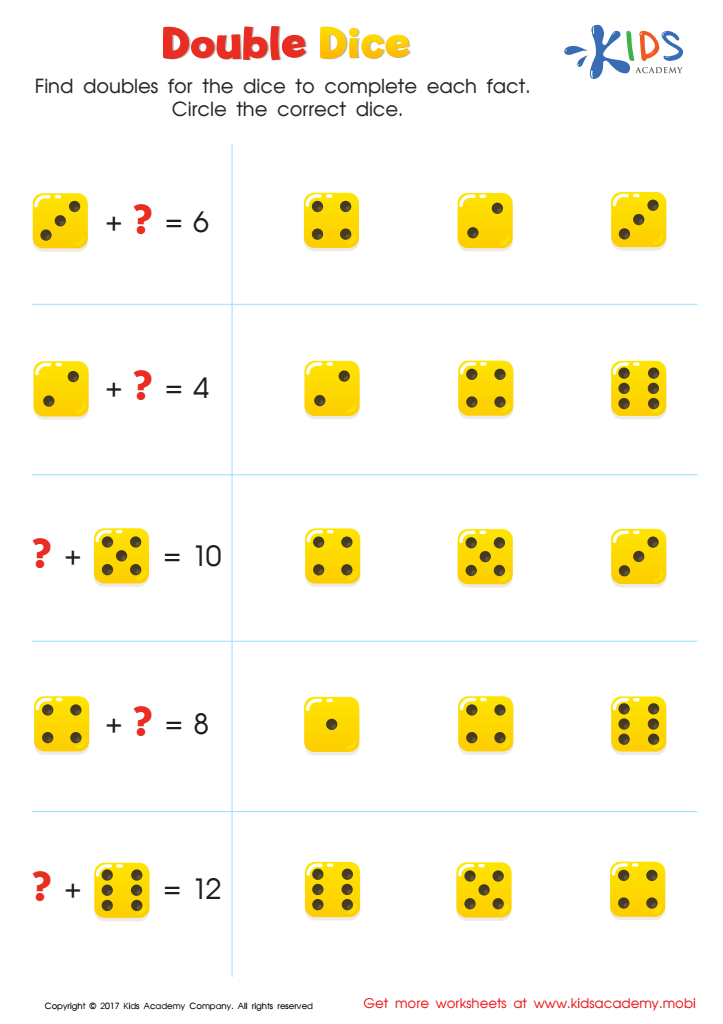
Addition Facts: Double Dice Worksheet
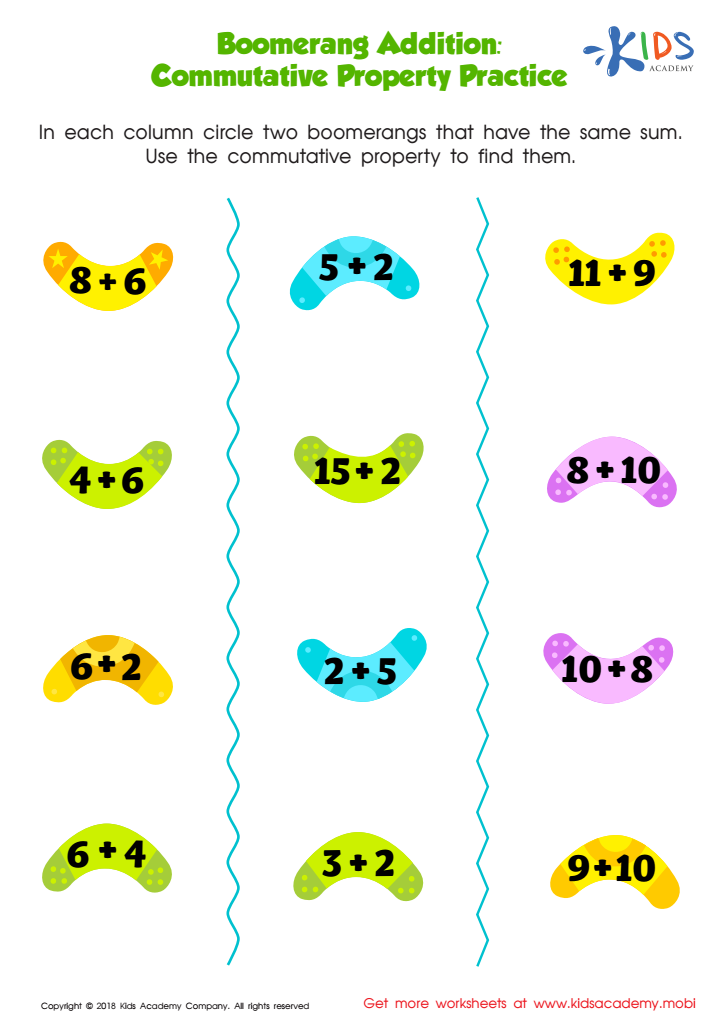
Boomerang Addition Worksheet
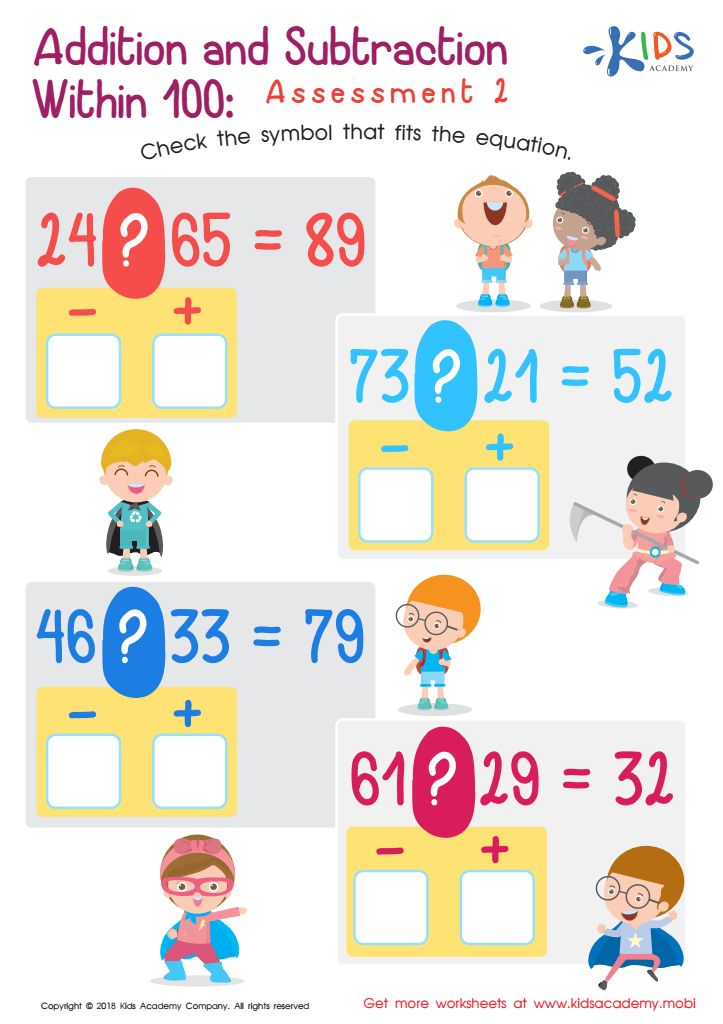
Addition and Subtraction Within 1: Assessment 2 Worksheet






Parents and teachers should prioritize mental math skills for children aged 3 to 7 because these abilities form the foundation for future academic success and everyday problem solving. At this age, children are in a critical stage of cognitive development. Developing mental math helps them build confidence, fosters a positive attitude towards mathematics, and enhances logical thinking.
Mental math encourages children to compute and reason without relying on calculators or written strategies, promoting deeper understanding and quicker recall of arithmetic facts. As they learn to manipulate numbers in their heads, they're honing their spatial and analytical skills which are essential for later mathematical concepts, such as addition, subtraction, and problem-solving.
Additionally, mental math activities can be fun and engaging, incorporating games and practical experiences that link math to daily life. This interactive approach not only strengthens their number skills but also nurtures a love for learning. Furthermore, mental math reduces dependence on external tools, encouraging autonomy and resilience.
Ultimately, fostering strong mental math skills early sets children up for success in higher-level mathematics, empowering them to tackle challenges with confidence throughout their education and beyond. Engaging them now nurtures lifelong learners equipped with crucial problem-solving abilities.








