Pattern recognition Numbers Worksheets for Ages 3-7
4 filtered results
-
From - To
Discover our engaging Pattern Recognition Numbers Worksheets designed specifically for children aged 3-7! These interactive resources help young learners develop essential math skills while having fun. Through a variety of visually appealing activities, kids will identify and create number patterns, enhancing their cognitive abilities and fostering critical thinking. Our worksheets are tailored to accommodate different learning paces, ensuring all children can thrive. Whether at home or in the classroom, these pattern recognition exercises promote number literacy and prepare children for more advanced mathematical concepts. Explore our collection today and support your child's journey to becoming a confident learner!
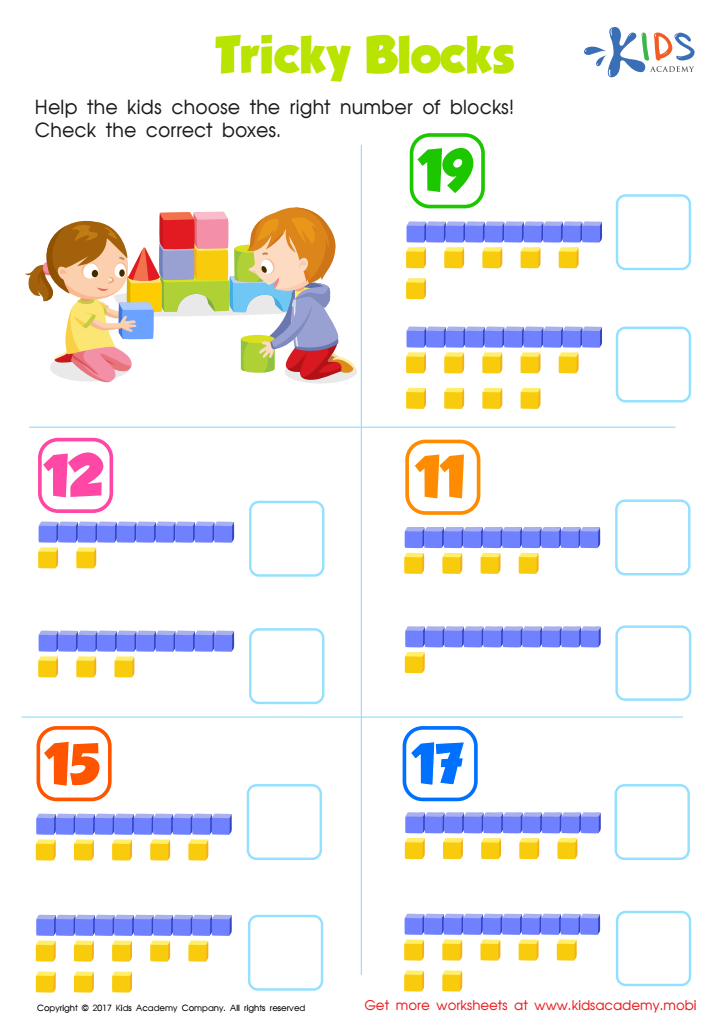
Tricky Blocks Worksheet
 Assign to My Students
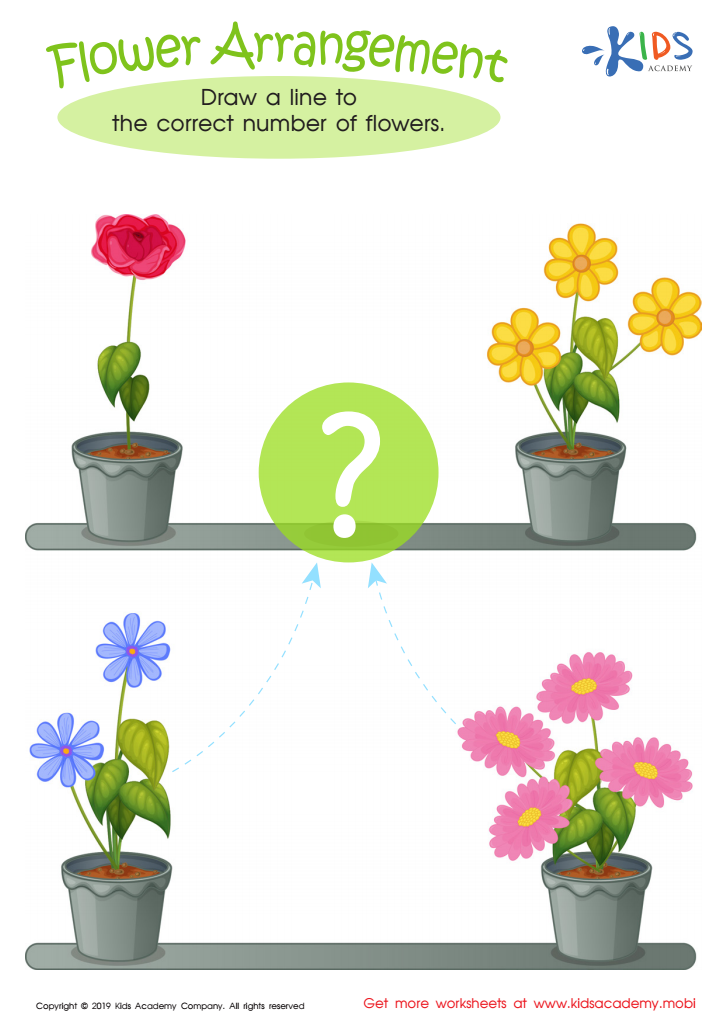
Flower Arrangement Worksheet
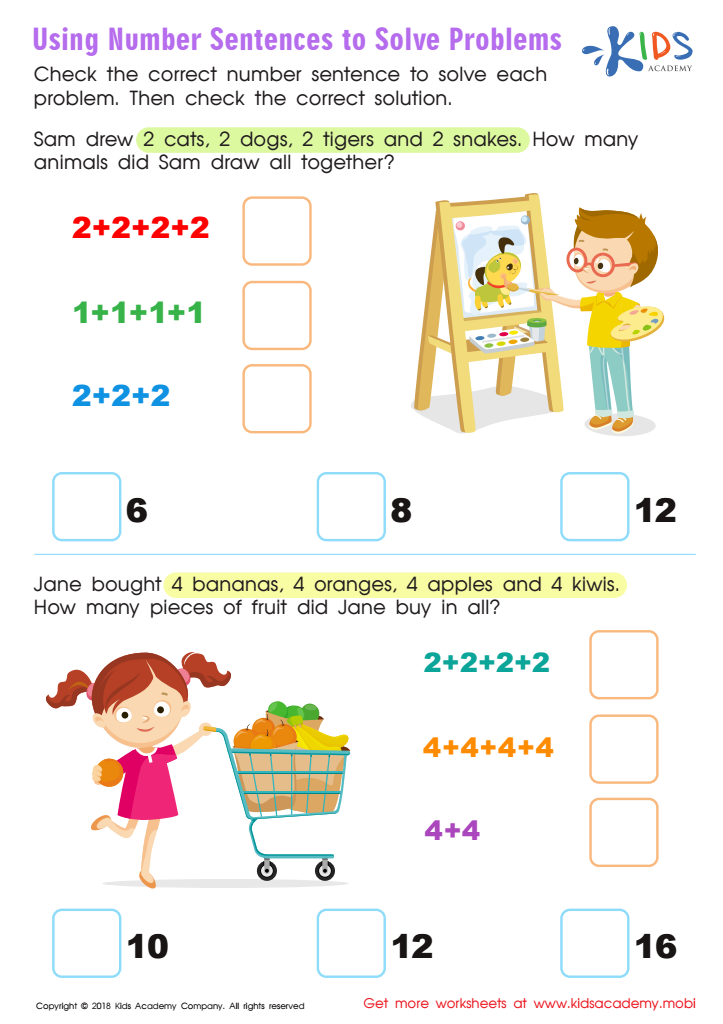
Using Number Sentences to Solve Problems Worksheet
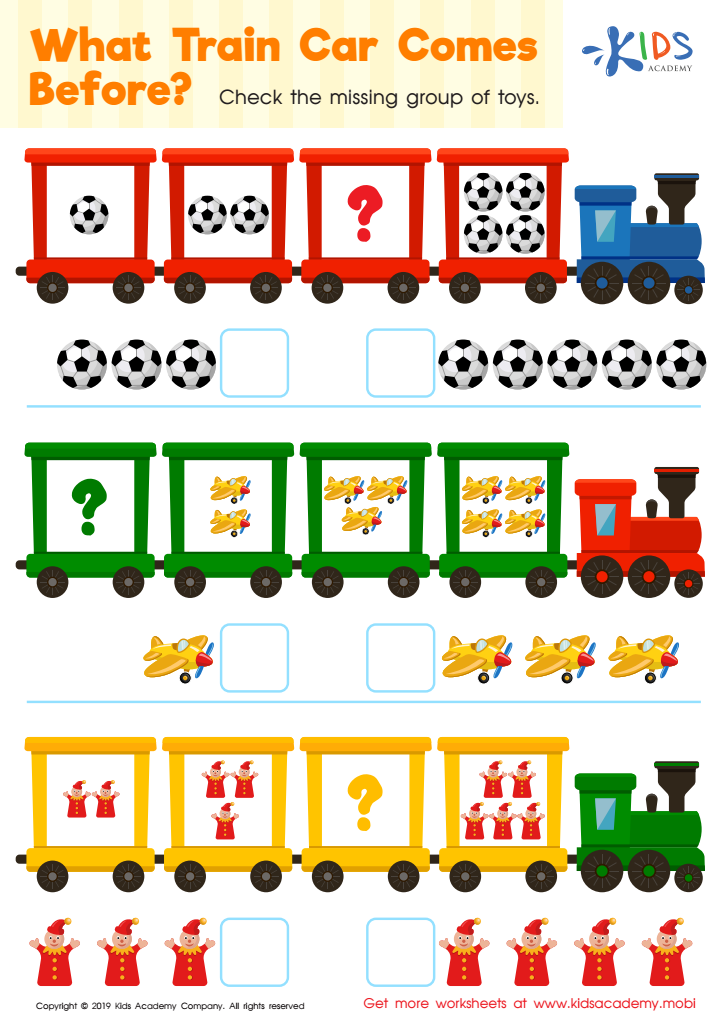
What Train Car Comes Before? Worksheet


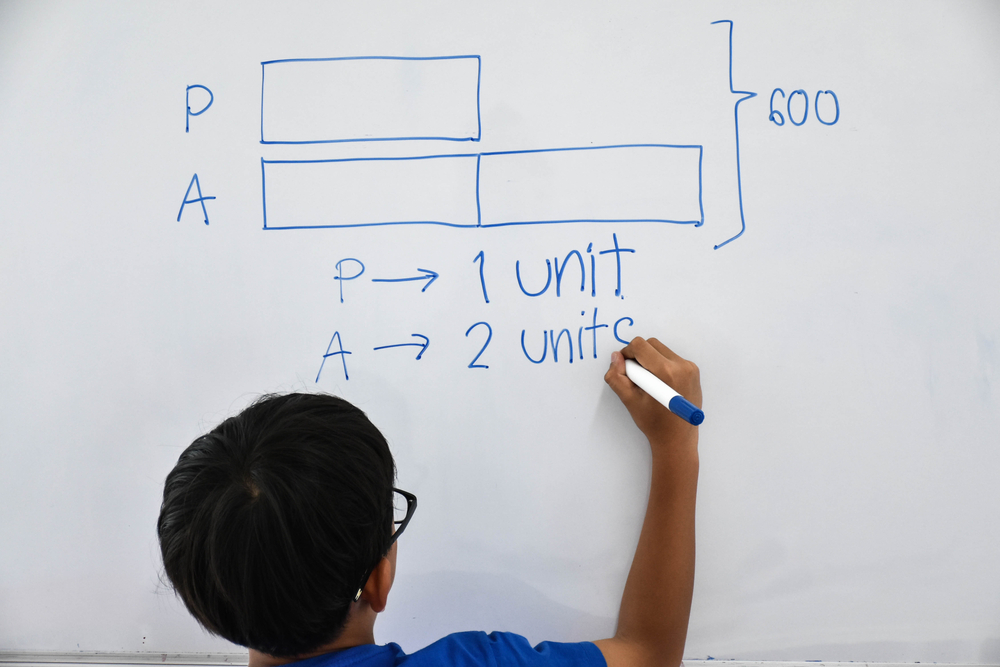





Pattern recognition in numbers is crucial for children aged 3-7 as it lays the foundation for essential mathematical skills. During these formative years, children are naturally curious and eager to explore relationships and sequences in their environment. By engaging them in pattern recognition activities, such as counting, sorting, and identifying patterns in numbers, we foster critical thinking and problem-solving abilities.
Understanding patterns helps children make connections between numbers, which is vital for grasping concepts like addition, subtraction, and even more complex mathematics in the future. When children can recognize and predict patterns, they build confidence in their mathematical abilities, enhancing their engagement in learning.
Moreover, pattern recognition is not limited to mathematics; it develops analytical skills that are applicable across various subjects. Parents and teachers can cultivate these skills through playful activities like games, rhymes, and storytelling, creating an enriching learning experience.
Ultimately, nurturing pattern recognition encourages a love for learning and enhances cognitive development, preparing children for future academic challenges. By emphasizing this area in early education, caregivers and educators play a crucial role in shaping proficient, confident learners ready to tackle the complexities of mathematics and beyond.








