Sorting skills Numbers Worksheets for Ages 3-7
5 filtered results
-
From - To
Discover our engaging Sorting Skills Numbers Worksheets, specially designed for children ages 3-7. These fun and interactive activities help young learners develop critical math skills while enhancing their ability to recognize, sort, and categorize numbers. Our worksheets provide a foundation for understanding numerical concepts, fostering logical thinking, and improving attention to detail. Perfect for preschool and early elementary students, each worksheet offers colorful illustrations and practical exercises that keep young minds captivated. Boost your child's confidence in math with these effective sorting skills worksheets, available now on Kids Academy – where early education is exciting and enjoyable!
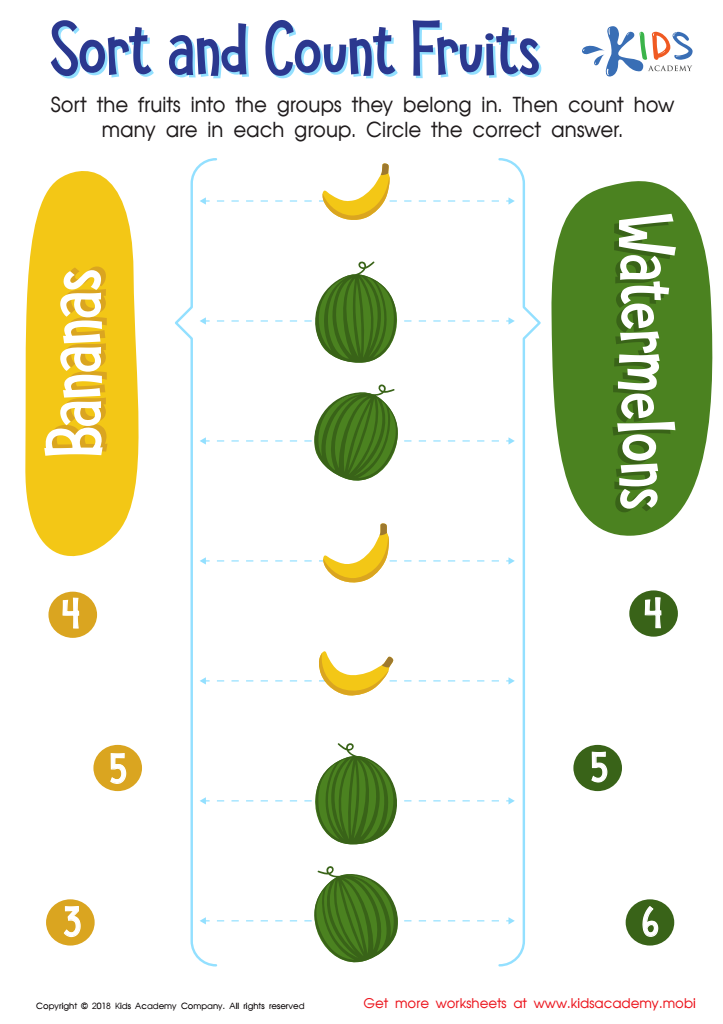
Sort and Count Fruits Worksheet
 Assign to My Students
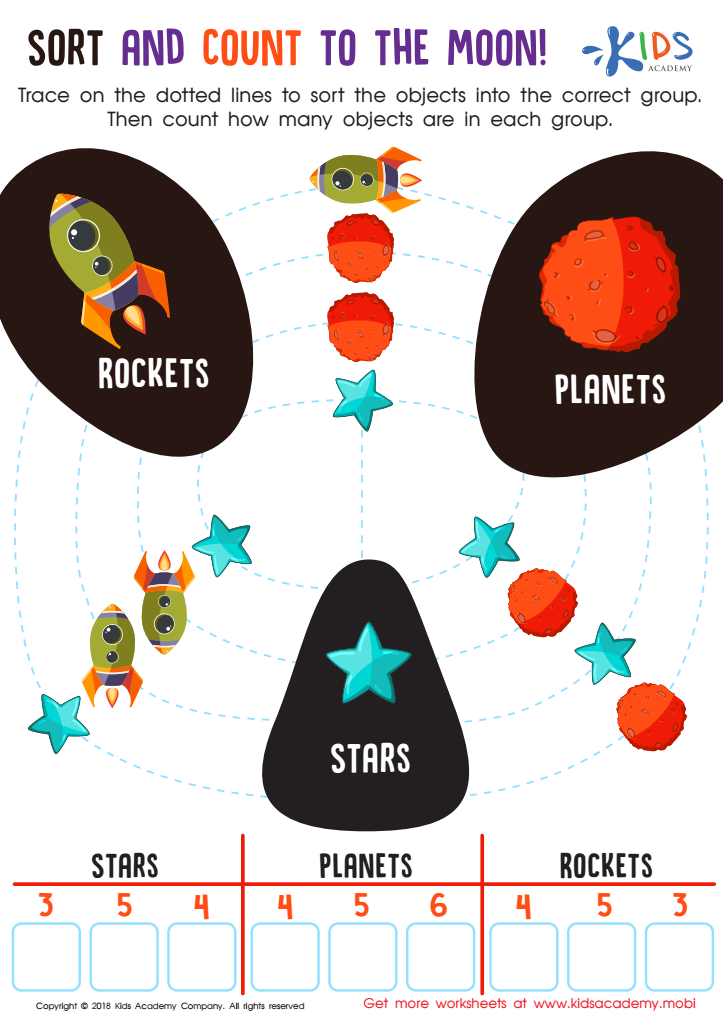
Sort and Count to the Moon Worksheet
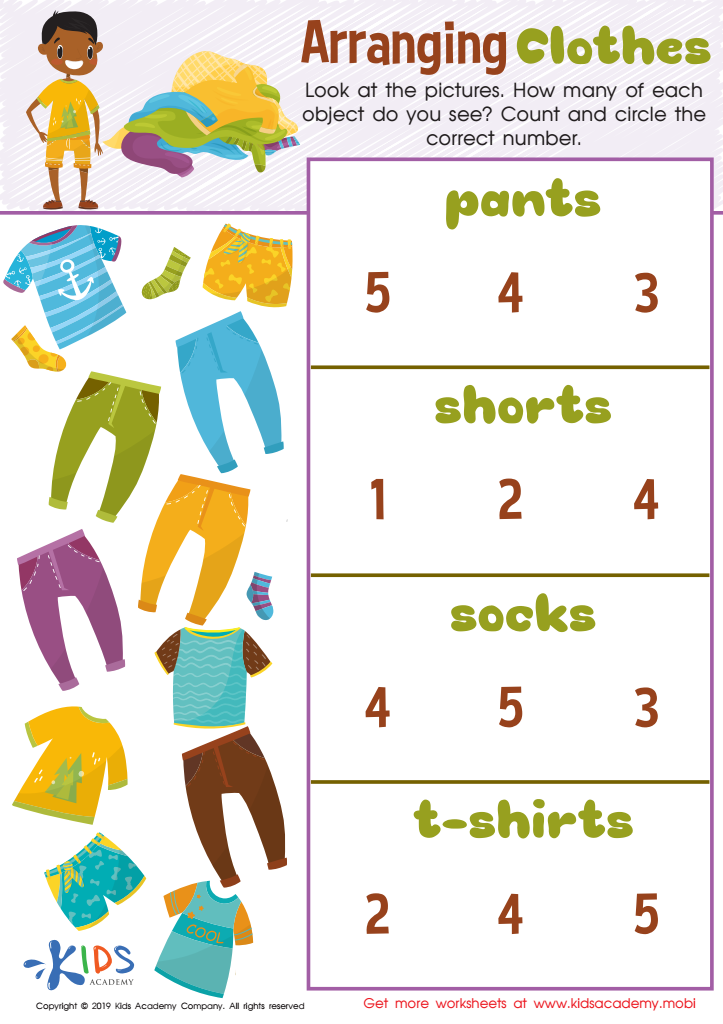
Arranging Clothes Worksheet
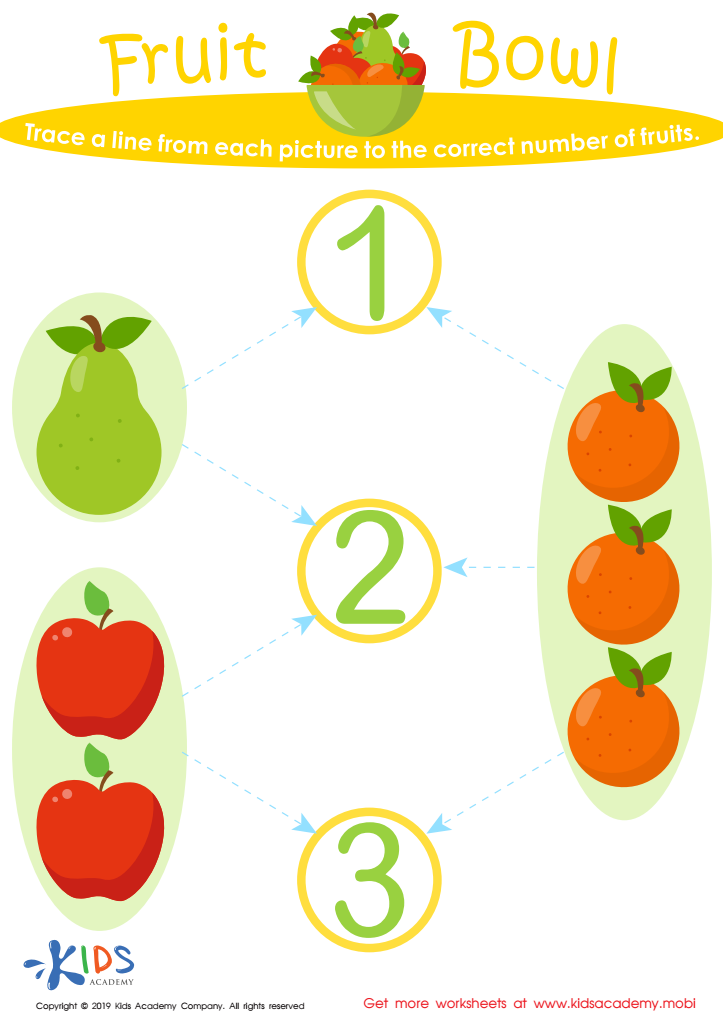
Fruit Bowl Worksheet
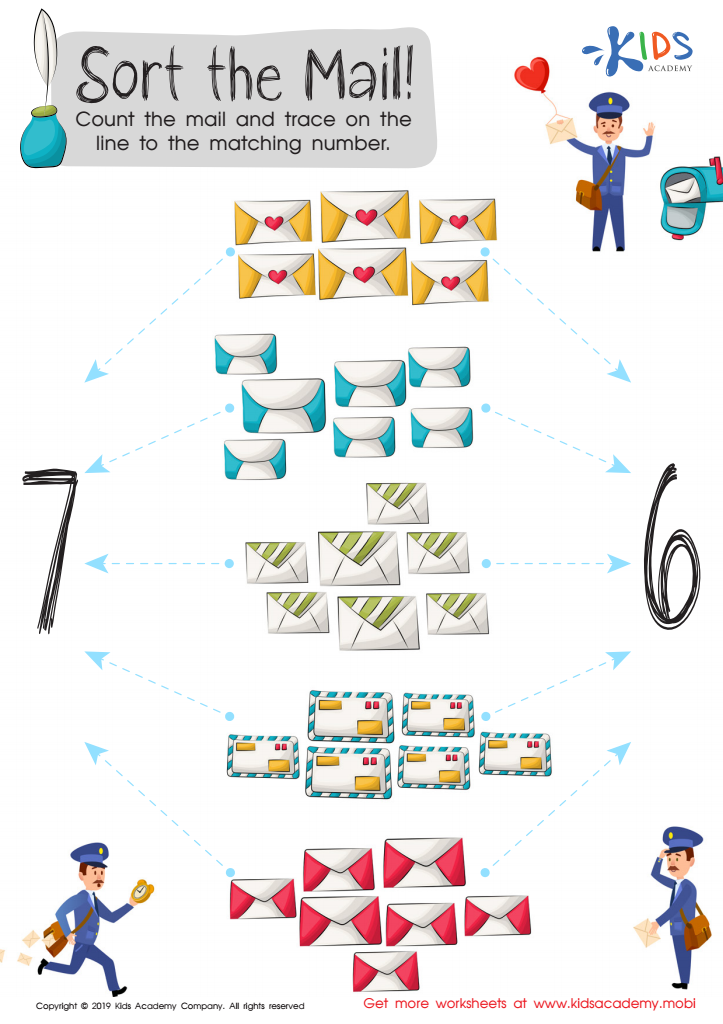
Sort the Mail Worksheet








Sorting skills and understanding numbers are essential building blocks for young children's cognitive development. For ages 3-7, grasping these concepts lays a solid foundation for more advanced mathematical, organizational, and analytical skills.
Firstly, sorting teaches children to categorize objects based on attributes such as size, color, shape, or numerical value. This skill enhances their ability to observe details and discern patterns, nurturing critical thinking early on. For instance, sorting coins or blocks paves the way for comprehending more complex mathematical concepts such as grouping, addition, and subtraction.
Secondly, number recognition and counting enable children to understand the concept of quantity and order. Recognizing and sequencing numbers fosters numerical literacy, setting the stage for arithmetic skills. This early familiarity with numbers makes future learning less daunting and more intuitive.
Moreover, these activities support fine motor development as children manipulate objects, which helps in hand-eye coordination and dexterity. They also boost linguistic skills as children describe what they are doing and why, enriching their vocabulary and communication abilities.
Parents and teachers play a pivotal role in creating interactive and engaging learning experiences. When sorting and numbers are introduced through playful activities, children become curious and enthusiastic learners, thereby establishing a positive attitude toward education that lasts a lifetime.








