
Addition up to 5 Math Worksheets for Ages 3-7
4 filtered results
Difficulty Level
Grade
Age
-
From - To
Subject
Activity
Standards
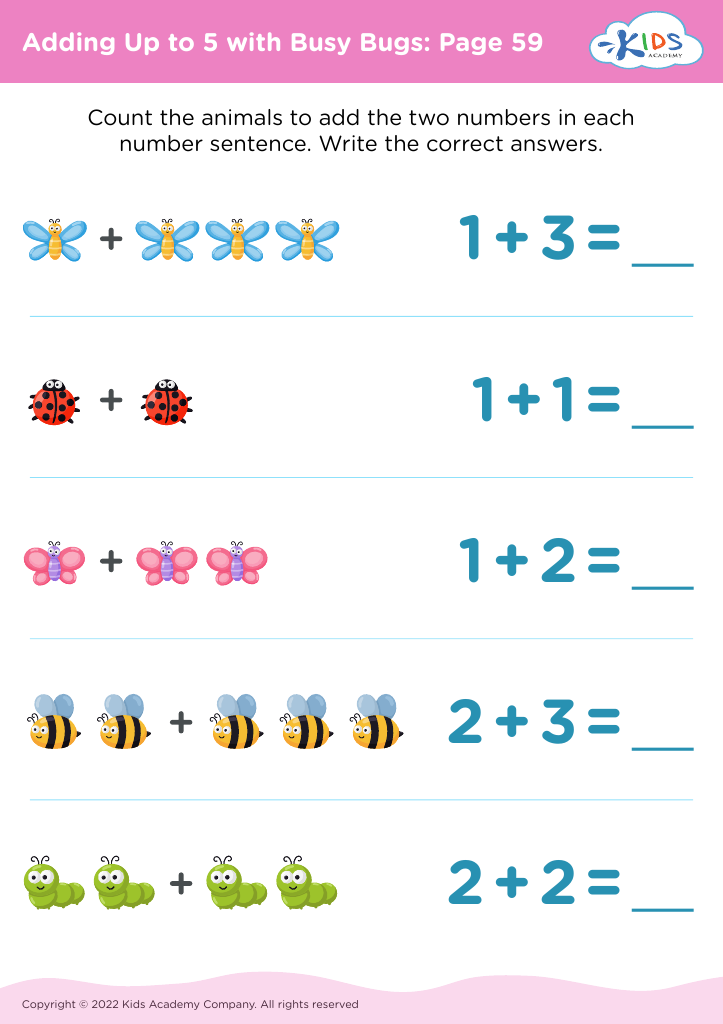
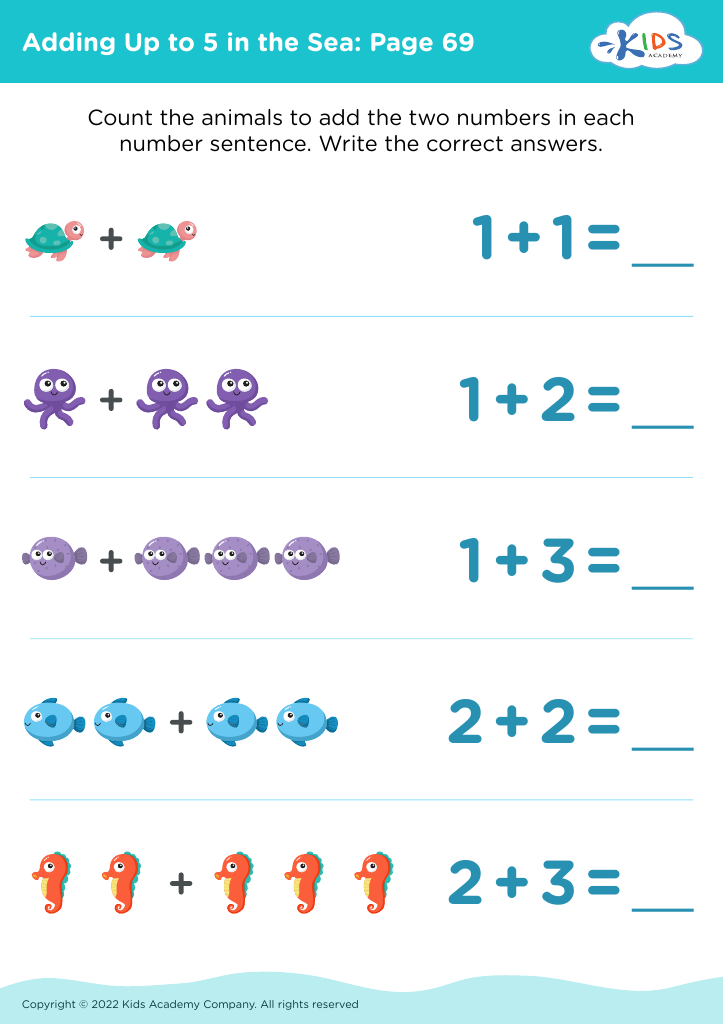
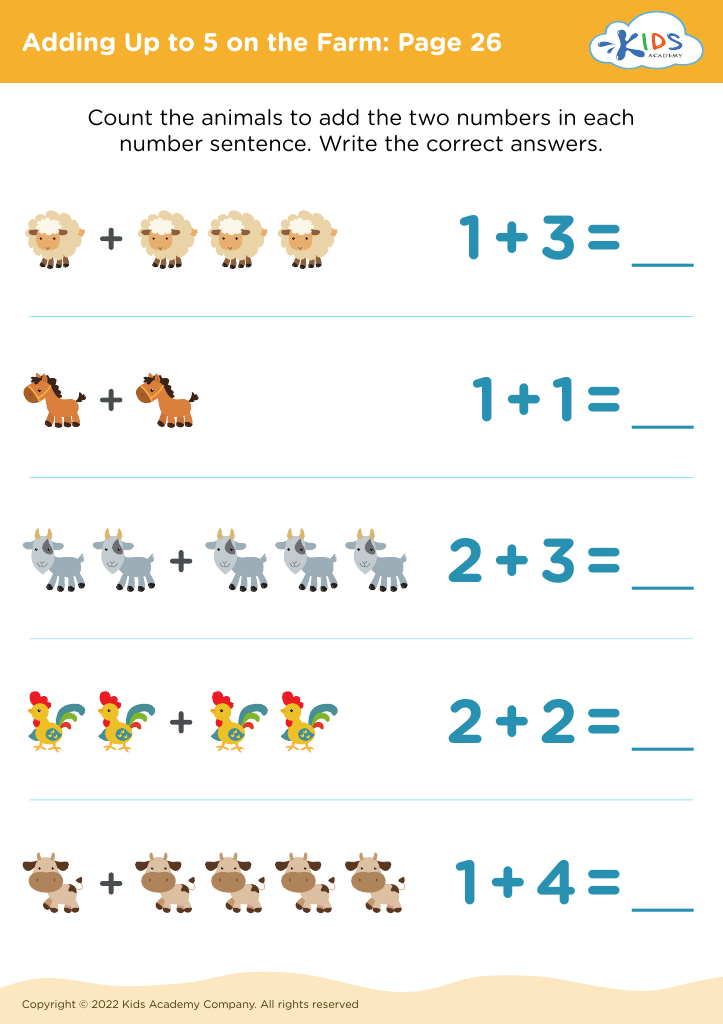
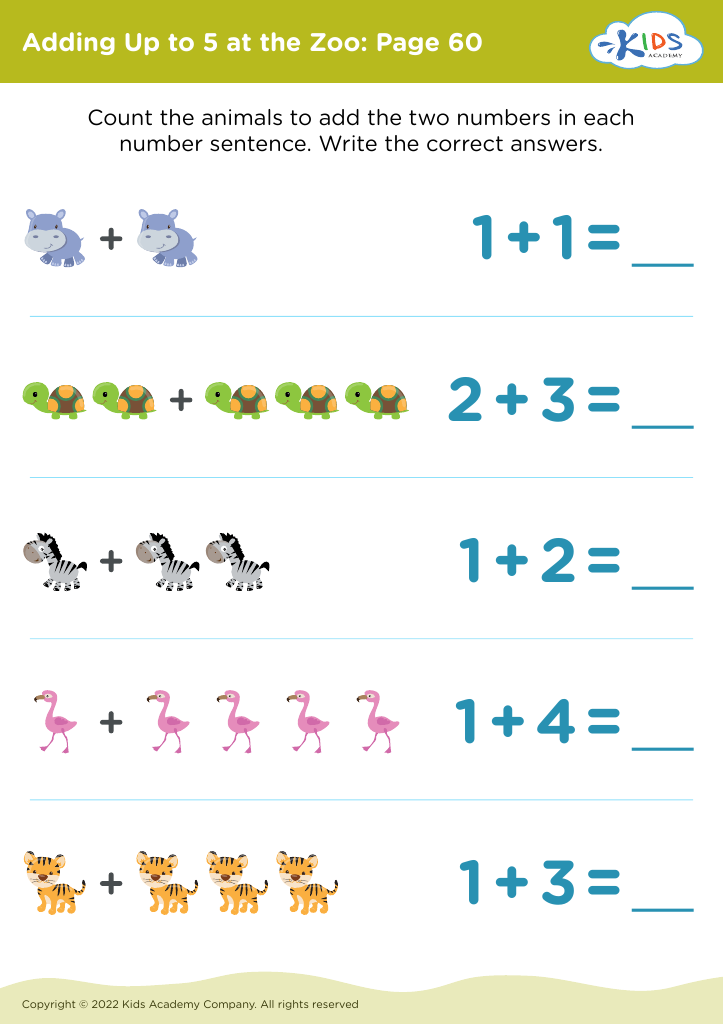
Welcome to our “Addition up to 5” math worksheets designed for young learners aged 3-7! These engaging and colorful worksheets provide a fun way for children to practice their early addition skills. With easy-to-understand problems, kids can confidently learn to add numbers up to 5 through visual aids and interactive tasks. The worksheets promote essential thinking skills and enhance number recognition, ensuring a solid mathematical foundation. Ideal for both classroom and at-home learning, our resources cater to diverse learning styles. Download now and help your child build confidence in math while enjoying the learning journey!
Favorites
With answer key
Interactive
Join Kids Academy for Free
Who is primarily going to use this learning content?








Parents and teachers should prioritize teaching addition up to 5 for children aged 3 to 7 because it's a foundational skill that sets the stage for future mathematical understanding. Mastery of basic addition within this range helps young learners develop number sense, which is crucial for their overall mathematical development. At this age, children are naturally curious and eager to explore concepts, making it an ideal time to introduce simple addition through engaging activities.
Moreover, early arithmetic skills contribute to cognitive development, facilitating logical thinking and problem-solving abilities. These skills not only enhance mathematical competence but also support language development, as children learn to articulate their thought processes when adding numbers.
Additionally, positive experiences with math at a young age can foster a lifelong love for the subject. Recognizing and celebrating small victories in addition can boost a child’s confidence and motivation to tackle more complex concepts in the future. By incorporating playful methods, such as games and hands-on activities, parents and teachers can create an enjoyable learning environment that encourages curiosity and exploration, ultimately laying a strong mathematical foundation that supports academic success in years to come.








