Associative learning Math Worksheets for Ages 3-7
4 filtered results
-
From - To
Discover our engaging Associative Learning Math Worksheets designed for children ages 3-7! These carefully crafted activities make learning math concepts enjoyable and effective by helping young learners connect different ideas and numbers. Our worksheets promote critical thinking and problem-solving skills as children explore relationships through fun exercises, such as matching, sorting, and number associations. Perfect for parents and teachers looking to enrich, reinforce, or assess math skills at home or in the classroom, these resources encourage a deeper understanding of math while fostering a love for learning. Start your child's mathematical journey today with our interactive and colorful worksheets!
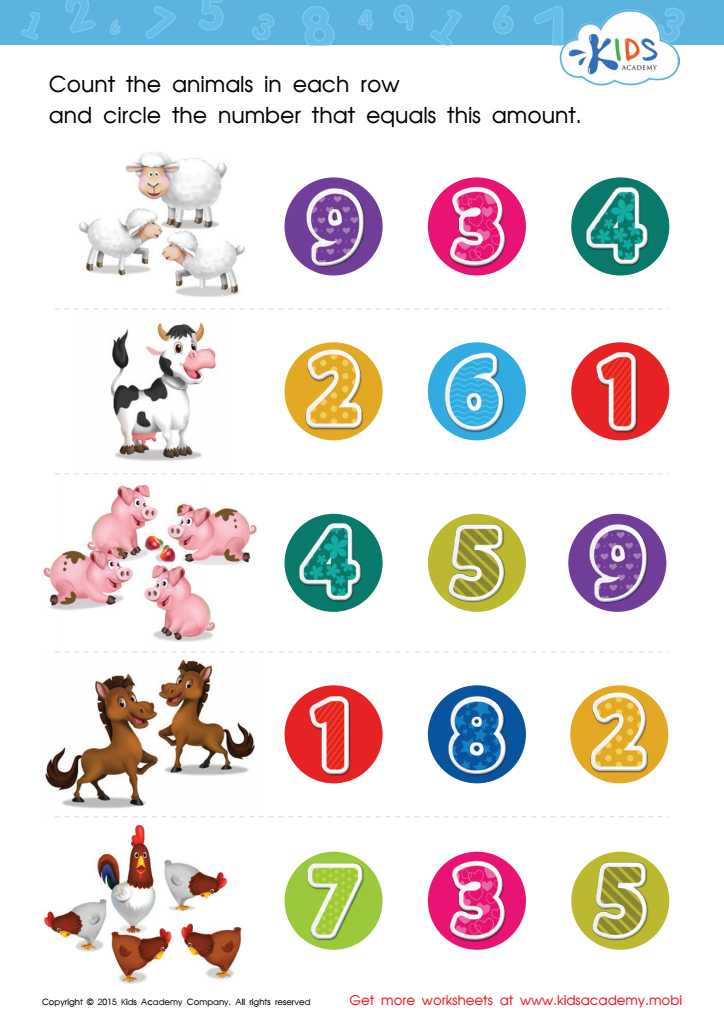
Count and Match 1 – 5 Math Worksheet
 Assign to My Students
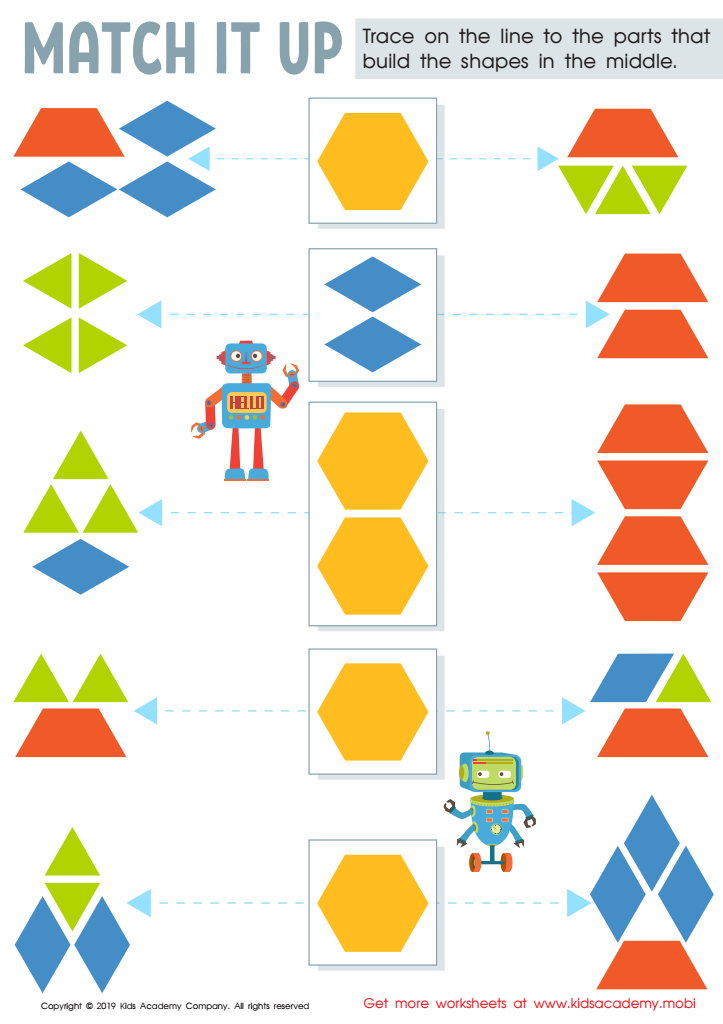
Match It up Worksheet
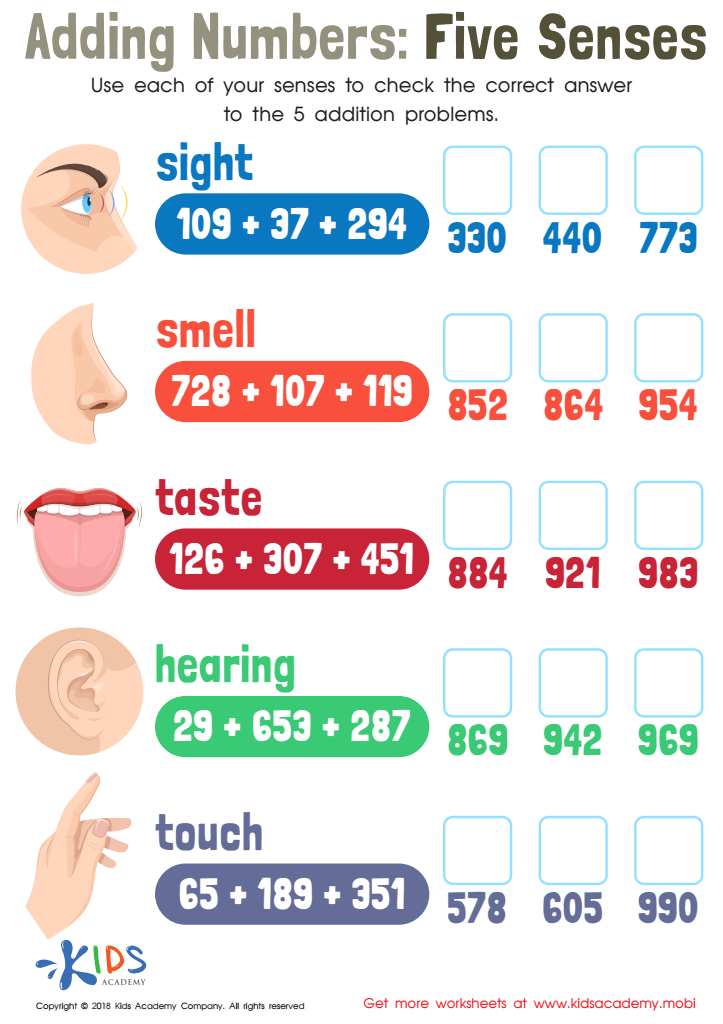
Adding Numbers: Five Senses Worksheet
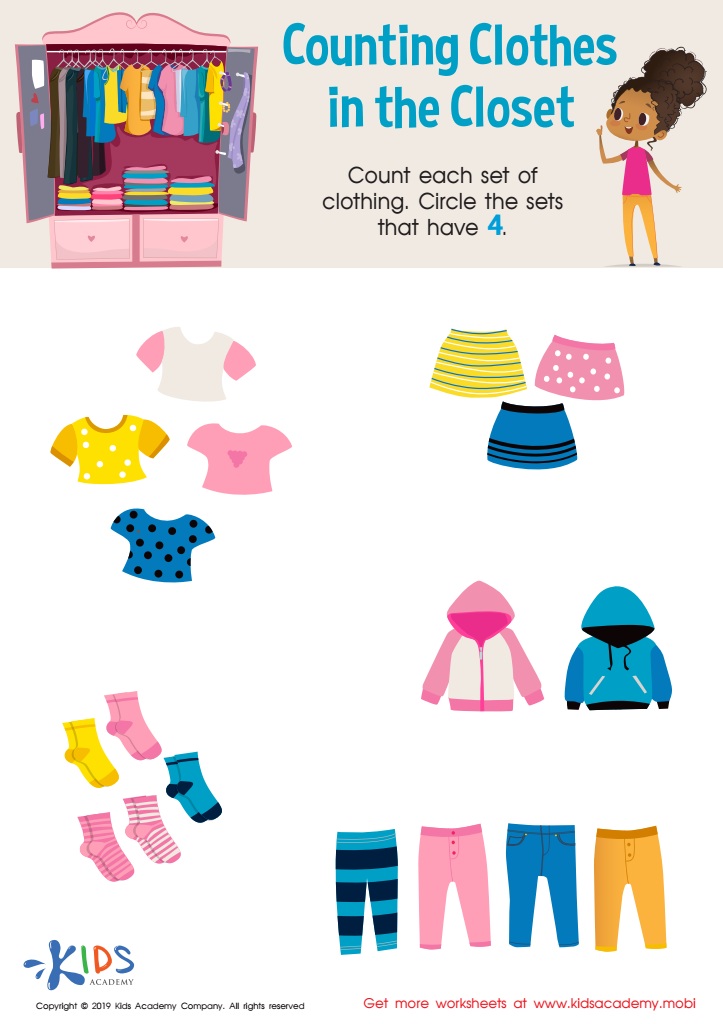
Counting Clothes Worksheet








Associative learning in math for children aged 3-7 is crucial for laying the foundation of mathematical understanding. This technique involves forming connections between different concepts, ideas, and experiences, making math more accessible and engaging for young learners.
Parents and teachers should care about fostering associative learning in early math education because it enhances cognitive development and critical thinking skills. When children associate numbers with objects, patterns, or their everyday environment, they develop a deeper comprehension of mathematical concepts, like basic addition and subtraction, measurement, and spatial awareness. This method nurtures their curiosity, promotes problem-solving skills, and fosters a positive attitude towards learning.
Furthermore, associative learning can help bridge gaps in understanding that may occur later in education. By encouraging children to make connections between mathematical concepts and real-world applications, they become more confident and adept at tackling advanced mathematical concepts in the future.
Additionally, implementing playful and engaging activities centered around associative learning makes math enjoyable. This engagement dispels the notion that math is intimidating, encouraging a lifelong love of learning. Ultimately, supporting associative learning not only builds mathematical skills but also promotes holistic development in children, preparing them for future academic success and essential life skills.








