
Basic addition practice Math Worksheets for Ages 3-7
25 filtered results
Difficulty Level
Grade
Age
-
From - To
Subject
Activity
Standards
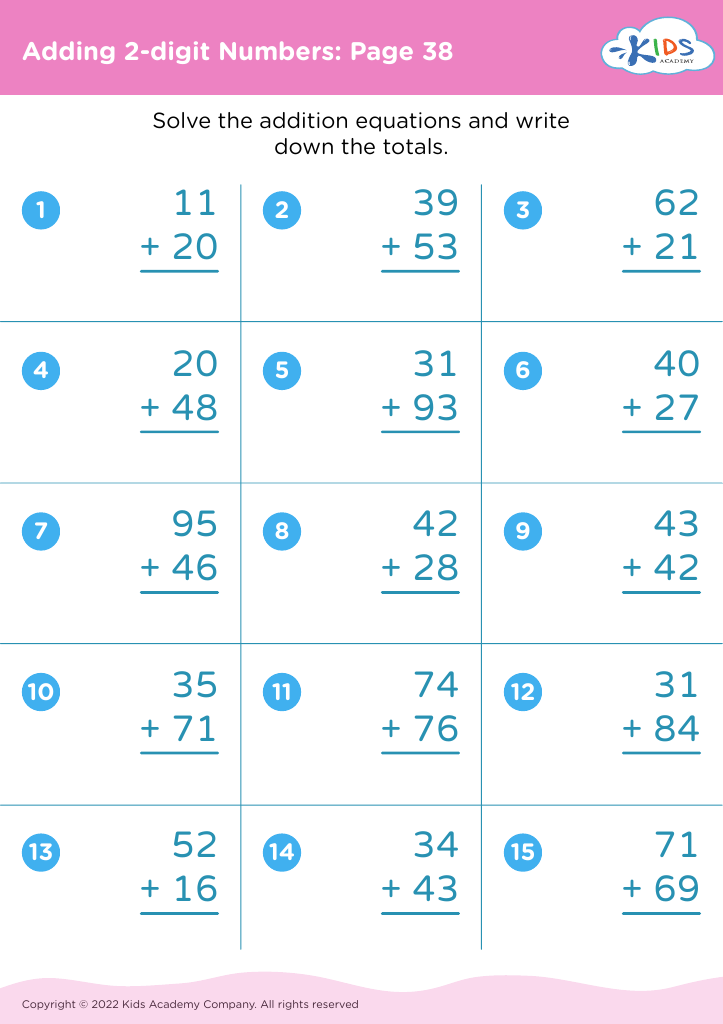
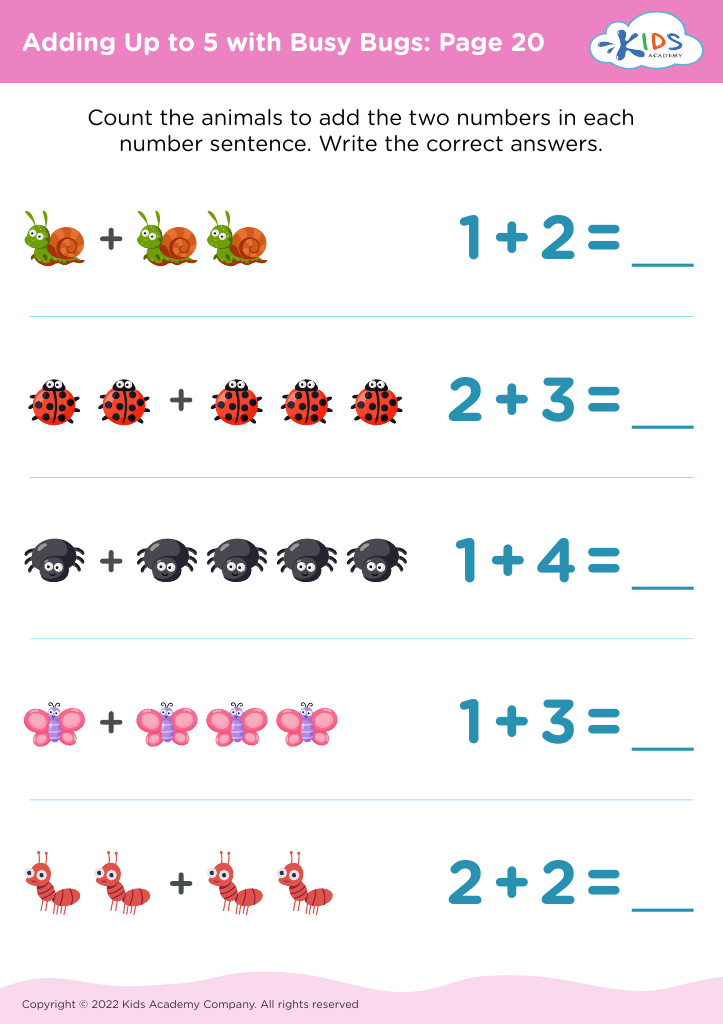
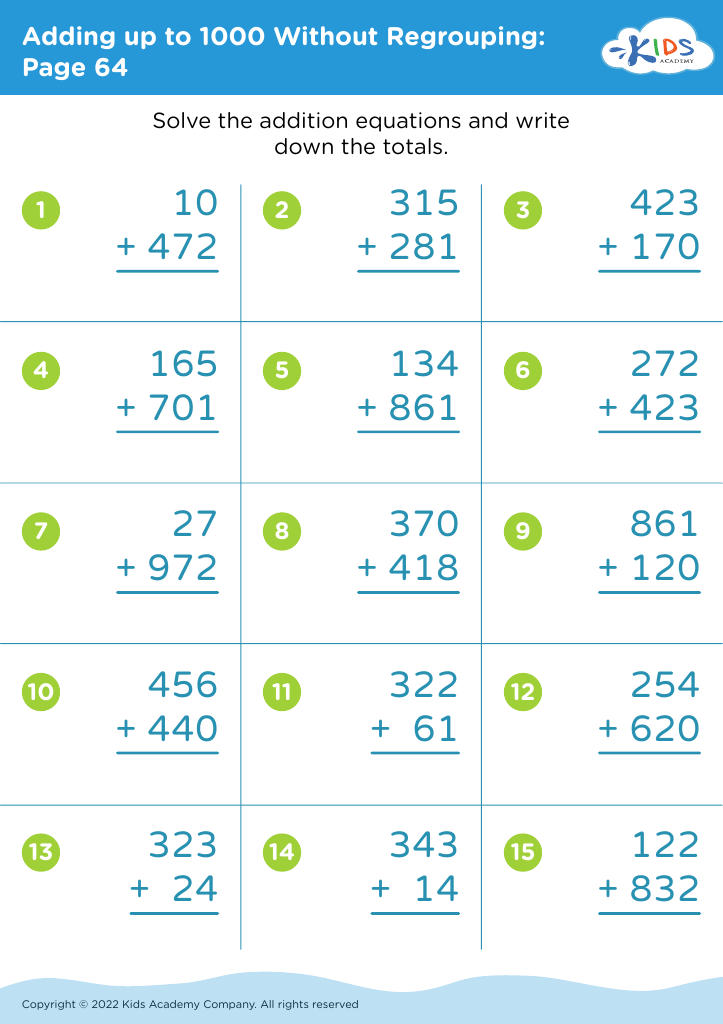
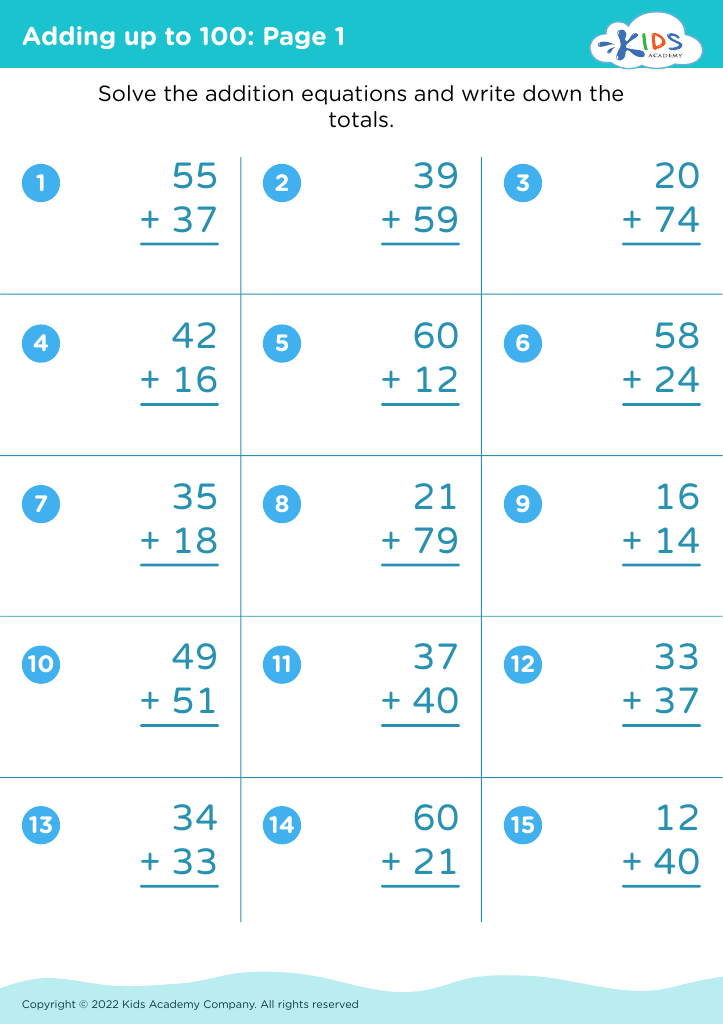
Unlock your child's math potential with our engaging Basic Addition Practice Math Worksheets, designed specifically for children ages 3-7. Featuring colorful illustrations and fun themes, these exercises transform learning into an adventure. Our worksheets help young learners develop fundamental addition skills, reinforce number recognition, and build confidence through gradual challenges. Created by educational experts, each worksheet offers hands-on practice that aligns with early childhood math standards. Ideal for both classroom and at-home learning, these printables are a perfect tool to support your child's math growth and foster a love for numbers early on. Download now and watch them add up to success!
Favorites
With answer key
Interactive
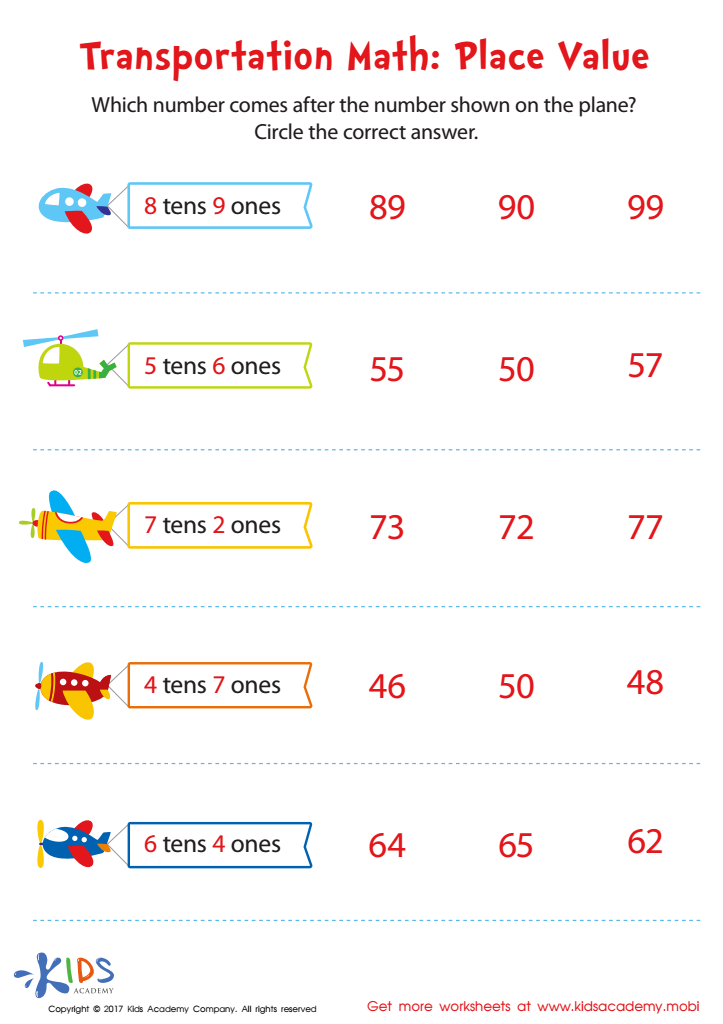
Transportation Math Printable
Challenge your child's number sense with this Transportation Math worksheet! They'll need to recall place values and use mental addition to solve tricky math problems. It's a great way to give their brain a workout!
 Assign to My Students
Transportation Math Printable
Worksheet
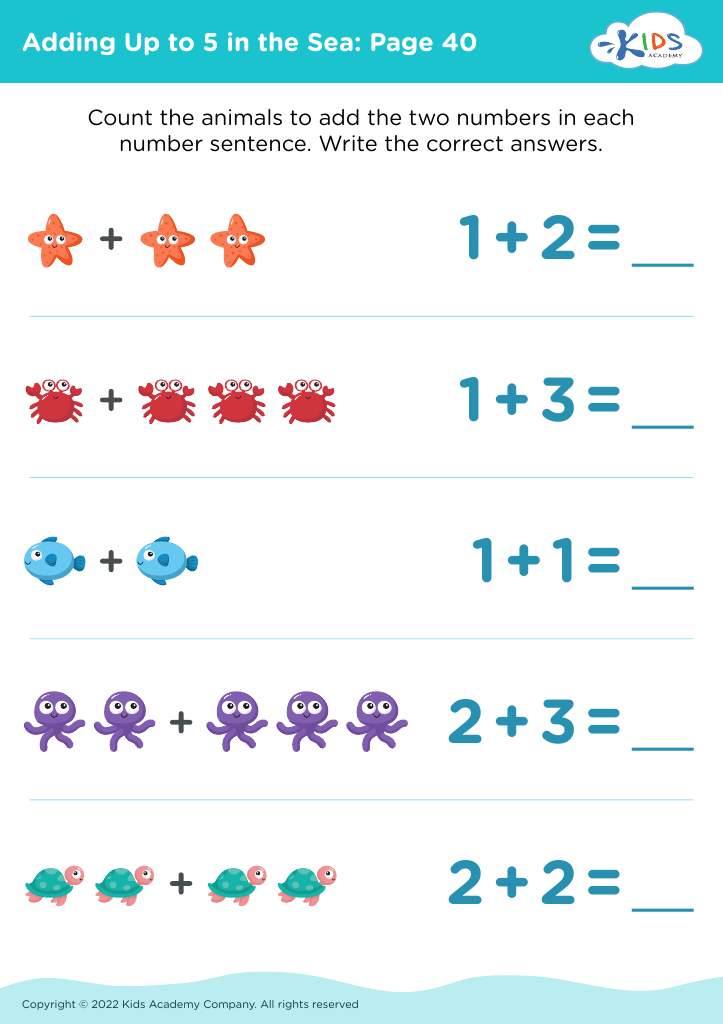
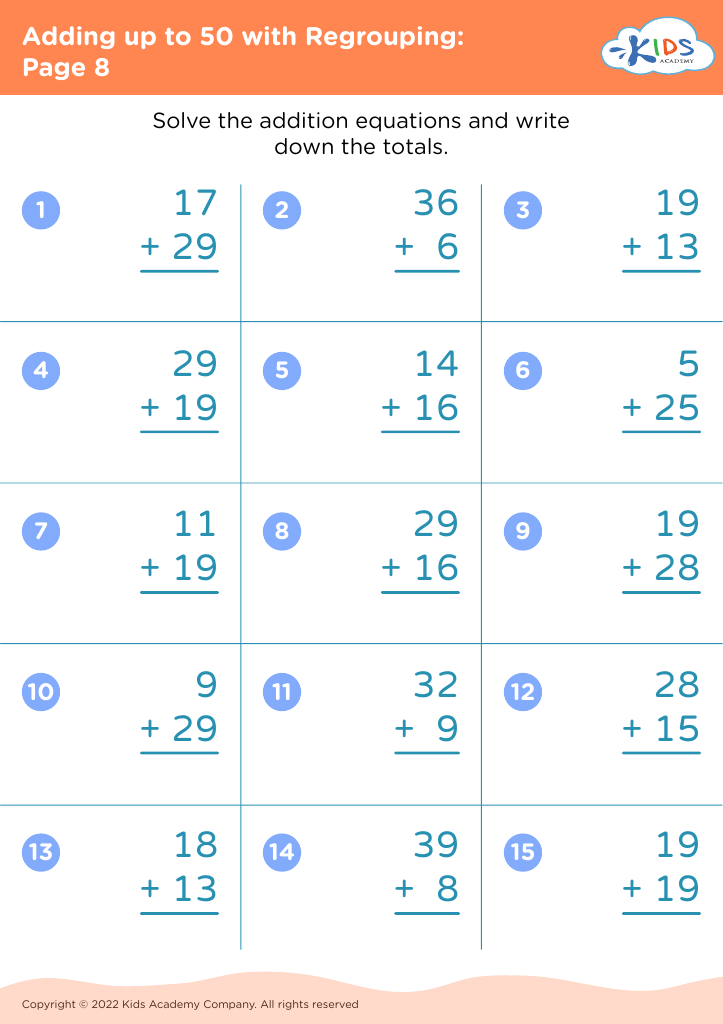
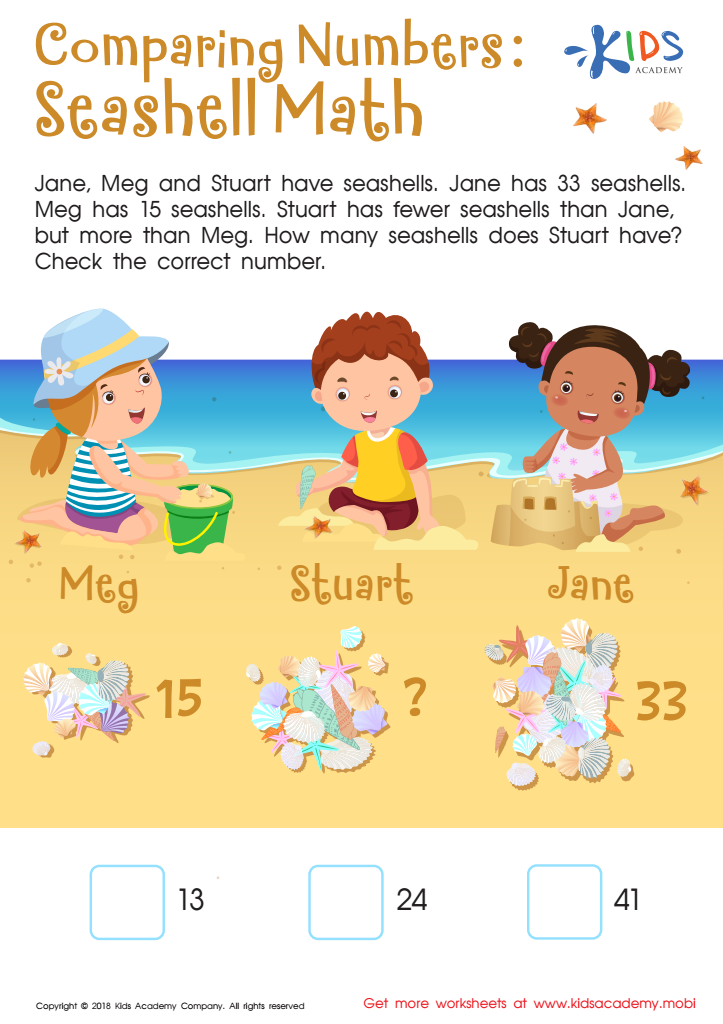
Seashell Collectors Worksheet
Bring beach fun into math with this printable worksheet! Carefully read the text with your child and figure out how many seashells Stuart has - more than Meg's, less than Jane's. Forget boring indoor math; your child won't want to miss out on this fun activity!
Seashell Collectors Worksheet
Worksheet
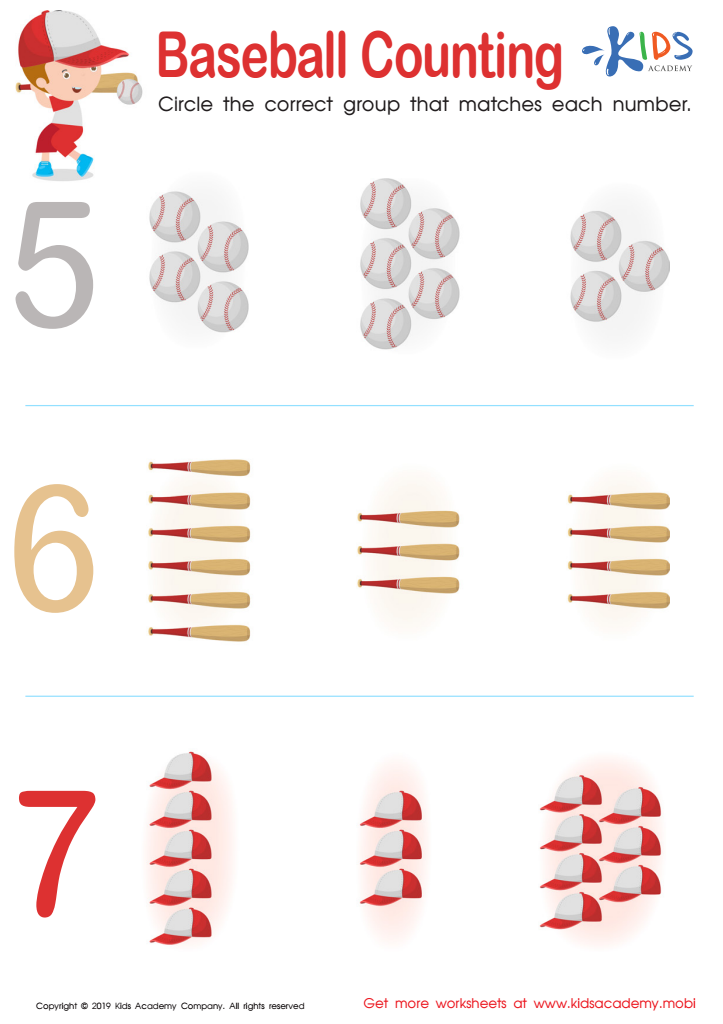
Baseball Counting Worksheet
Does your family like baseball? Refresh their minds by asking them to count items in a baseball game. To begin, have them count from 1 to 10. Point out each object and read out the numbers. Then, help them circle the group that matches each number. It will be a fun way to test their counting skills!
Baseball Counting Worksheet
Worksheet
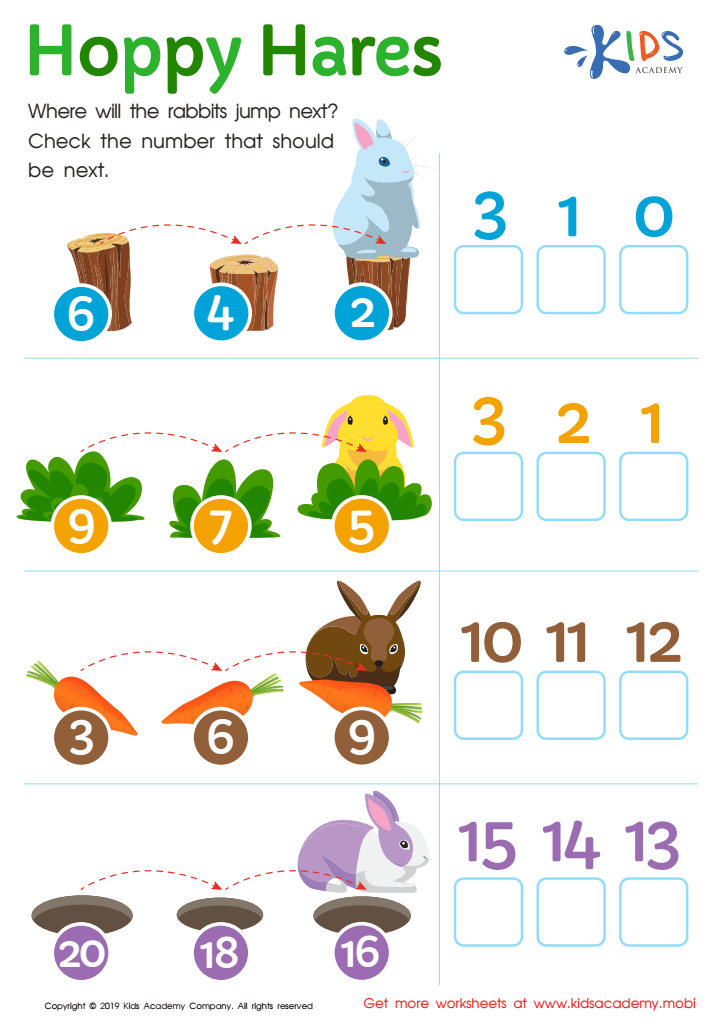
Hoppy Hares Worksheet
Ask your kids if they can identify the rabbits in the picture, then help them solve the math problems. The rabbits need to hop from place to place, so look at the numbers and help your kids figure out the next one. These cute and friendly little animals make great pets. Have fun solving this worksheet together!
Hoppy Hares Worksheet
Worksheet
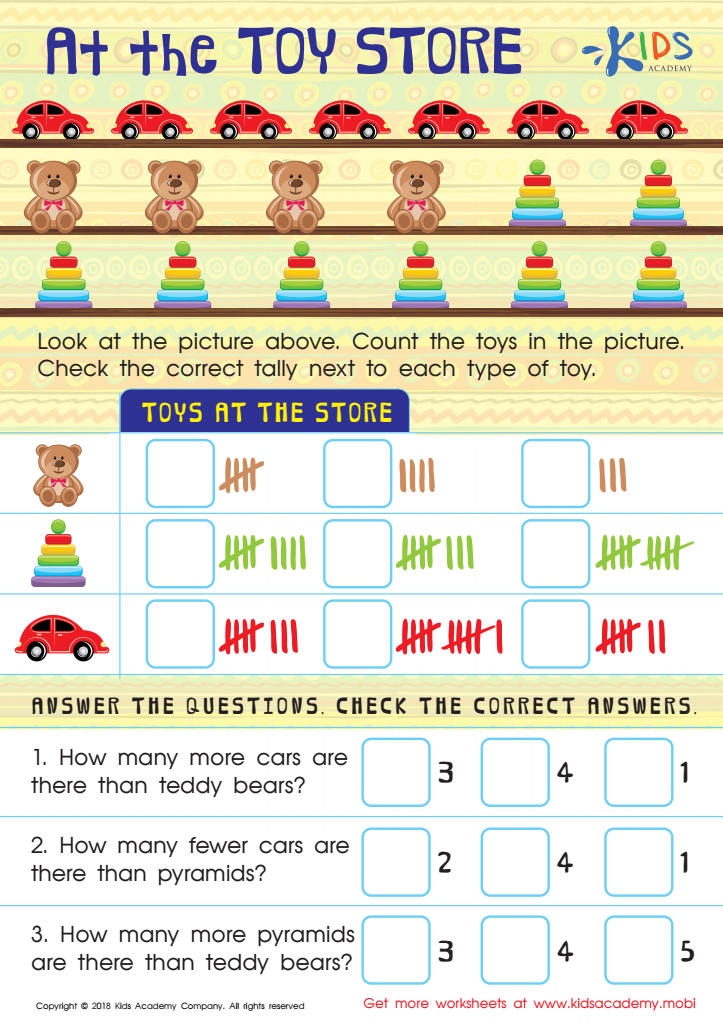
Tally Chart: At the Toy Store Worksheet
Kids Academy has a fun worksheet to help kids practice counting and using tally marks! They can think about the number of toys and compare them. At the bottom, help them answer the questions about the toys on this math page. It's an easy way to learn that one tally mark equals one item.
Tally Chart: At the Toy Store Worksheet
Worksheet
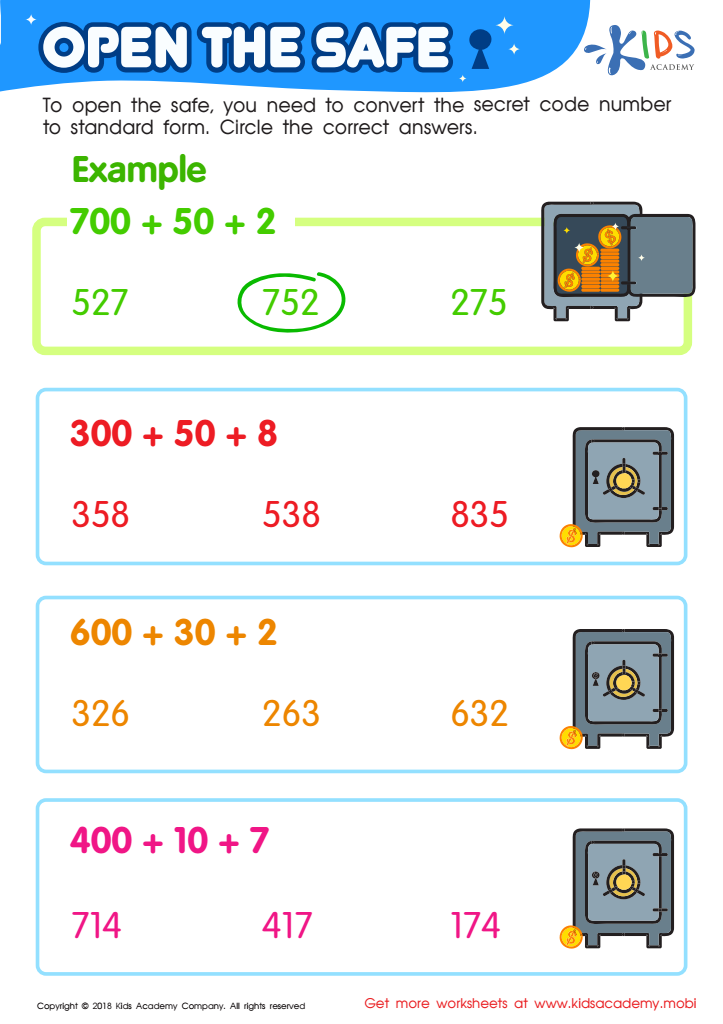
Open the Safe Worksheet
Send your child on a secret mission! Help them open the safe by giving them the code numbers to convert into standard form (e.g. 700 + 50 + 2 = 752). Get them to circle the correct answer for each safe and see all that math knowledge pay off!
Open the Safe Worksheet
Worksheet
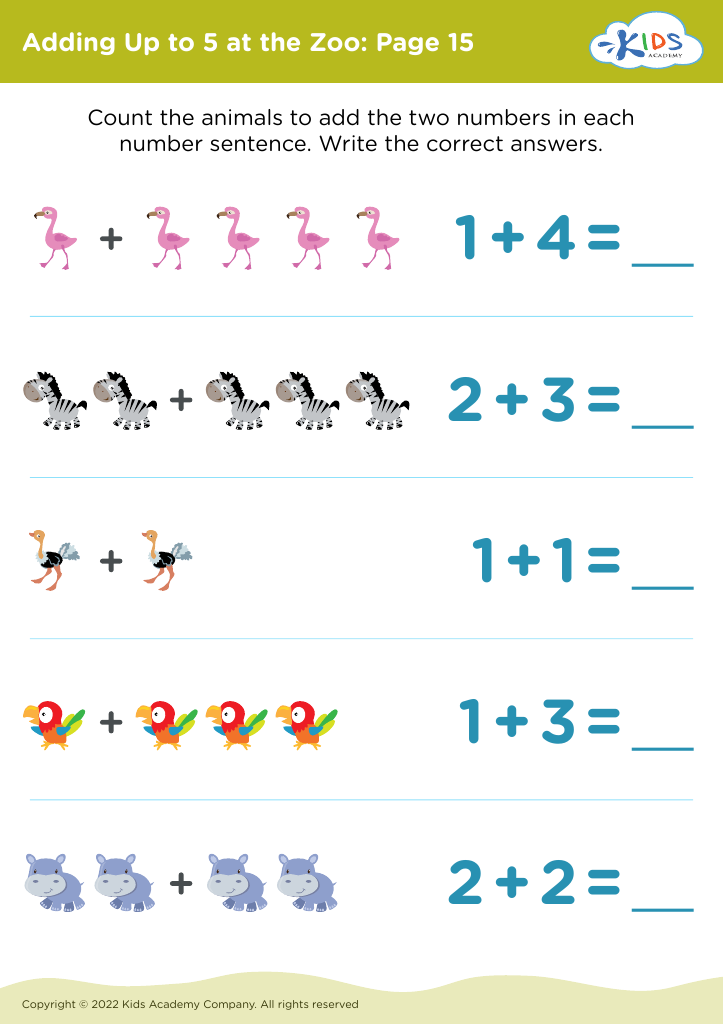
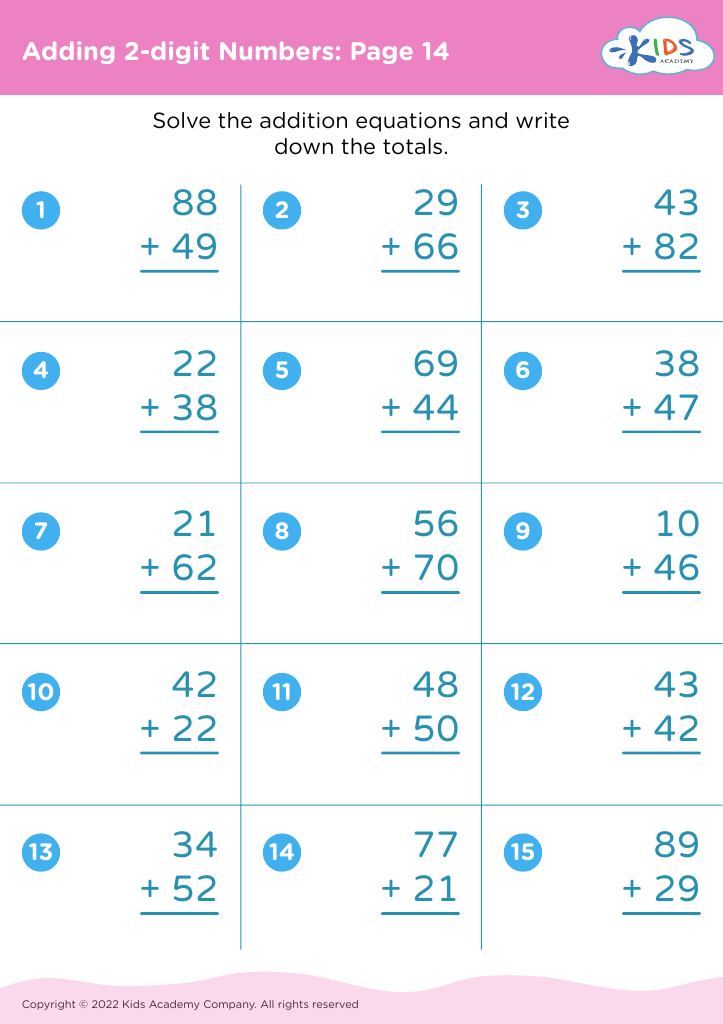
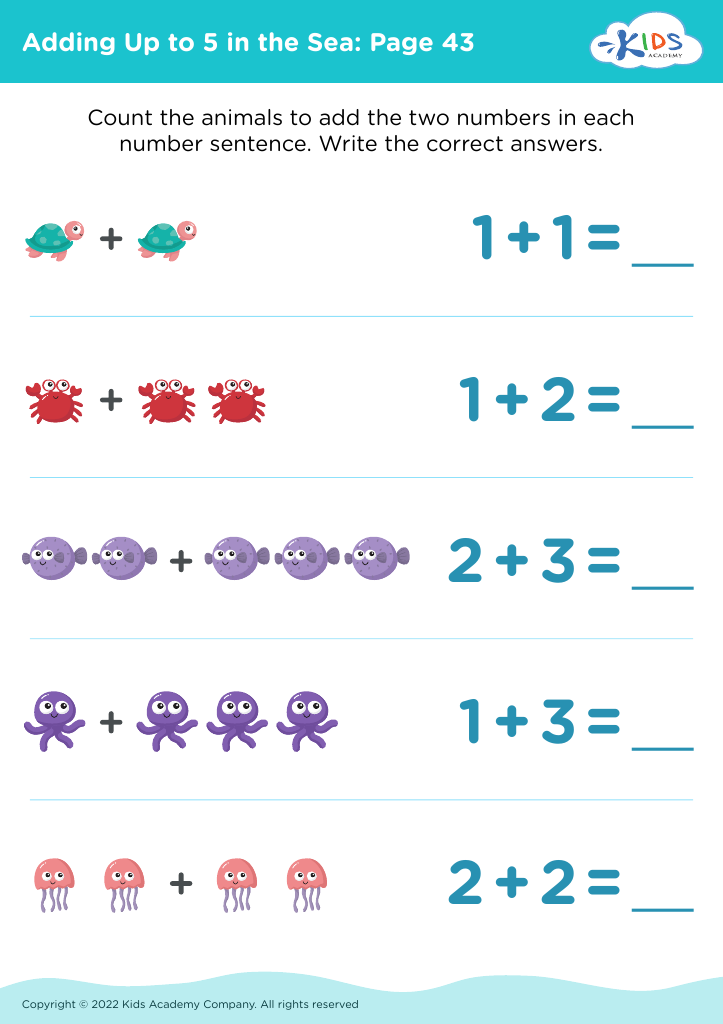
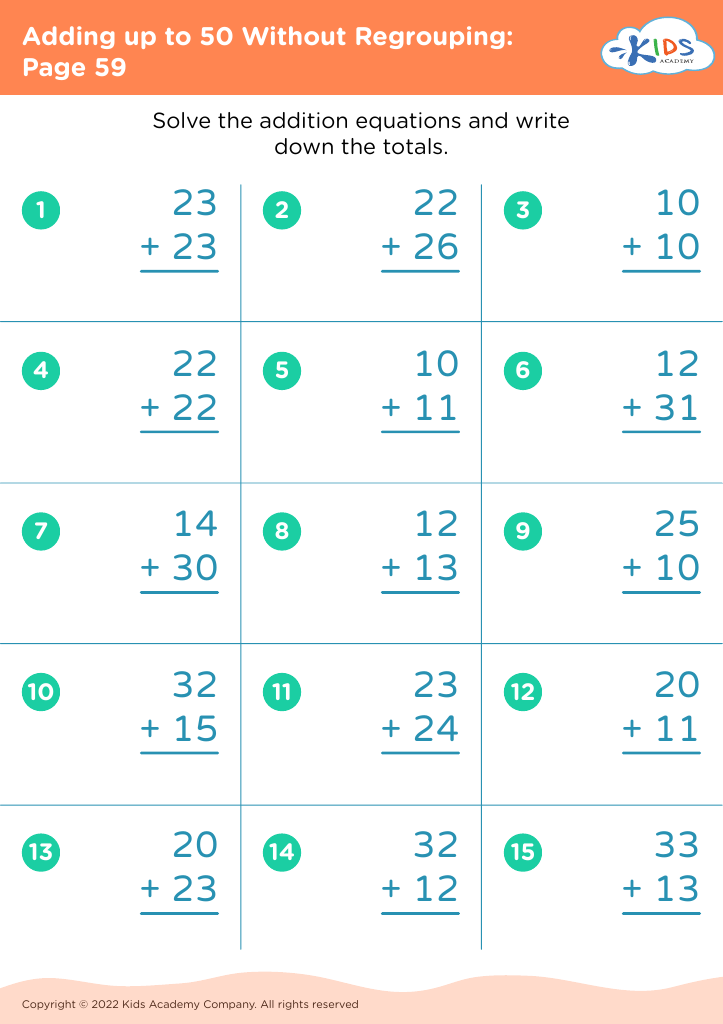
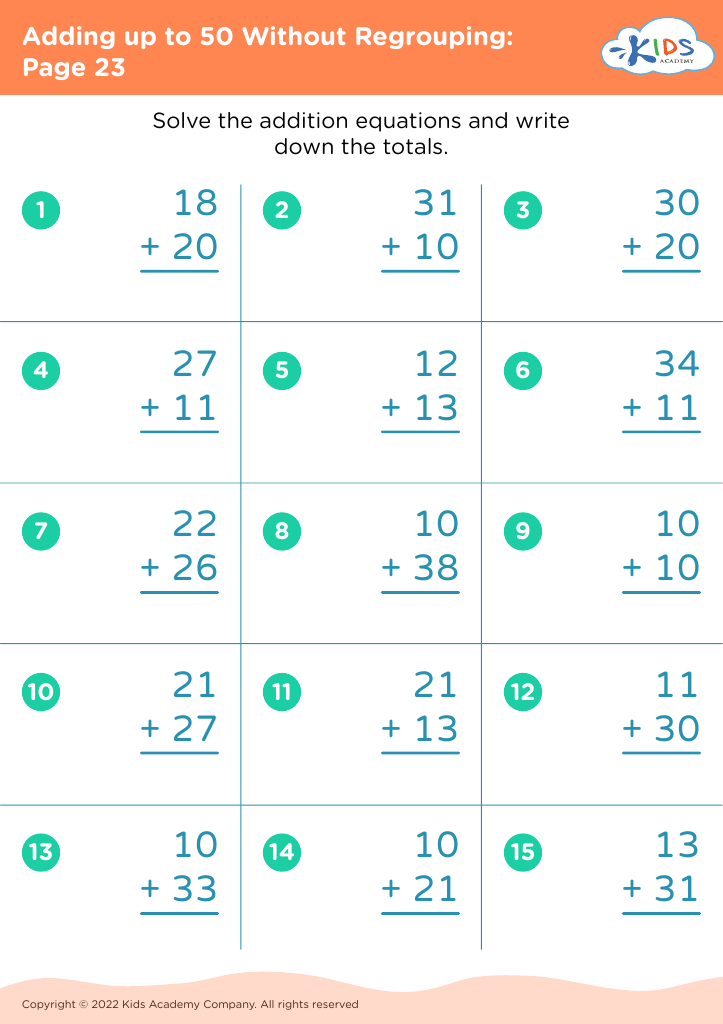
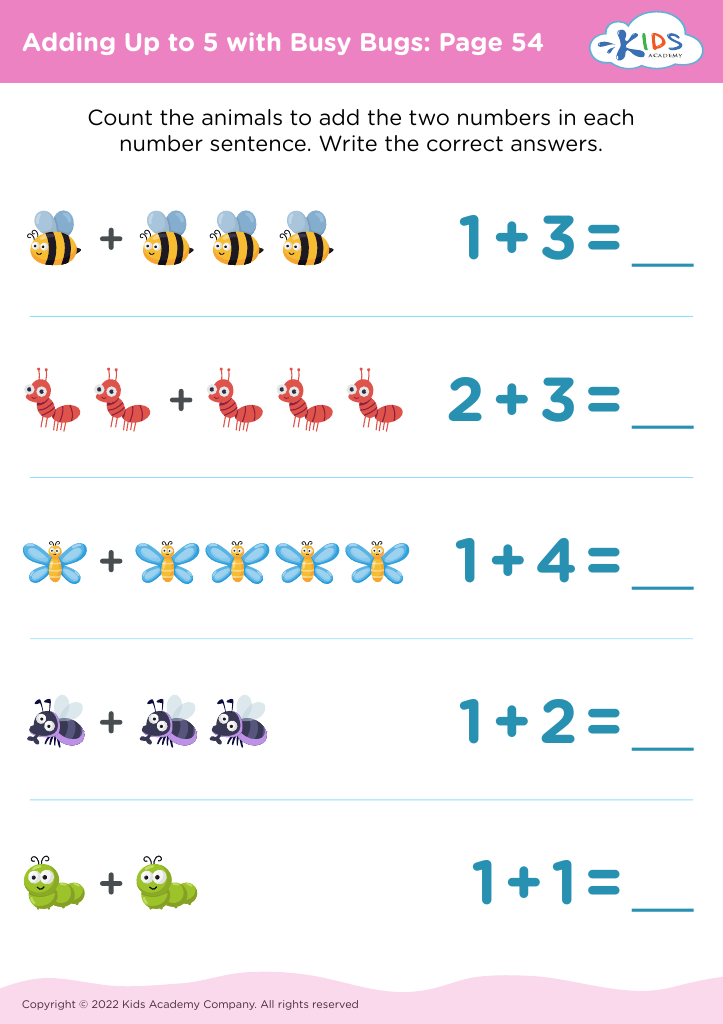
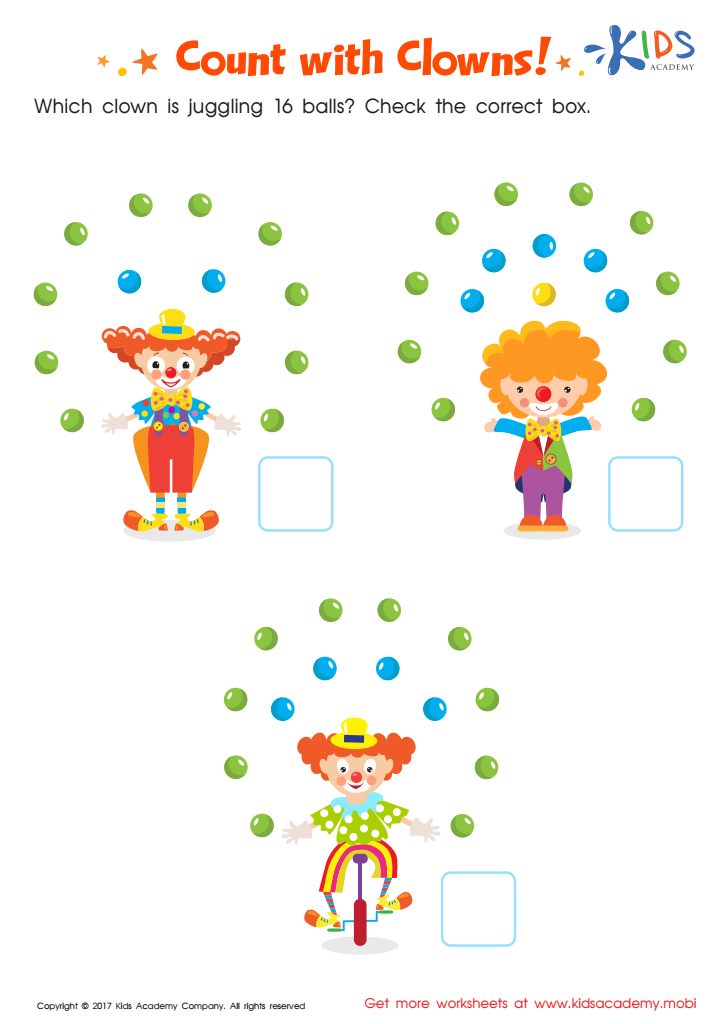
Count with Clowns Worksheet
Math may not be a laughing matter, but this worksheet sure is! Download the PDF and get ready to count balls with the clowns! Your child will have a blast and learn how to count at the same time. It's an easy, fun way to practice math!
Count with Clowns Worksheet
Worksheet
Join Kids Academy for Free
Who is primarily going to use this learning content?






Basic addition is one of the foundational building blocks of mathematics for young children, making practice essential for ages 3-7. During these formative years, children develop critical cognitive skills that pave the way for more complex mathematical concepts. Mastering basic addition helps enhance problem-solving abilities, boost confidence, and foster a positive attitude toward math.
For teachers, incorporating basic addition into daily activities transforms learning into a fun, engaging, and interactive experience. By using tools like manipulatives, games, and visual aids, children can grasp abstract concepts more concretely. This hands-on approach makes math tangible and enjoyable, encouraging active participation and collaboration among peers.
Parents play an equally crucial role by extending math practice beyond the classroom. Engaging in simple, everyday activities—such as counting toys, adding ingredients during cooking, or playing educational board games—can seamlessly integrate math into a child's routine. This constant reinforcement solidifies their understanding and reduces anxiety around the subject.
Ultimately, prioritizing basic addition practice equips children with necessary life skills. It lays the groundwork for arithmetic operations, fosters logical thinking, and builds a strong academic foundation. By investing effort and enthusiasm into early math education, parents and teachers can set children on a path to success and lifelong learning.








