
Basic arithmetic operations Math Worksheets for Ages 3-7
3 filtered results
Difficulty Level
Grade
Age
-
From - To
Subject
Activity
Standards
Discover our engaging Basic Arithmetic Operations Math Worksheets designed for children aged 3-7. These interactive worksheets help young learners explore essential math concepts, ensuring they build a strong foundation in addition, subtraction, multiplication, and division. Tailored to foster enthusiasm for math, our resources blend fun activities with educational exercises. Perfect for both home and classroom settings, they support early learning standards and enhance number recognition and problem-solving skills. Encourage your child's mathematical journey with captivating visuals and a variety of exercises that promote confidence and enjoyment in math. Download these worksheets today and watch your little ones thrive in arithmetic!
Favorites
With answer key
Interactive
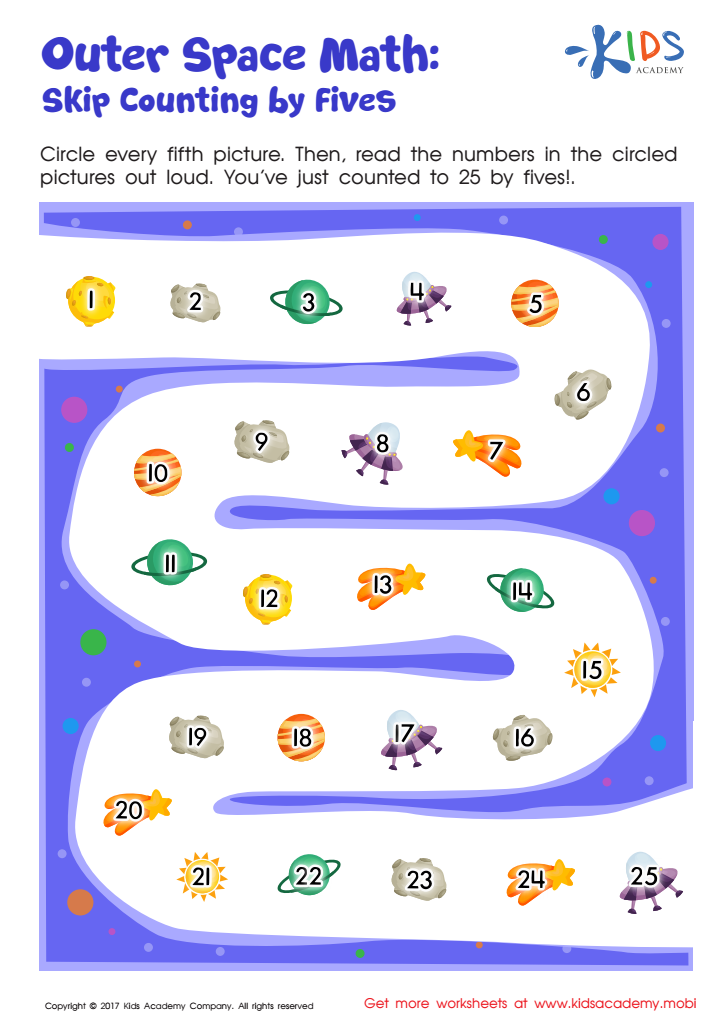
Skip Counting by 5s: Outer Space Math Printable
Let your kid learn skip counting by fives with this fun space-themed worksheet! With simple instructions, cute graphics, and an independent approach, your child will have a blast and gain a key skill for math success. Counting answers and learning numeracy, they'll sharpen cognitive and problem solving skills while having fun! A great way to introduce skip counting, they'll discover the concept through minimal assistance. Blast off!
 Assign to My Students
Skip Counting by 5s: Outer Space Math Printable
Worksheet
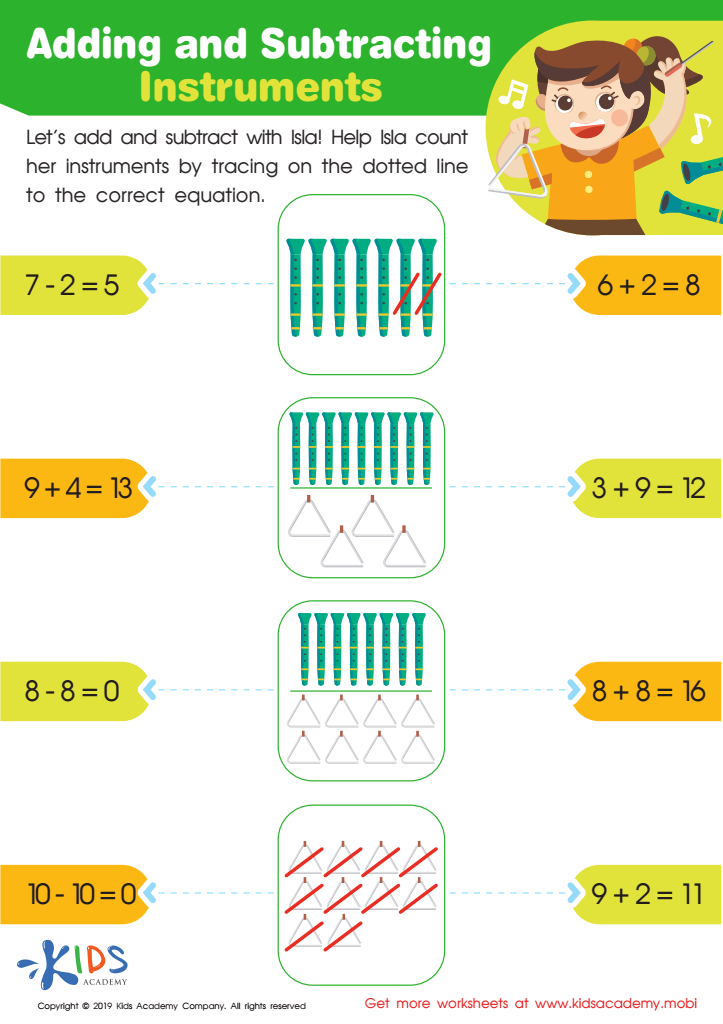
Adding and Subtracting: Instruments Worksheet
Children can help Isla count her musical instruments with this fun worksheet. The downloadable PDF gives them a chance to practice addition and subtraction by connecting pictures to equations. It's also a great way to learn the order of operations.
Adding and Subtracting: Instruments Worksheet
Worksheet
Join Kids Academy for Free
Who is primarily going to use this learning content?








Basic arithmetic operations—addition, subtraction, multiplication, and division—are foundational skills for children ages 3-7 that significantly impact their cognitive development and future academic success. During this critical developmental stage, children are naturally curious and eager to explore numbers and patterns. Introducing these concepts early not only helps them grasp essential mathematical skills but also fosters logical thinking and problem-solving abilities.
Understanding arithmetic lays the groundwork for more complex math topics in later grades. Research shows that early math proficiency is linked to future success in not just math, but in other subjects like science and reading. By engaging in simple counting games, measuring activities, and interactive storytelling involving numbers, parents and teachers can nurture a child’s enthusiasm for math.
Furthermore, these skills encourage everyday applications, such as managing money or cooking, empowering children to become adept in life skills as they grow. When children encounter arithmetic naturally, they build confidence, develop mental flexibility, and gain a positive attitude towards learning. Therefore, caring about basic arithmetic at such an early age leads to well-rounded, competent learners who appreciate math as part of their world. Investing time in these operations is essentially investing in a child’s future success and self-esteem.








