Building vocabulary Math Worksheets for Ages 3-7
3 filtered results
-
From - To
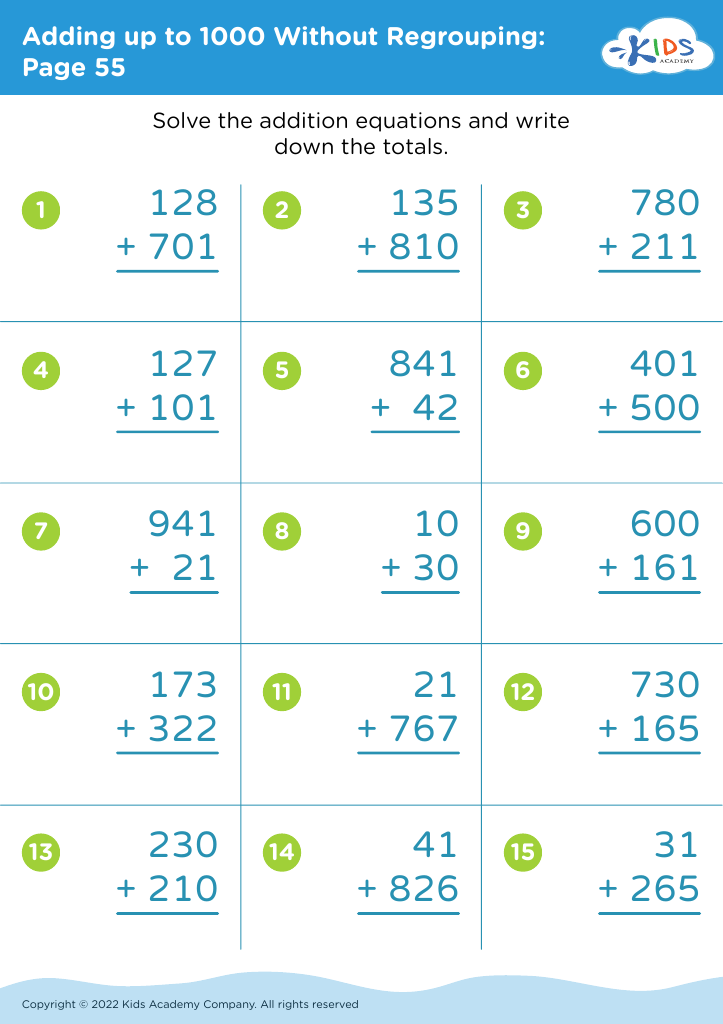
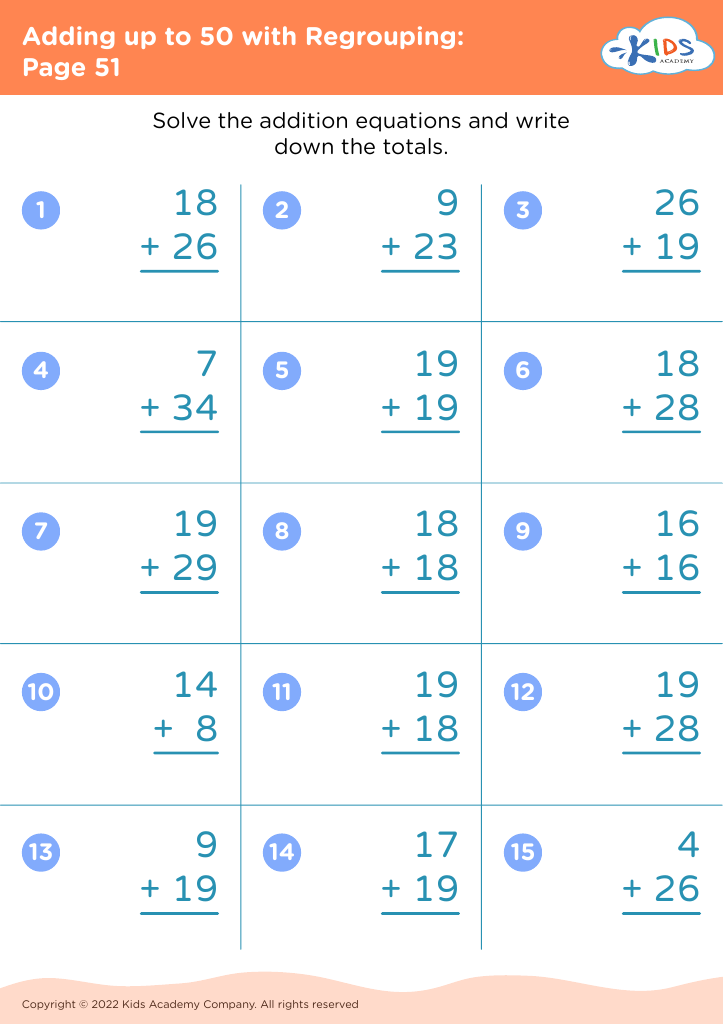
Welcome to our "Building Vocabulary Math Worksheets" page for ages 3-7! Designed to enhance young learners' mathematical vocabulary, these engaging worksheets introduce key math concepts through fun activities. Children will explore words like addition, subtraction, and shapes while practicing essential skills in an enjoyable way. Our worksheets not only foster language development but also strengthen foundational math abilities, creating a well-rounded learning experience. Perfect for both classroom use and at-home practice, these resources will help your child build confidence and proficiency in math while expanding their vocabulary. Check out our diverse collection to support your child’s learning journey today!
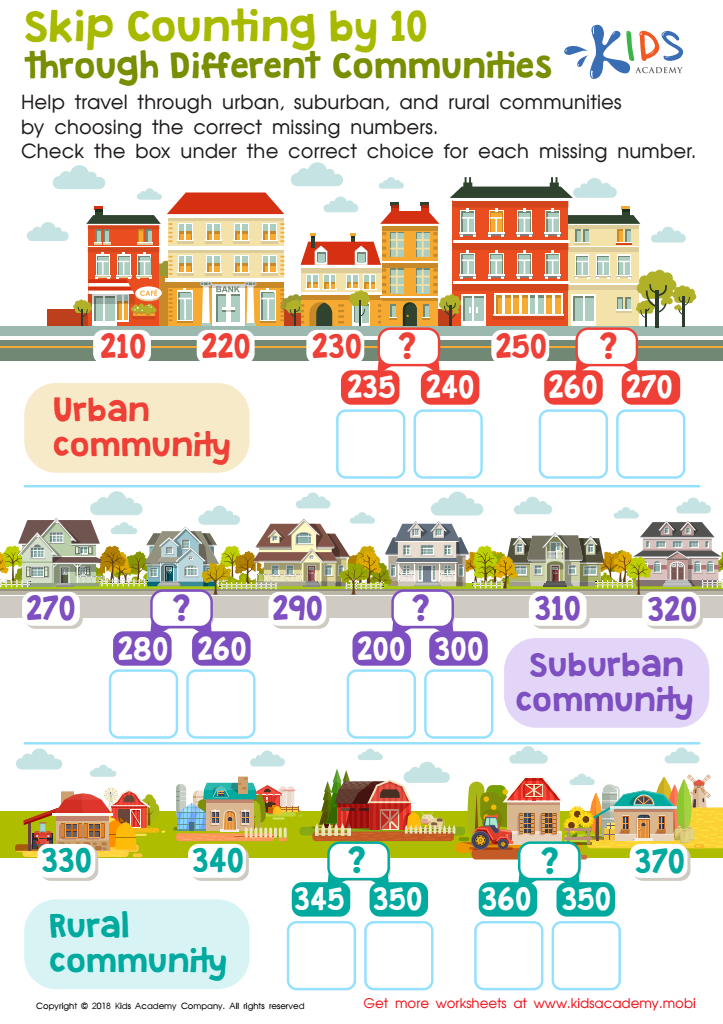
Skip Counting by 10 through Different Communities Worksheet
 Assign to My Students


%20(1).jpg)





Building vocabulary in math for children ages 3-7 is crucial because it lays the foundation for their understanding and application of mathematical concepts. Vocabulary development in math is not just about learning isolated terms; it encompasses understanding numerical concepts, relationships, and problem-solving skills. When children learn math vocabulary, such as "greater than," "minus," or “equal,” they gain the tools necessary to comprehend mathematical ideas more deeply.
Parents and teachers should care about this aspect of early education because vocabulary is linked to overall academic success. Strong vocabulary skills improve communication and reasoning ability in math, leading to higher performance in school. Engaging children in conversations about numbers and patterns at a young age fosters curiosity and confidence in their abilities. Furthermore, building math vocabulary enhances critical thinking, as it allows children to express their thought processes and understand instructions clearly.
By integrating math vocabulary into everyday activities—through games, storytelling, or hands-on experiences—parents and teachers can create a rich learning environment. This investment not only nurtures a child's ability to work with numbers but also promotes a positive attitude toward math, setting them up for success in future learning endeavors.








