Comparing objects Math Worksheets for Ages 3-7
8 filtered results
-
From - To
Introduce young learners to the exciting world of math with our Comparing Objects Math Worksheets, tailored for ages 3-7. These engaging, printable worksheets help kids develop vital math skills such as comparing sizes, weights, and quantities of different objects. Through fun, interactive activities, children will learn to identify similarities and differences, fostering critical thinking and problem-solving ability. Perfect for both classroom use and at-home practice, our carefully designed worksheets support early learning with colorful illustrations and easy-to-follow instructions, ensuring a delightful educational experience. Empower your child's math journey today with Kids Academy’s Comparing Objects Math Worksheets!
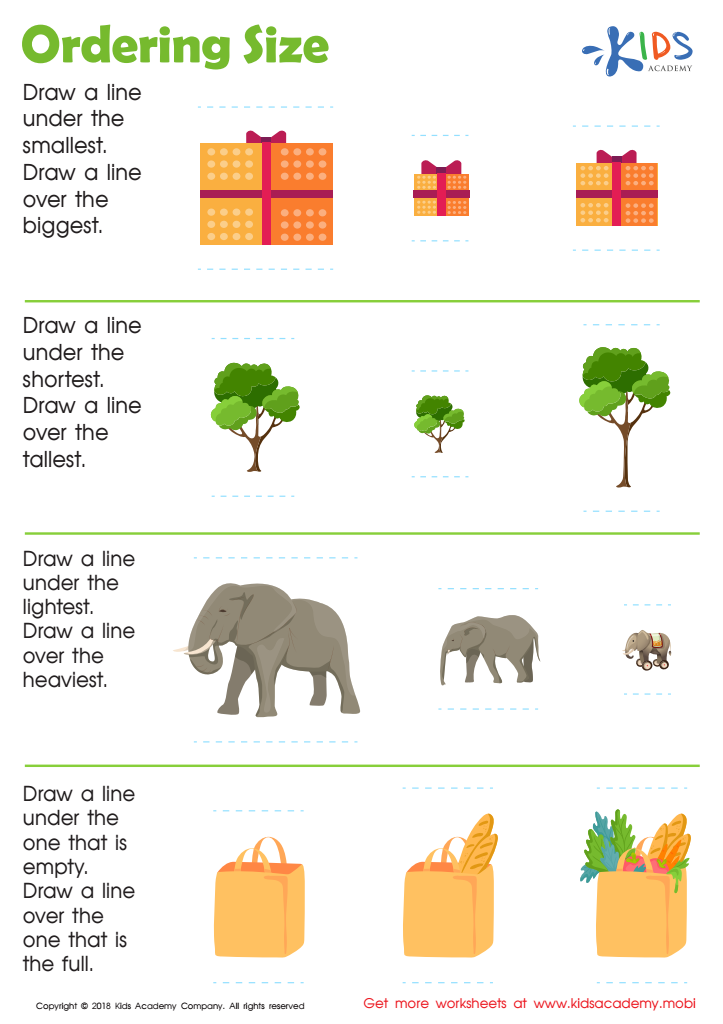
Ordering Size Worksheet
 Assign to My Students
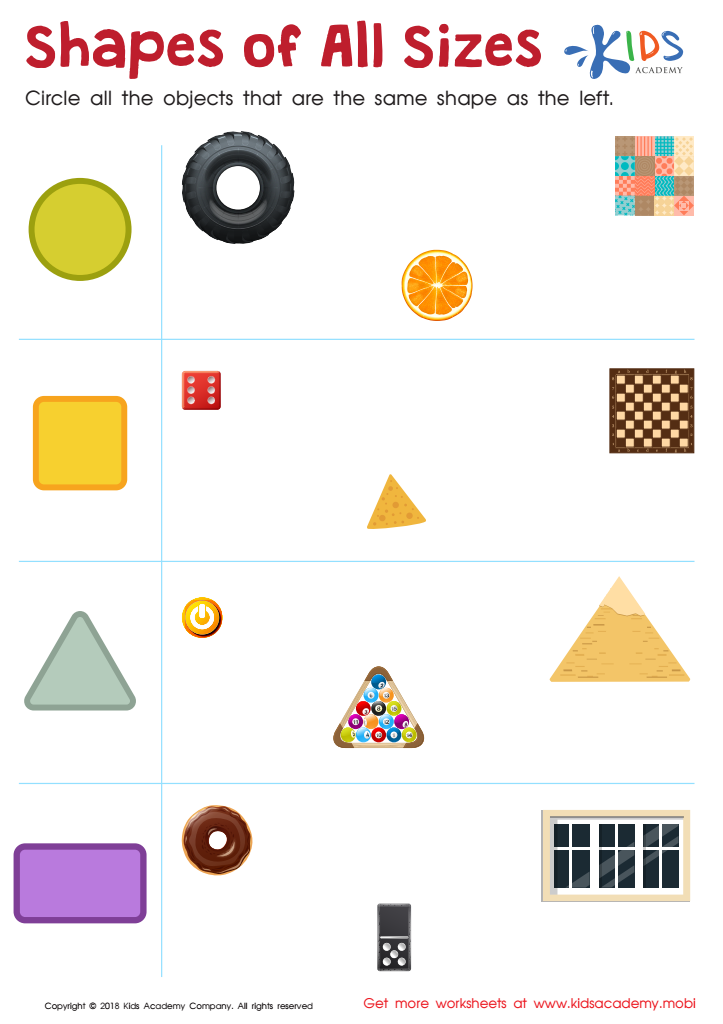
Shapes of All Sizes Worksheet
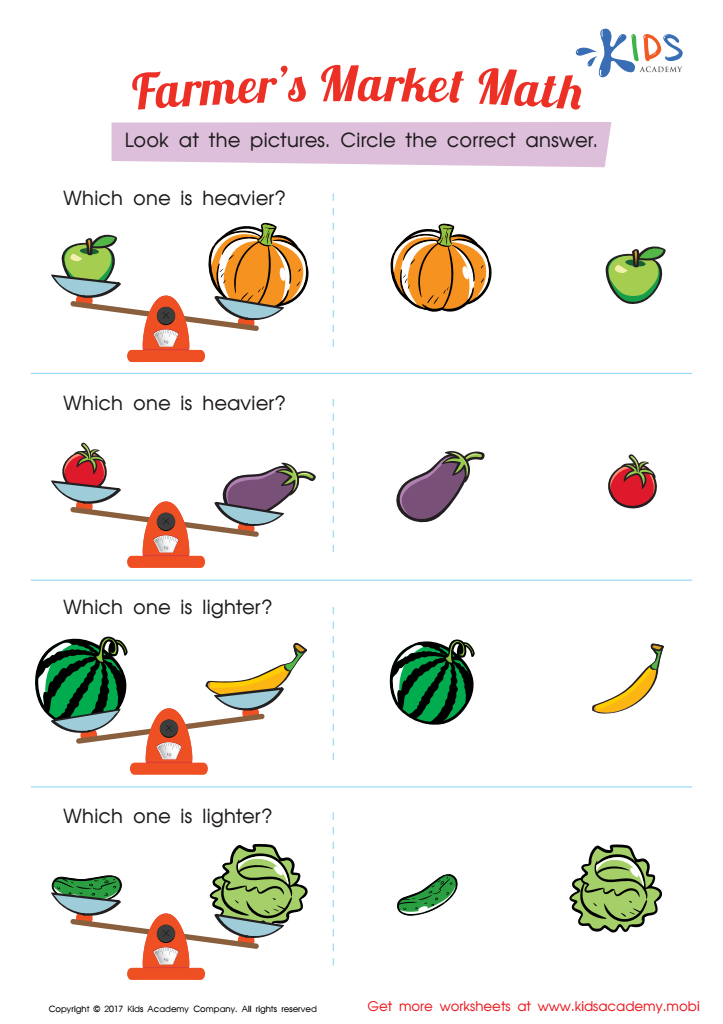
Which One Is Heavier Worksheet
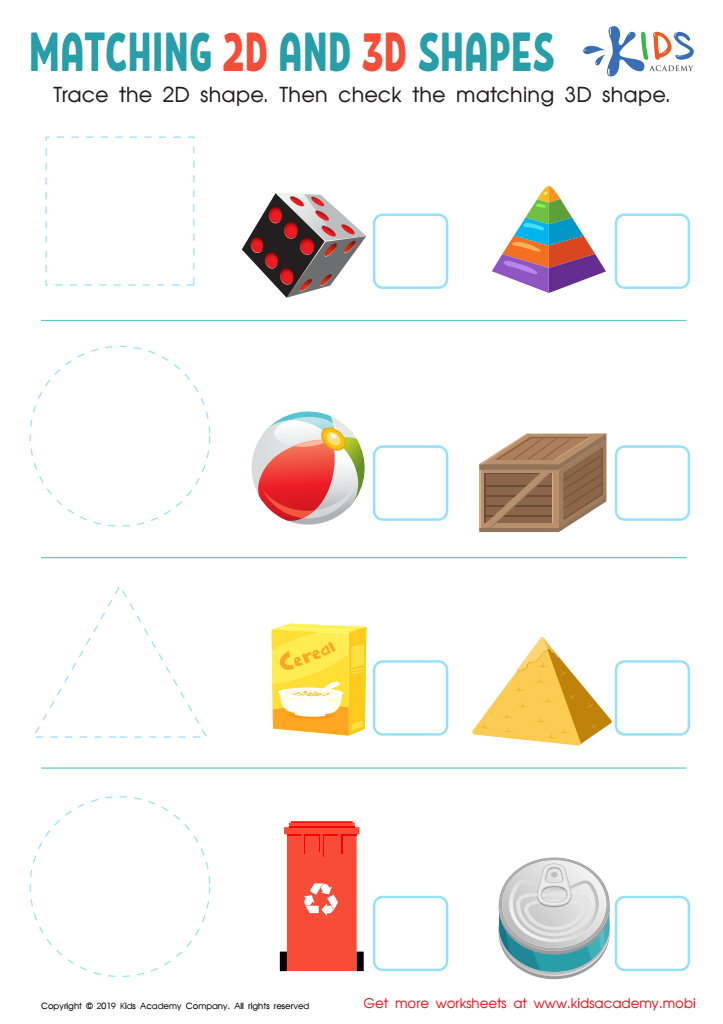
Matching 2D and 3D Shapes Worksheet
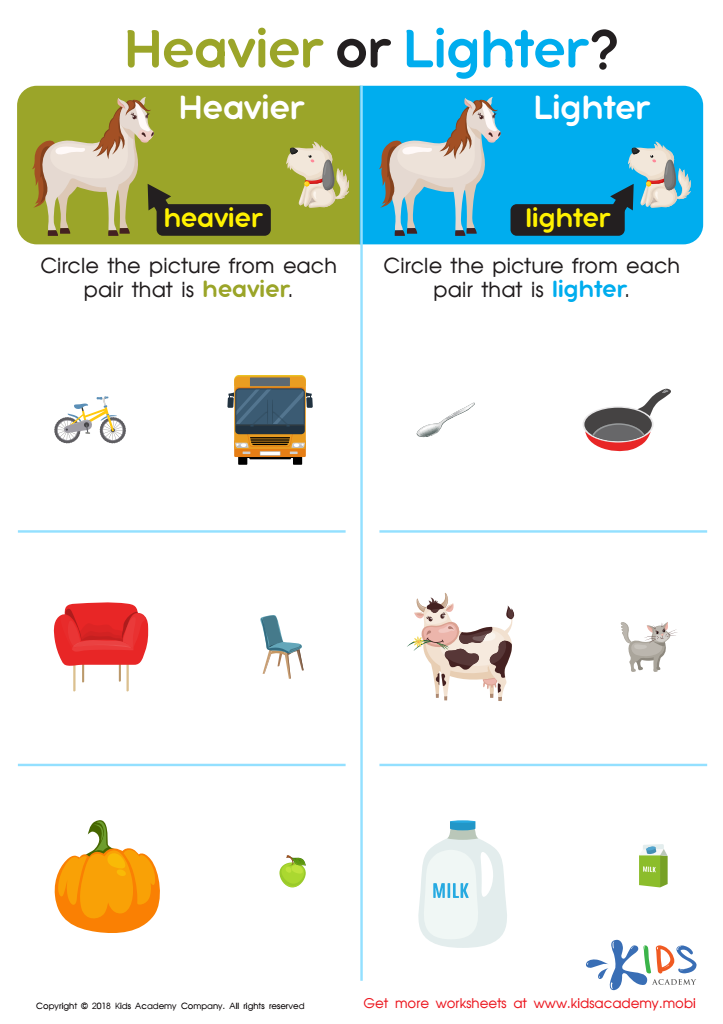
Heavier or Lighter? Worksheet
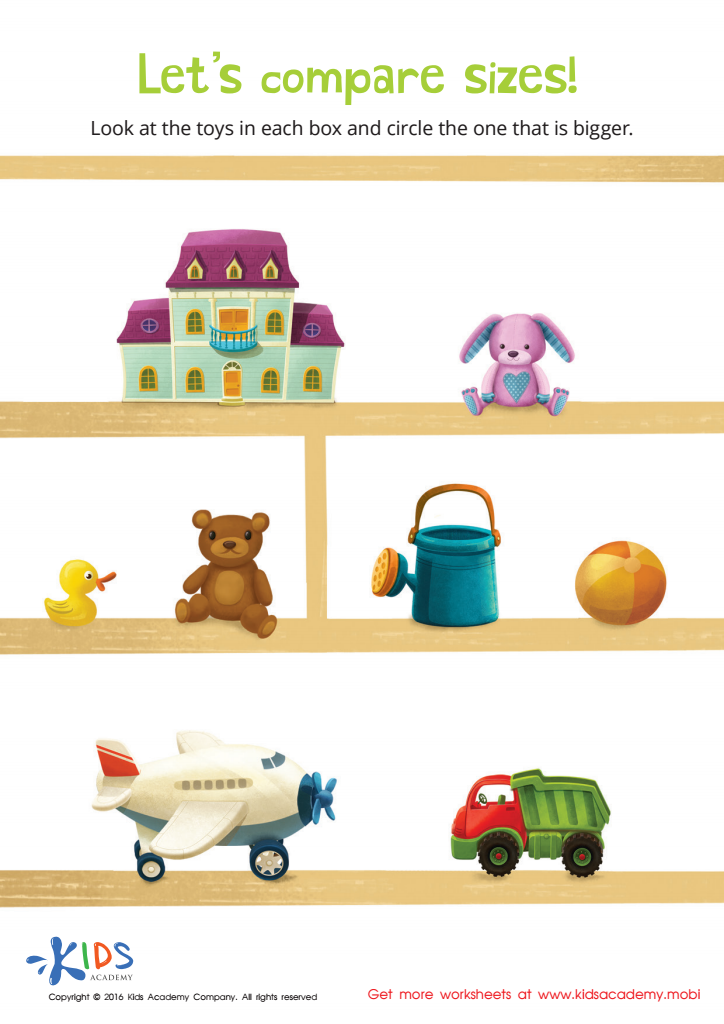
Classifying by Size Sorting Worksheet






Comparing objects in mathematical activities is fundamental for young children aged 3-7. This concept lays the groundwork for higher-level math skills by fostering critical thinking and observation. Through comparing, children learn key concepts like size, weight, length, and quantity, helping them make sense of the world.
For parents and teachers, encouraging comparison skills supports early cognitive development. By asking children to recognize differences and similarities, parents and teachers help improve children's vocabulary and language skills as they learn words like "bigger," "smaller," "taller," and "shorter." This vocabulary building is essential for literacy alongside numeracy development.
Mathematically, comparing objects introduces children to ordering, sorting, and classifying—skills they will revisit in more complex math problems in higher grades. For instance, understanding that three apples are more than two oranges is a practical way of grasping the basics of addition and subtraction, offering a tangible foundation for abstract math concepts.
Moreover, these activities bolster observational skills, attention to detail, and problem-solving abilities, which are crucial across all areas of learning. By incorporating comparison exercises in everyday play, parents and educators can make math both accessible and enjoyable, setting children up for long-term academic successes.








