Comprehension skills Math Worksheets for Ages 3-7
3 filtered results
-
From - To
Boost your child's math proficiency with our engaging Comprehension Skills Math Worksheets tailored for ages 3-7. Designed to blend fun with learning, these worksheets hone essential comprehension skills such as number recognition, pattern identification, and basic problem-solving. From counting exercises to simple addition and subtraction, each activity promotes cognitive development and critical thinking. At Kids Academy, we ensure that your child's learning journey is both enjoyable and fruitful. Download now to cultivate a strong mathematical foundation and foster a lifelong love for numbers in your young learner!
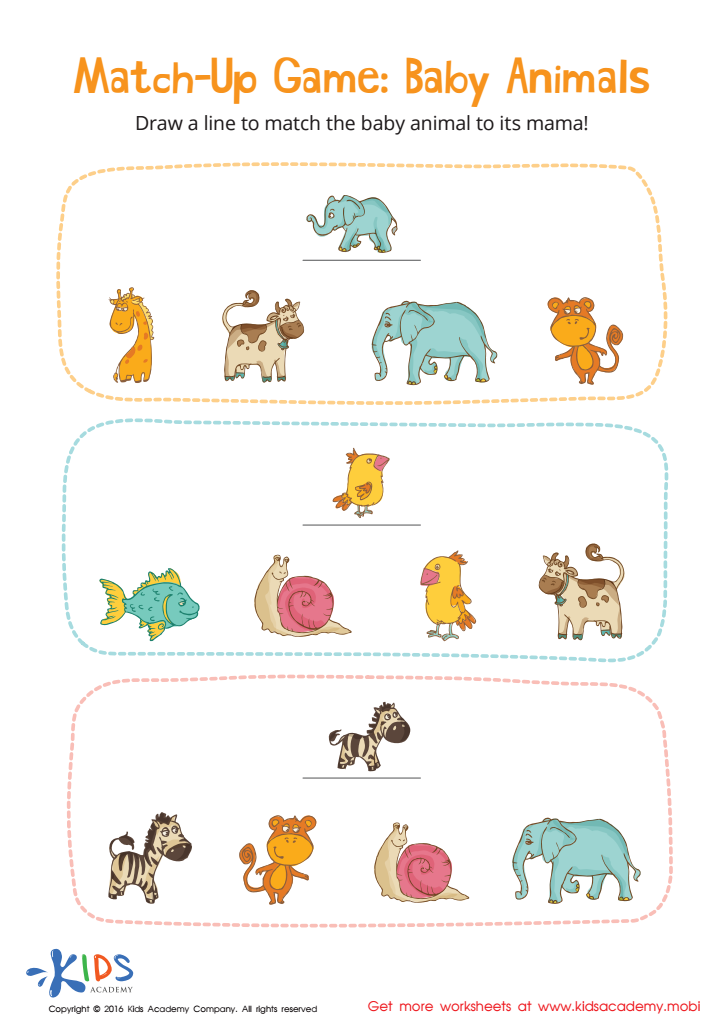
Baby Animals Match-Up Worksheet
 Assign to My Students
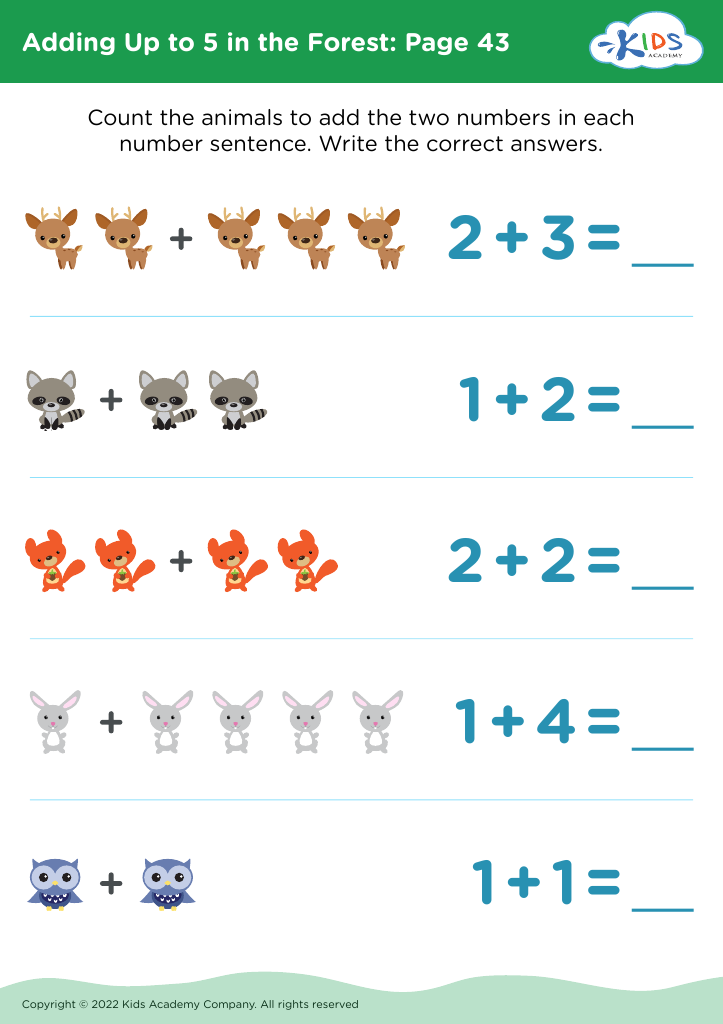
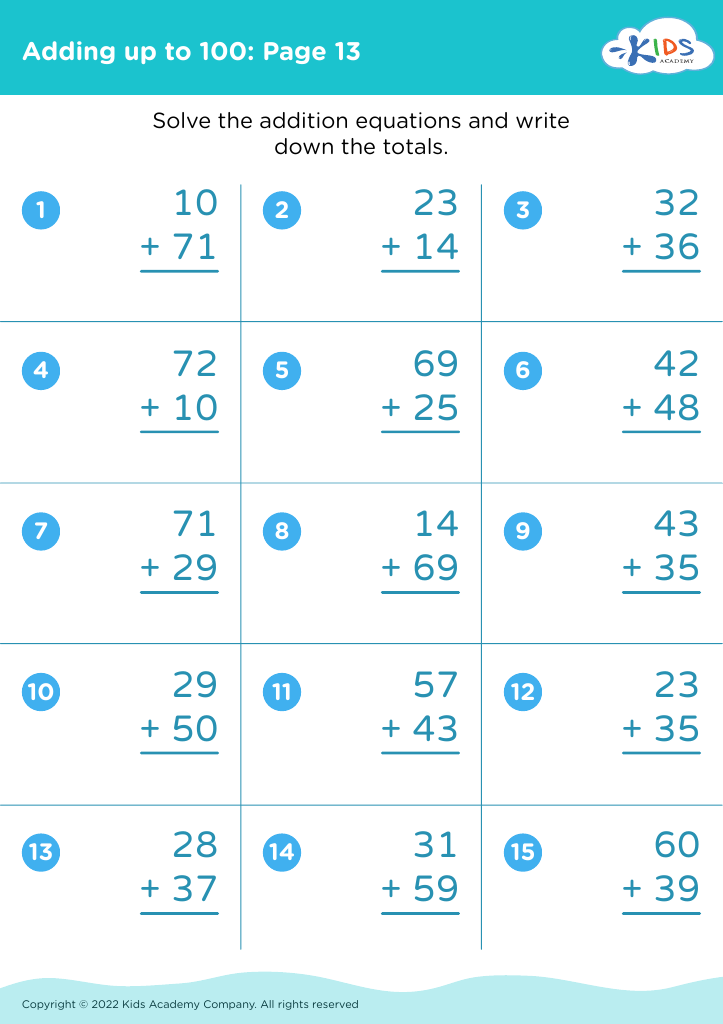








Comprehension skills in math for children ages 3-7 are foundational to their overall academic success and cognitive development. During these formative years, kids are not only learning numbers and basic operations but are also developing the ability to understand and process mathematical concepts in a meaningful way. High comprehension skills enable young learners to make sense of math problems, which is crucial for mastering more advanced topics later.
Firstly, a strong comprehension in math nurtures problem-solving skills. Children learn how to approach tasks methodically, enhancing their critical thinking abilities. Secondly, it builds confidence. When kids understand math concepts, they are more likely to enjoy the subject, which fosters a positive attitude toward learning in general.
Additionally, these skills have real-world applications. Understanding measurements, recognizing patterns, and grasping quantities are useful for everyday tasks like cooking, playing games, or even organizing toys. The earlier these skills are developed, the easier it will be for children to apply them in practical scenarios.
Finally, inter-disciplinary benefits abound. Math comprehension reinforces reading and writing skills as children learn to follow instructions, interpret word problems, and explain their reasoning. Therefore, parents and teachers should emphasize comprehension skills in math for young children to ensure a well-rounded and solid educational foundation.








