Develop addition skills Math Worksheets for Ages 3-7
5 filtered results
-
From - To
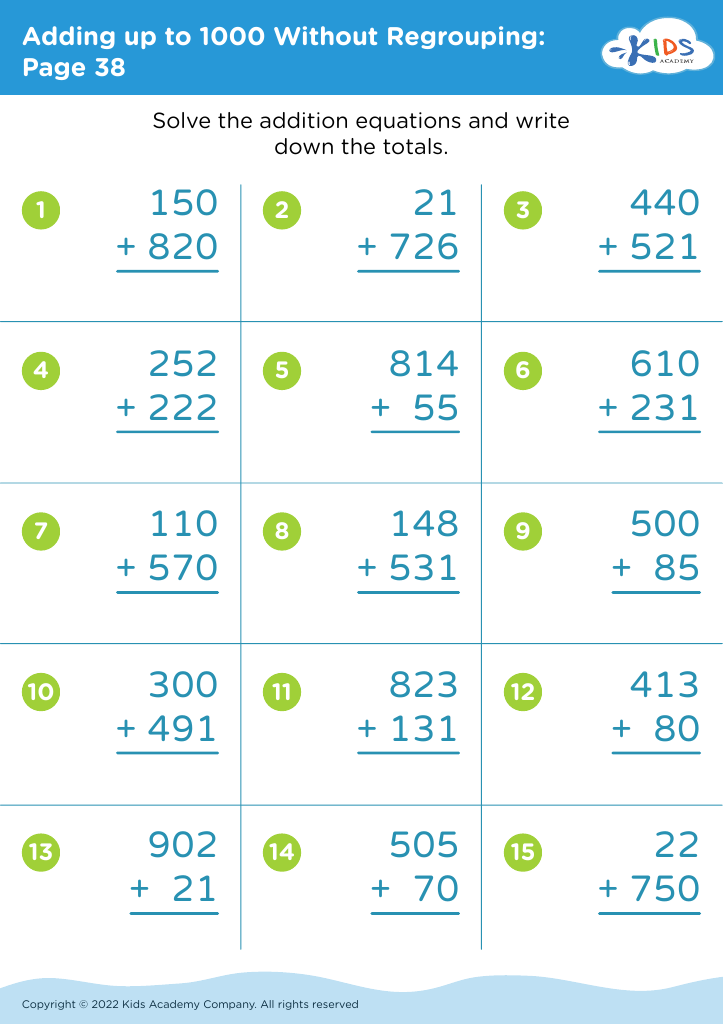
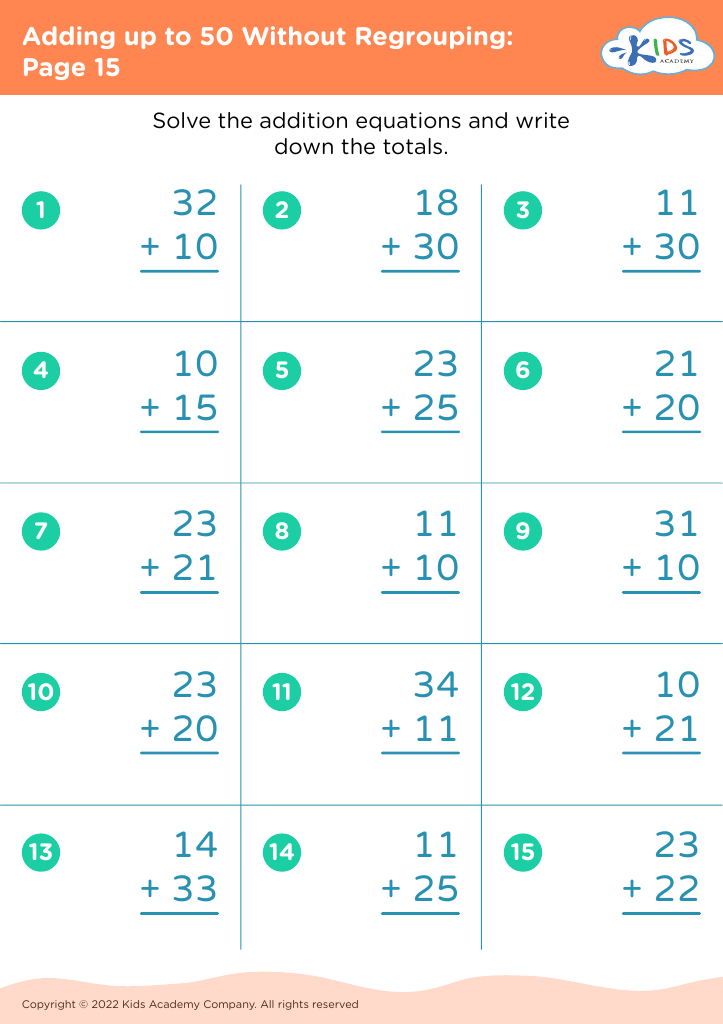
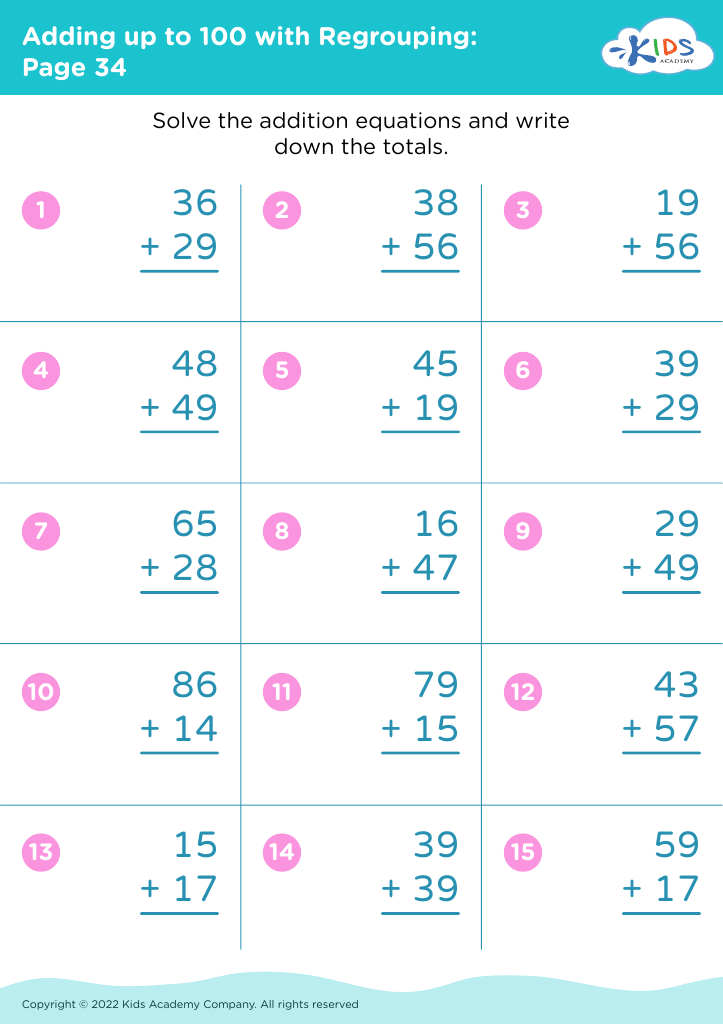
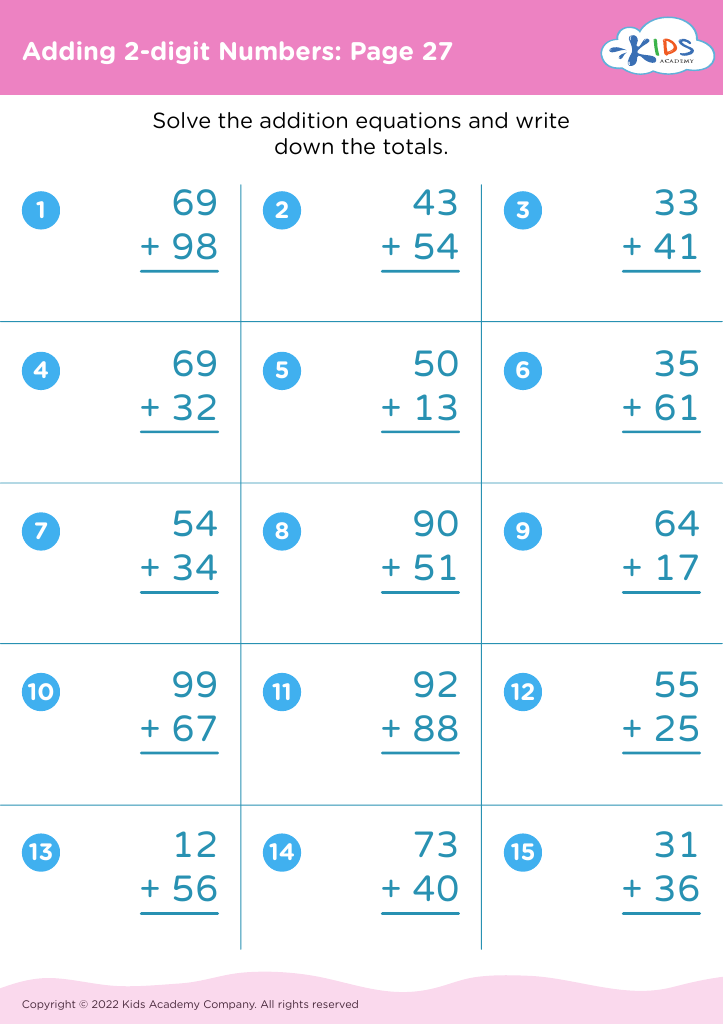
Enhance your child's early math skills with our "Develop Addition Skills" worksheets, designed for children ages 3-7. These engaging, printable activities, suitable for home or classroom use, focus on building a solid foundation in addition. With colorful illustrations and interactive exercises, young learners will enjoy mastering basic addition concepts through fun games and activities. Our worksheets cater to varied learning styles, helping children progress at their own pace. Foster a love for math while developing confidence and problem-solving abilities. Start your young mathematicians on their journey to arithmetic excellence today with our comprehensive and enjoyable addition resources!
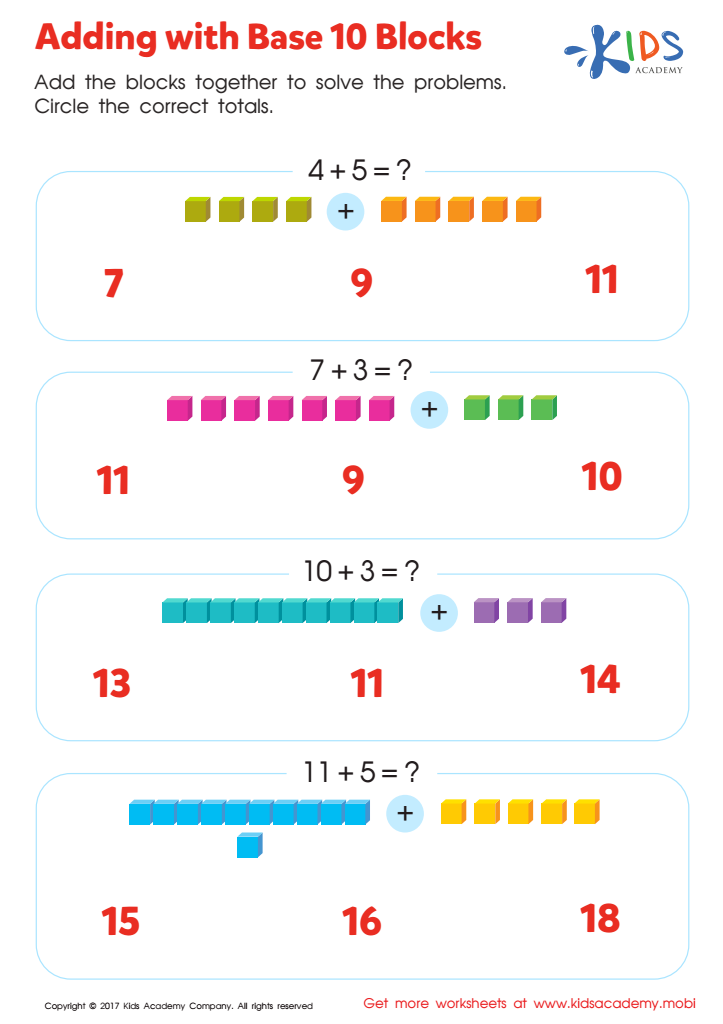
Adding with Base Ten Blocks Worksheet
 Assign to My Students






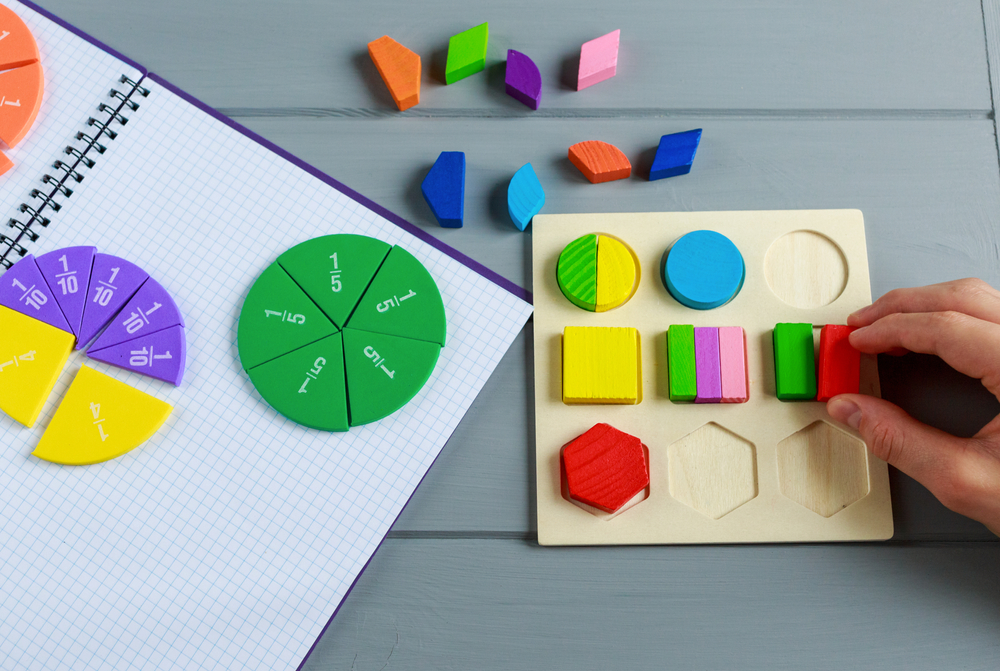
Developing addition skills in children aged 3-7 is crucial for several reasons. Firstly, this foundational math skill supports cognitive development. Early exposure to addition helps enhance problem-solving abilities, logical thinking, and cognitive flexibility. Children learn to recognize patterns and relationships, which are essential for future learning in more complex math concepts.
Secondly, math skills contribute to a child's confidence and self-esteem. Mastery of basic addition provides a sense of accomplishment and encourages a positive attitude toward math as a whole. Feeling competent in math lays the groundwork for lifelong learning.
Moreover, addition skills are critical for daily life. From counting toys to sharing snacks, understanding basic arithmetichelps children navigate their environments more efficiently. This practical application makes learning relatable and engaging.
Finally, fostering addition skills early paves the way for academic success in later years. Strong mathematical foundation will enhance a child's performance in school, promoting readiness for more advanced concepts in grades to come. By investing in addition skill development at an early age, parents and teachers play an essential role in shaping a child's future academic journey and holistic development.








