Unlock your child's problem-solving potential with our engaging Math Worksheets designed for ages 3-7! These fun and educational worksheets are crafted to enhance critical thinking, logical reasoning, and numerical skills. From simple puzzles to more complex problems, each activity is designed to build foundational math abilities while making learning enjoyable. Children will explore patterns, sorting, counting, basic addition, and more through interactive exercises that keep their young minds active and challenged. Perfect for home or classroom use, our resources support a structured learning path to build confidence and foster a love for mathematics from an early age.

Check out this FREE Trial Lesson on Math for age 3-7!

Lesson 1- Partitioning Shapes

Favorites
With answer key
Interactive
  • 3-7
  • Enhancing problem-solving abilities
  • Math
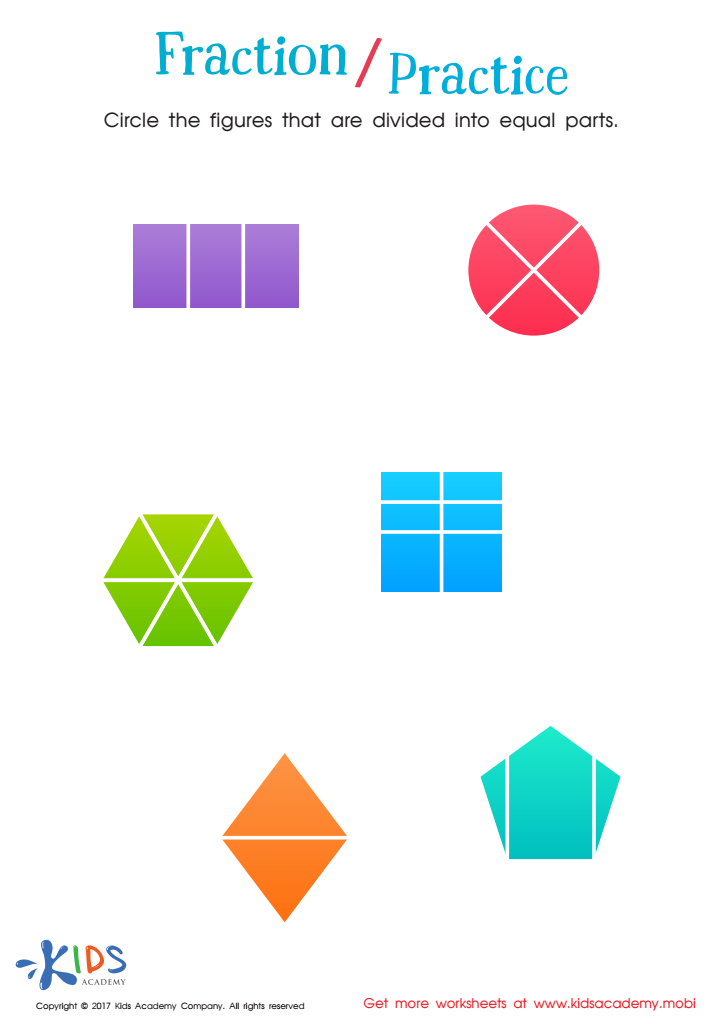
Fraction Practice Printable

Fractions: Shapes Worksheet

Get your printable now. Kids learn math differently today than you did in school; understanding concepts rather than memorizing facts. Help your child understand fractions with this printable worksheet. It'll help your child recognize parts of a whole, identify equal parts and build a foundation for numeracy. A better understanding sets kids up for math success! Get your printable now.
Fractions: Shapes Worksheet
Worksheet
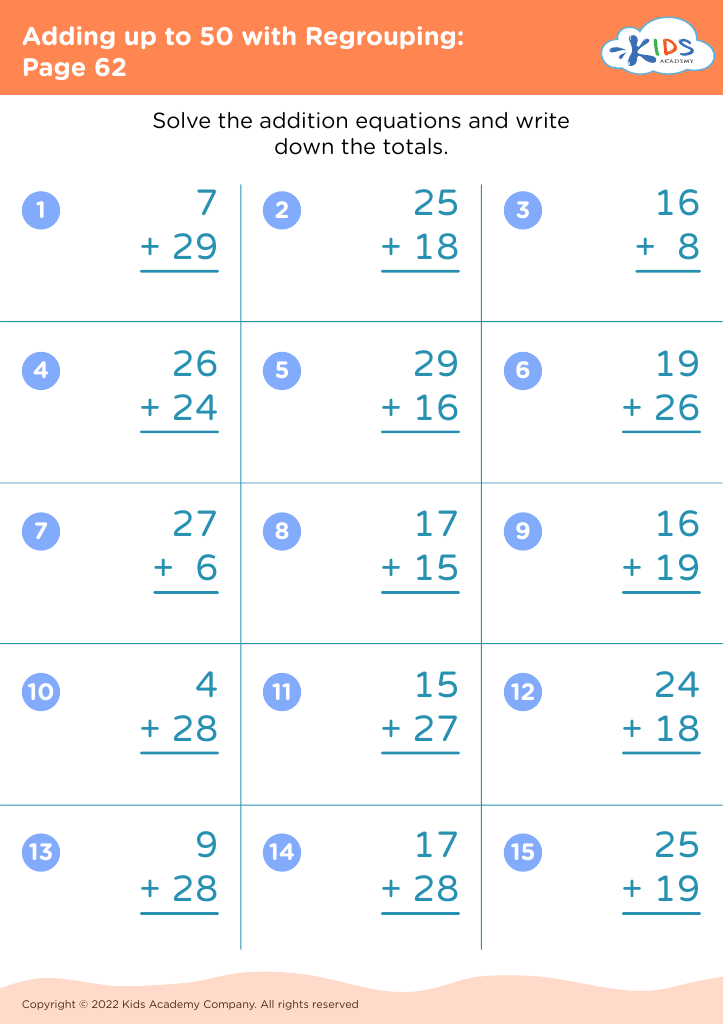
Adding up to 50 with Regrouping: Page 62
Worksheet
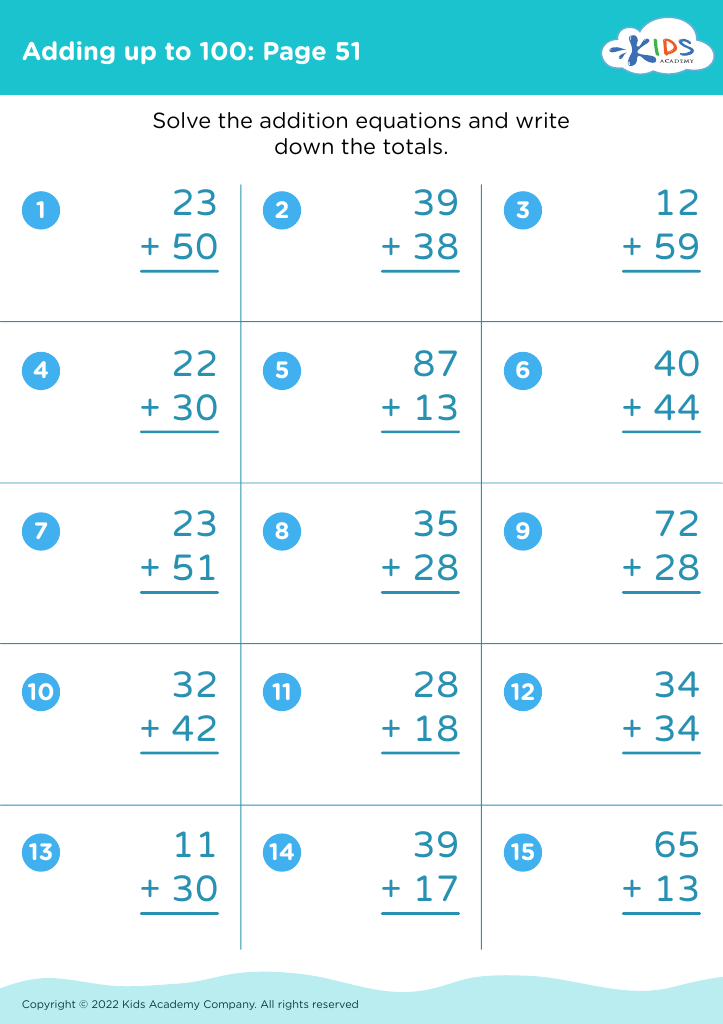
Adding up to 100: Page 51

Adding up to 100: Page 51

Adding up to 100: Page 51
Worksheet
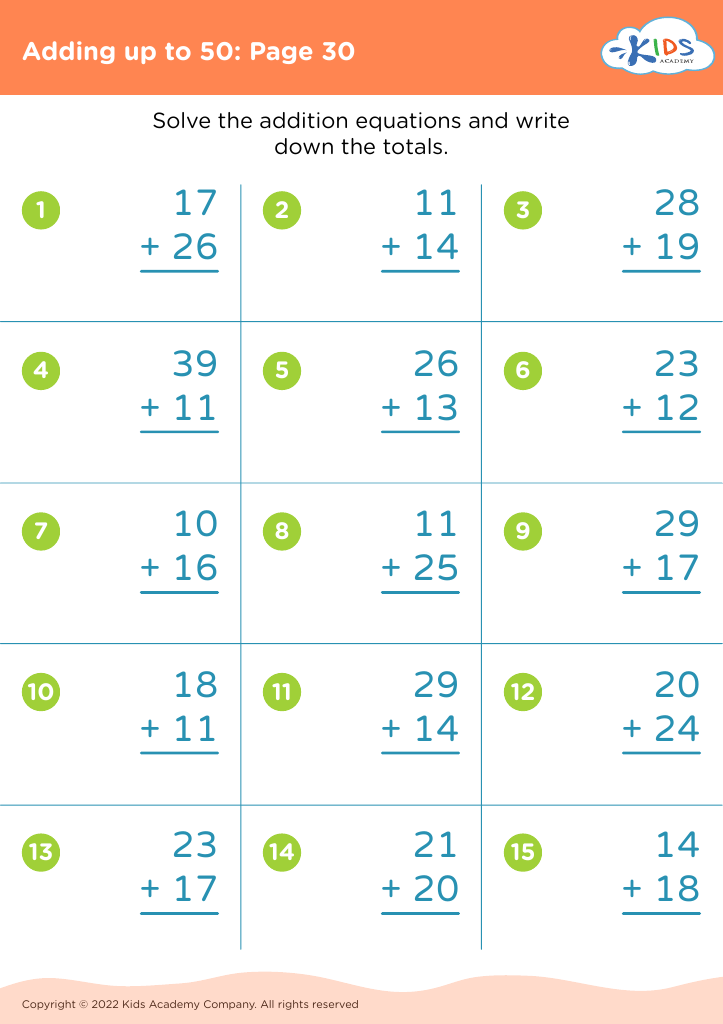
Adding up to 50: Page 30

Adding up to 50: Page 30

Adding up to 50: Page 30
Worksheet
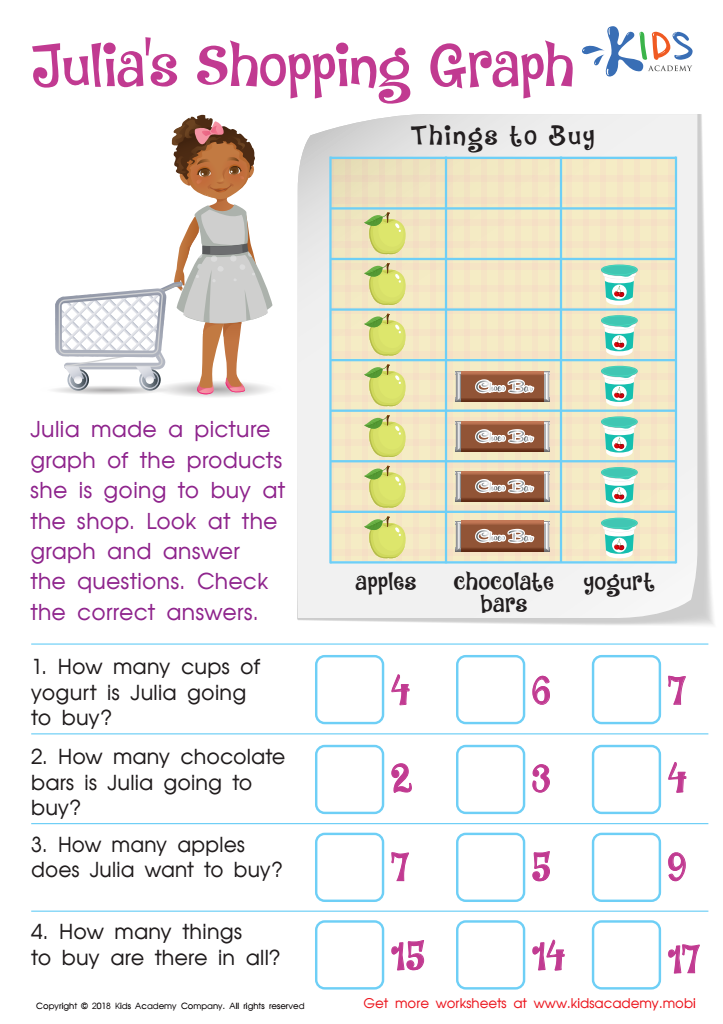
Julia's Shopping Graph Worksheet
Julia's Shopping Graph Worksheet
This fun PDF worksheet provides little mathematicians with practice using pictographs. They will answer questions about Julia's graph, helping to assess their understanding of reading and interpreting data. Counting and choosing the correct answer is sure to be an enjoyable experience!
Julia's Shopping Graph Worksheet
Worksheet
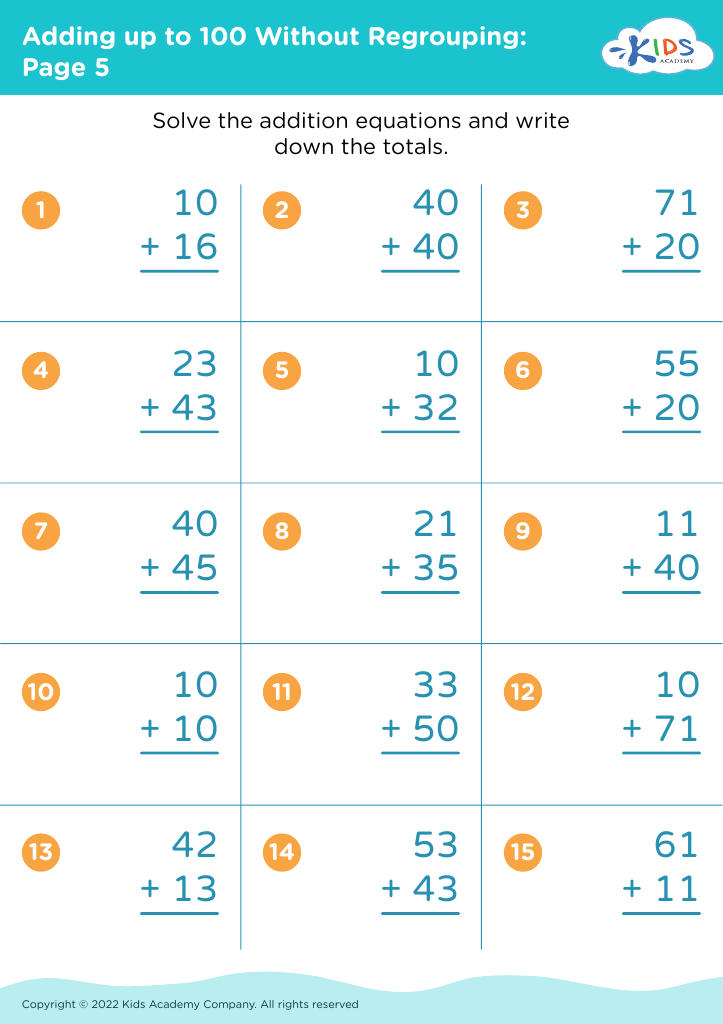
Adding up to 100 Without Regrouping: Page 5
Worksheet
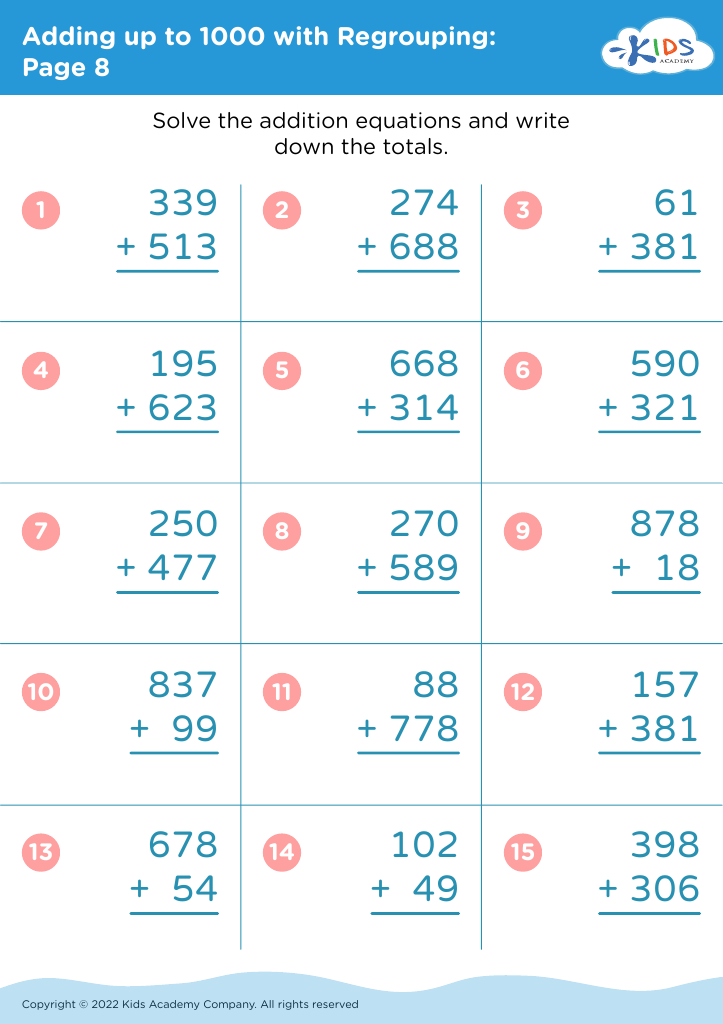
Adding up to 1000 with Regrouping: Page 8
Worksheet
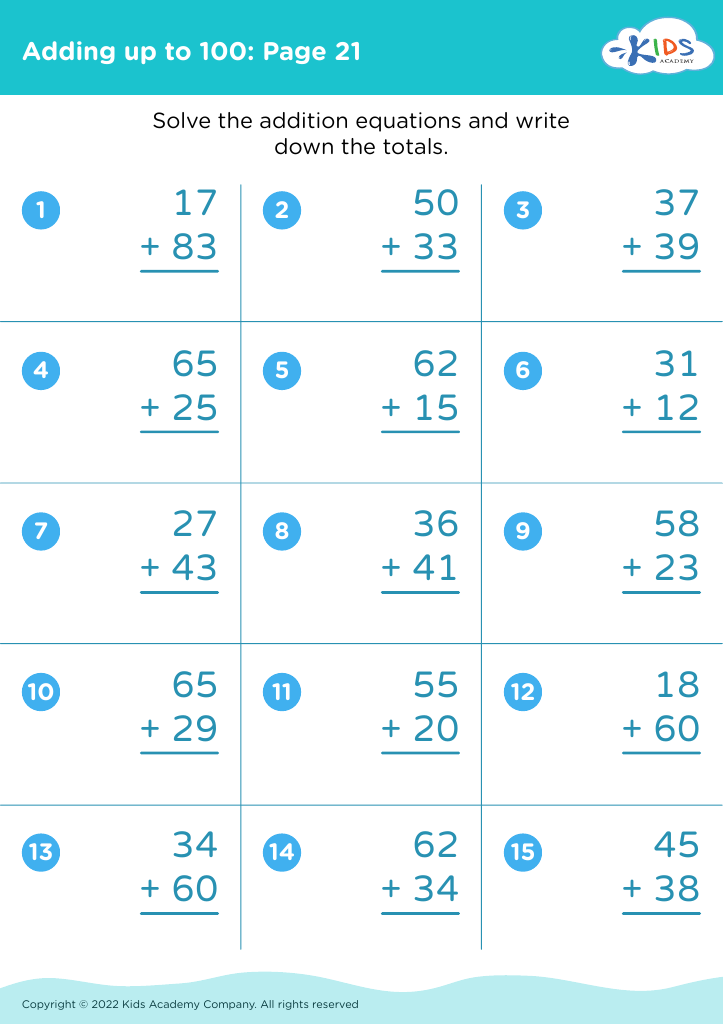
Adding up to 100: Page 21

Adding up to 100: Page 21

Adding up to 100: Page 21
Worksheet
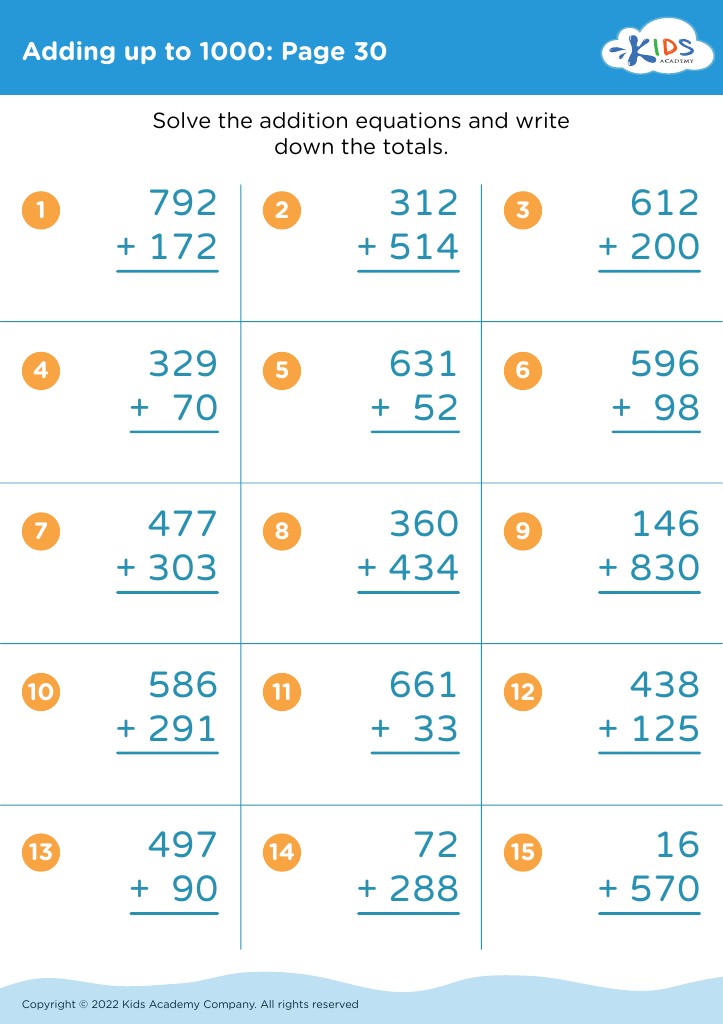
Adding up to 1000: Page 30

Adding up to 1000: Page 30

Adding up to 1000: Page 30
Worksheet
Commutative Property of Addition Worksheet
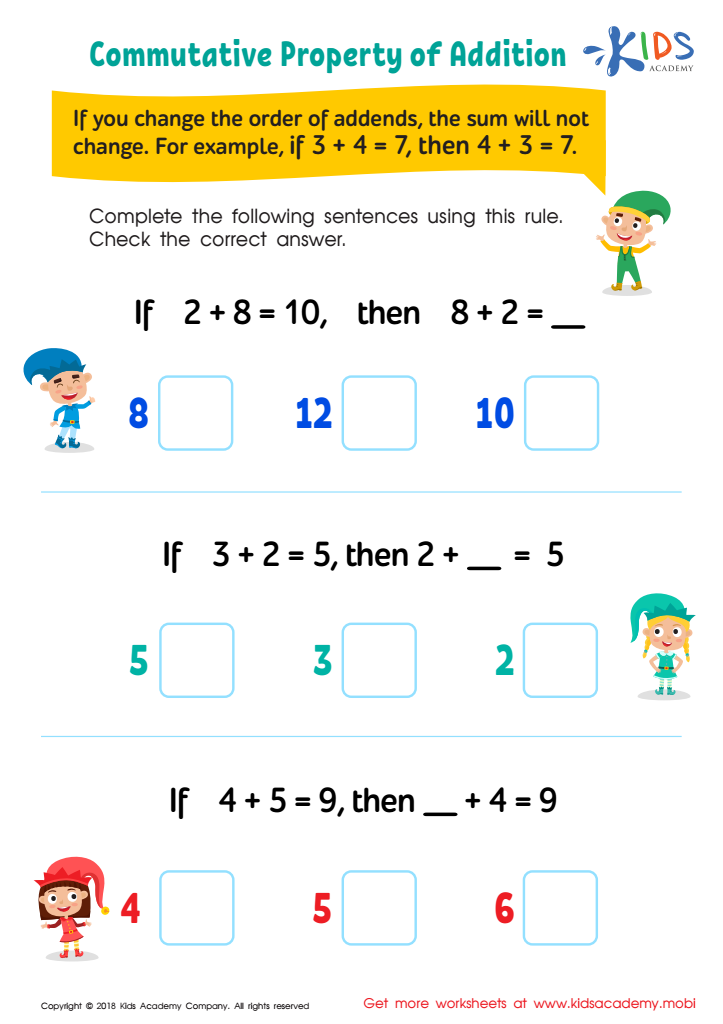
Commutative Property of Addition Worksheet

Master the commutative property of addition with Kids Academy's worksheet! Kids will have fun with silly elves as they complete the rows, switching or adding the addends. Observe that the sum stays the same no matter the order of the numbers!
Commutative Property of Addition Worksheet
Worksheet
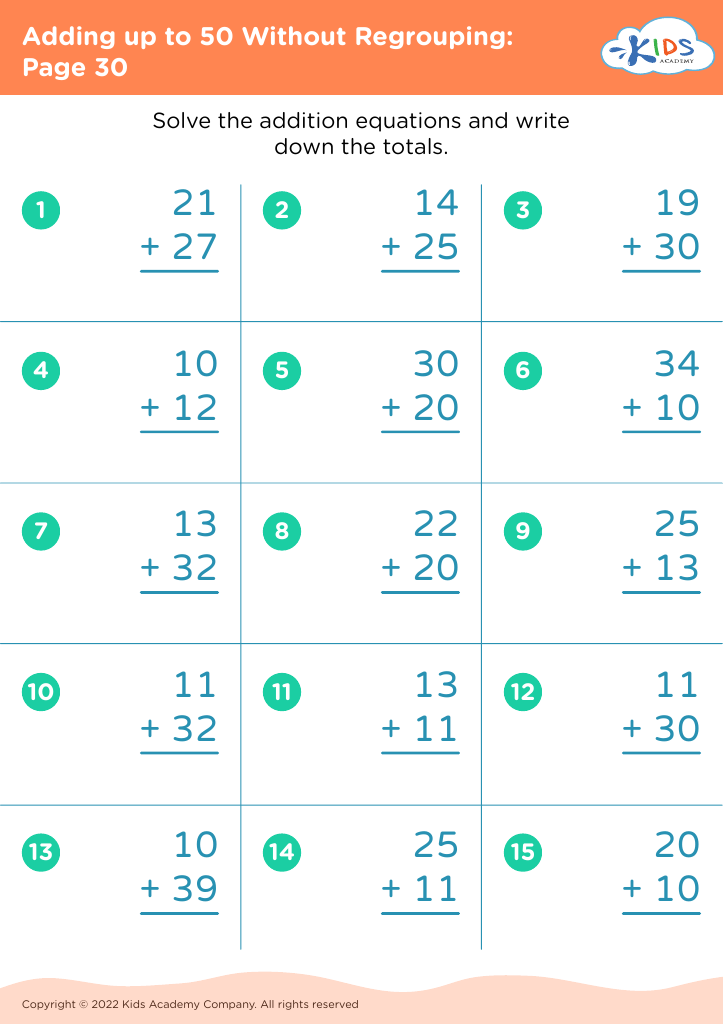
Adding up to 50 Without Regrouping: Page 30
Worksheet
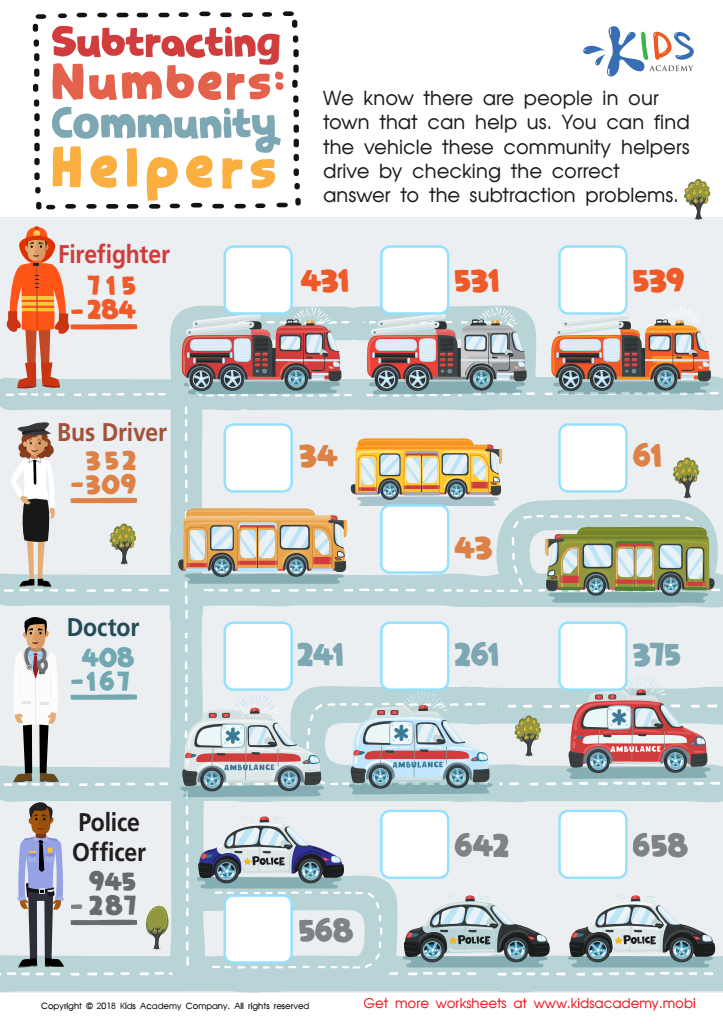
Subtracting Numbers: Community Helpers Worksheet


Subtracting Numbers: Community Helpers Worksheet

A community is an area of different people, buildings and other elements. People in a community have varied roles and work together to make it thrive. Ask your child what community helpers they know and how they help. Match the helpers to their vehicles by solving subtraction problems!
Subtracting Numbers: Community Helpers Worksheet

Worksheet


Enhancing problem-solving abilities in math for children ages 3-7 is crucial for multiple reasons and should be of high priority for both parents and teachers. Firstly, early math skills are strong predictors of later academic achievement, including reading skills and overall school success. Developing problem-solving abilities at a young age helps children to build a solid foundation, making advanced mathematical concepts easier to grasp as they progress through their education.

Moreover, math problems and puzzles stimulate cognitive development, enhancing critical thinking, logical reasoning, and the ability to analyze and approach problems methodically. These skills are not only vital for academic achievement but are also essential lifelong skills that support daily decision-making and problem-solving in a variety of contexts.

Additionally, engaging in problem-solving tasks boosts a child's confidence and fosters a growth mindset, teaching them that making mistakes and working through challenges are normal parts of the learning process. It also encourages persistence, resilience, and a positive attitude toward learning and exploring new concepts.

Teachers and parents who encourage problem-solving in math also inadvertently cultivate curiosity, creativity, and a love for learning. These outcomes collectively contribute to well-rounded development and prepare children to be successful, adaptive, and innovative thinkers in an ever-evolving world.