Fraction visualization Math Worksheets for Ages 3-7
8 filtered results
-
From - To
Discover our engaging Fraction Visualization Math Worksheets designed specifically for children ages 3 to 7! These worksheets help young learners grasp the fundamental concepts of fractions through colorful visuals and interactive exercises. Ideal for beginners, our resources encourage hands-on learning and visual recognition of fraction parts, making math fun and accessible. Perfect for homeschooling or classroom use, these worksheets provide a solid foundation in fraction skills. Explore an array of activities that promote critical thinking and problem-solving while fostering a love for math. Join us in making fractions enjoyable and easy to understand for your little mathematicians!
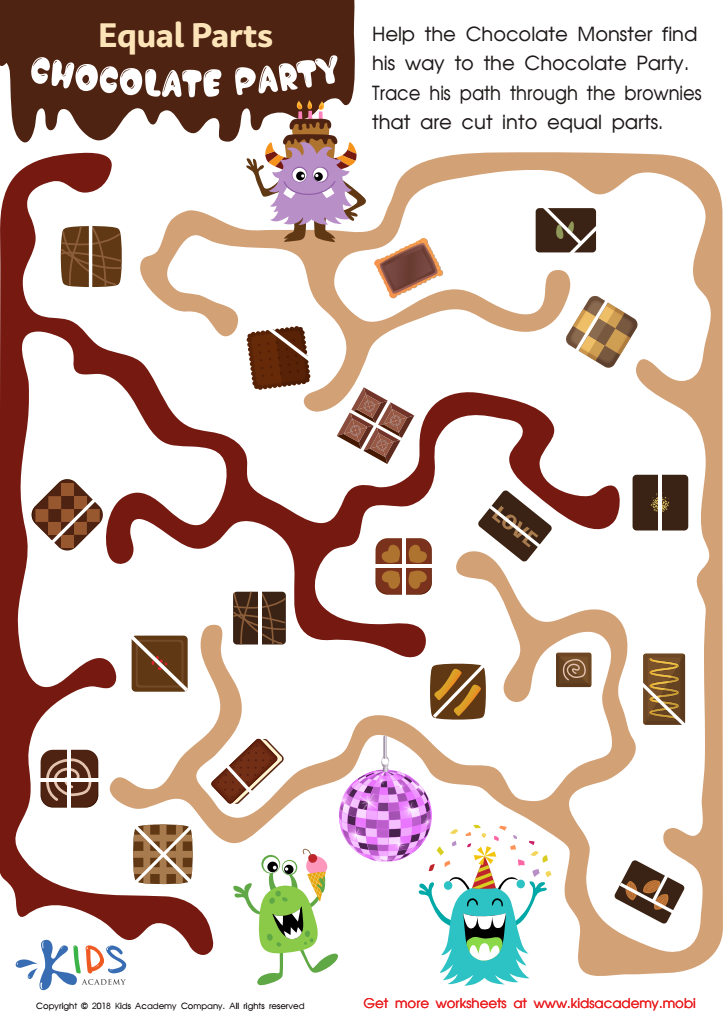
Equal Parts: Chocolate Party Worksheet
 Assign to My Students
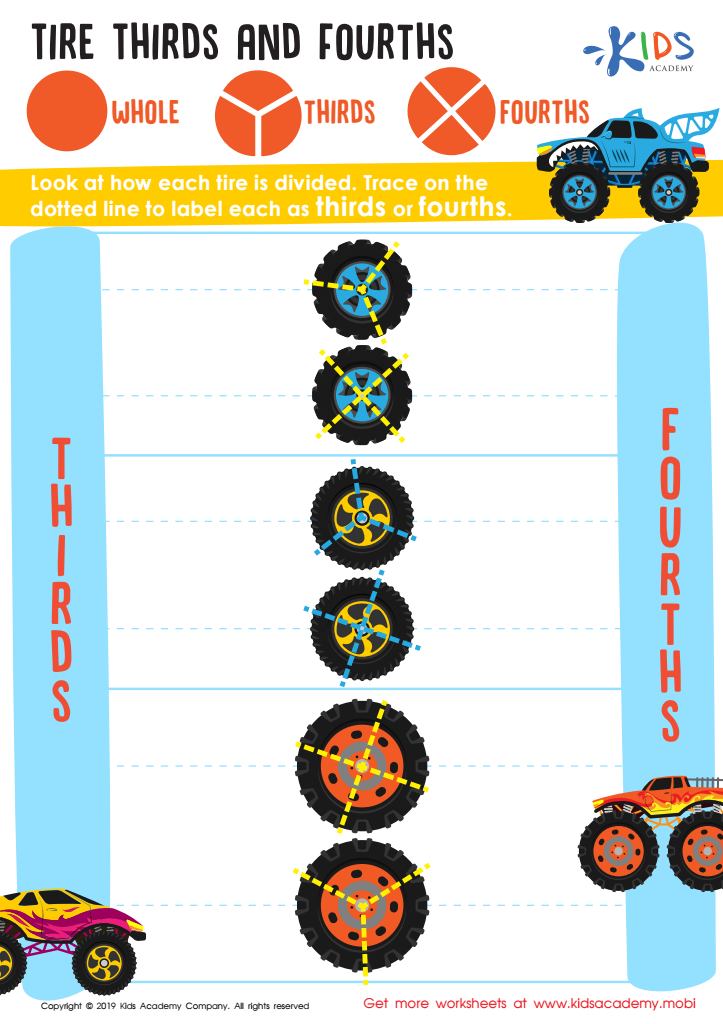
Tire Thirds and Fourths Worksheet
Bubbling Over Worksheet
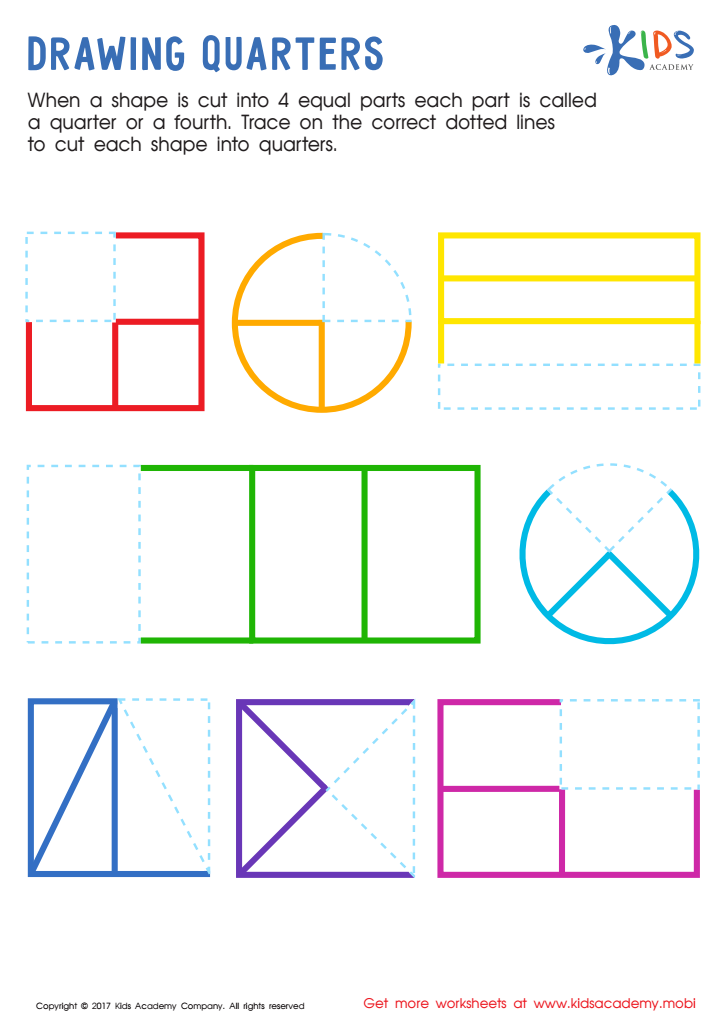
Drawing Quarters Worksheet
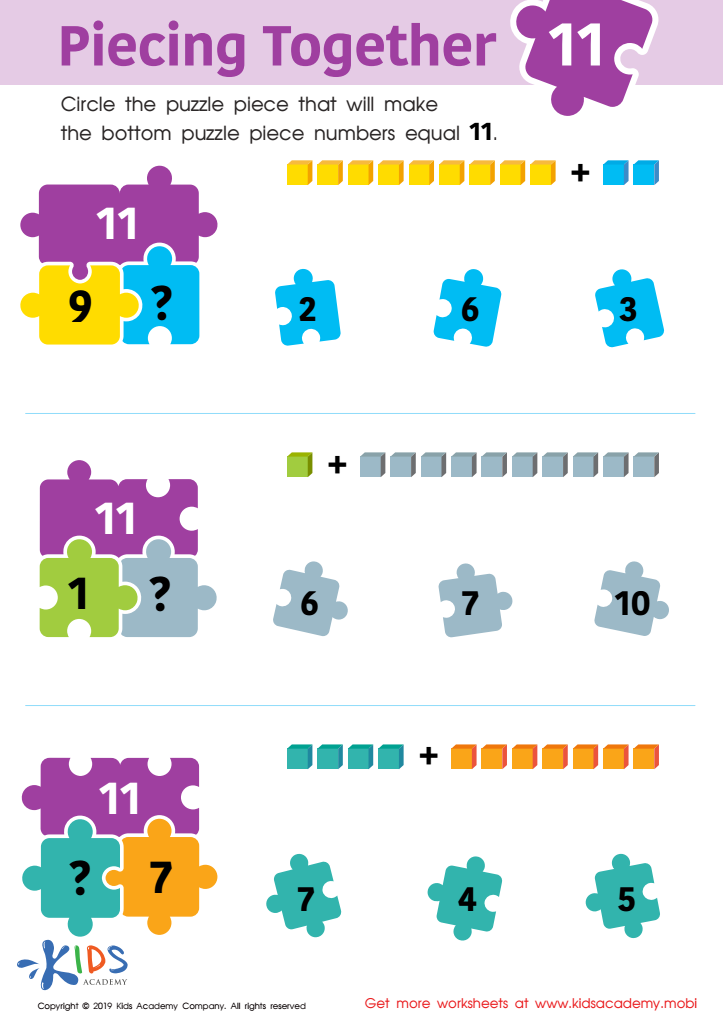
Piecing Together 11 Worksheet
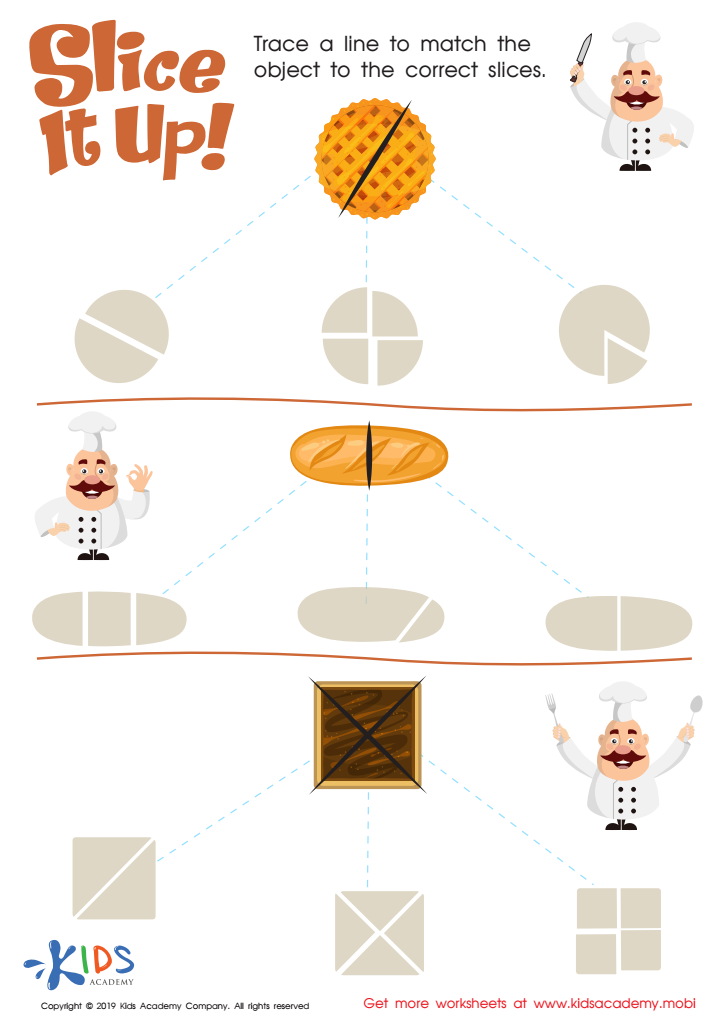
Slice It Up Worksheet
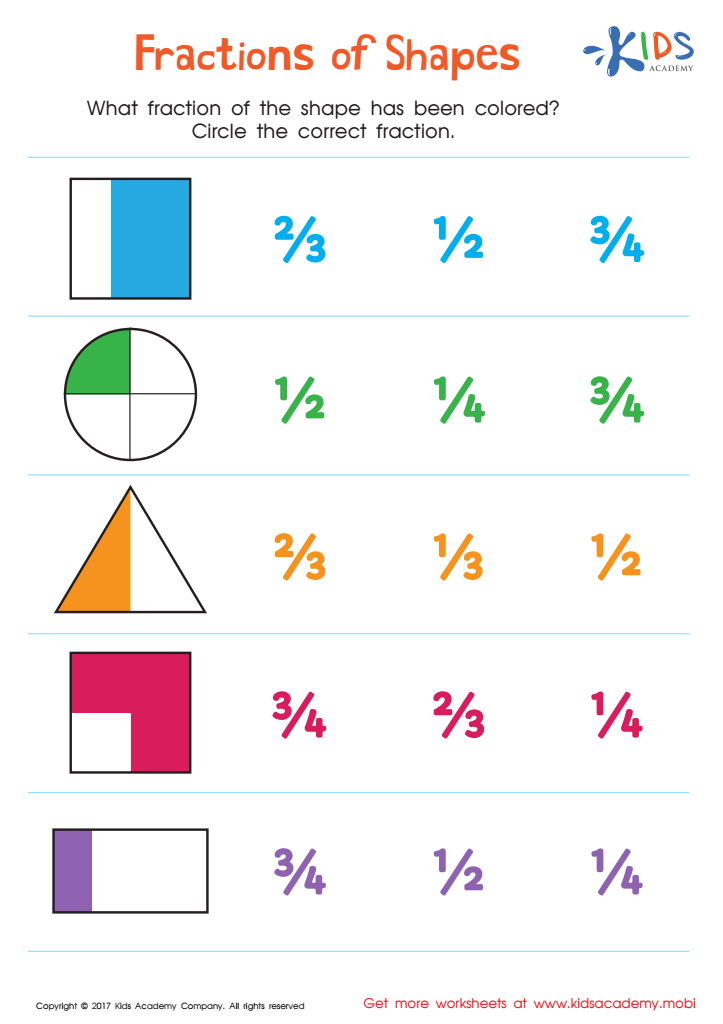
Fractions of Shapes: Math Concept Worksheet







Fraction visualization is crucial for early learners aged 3-7, as it lays the foundation for their understanding of more complex mathematical concepts. At this age, children are naturally curious and eager to explore. Visualizing fractions helps them grasp the idea of part-to-whole relationships, which is essential for problem-solving skills in both math and everyday situations.
Parents and teachers should care about fraction visualization because it supports cognitive development. When children can physically manipulate objects to see fractions represented—like slicing a pizza or sharing a cake—they develop a more intuitive understanding of concepts like equal parts, wholes, and divisions. This hands-on experience makes learning more engaging and memorable.
Moreover, early exposure to fraction visualization promotes critical thinking abilities. It encourages children to make connections between numbers and their representations, which is foundational for future math learning. By nurturing these visualization skills, educators and parents empower children to build confidence in math, improving their overall academic performance.
In our increasingly data-driven world, a solid grasp of fractions enhances life skills, such as budgeting, cooking, and time management. Consequently, emphasizing fraction visualization during these formative years sets children on a path to success in both math and life skills.








