Number tracing Math Worksheets for Ages 3-7
4 filtered results
-
From - To
Ignite your child's mathematical journey with our expertly-designed Number Tracing Math Worksheets for Ages 3-7! At Kids Academy, we offer engaging, age-appropriate printable worksheets that transform number learning into a fun and interactive experience. Perfect for preschoolers and early elementary students, these worksheets enhance number recognition, fine motor skills, and hand-eye coordination through playful, traceable activities. Watch as your little ones confidently master numbers and build a strong foundation for future math success. Spark enthusiasm for learning with Kids Academy's Number Tracing Math Worksheets today!
 Assign to My Students
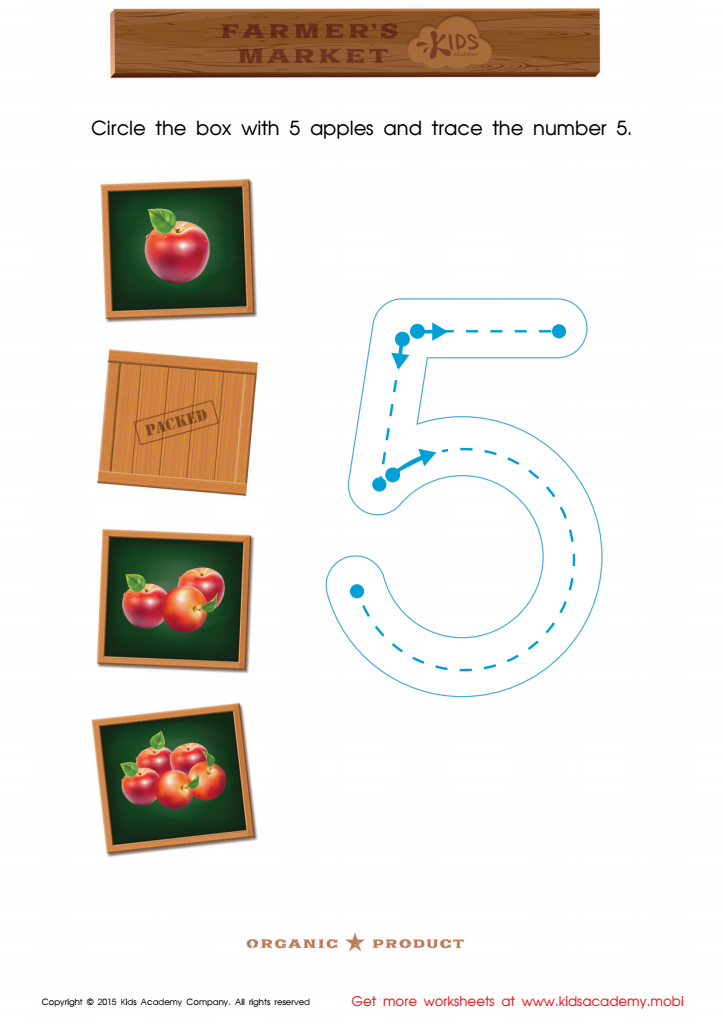
Count the Apples and Trace the Number 5 Printable






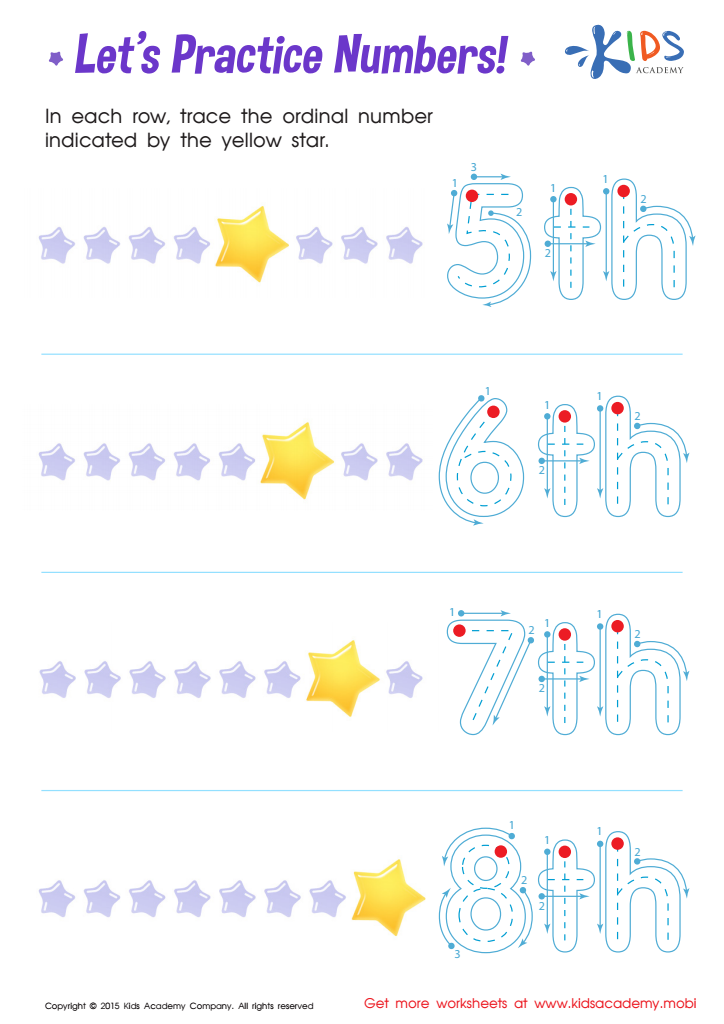
Parents and teachers should care about number tracing math for ages 3-7 because it serves as a critical foundational skill that supports early mathematical development and overall cognitive growth. At this formative stage, children are rapidly developing their motor skills and capacity for symbolic reasoning. Number tracing helps strengthen fine motor coordination by guiding children to draw numbers correctly, building the muscle memory necessary for more complex writing tasks in the future.
Moreover, number tracing integrates visual and kinesthetic learning, supporting different learning styles and enhancing memory retention. As children repeatedly trace numbers, they become more familiar with numeric shapes and patterns, which are fundamental to early math skills. This practice also helps children with number recognition, ensuring they can accurately identify and differentiate numbers, a critical precursor to addition, subtraction, and more complex math operations.
Additionally, number tracing exercises often involve counting, sequencing, and simple math problems, helping children understand the practical applications of numbers and improving their arithmetic skills. Teachers and parents play a crucial role in encouraging a positive attitude towards mathematics, and engaging, hands-on activities like number tracing can make learning math both enjoyable and effective. Investing time in this early skill helps build a child's confidence and lays the groundwork for future academic success.








