Spatial Orientation Math Worksheets for Ages 3-7
4 filtered results
-
From - To
Enhance your child's spatial awareness with our Spatial Orientation Math Worksheets, designed for ages 3-7. These engaging activities help young learners grasp fundamental concepts such as shapes, directions, and positional words. Perfect for preschool and early elementary students, the worksheets foster critical thinking, improve problem-solving skills, and build a strong foundation in math. Each exercise combines fun illustrations with practical tasks to keep kids excited about learning. From identifying left and right to mastering coordinates, our downloadable worksheets make it easy to support your child's developmental milestones. Start their spatial reasoning journey today with Kids Academy's expertly crafted resources!
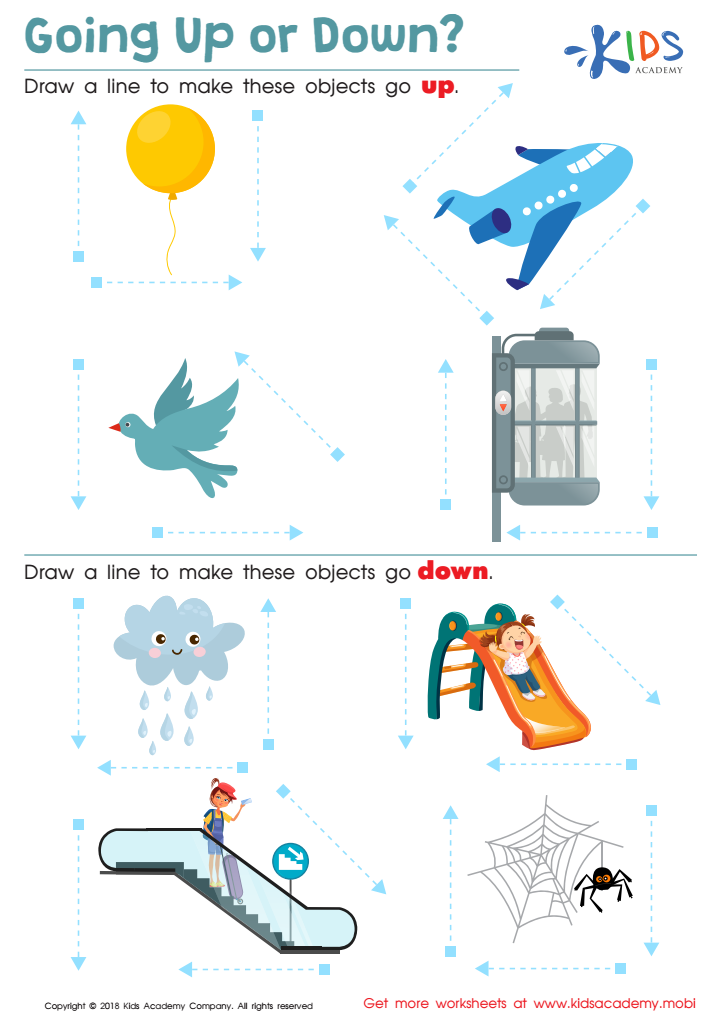
Going up or Down? Worksheet
 Assign to My Students
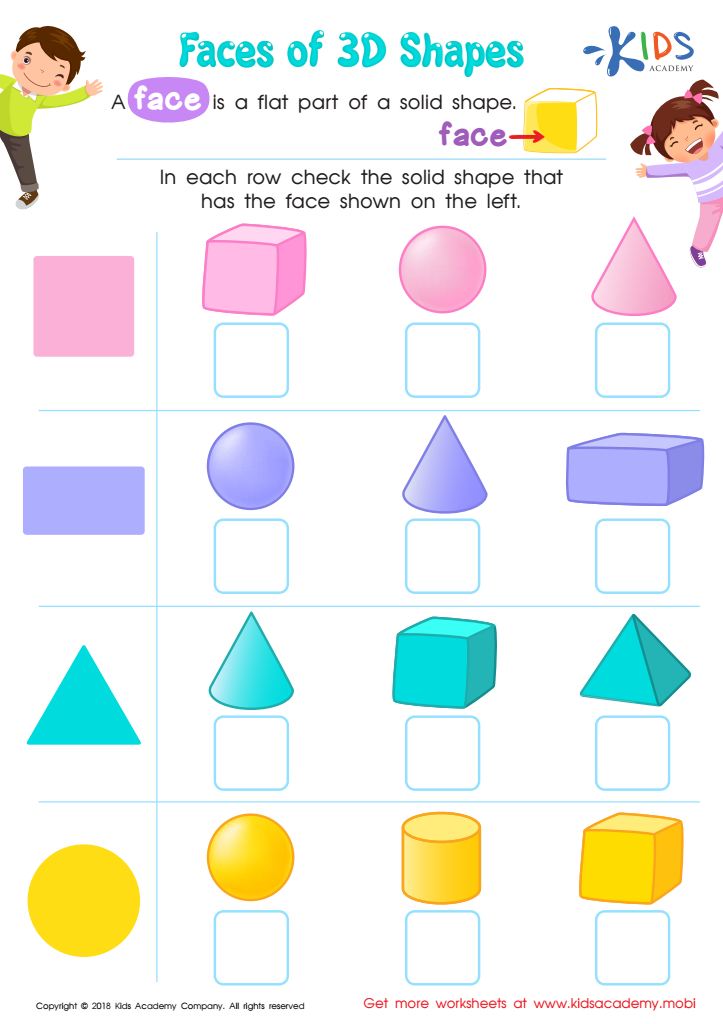
Faces of 3D Shapes Worksheet
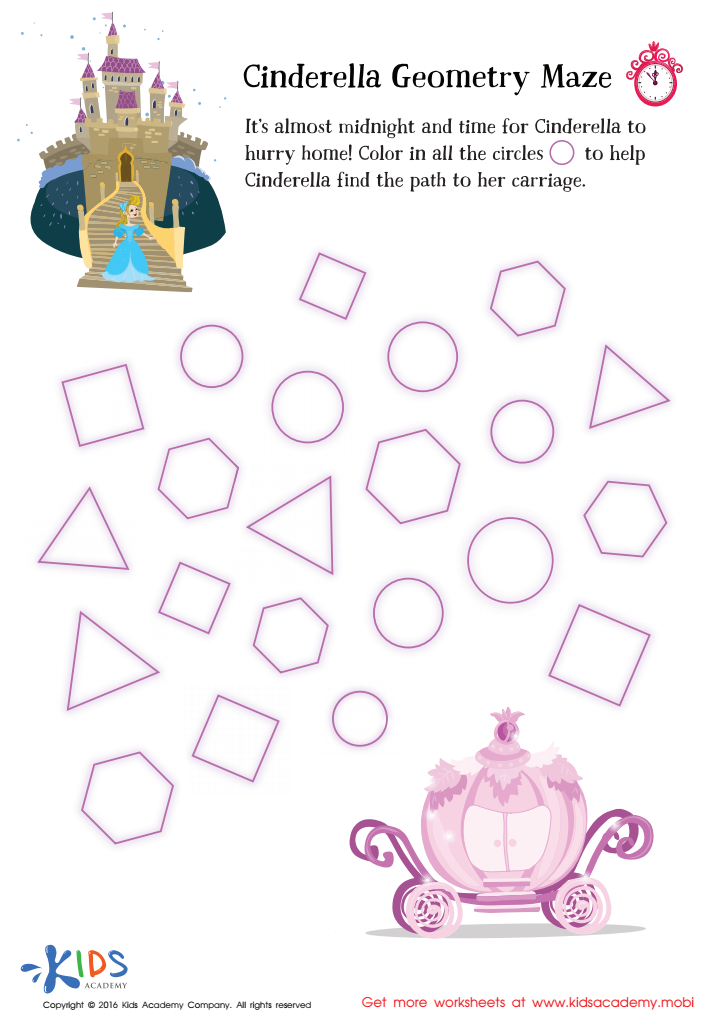
Cinderella Geometry Maze Worksheet








Spatial orientation skills are crucial for children aged 3-7 as they lay the foundation for many essential cognitive and practical abilities. For parents and teachers, understanding the significance of spatial orientation can greatly enhance a child's learning experience and overall development.
First, spatial orientation enhances problem-solving skills. It helps children understand relationships between objects and navigate physical spaces, which is vital for tasks such as assembling puzzles or playing with building blocks. These activities, in turn, foster critical thinking and creativity.
Next, it is foundational for mathematics and future STEM learning. Concepts like geometry, measurement, and even understanding place value depend on a child's ability to comprehend spatial relationships. Early proficiency in these areas can lead to better performance in math and science as they progress through school.
Moreover, spatial orientation is essential for everyday functioning. Skills such as organizing a backpack, following directions, and even handwriting involve an understanding of space and positioning.
By prioritizing activities that enhance spatial orientation, parents and teachers promote not only academic success but also general life skills. Simple activities like guided play, interactive games, or even drawing can greatly reinforce these skills, setting the stage for well-rounded cognitive development. Thus, investment in spatial skills at this early, impressionable age can yield long-term benefits in a child's educational journey.








