
Story sequencing Math Worksheets for Ages 3-7
5 filtered results
Difficulty Level
Grade
Age
-
From - To
Subject
Activity
Standards
Discover our engaging Story Sequencing Math Worksheets designed for children aged 3-7! These interactive resources combine storytelling and math skills, making learning fun and effective. Kids will develop crucial sequencing abilities as they arrange events from charming narratives while enhancing their understanding of numbers and basic math concepts. Each worksheet features vibrant illustrations that captivate young learners, fostering creativity and critical thinking. Perfect for home or classroom use, our story sequencing worksheets help build foundational math skills in a playful way. Explore our collection and watch your little ones thrive in both literacy and numeracy as they enjoy the magic of storytelling!
Favorites
With answer key
Interactive
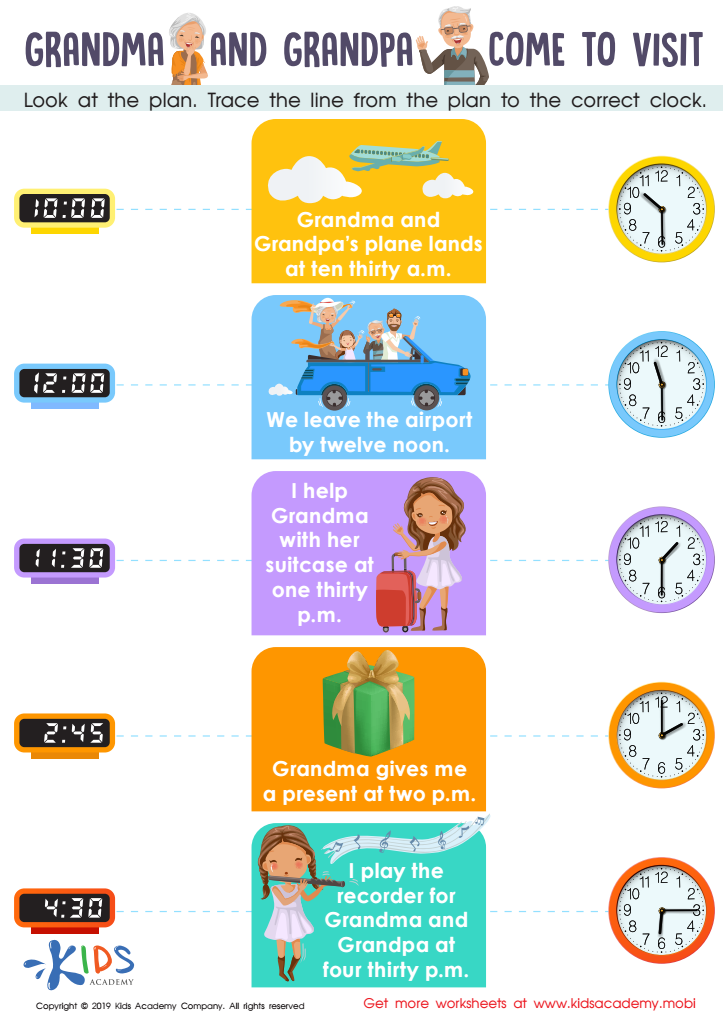
Grandpa and Grandma Come to Visit Worksheet
Have your kids learn about time using this worksheet. It contains pictures, accompanying texts and a clock, which you can use to help them trace the plan. Grandparents' visits and trips to their house are the perfect opportunity to practice this skill. Talk to your kids about the plan and watch them trace it to the correct clock.
 Assign to My Students
Grandpa and Grandma Come to Visit Worksheet
Worksheet
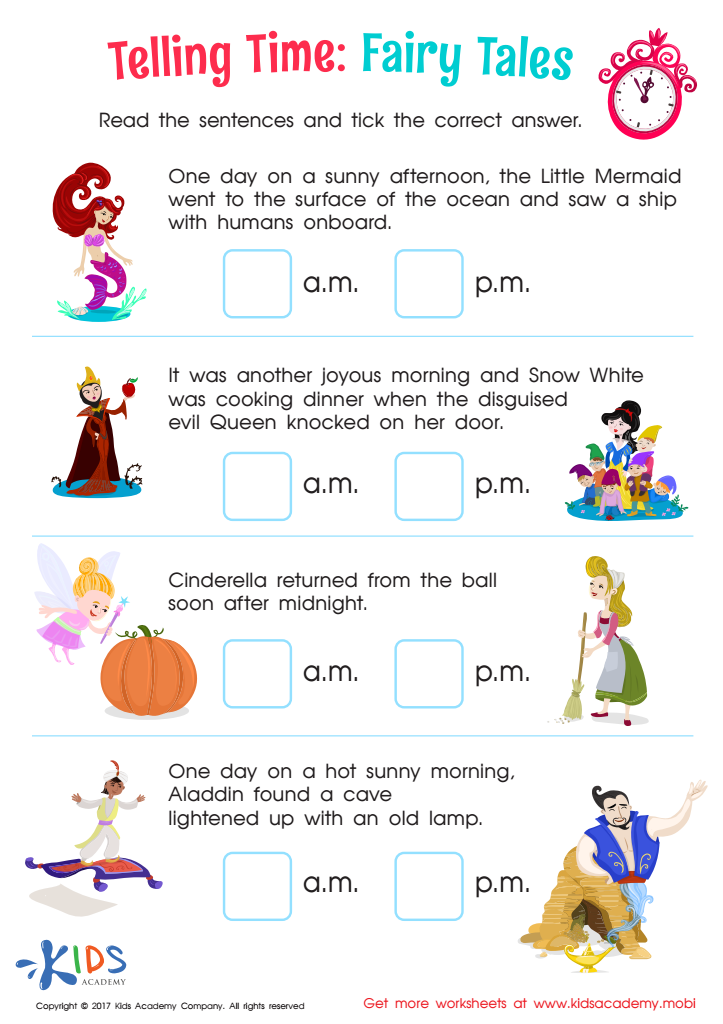
Telling Time: Fairy Tales Worksheet
Bring your child's imagination to life with classic fairy tales! This colorful telling time worksheet has it all: The Little Mermaid, Cinderella, and more! Plus, your child will have fun learning to distinguish a.m. from p.m. with this charming worksheet.
Telling Time: Fairy Tales Worksheet
Worksheet
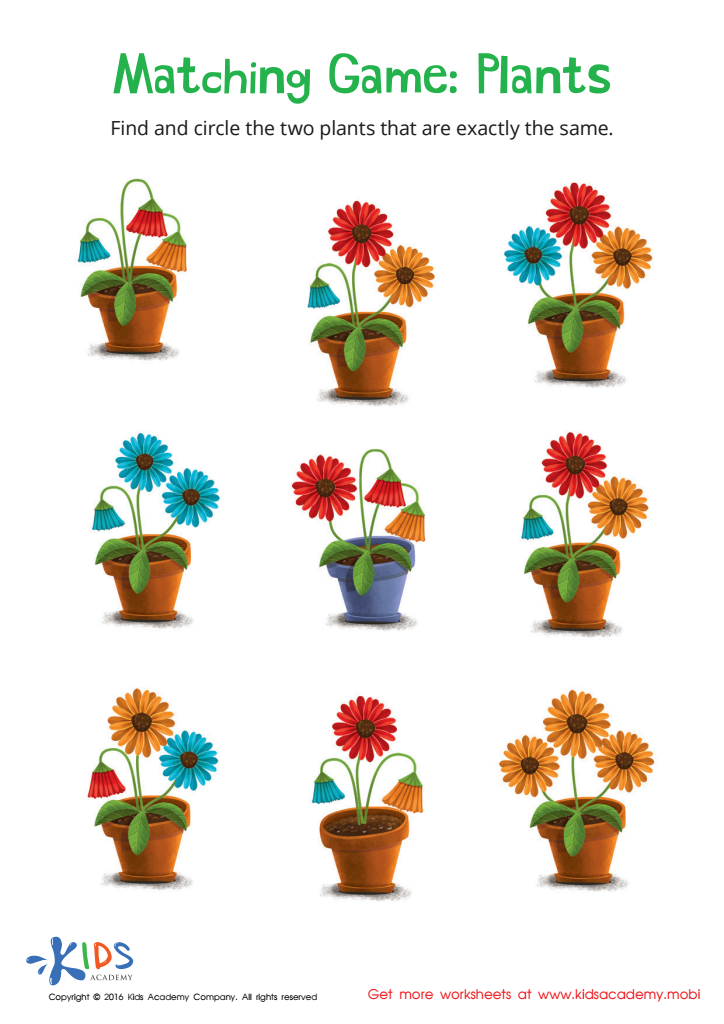
Matching: Plants Worksheet
This worksheet helps your child focus on details to build pattern recognition, problem solving and sorting/matching skills. Your child will enjoy the challenge of searching for similar images that match. Point out how small differences can exist in similar things and excite them with bright pictures and a fun challenge.
Matching: Plants Worksheet
Worksheet
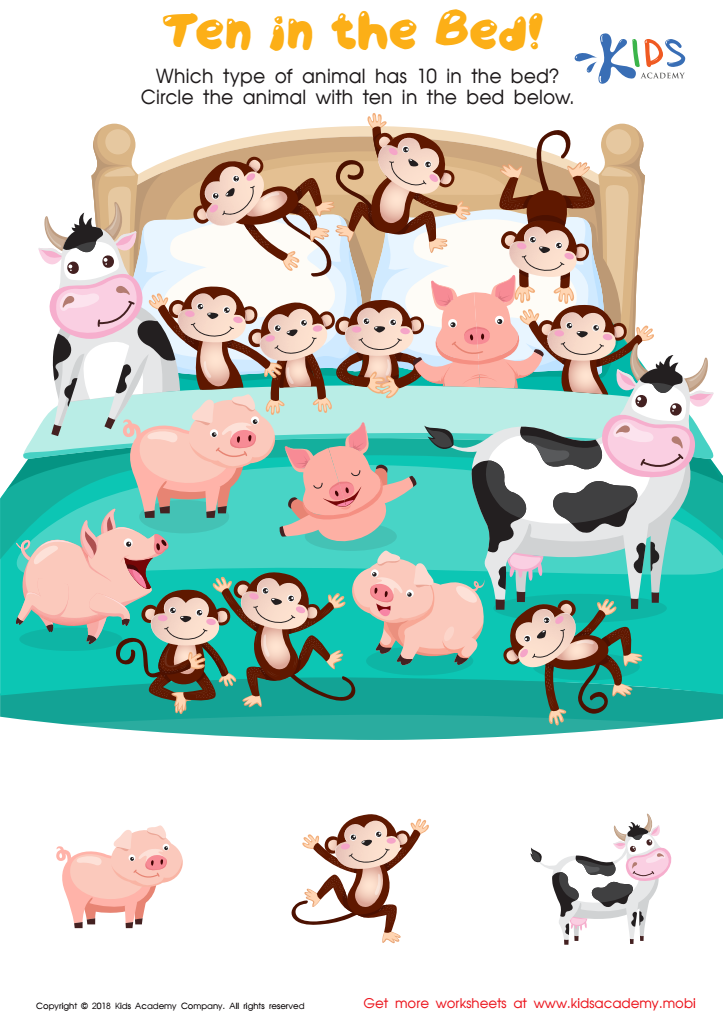
Ten in the Bed Worksheet
This fun worksheet has your kids counting and sorting friendly animal faces in a bed of ten! It's a great way for them to practice their mental math skills, like adding and multiplying more efficiently. Plus, it brings a new meaning to the classic song "Monkeys Jumping on the Bed"!
Ten in the Bed Worksheet
Worksheet
Join Kids Academy for Free
Who is primarily going to use this learning content?








Story sequencing in math is essential for young learners, as it intertwines narrative development with mathematical understanding. This engaging approach helps children aged 3-7 grasp foundational math concepts through relatable stories, making abstract ideas more concrete. By integrating sequencing, children develop critical cognitive skills such as problem-solving, logical reasoning, and critical thinking.
Parents and teachers should prioritize story sequencing because it fosters not only mathematical comprehension but also language and literacy skills. As children narrate their stories, they learn to organize their thoughts, enhance vocabulary, and improve their communication skills. This multi-faceted learning experience encourages creativity and imagination, allowing children to express mathematical ideas in unique and personal ways.
Additionally, story sequencing aids in developing a positive attitude toward math. When children encounter math within the context of enjoyable stories, they view the subject as approachable rather than intimidating. This lays the groundwork for lifelong learning and appreciation of math.
Ultimately, engaging children through story sequencing in math nurtures an integrated approach to learning, where children can link their math skills to real-life contexts, enriching their overall educational journey and helping to cultivate well-rounded individuals. Parents and teachers thus play a vital role in supporting this essential part of early education.








