Time reading skills Math Worksheets for Ages 3-7
12 filtered results
-
From - To
Introducing our "Time Reading Skills Math Worksheets" designed for children aged 3-7. These engaging and colorful worksheets are perfect for helping young learners master the essential skill of reading analog and digital clocks. Our age-appropriate materials cater to various skill levels, ensuring a fun learning experience that builds a solid foundation in time-telling. With activities ranging from identifying hours and minutes to understanding concepts like morning, afternoon, and night, our worksheet collection aligns with educational standards and makes learning enjoyable. Enhance your child's math skills with our expertly crafted resources at Kids Academy.
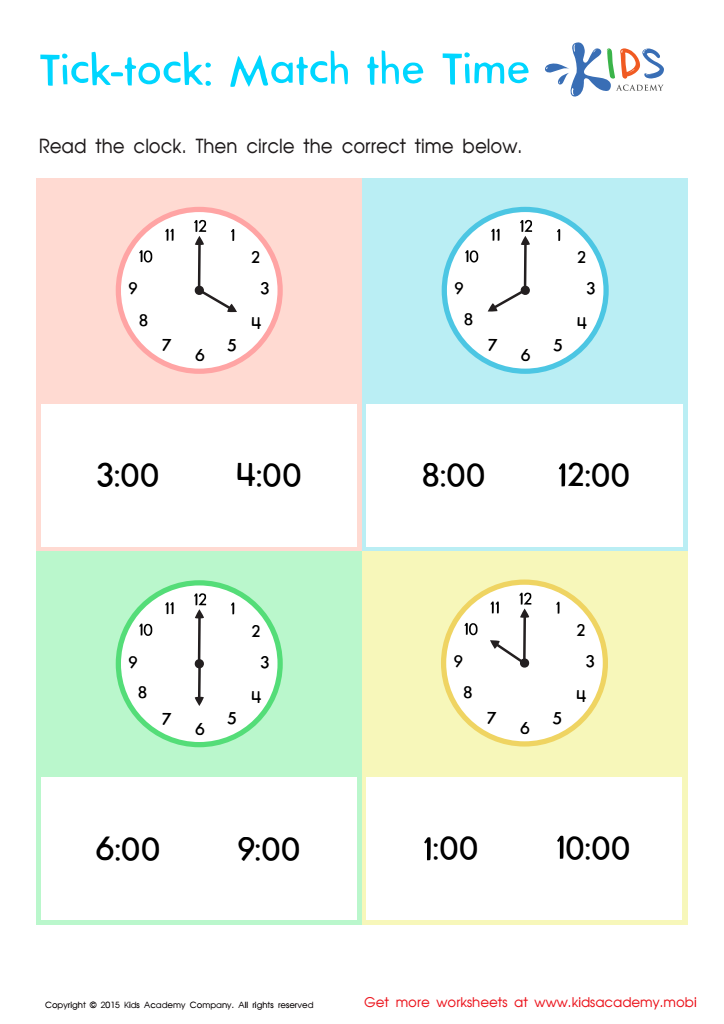
Telling The Time Worksheet: Part 4
 Assign to My Students
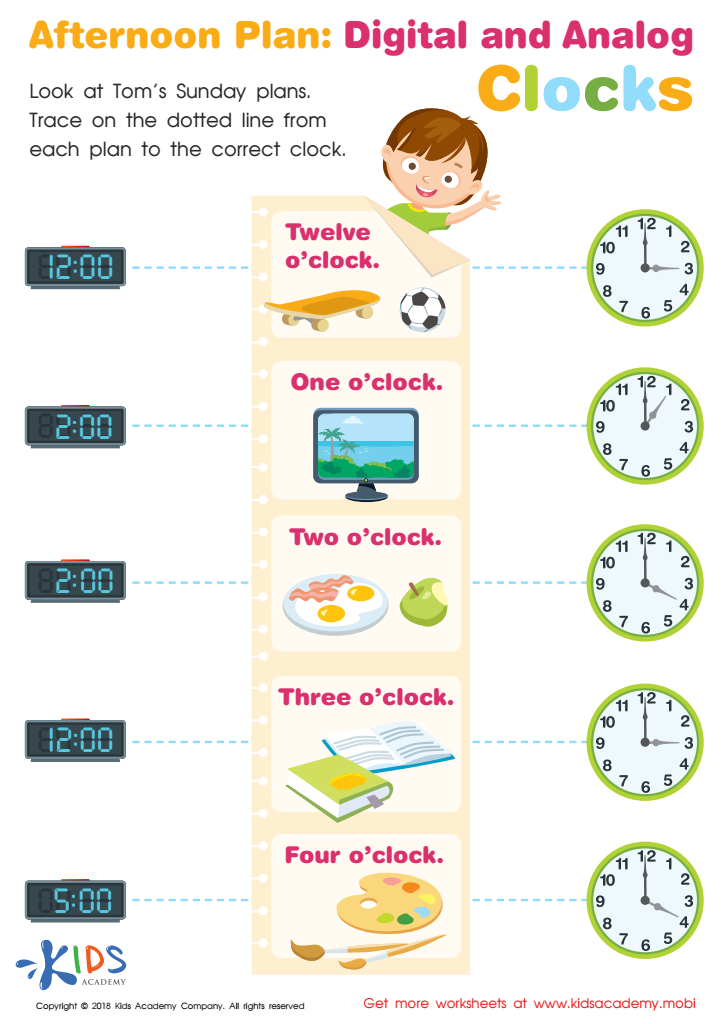
Afternoon Plan: Digital and Analog Clocks Worksheet
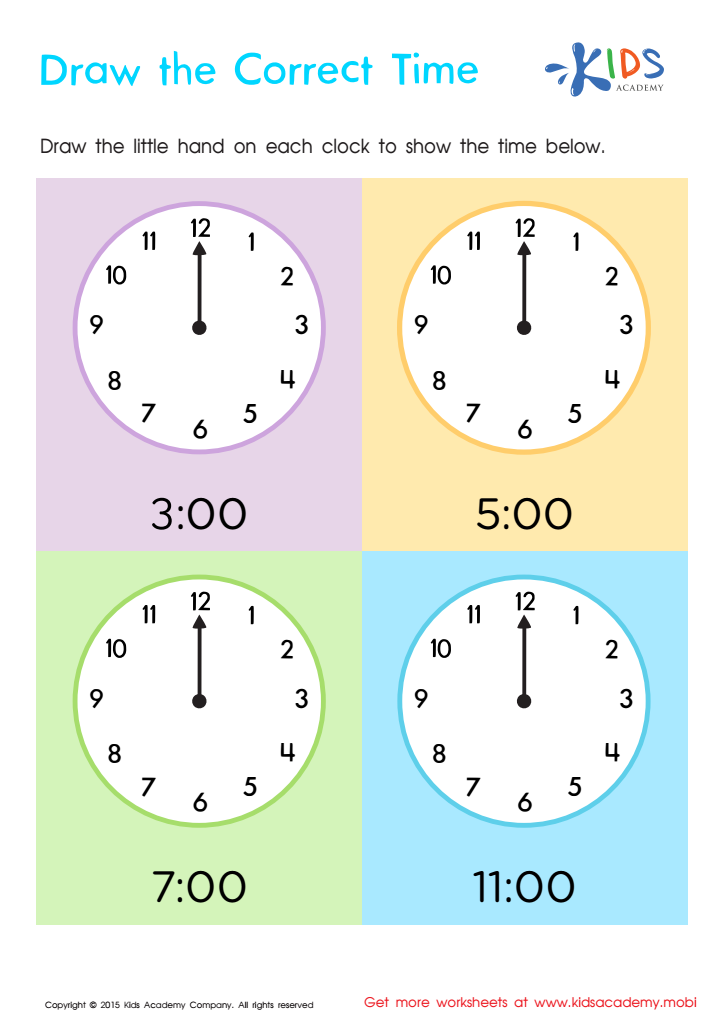
Telling The Time Worksheet: Part 1
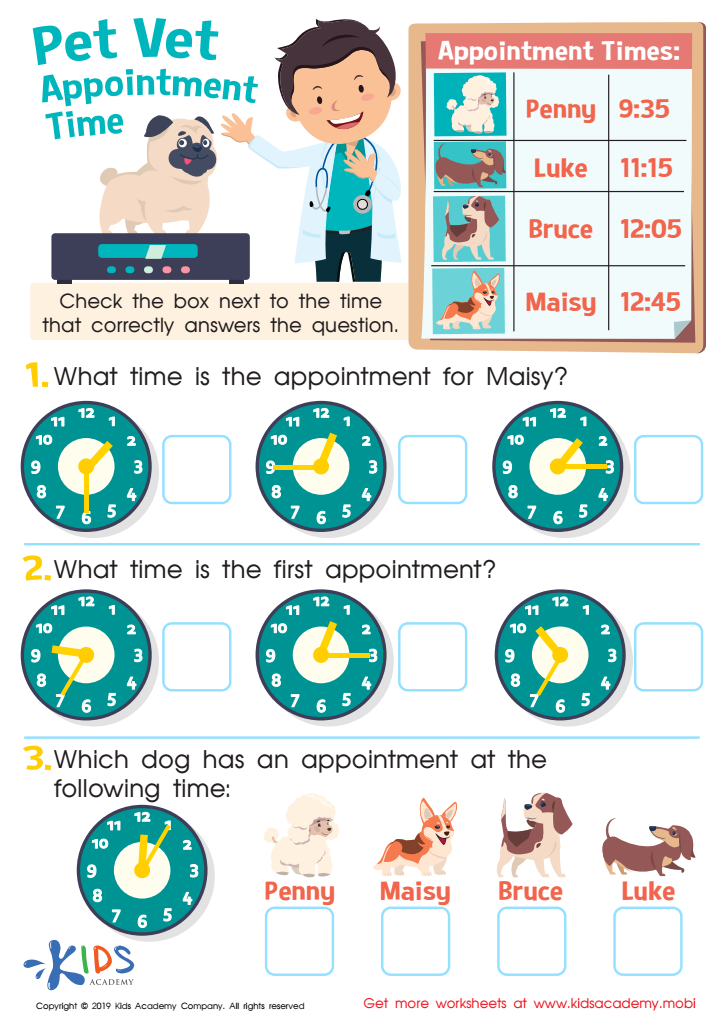
Pet Vet Appointment Time Worksheet
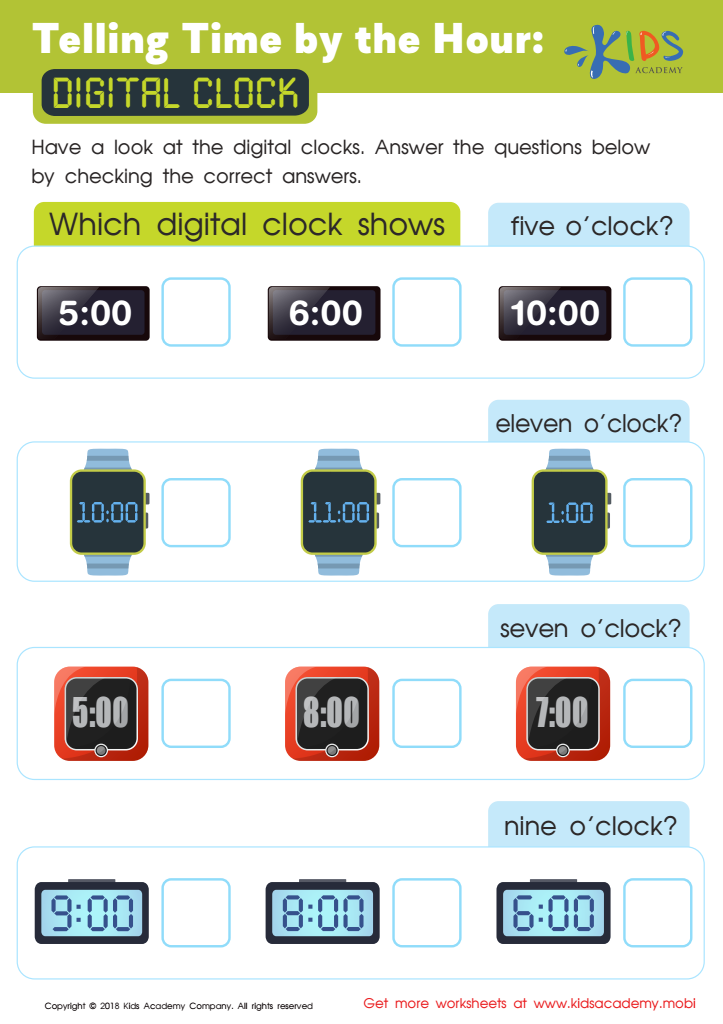
Telling Time by the Hour: Digital Clock Worksheet
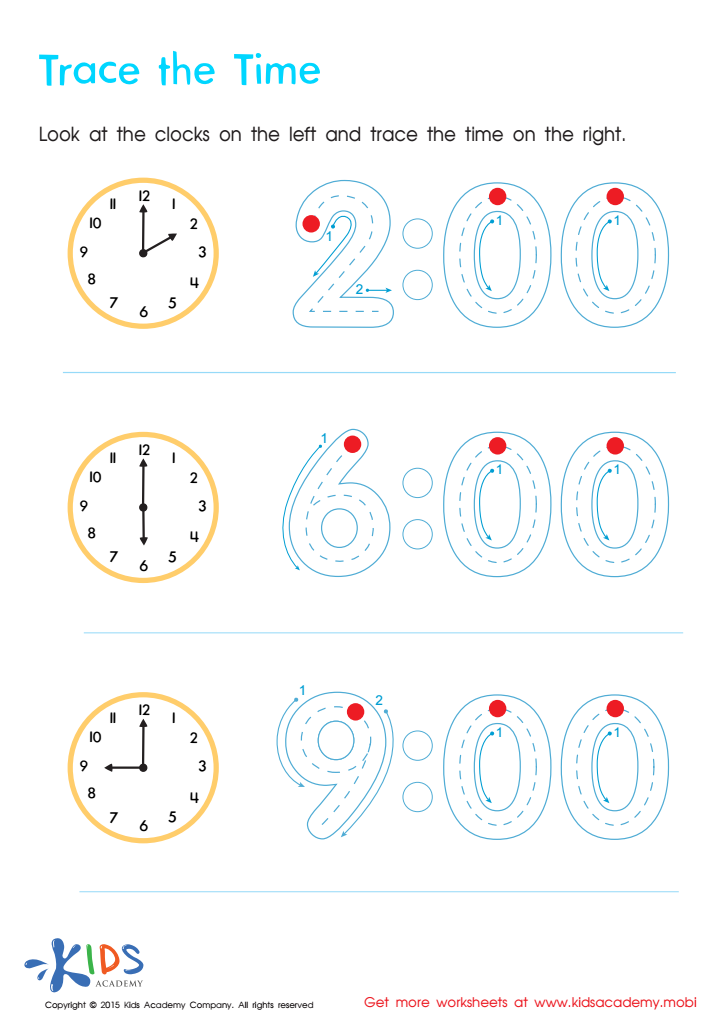
Telling The Time Worksheet: Part 2
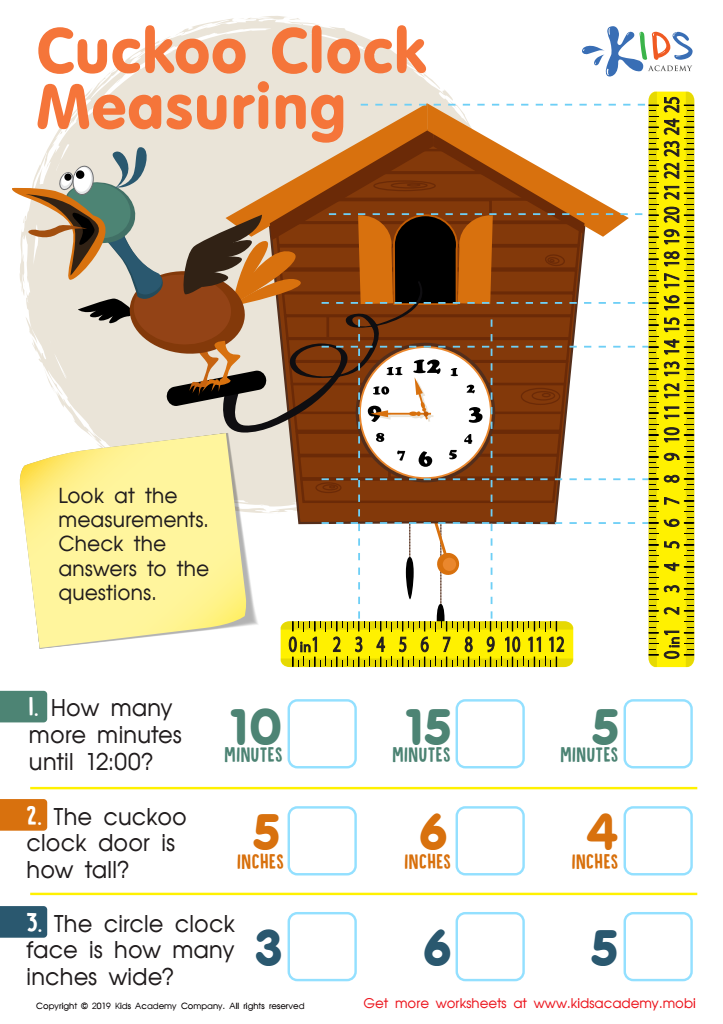
Cuckoo Clock Measuring Worksheet
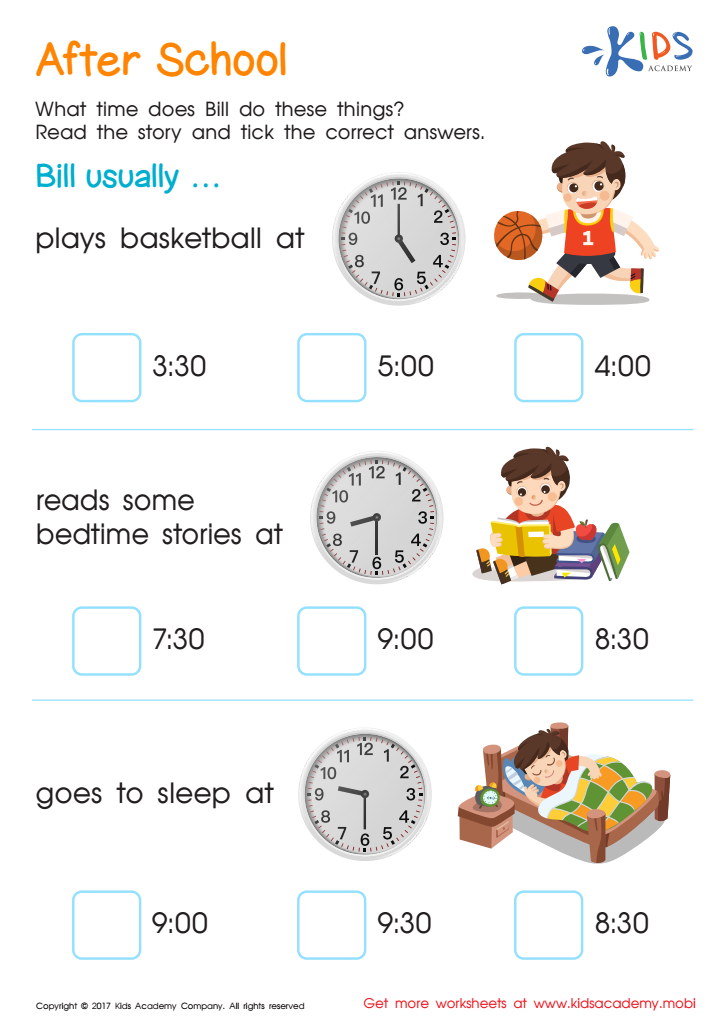
After School Time Printable
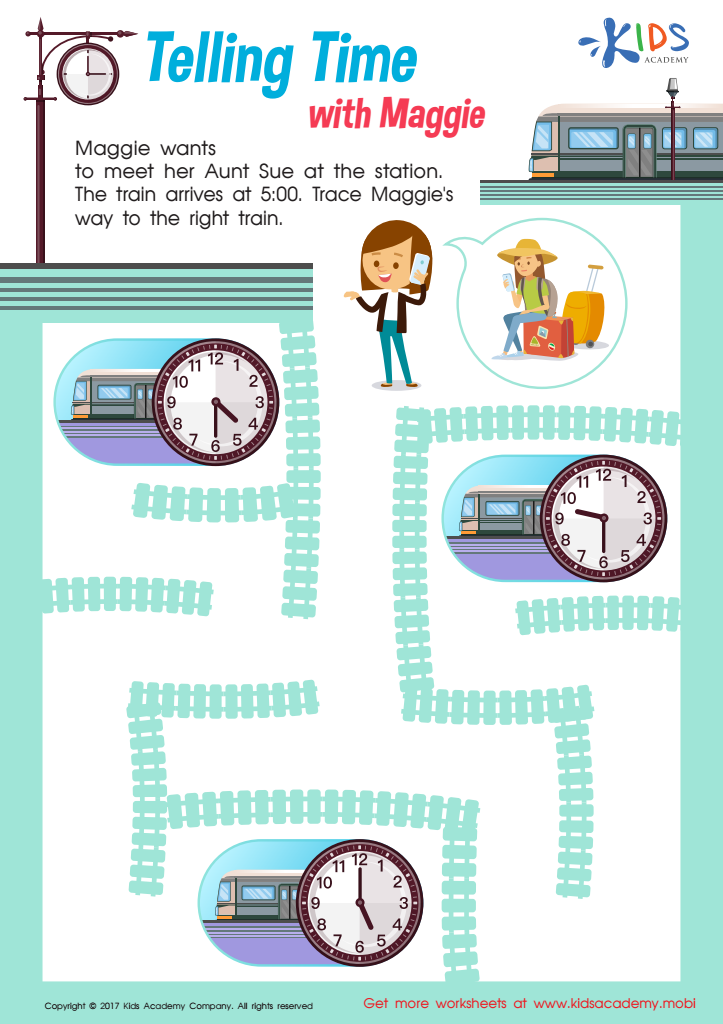
Telling Time With Maggie Time Worksheet
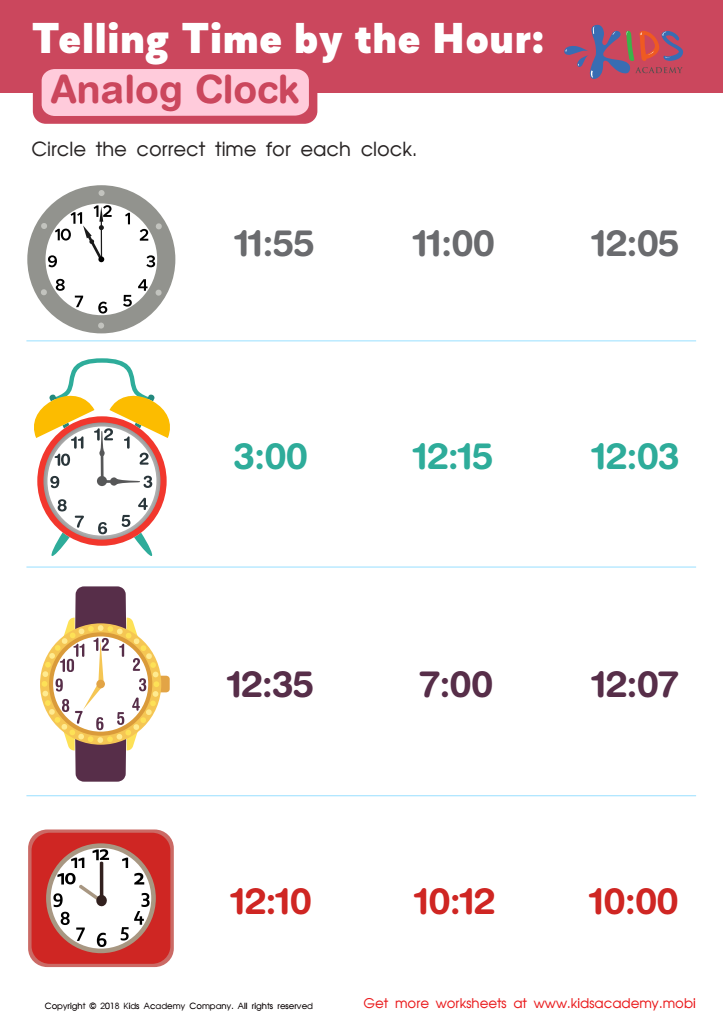
Telling Time by the Hour: Analog Clock Worksheet
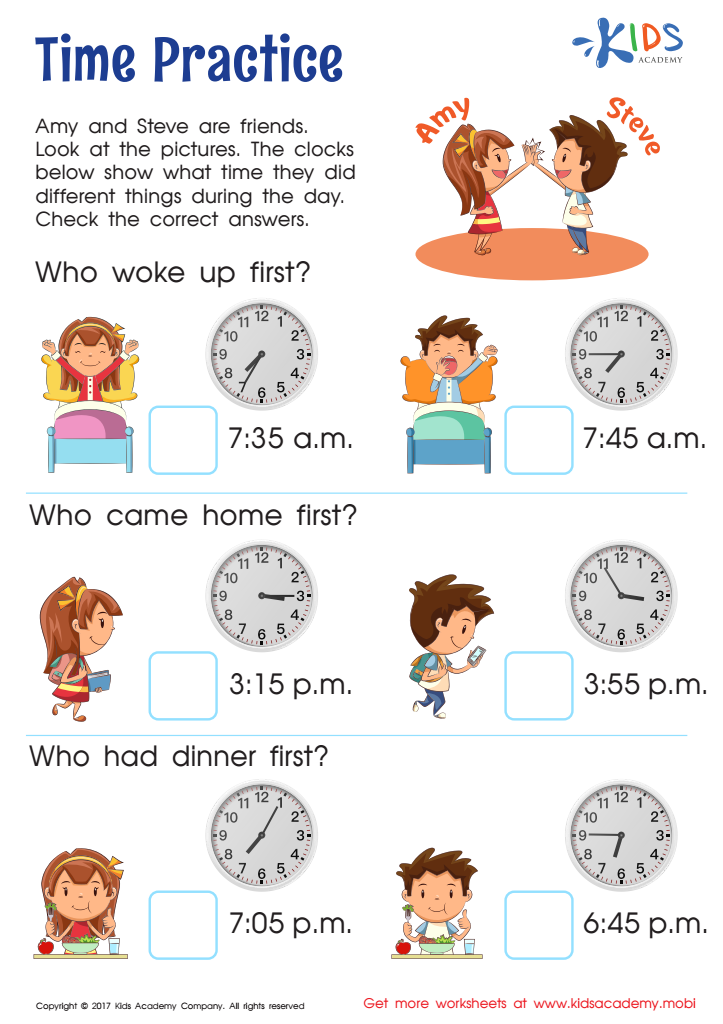
Time Practice Worksheet
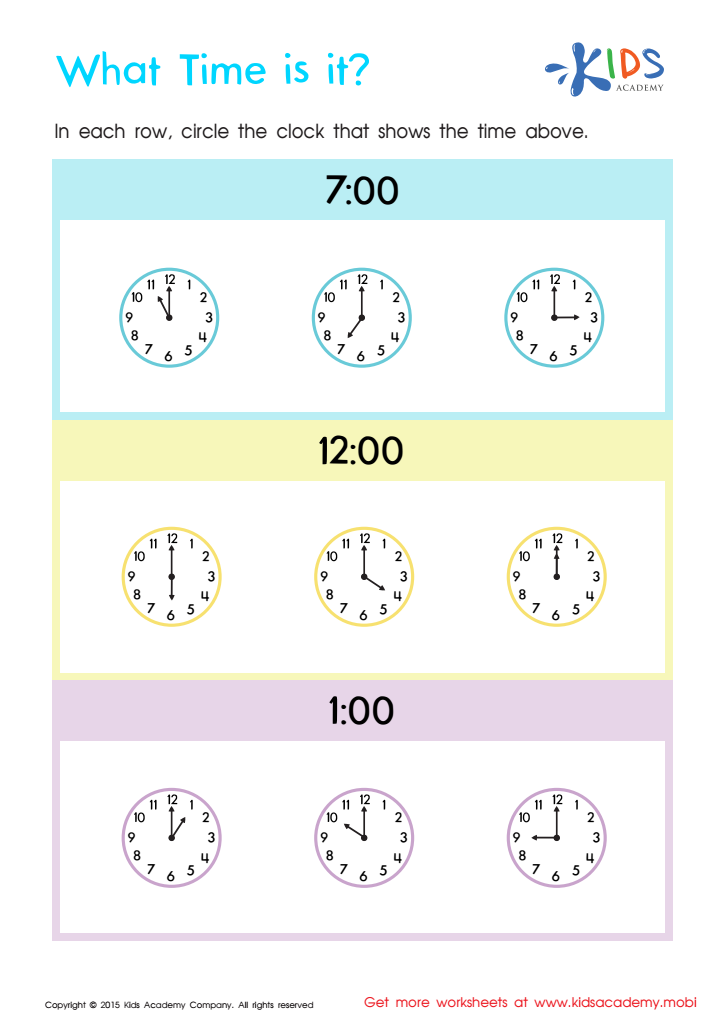
Telling The Time Worksheet: Part 3




.jpg)


Time reading skills in early childhood are essential for fostering a child’s overall development and future academic success. At ages 3-7, children are in a critical learning period where foundational skills are developed. Understanding time and clock reading blends math and real-world application, helping kids grasp numerical concepts and sequence.
Teaching time reading enhances a sense of structure and responsibility. Children learn to identify important parts of their day such as meal times, school hours, and bedtime routines. This awareness supports routine and punctuality, which are important for school readiness and success.
Furthermore, time reading promotes cognitive skills like logical thinking, problem-solving, and memory. It strengthens their ability to distinguish between concepts of 'before,' 'after,' and the sequence of events, essential for story comprehension and future complex math skills like calculating durations and intervals.
Additionally, these skills support independence. When children tell time, they can better manage their activities and make informed decisions throughout the day.
By focusing on time-reading skills between ages 3-7, parents and teachers are investing in a child's comprehensive skill set that underpins academic performance, daily functional skills, and fostering an independent, reliable habit which aids in both current success and later life competence.








