Understanding comparisons Math Worksheets for Ages 3-7
5 filtered results
-
From - To
Unlock the world of math with our "Understanding Comparisons Math Worksheets for Ages 3-7". Designed to introduce young learners to the foundational concepts of comparing quantities, sizes, and numbers, these printable worksheets are engaging and fun. Each activity helps children develop critical thinking and reasoning skills through easy-to-follow exercises. Perfect for home or classroom use, our worksheets feature colorful illustrations and clear instructions, making learning accessible and enjoyable. Give your child the tools they need to master comparison skills and build a strong mathematical foundation. Start exploring our collection today for impactful early learning!
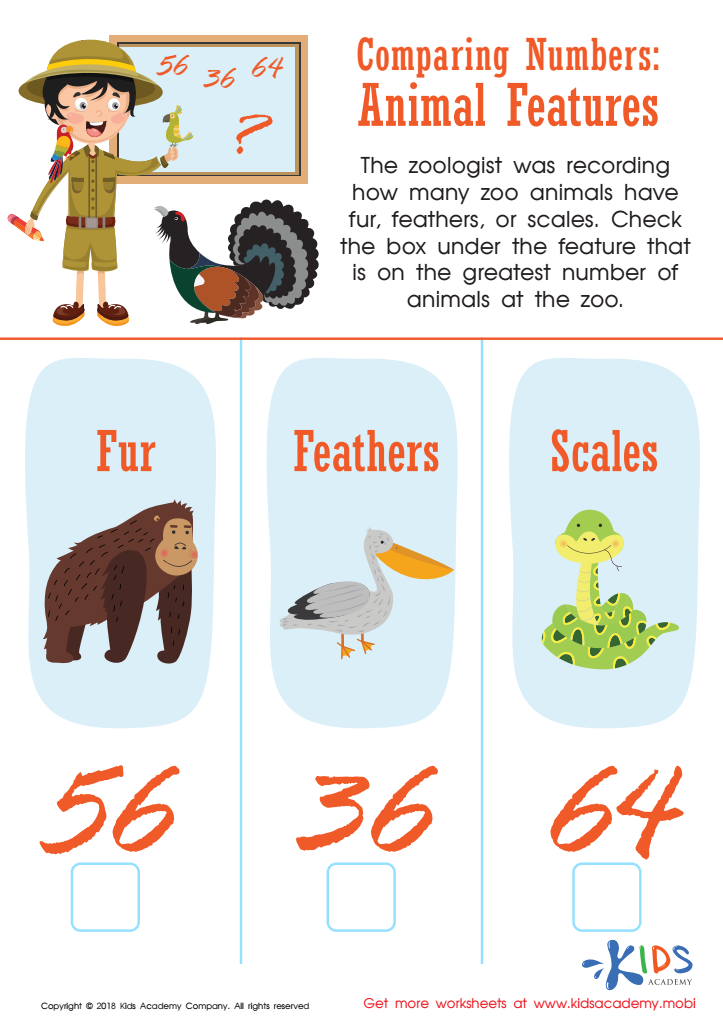
Animal Features Worksheet
 Assign to My Students
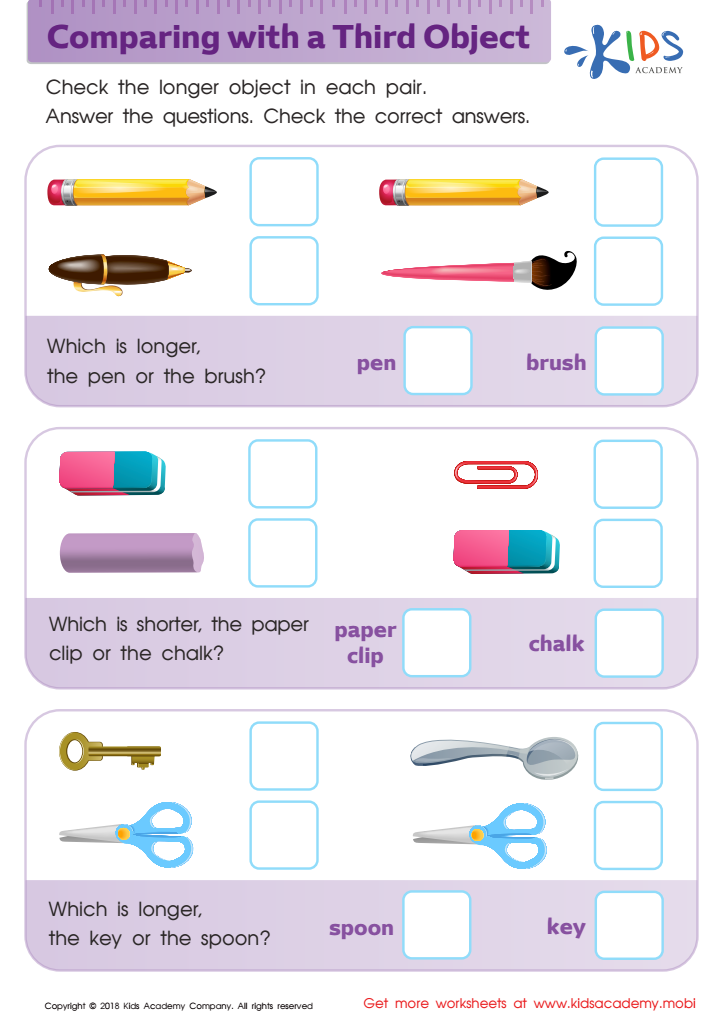
Comparing with a Third Object Worksheet
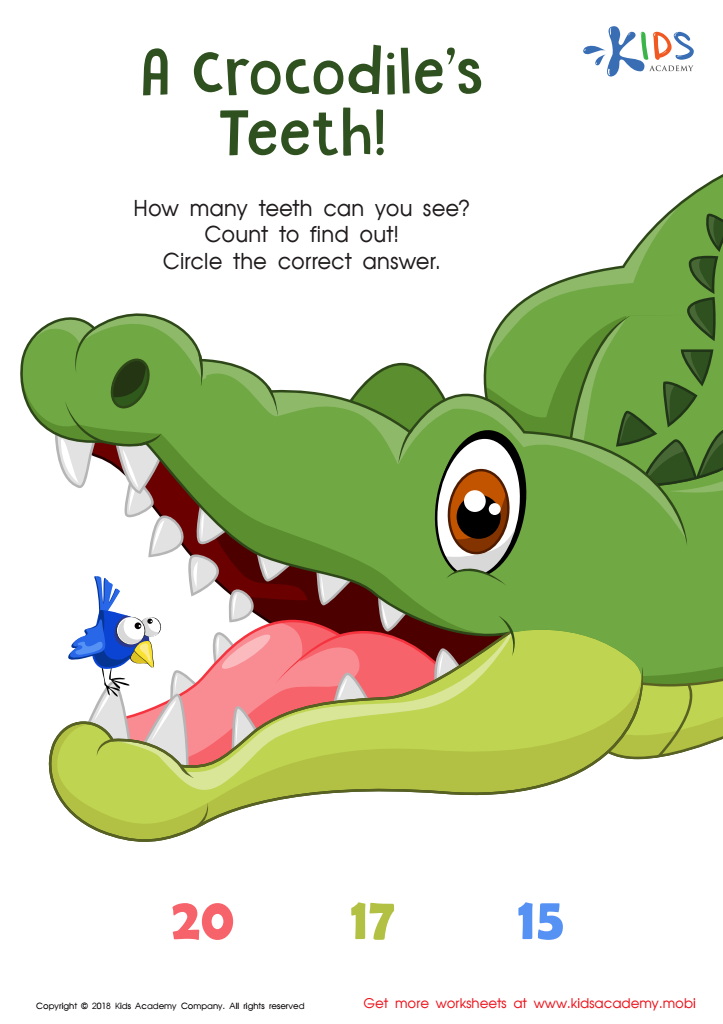
A Crocodile's Teeth Worksheet
Matching: Classifying Toys by Size Worksheet
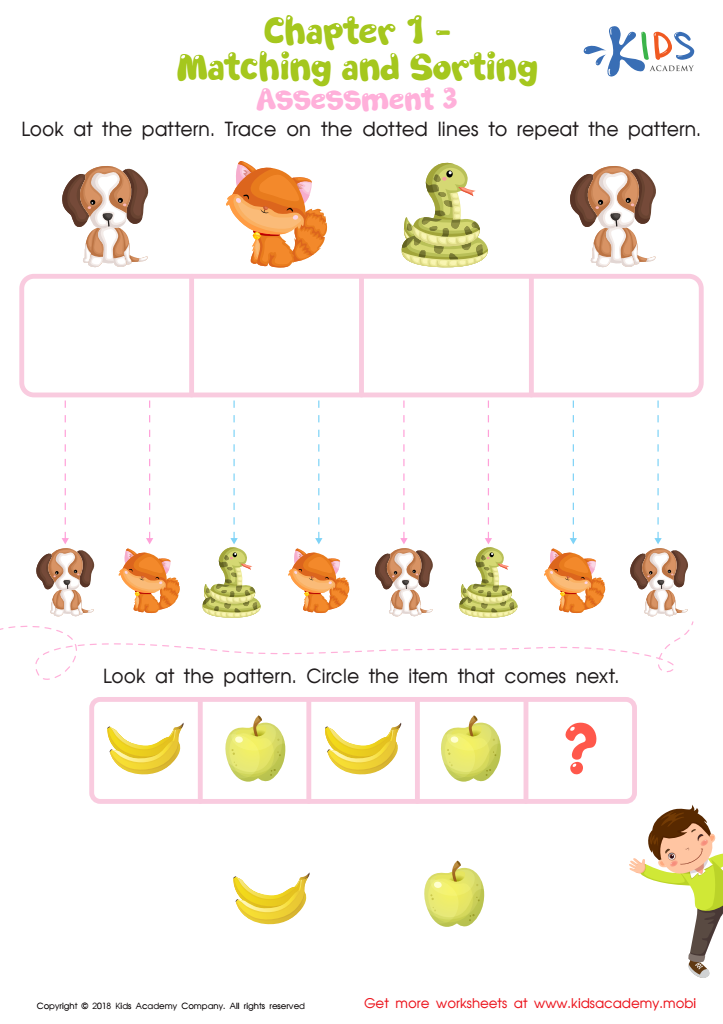
Matching and Sorting for Preschool: Assessment 3 Worksheet








Understanding comparisons in math for ages 3-7 is foundational for a child's cognitive and academic development. These early years, often termed the "sensitive period" by educational theorist Maria Montessori, are when young minds are most receptive to learning basic mathematical concepts through exploration and play.
Mastering comparisons such as ‘bigger vs. smaller,’ ‘more vs. less,’ and ‘taller vs. shorter’ helps children develop a strong sense of observation and critical thinking. These simple comparisons form the building blocks for more complex mathematical skills, including measurements, number sense, and problem-solving abilities. For instance, recognizing that a group of 5 apples is more than a group of 3 apples lays the groundwork for addition and subtraction.
Moreover, comprehension of comparisons transcends mathematics and is integral to daily life and effective communication. It enables a child to express their thoughts clearly and understand relational concepts, contributing to enhanced social interactions and emotional intelligence.
By encouraging and nurturing young children’s abilities to make comparisons, parents and teachers set them up for future academic success. Hands-on activities, interactive games, and verbal interactions can make these learning experiences both engaging and enjoyable. Early math skills are predictive of later academic achievement, thus emphasizing the importance of understanding comparisons in these formative years.








