Understanding instructions Math Worksheets for Ages 3-7
4 filtered results
-
From - To
"Understanding Instructions Math Worksheets for Ages 3-7" are designed to strengthen young learners' ability to follow mathematical directions while enhancing critical thinking skills. These engaging worksheets include vibrant activities that focus on basic math concepts such as counting, shapes, and simple operations. By completing these tasks, children develop the foundational skills needed for future mathematical success. Perfect for both classroom and home use, the worksheets support early learning in a fun, interactive way, and foster independence and confidence in young mathematicians. Parents and educators trust Kids Academy to provide high-quality educational resources that cater to the developmental needs of kids ages 3-7.
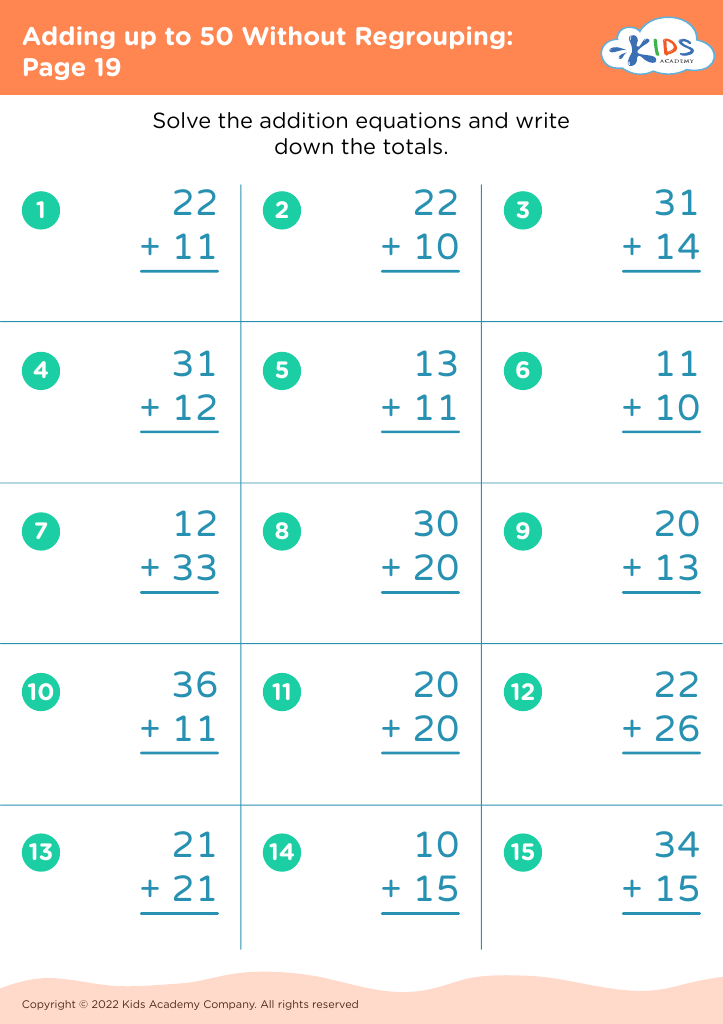
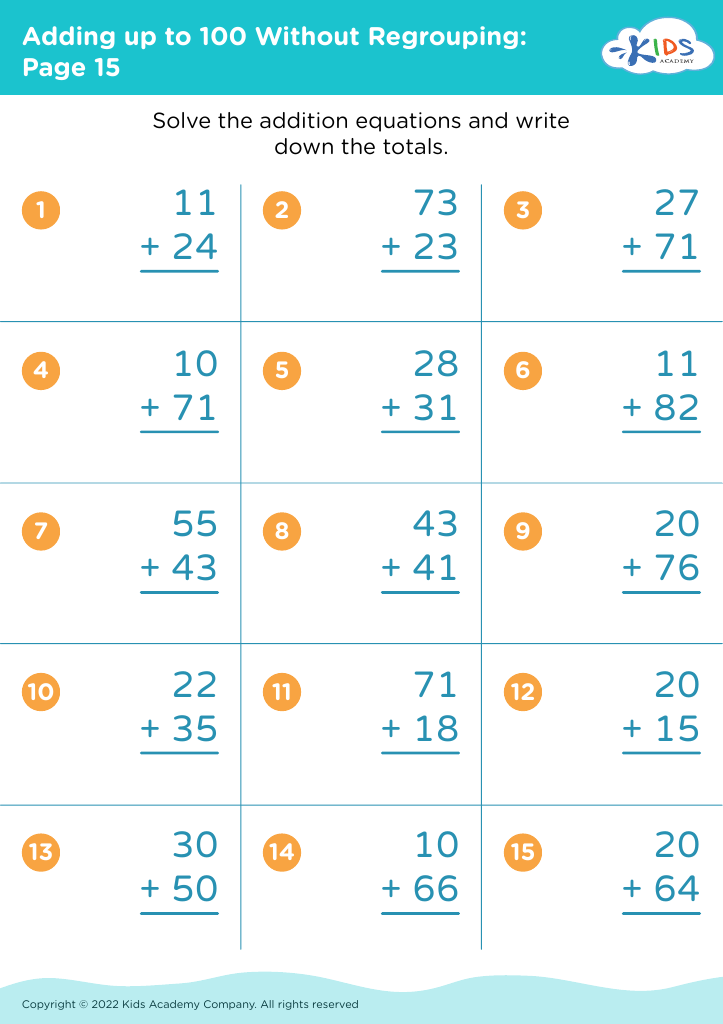
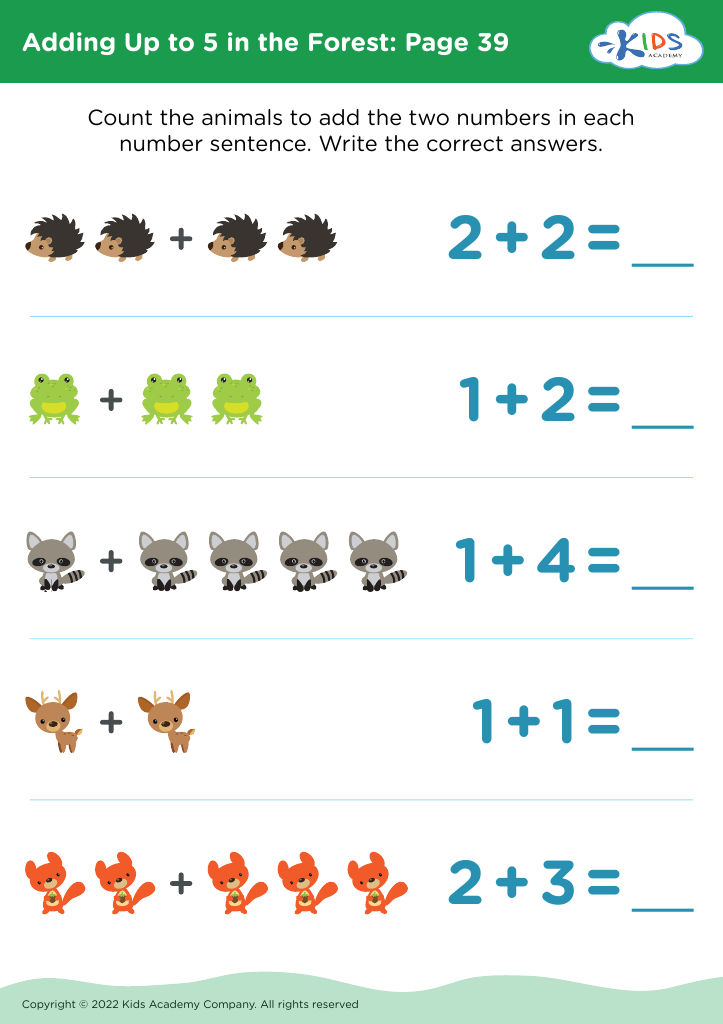
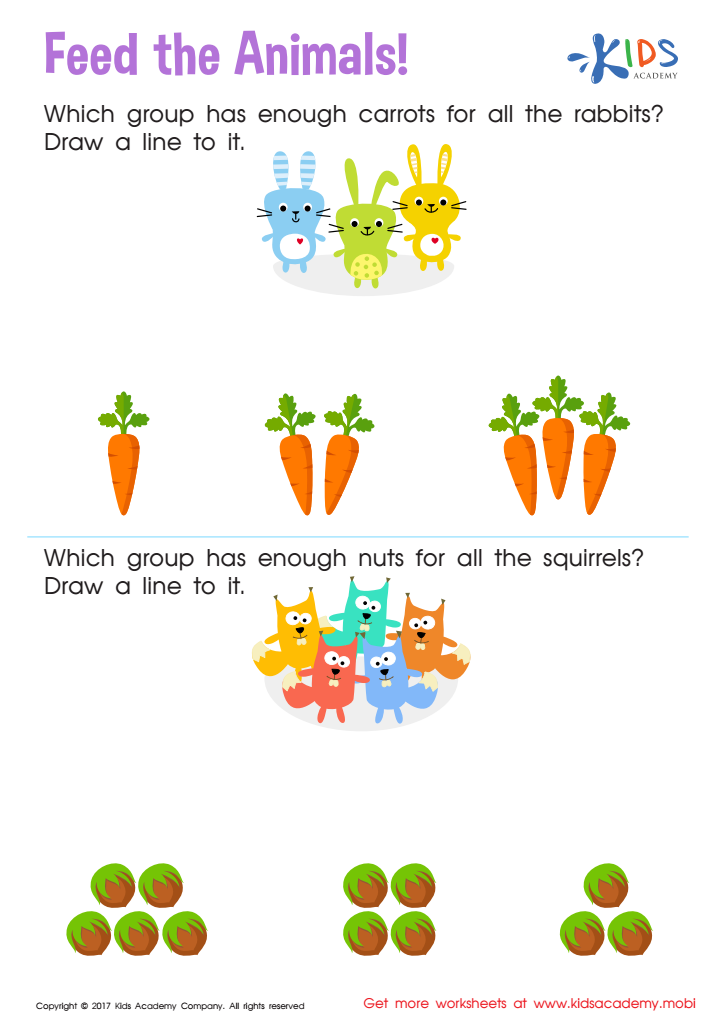
Count and Match: Feed the Animals Worksheet
 Assign to My Students








Understanding math instructions for children aged 3-7 is crucial as it forms the foundation for their future learning and cognitive development. During these early years, children are naturally curious and absorb information rapidly, often through play and exploration. Introducing math concepts through clear and engaging instructions nurtures their problem-solving skills, logical thinking, and ability to understand the world around them.
When parents and teachers give clear math instructions, they help children grasp basic concepts such as counting, recognizing shapes, measuring, and understanding patterns. These concepts are not only pivotal for academic achievement but also for everyday tasks and decision-making processes. For instance, understanding numbers helps in counting toys, sharing snacks, and recognizing time intervals, which are essential skills in daily life.
Additionally, positive early math experiences build confidence and reduce math anxiety often seen in later years. Children who feel competent in math are more likely to pursue and succeed in STEM (Science, Technology, Engineering, Mathematics) fields. Moreover, clear instructions accommodate children’s diverse learning styles and paces, ensuring that no child is left behind.
Parents and teachers play a fundamental role in setting the stage for a child's long-term educational journey. Investing time and effort in these formative years through clear math instruction helps cultivate a generation of confident and capable learners.








