Understanding more/less concept Math Worksheets for Ages 3-7
3 filtered results
-
From - To
Unlock the foundational math skills within your child with our "Understanding More/Less Concept Math Worksheets" tailored for ages 3-7. These engaging and age-appropriate activities help young learners grasp essential concepts of comparison, fostering a deep understanding of quantity and number relationships. Each printable worksheet is designed to be fun and interactive, ensuring that children stay motivated and eager to learn. Perfect for at-home practice or enhancing classroom learning, our worksheets provide ample opportunities for youngsters to develop their critical thinking and problem-solving abilities effortlessly. Start your child's math journey today with tools crafted to inspire and educate.
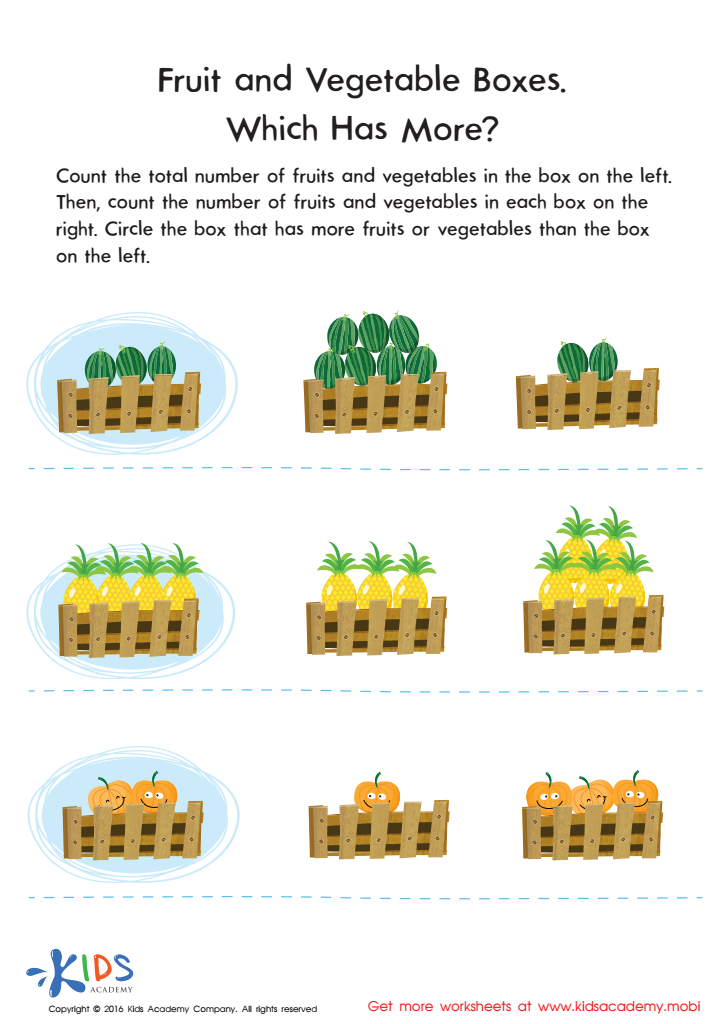
Which Has More? Size Worksheet
 Assign to My Students
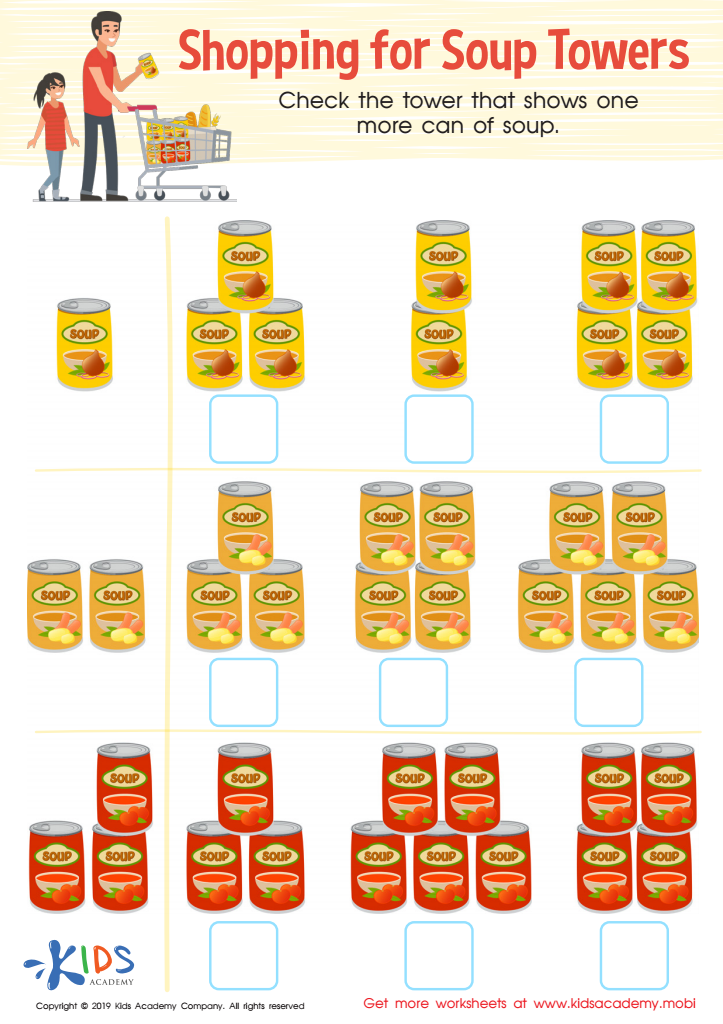
Soup Towers Worksheet
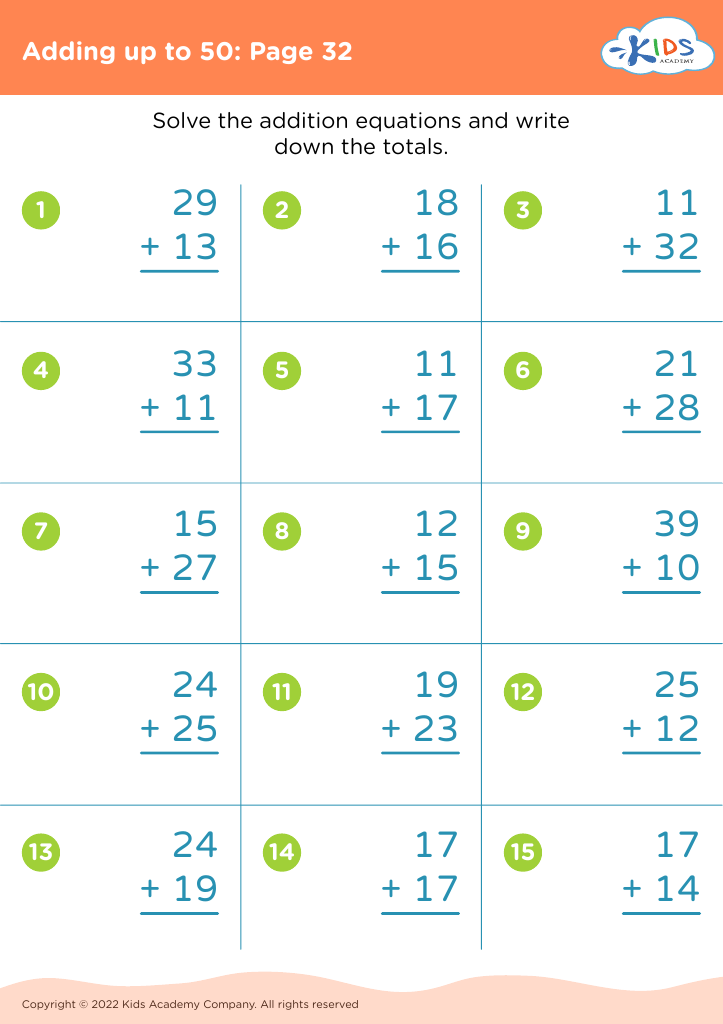






Understanding the concept of more/less in math is crucial for children aged 3-7 because it forms the foundation for number sense and future mathematical learning. At this stage, kids are developing cognitive skills and abilities such as counting, comparing quantities, and understanding relationships between numbers. These skills are essential for more complex math concepts they will encounter later, such as addition, subtraction, and even multiplication and division.
Parents and teachers play a key role in nurturing these early skills. Engaging children in activities that compare amounts helps them intuitively grasp concepts of quantity and fosters a love for learning. For example, asking a child to pick which group of apples has more or fewer items teaches them to observe and reason quantitatively.
Additionally, integrating more/less concepts into everyday situations makes learning relevant and exciting. Simple tasks like helping to divide snacks or sorting toys by size can turn daily routines into educational opportunities.
Beyond academics, understanding more/less helps with problem-solving and decision-making in real-life scenarios. When children can compare quantities, they are better equipped to make choices, such as deciding if they have enough blocks to build a tower or determining if there are too many items to carry. Hence, parents and teachers should emphasize these concepts to build a solid mathematical foundation and practical life skills.








