Visual fraction representation Math Worksheets for Ages 3-7
3 filtered results
-
From - To
Discover our engaging Visual Fraction Representation Math Worksheets designed for children aged 3-7! These worksheets introduce young learners to the concept of fractions through colorful visuals and interactive activities that make learning fun. Perfect for early math education, each worksheet is tailored to help kids understand parts of a whole with relatable objects and images. Enhance your child's comprehension of fractions with our easy-to-follow exercises that promote critical thinking and visual recognition. Ideal for classroom use or at-home learning, these worksheets provide a supportive foundation for future mathematical success. Explore our collection and ignite your child's love for math today!
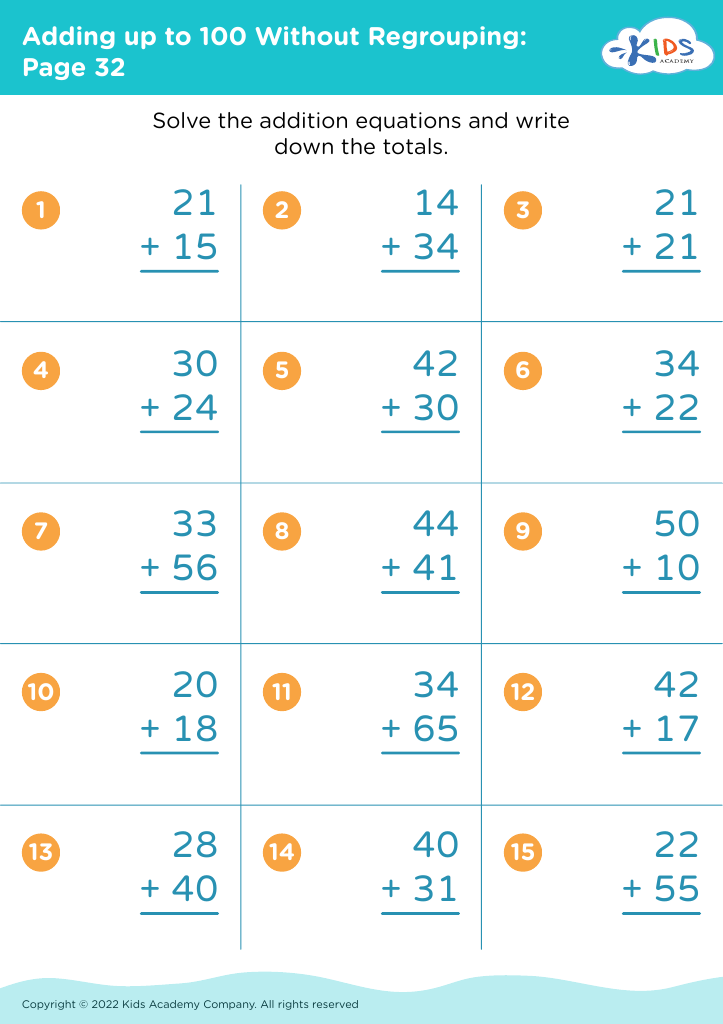
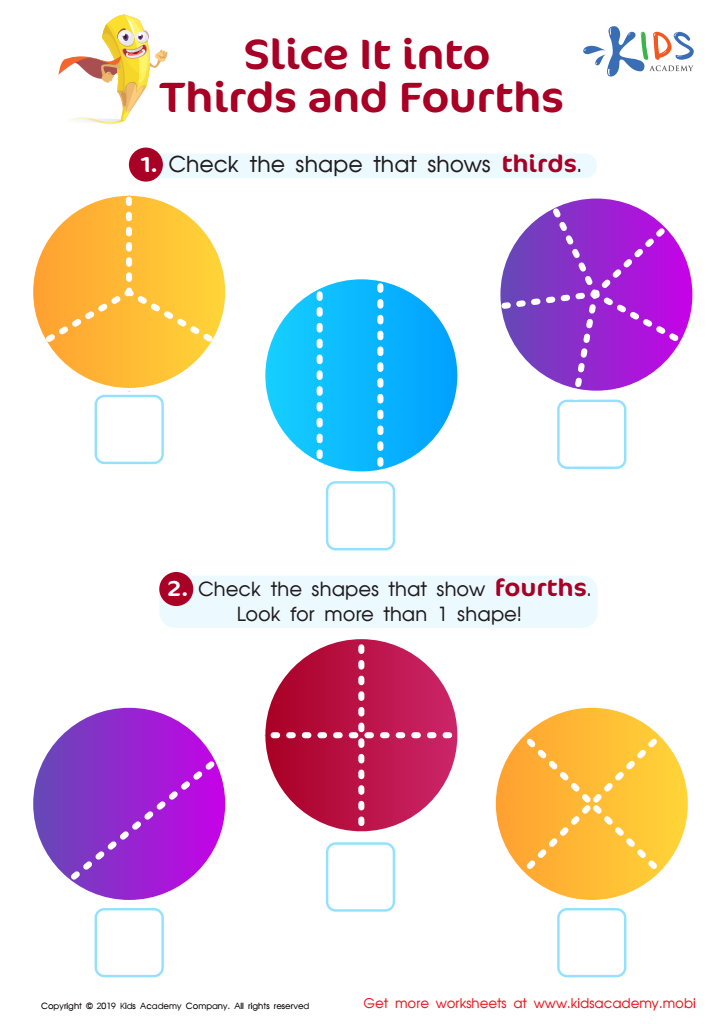
Slice in Thirds Fourths Worksheet
 Assign to My Students
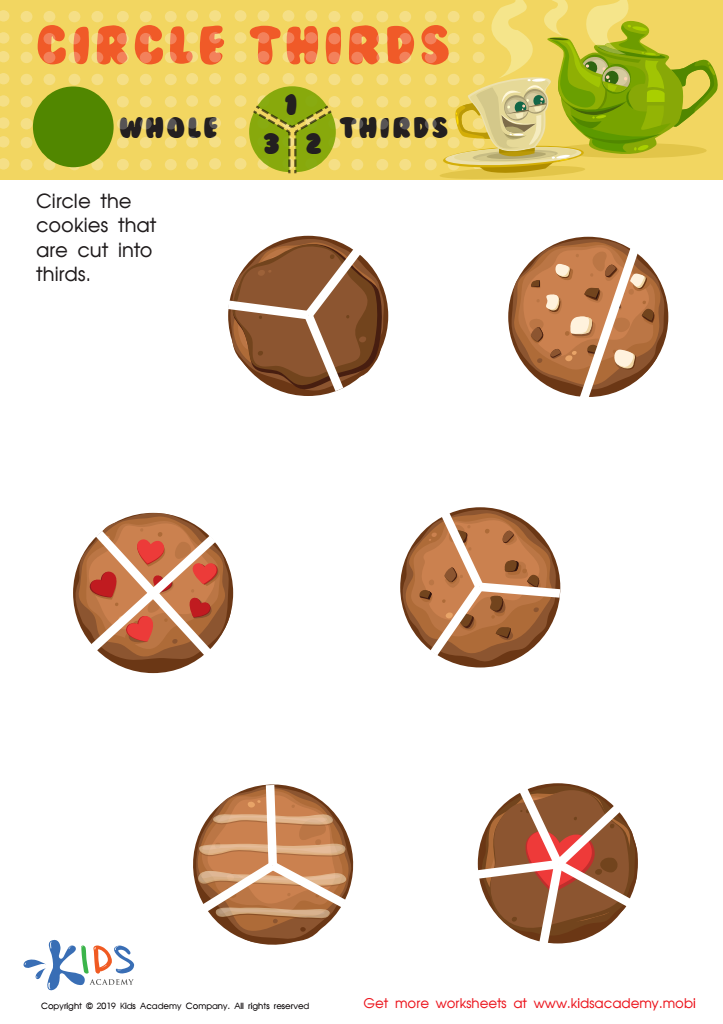
Circle Thirds Worksheet




.jpg)

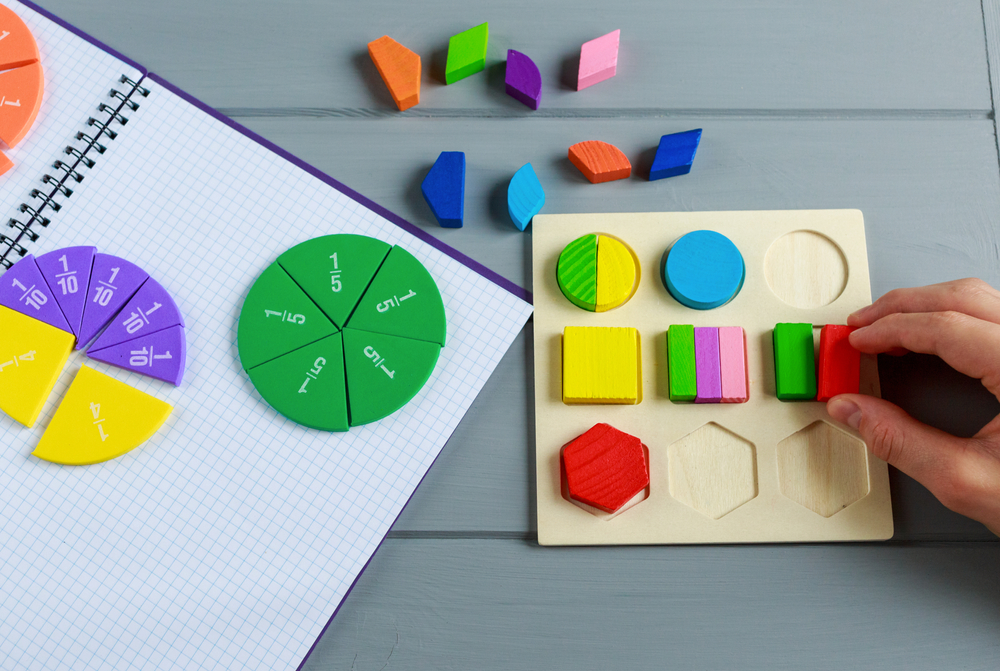
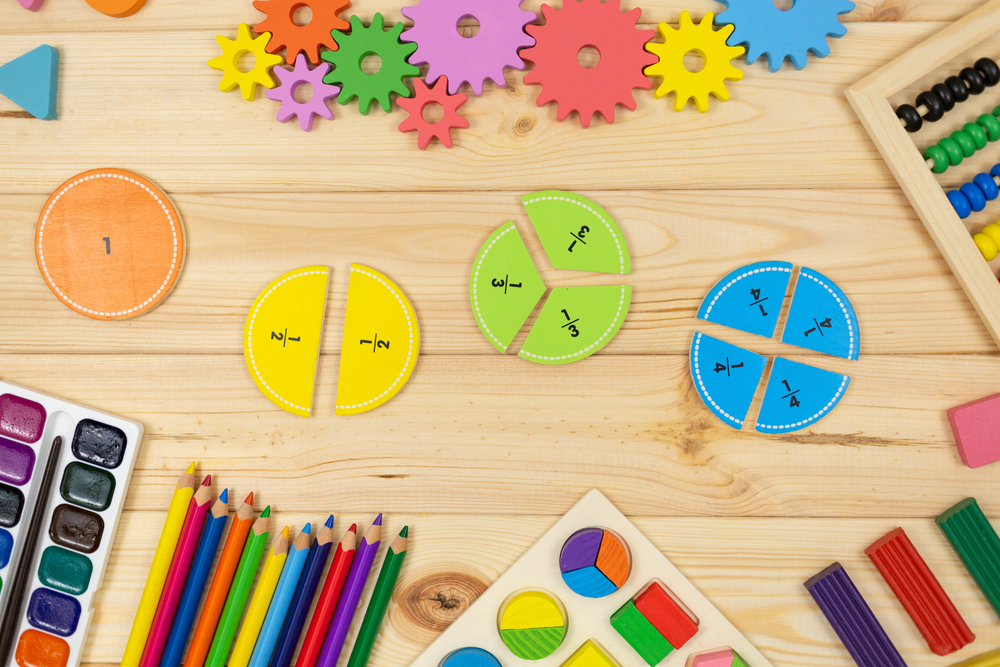
Visual fraction representation is essential for children aged 3-7 because it lays the groundwork for their understanding of mathematical concepts. At this developmental stage, children are naturally visual learners; they comprehend complex ideas better when they can see them. Fractions, although abstract, can be made tangible through visual tools like pie charts, blocks, or number lines. These representations enable young learners to grasp the concept of part-to-whole, helping them visualize how different fractions relate to one another.
Additionally, visual representations foster a more profound engagement with math, making learning enjoyable and interactive. They help diminish anxieties related to math by breaking down concepts into manageable, concrete visuals. For parents and teachers, incorporating visual fractions aids in developing critical thinking and problem-solving skills as children learn to manipulate these representations to solve problems.
Moreover, an early understanding of fractions supports proficiency in more advanced math topics later on. Since foundational math skills build upon one another, an emphasis on visual fraction representations can enhance children's overall numeracy and help cultivate a positive attitude toward math. Consequently, investing in these strategies now can set the stage for lifelong mathematical competence and confidence.








