
Color Identification Matching Worksheets for Ages 3-7
3 filtered results
Difficulty Level
Grade
Age
-
From - To
Subject
Activity
Standards
Discover our engaging Color Identification Matching Worksheets designed for ages 3-7! These fun and educational printables help young learners recognize and match different colors, improving their visual discrimination and cognitive skills. Perfect for preschool and early elementary students, our worksheets feature vibrant themes and interactive activities to keep kids excited about learning. From matching colorful balloons to sorting vibrant shapes, each worksheet provides a playful way to enhance your child's color awareness. Download now from Kids Academy and watch as your young learner develops essential skills through joyful exploration!
Favorites
With answer key
Interactive
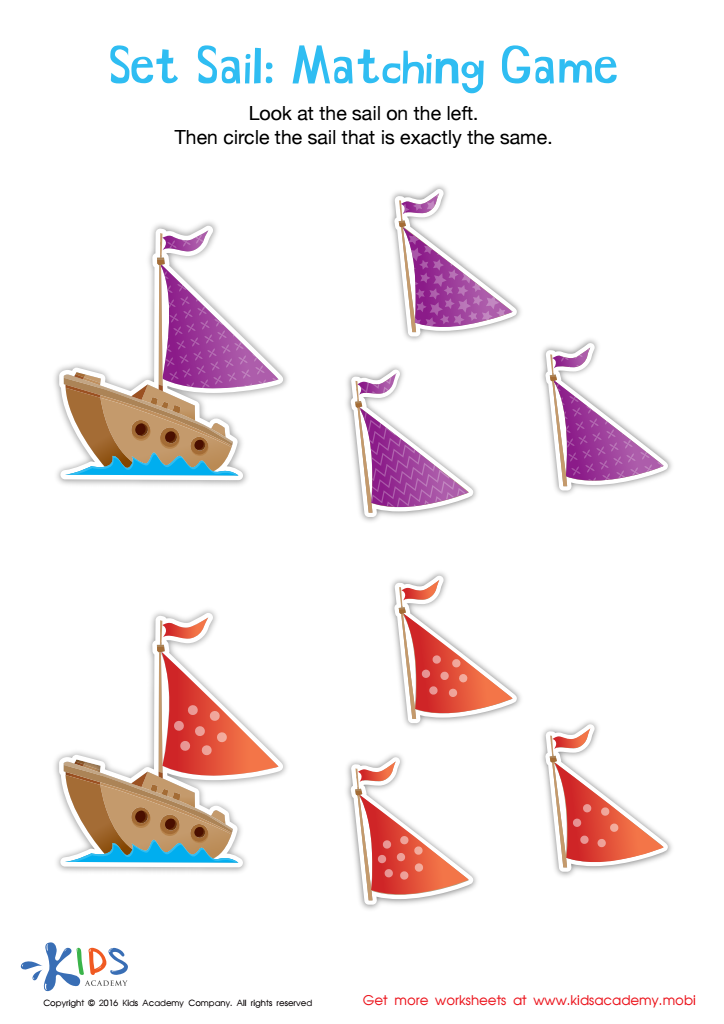
Set Sail Worksheet
Set sail with this fun matching game for toddlers! Kids will love finding the same pattern on the sails, improving their problem-solving and counting skills. Enjoy this bright and engaging worksheet!
 Assign to My Students
Set Sail Worksheet
Worksheet
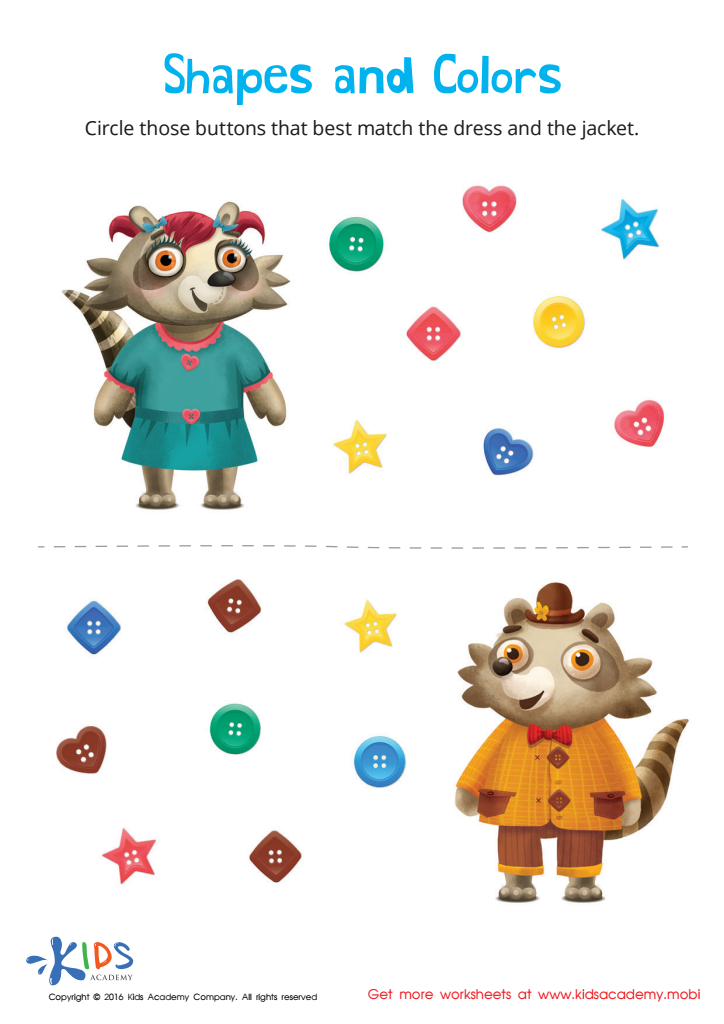
Matching: Shapes and Colors Worksheet
Help Mr. and Mrs. Raccoon find the right buttons to match their shirts! Kids will identify shapes and colors and learn to match them correctly.
Matching: Shapes and Colors Worksheet
Worksheet
Join Kids Academy for Free
Who is primarily going to use this learning content?








Color identification and matching are foundational skills with far-reaching implications for children's cognitive and social development. Between the ages of 3 and 7, children are in a critical period for learning and brain development, and engaging with colors plays a key role in this process.
Firstly, color identification aids children in making sense of the world around them. Recognizing and naming colors improves vocabulary and language skills, enabling kids to describe objects and experiences more vividly. For instance, describing a red apple or a blue sky enhances communication skills and creative expression.
Secondly, matching colors builds cognitive abilities such as categorization and problem-solving. When children group similar colors together, they develop skills in analysis and reasoning, which are foundational for later academic pursuits, particularly in science and mathematics.
Moreover, color activities foster fine motor skills. Whether coloring within lines or sorting colored objects, these tasks require precision and hand-eye coordination. These motor skills are crucial for writing and other intricate activities.
Socially, engaging in color-based activities often involves collaboration and sharing, promoting teamwork and social interaction. These interactions enhance emotional intelligence, teaching children to navigate shared spaces and resources.
Therefore, parents and teachers should prioritize color identification and matching activities, as they play a multifaceted role in nurturing a child's linguistic, cognitive, motor, and social development.








