Color recognition Matching Worksheets for Ages 3-7
3 filtered results
-
From - To
Explore our engaging Color Recognition Matching Worksheets for children aged 3-7! Designed to enhance your child's understanding of colors, these printable activities feature vibrant images and fun matching exercises. Ideal for preschool and early elementary classrooms, these worksheets promote visual recognition skills and critical thinking through playful learning. Simply print and utilize these resources to foster creativity and comprehension in a delightful way. Parents and educators can support young learners in identifying and matching colors while enjoying the learning process together. Whether at home or in school, our worksheets are a perfect addition to reinforce color recognition skills for young minds!
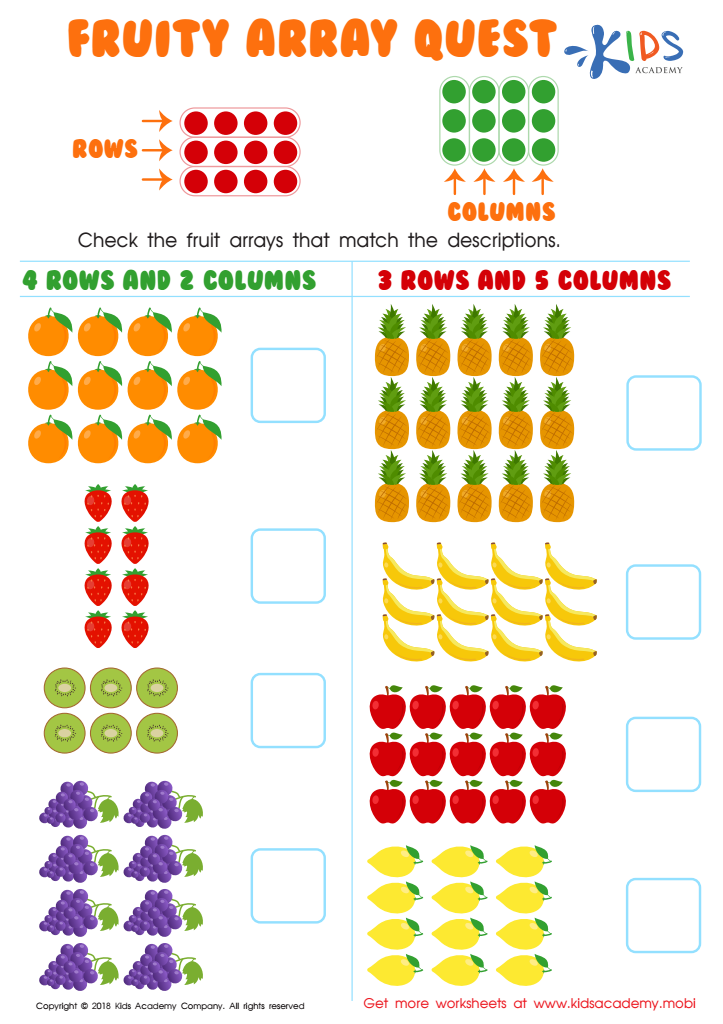
Fruity Array Quest Worksheet
 Assign to My Students
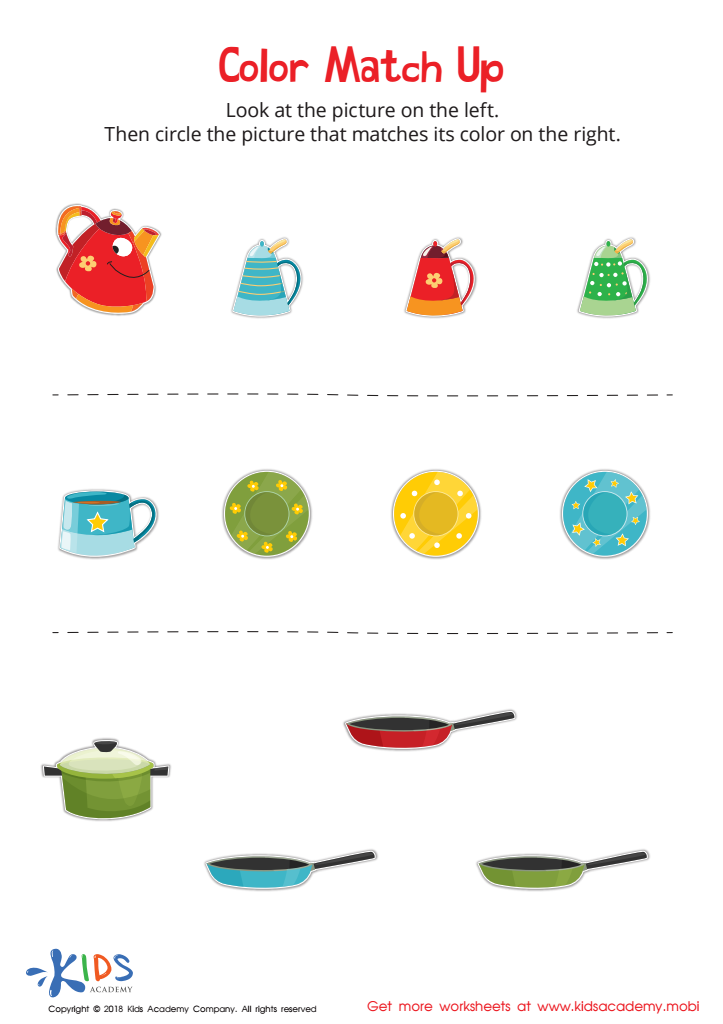
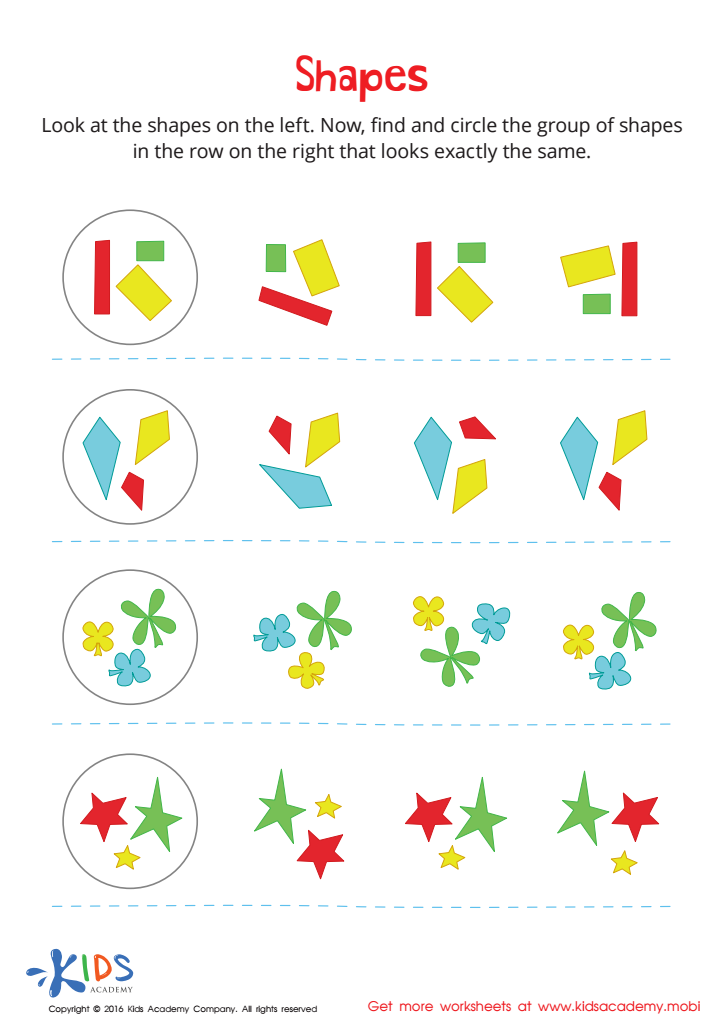
Shapes Worksheet







Color recognition and matching are foundational skills in early childhood development that significantly impact a child's learning journey. For children aged 3 to 7, engaging in color recognition activities fosters cognitive growth, boosts creativity, and enhances social interactions. Understanding colors aids in the development of essential skills such as sorting, categorizing, and problem-solving.
Parents and teachers should prioritize color recognition because it supports language development. When children learn to identify and describe colors, they expand their vocabulary and improve communication skills. Moreover, these activities stimulate visual perception, sharpen attention to detail, and lay the groundwork for later math and science concepts by introducing them to patterns and relationships.
In addition to cognitive benefits, color recognition enhances emotional intelligence by allowing children to express feelings associated with different colors. Activities involving colors, whether through art, games, or nature exploration, also encourage social skills as children frequently collaborate, discuss their ideas, and share materials.
Ultimately, nurturing color recognition not only helps children acquire important academic skills but also contributes to their overall development, fostering a love for learning that will serve them well throughout their educational journey. Thus, investing time in these activities is of great significance for both parents and educators.








