Comparing object weights Measurement Worksheets for Ages 3-7
3 filtered results
-
From - To
Explore our engaging "Comparing Object Weights Measurement Worksheets" designed for children aged 3-7! These interactive worksheets provide a fun and educational way for young learners to understand the concepts of weight and comparison. Through hands-on activities, kids will differentiate between light and heavy objects, enhancing their critical thinking and observational skills. Our colorful illustrations and simple instructions make it easy for parents and educators to guide children through each exercise. Perfect for preschoolers and early graders, these worksheets aim to build a solid foundation in measurement while keeping learning enjoyable. Download your free worksheets today and inspire your little ones!
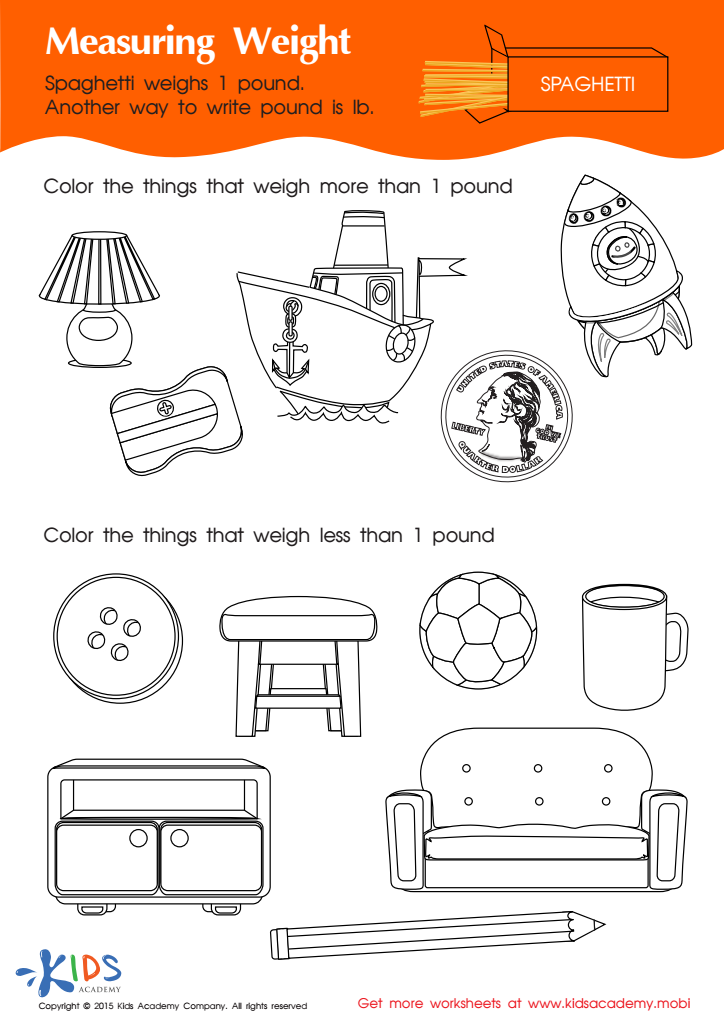
 Assign to My Students
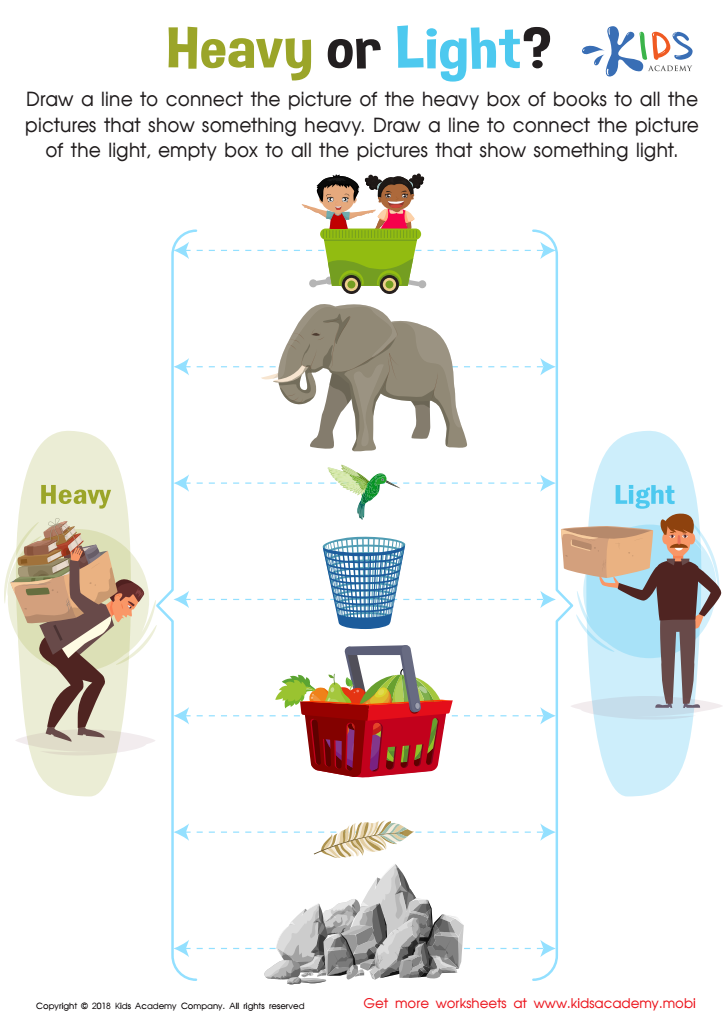
Heavy or Light? Worksheet
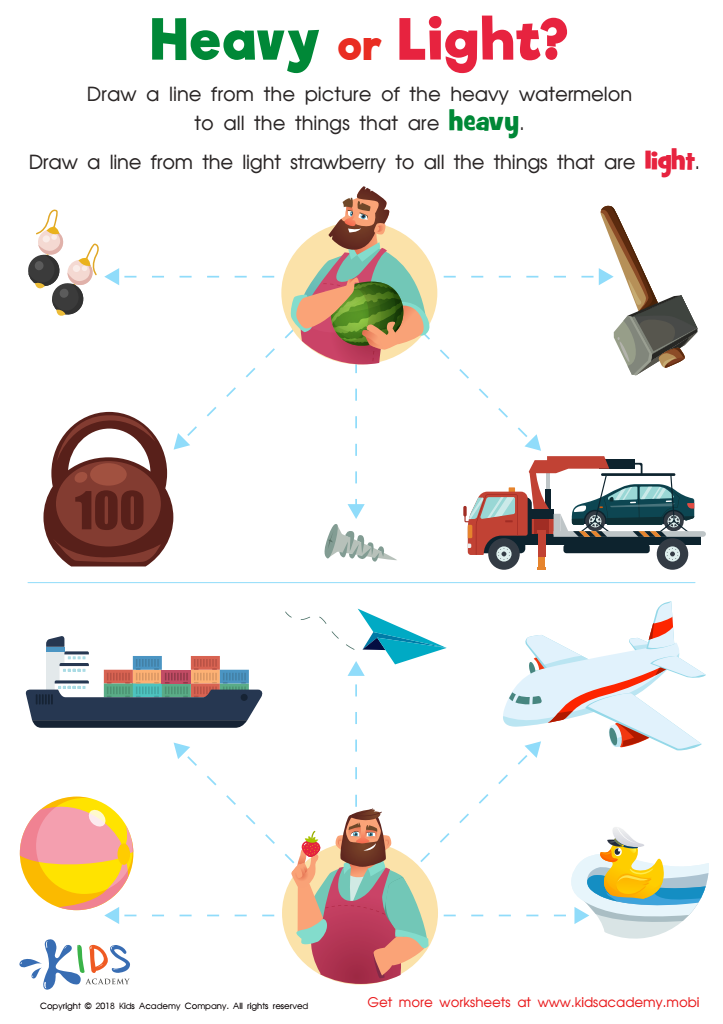
Heavy or Light? Worksheet








Comparing object weights is crucial for the developmental growth of children aged 3 to 7. During these formative years, children are naturally curious and eager to learn about the world around them. Engaging in activities that involve weighing and comparing different objects fosters a foundational understanding of measurement concepts. These activities not only introduce children to scientific thinking but also help them develop critical cognitive skills such as sorting, classifying, and reasoning.
By learning to compare weights, children enhance their understanding of the world and begin to grasp important mathematical principles related to measurement. This hands-on experience is vital as it aligns with early learning standards and supports their overall academic growth. Furthermore, discussing weight encourages language development through vocabulary building and descriptive communication.
For parents and teachers, prioritizing weight comparison activities creates opportunities for playful, inquiry-based learning. Children benefit from interactive experiences that transform classroom and home environments into learning hubs. Ultimately, by valuing these measurement skills, caregivers empower children to cultivate confidence, curiosity, and a love for exploration—traits that are essential for lifelong learning and success. Engaging kids in these activities sets a strong foundation for future academic challenges and instills a sense of wonder about the world.








