Vocabulary enhancement Measurement Worksheets for Ages 3-7
4 filtered results
-
From - To
Boost your child's language and measurement skills with our Vocabulary Enhancement Measurement Worksheets for Ages 3-7. These engaging, printable worksheets incorporate fun measurement activities designed to enrich young learners' vocabulary through practical application. With easy-to-understand tasks that involve size, length, weight, and volume, your child will develop a solid foundation in both language and math. Ideal for educators and parents, these resources make learning enjoyable and effective. Nurture your child's curiosity and confidence with tools that blend education and play seamlessly. Explore our selection today to give your young learner a head start in school readiness.
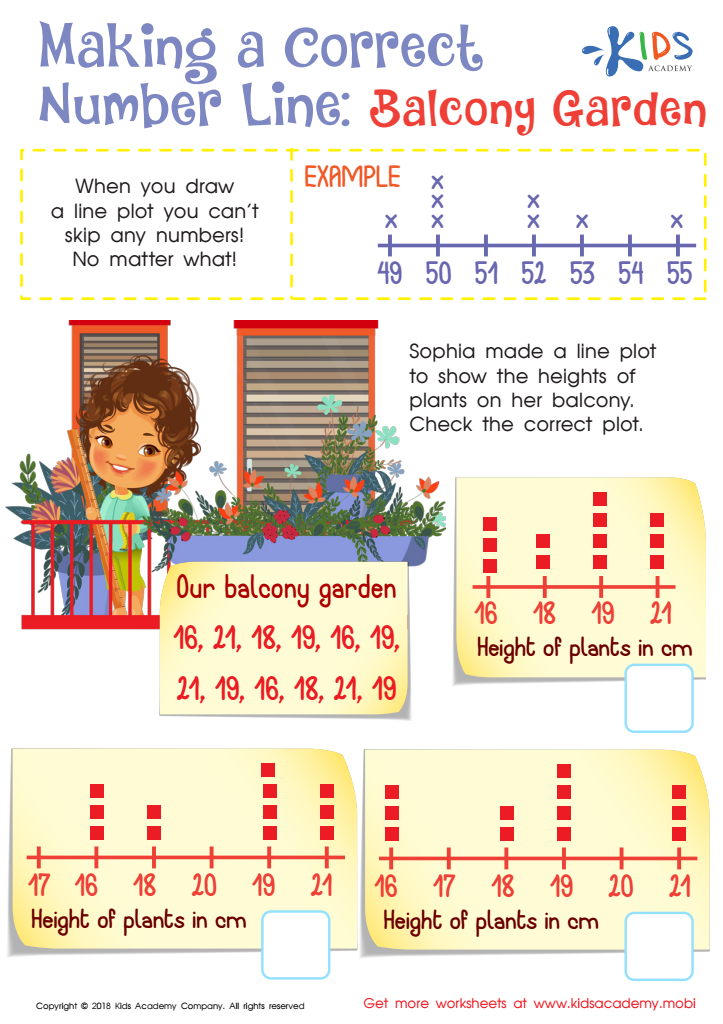
Making a Correct Number Line: Balcony Garden Worksheet
 Assign to My Students
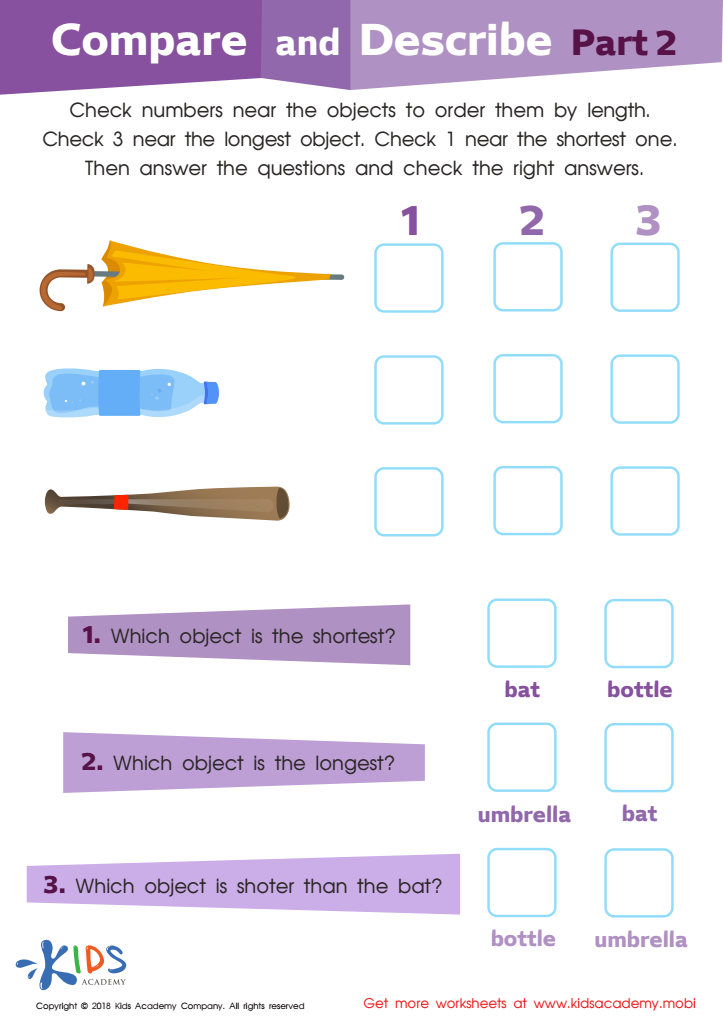
Compare and Describe: Part 2 Worksheet
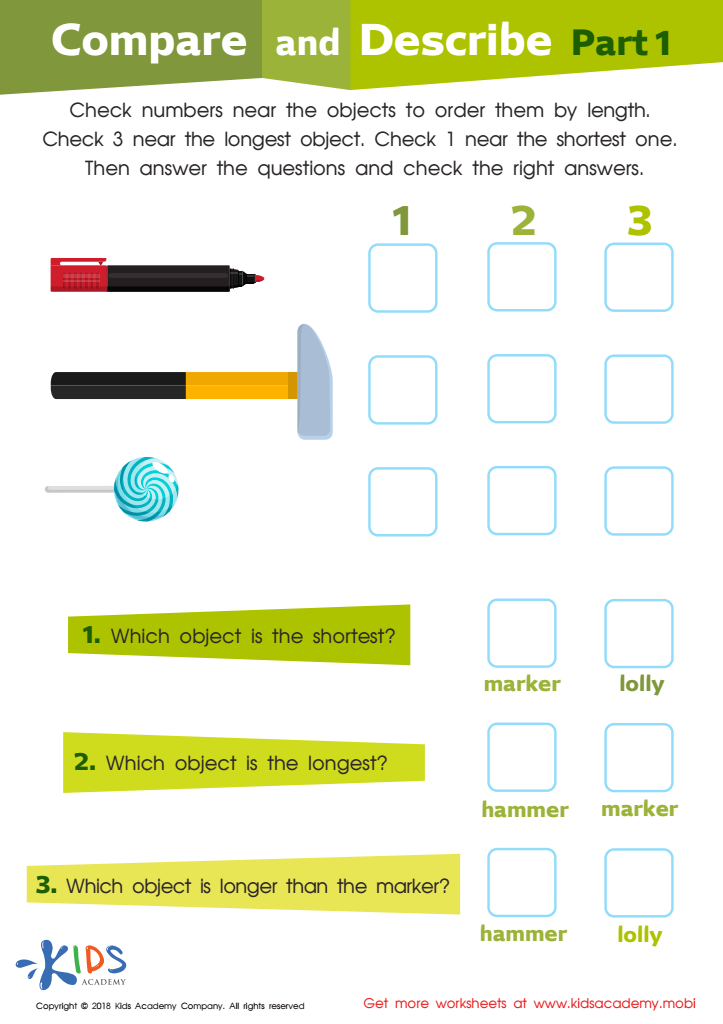
Compare and Describe: Part 1 Worksheet
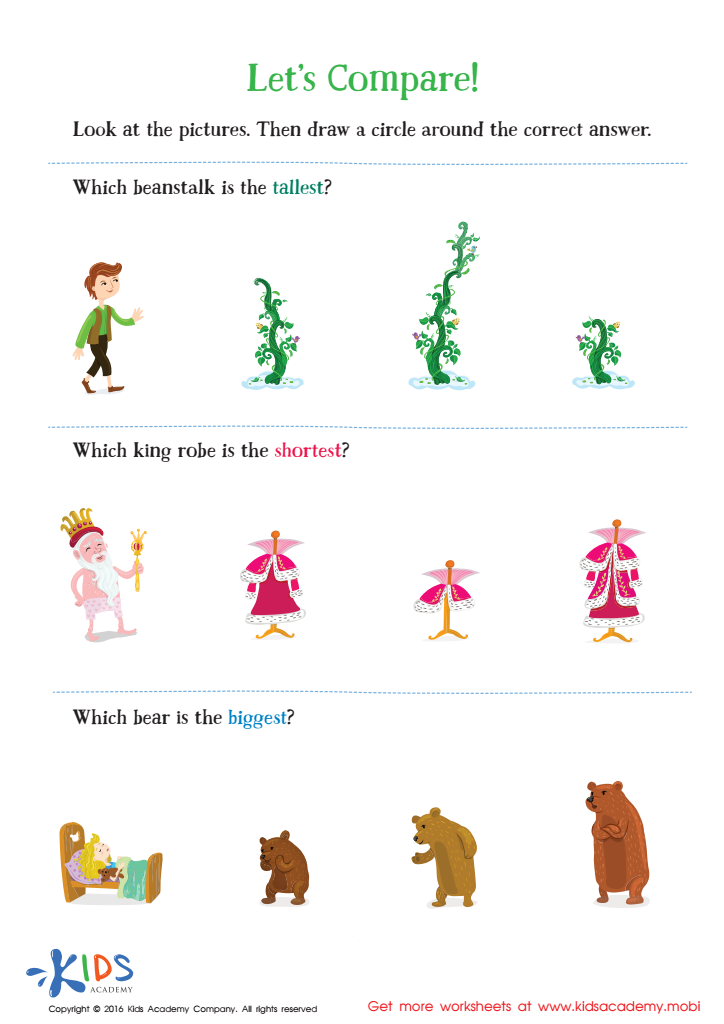
Fairy Tale Worksheet: Let's Compare








Vocabulary enhancement is crucial in early childhood development and significantly impacts a child’s future academic success. Fostering robust language skills from ages 3-7 lays a strong foundation for reading comprehension and effective communication. During these formative years, children's brains are highly receptive to new information, making it an optimal time to expand their vocabulary.
Parents and teachers who emphasize vocabulary development support cognitive and social-emotional growth. A rich vocabulary allows children to express their thoughts, feelings, and experiences more accurately and confidently. It also aids in problem-solving and critical thinking, as children with a broad vocabulary can understand and conceptualize more complex ideas.
Moreover, measuring vocabulary enhancement during these early years helps identify any language delays or difficulties. Early detection of such issues allows for timely intervention, ensuring that all children receive the support they need to succeed academically and socially. Vocabulary measurement can also guide parents and teachers in creating more effective and targeted learning activities, whether through reading, games, or conversation.
Ultimately, investing in vocabulary enhancement for young children equips them with essential tools for lifelong learning and personal development, making it a priority that parents and educators should wholeheartedly embrace.








