Understanding fractions Sorting Worksheets for Ages 3-7
3 filtered results
-
From - To
Unlock your child's math potential with our "Understanding Fractions Sorting Worksheets for Ages 3-7!" These engaging and educational worksheets are designed to simplify the concept of fractions for young learners through interactive sorting activities. Ideal for preschool to early elementary students, these worksheets foster critical thinking and basic fraction skills in a fun, visual way. By sorting shapes and objects into fractions, children will grasp fundamental math concepts more easily. Perfect for parents and educators, our worksheets make learning fractions enjoyable and accessible! Start your child's math success journey today with Kids Academy!
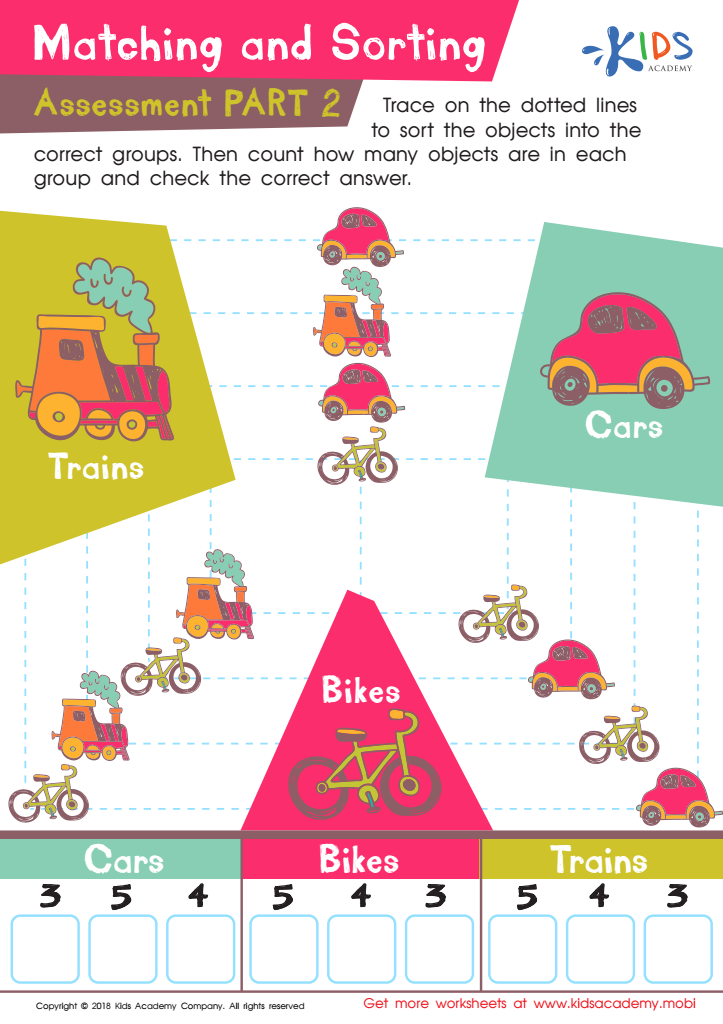
Matching and Sorting for Kindergarten: Assessment 2 Worksheet
 Assign to My Students
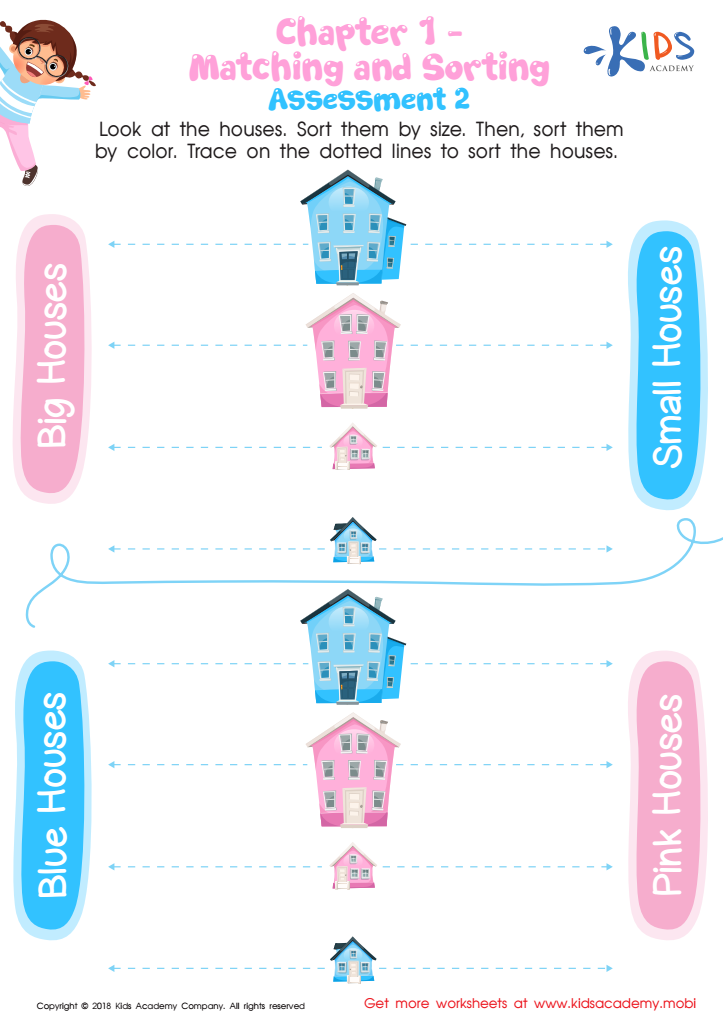
Matching and Sorting for Preschool: Assessment 2 Worksheet
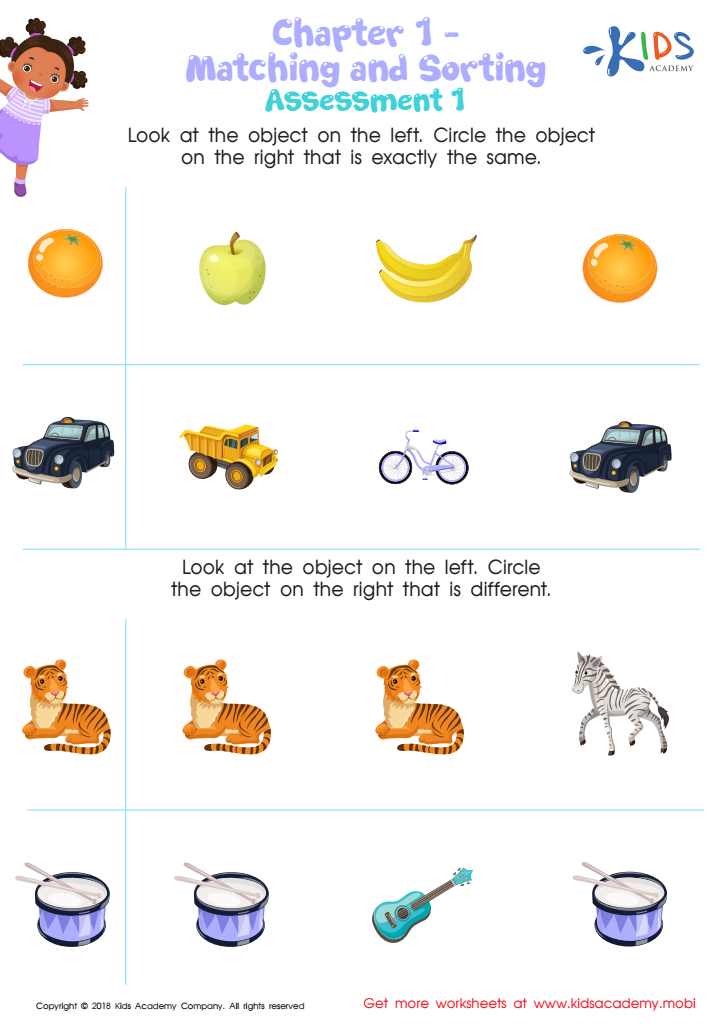
Matching and Sorting for Preschool: Assessment 1 Worksheet








Understanding fractions is a foundational mathematical skill, even for children as young as 3 to 7 years old. At first glance, fractions might seem too complex for this age group, but early exposure can significantly benefit their cognitive development and future math proficiency. Including activities such as sorting fractions in a fun and engaging way helps children grasp critical concepts effortlessly.
Fractions introduce the idea of parts of a whole and help children understand division in a simple, visual manner. Activities that involve sorting fractions can develop their problem-solving skills, improve their ability to compare quantities, and build a strong mathematical foundation. When children sort objects into fractional categories, they intuitively learn that halves, quarters, and thirds represent parts of a whole, which is a crucial building block for more advanced concepts like addition and subtraction of fractions, and even algebra.
Additionally, mastering fractions at an early age boosts a child's confidence with numbers, encouraging a positive attitude towards math in general. As fractions are a significant part of everyday experiences—for example in cooking or sharing—they give practical, real-world applications enhancing their relevance and learning. Parents and teachers should, therefore, incorporate fraction-sorting activities to develop these essential skills and lay the groundwork for future academic success in mathematics.








